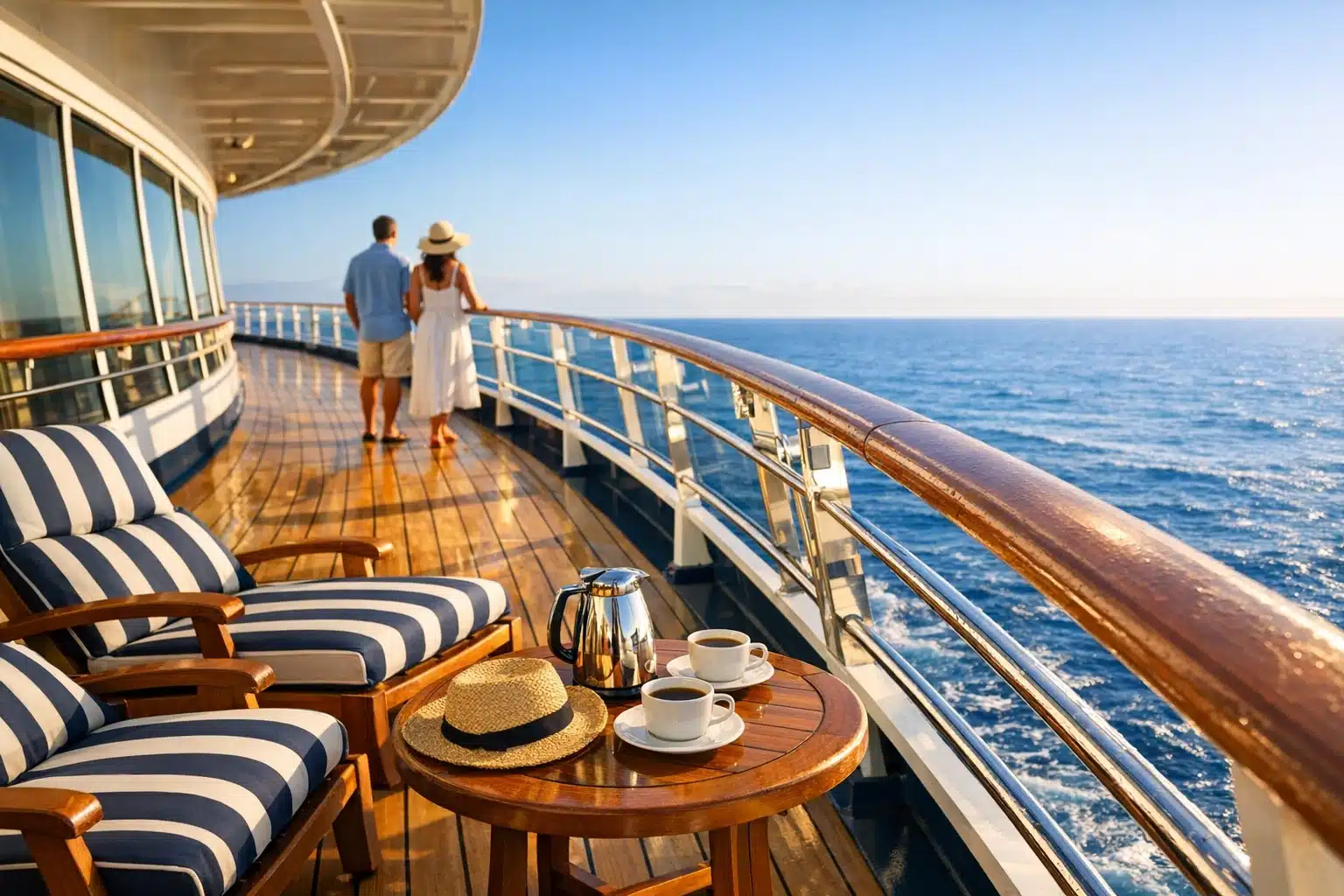
 Artificially generated image
 10-Night Cruise from Australia to Thailand: What to Expect
A 10-night cruise from Australia to Thailand sits in a sweet spot for travelers who want more than a quick getaway but less commitment than a long repositioning voyage. It combines open-water sailing, tropical stopovers, and the ease of unpacking once while moving between cultures. Because these itineraries are less common than standard South Pacific routes, the departure port, season, and ship matter more than many first-time cruisers expect. That is exactly why informed planning makes the trip feel smooth rather than uncertain.
Route Snapshot and Article Outline
Before getting into cabin choices, budgets, and port logistics, it helps to understand what a 10-night cruise from Australia to Thailand actually represents. This is not one of the most common cruise corridors in the region, which is exactly why it appeals to travelers who want something a little less routine. The phrase can describe several different cruise formats: a one-way repositioning sailing, a sector cruise that starts in northern or western Australia, or an itinerary that includes air and hotel elements around the core sailing. In practical terms, the route usually works best when the ship departs from places such as Darwin or Fremantle rather than from Sydney or Brisbane, because the sea distance to Thailand is far more manageable within ten nights.
Most cruise ships in this part of the world sail at roughly 16 to 22 knots, depending on vessel size, weather, and scheduling. That cruising speed matters. A ship leaving eastern Australia would spend too much of a 10-night itinerary simply covering distance, while a departure from northern Australia allows a more balanced mix of sea days and port calls. The result is a journey that can feel both relaxed and varied: one day you are watching flying fish skim the surface at sunrise, and a few days later you are stepping into a Thai port city with street food aromas drifting through the air.
Here is a practical outline for understanding the full trip:
- How realistic the route is from different Australian departure ports
- What a typical 10-night itinerary may include across Southeast Asian waters
- What life on board feels like during multiple sea days
- How to budget for fares, excursions, gratuities, and extras
- Which travelers are most likely to enjoy this cruise style
The sections that follow expand each of these points in detail. Rather than treating the cruise as a generic holiday at sea, this article looks at it as a regional travel product with specific strengths and trade-offs. That distinction matters. A 10-night Australia-to-Thailand cruise can be excellent for travelers who enjoy comfort, scenic transitions, and simplified logistics, but it may disappoint those expecting constant port activity or ultra-low pricing. Knowing the shape of the experience before booking is half the value, and the rest lies in choosing an itinerary that fits your pace, budget, and expectations.
Departure Ports, Distances, and What the Itinerary Usually Looks Like
The single biggest factor shaping a 10-night cruise from Australia to Thailand is geography. Australia is vast, and not all departure points make equal sense for a voyage of this length. If you start from Sydney, Melbourne, or Brisbane, the ship would have to cover a huge amount of distance to reach Thailand in just ten nights, leaving very limited room for meaningful port calls. That is why many realistic sailings begin from Darwin, occasionally from Fremantle or other western gateways, and sometimes as part of a longer ship movement where passengers can book only one section of the broader route.
From Darwin to Phuket, for example, the distance is far more practical for a 10-night itinerary than from the east coast. A ship can combine several sea days with one or more stops in Indonesia, Malaysia, or Singapore before arriving in Thailand. Exact port combinations vary by cruise line and season, but common possibilities may include Bali, Lombok, Semarang, Surabaya, Kuala Lumpur via Port Klang, Penang, Langkawi, or Singapore. Some itineraries end in Phuket, while others continue to Laem Chabang, the main cruise gateway for Bangkok. That difference matters because Phuket offers easier beach access, while Laem Chabang is more useful for travelers who want to explore central Thailand.
A typical route pattern often looks like this:
- Embarkation in northern or western Australia
- Two to four sea days in the Timor or Arafura region and onward through Southeast Asian waters
- One to three intermediate port calls, often in Indonesia or Malaysia
- Final arrival in a Thai port such as Phuket or Laem Chabang
There is also an important comparison to keep in mind: not every cruise marketed around this corridor is a pure point-to-point voyage. Some are repositioning cruises, which means the ship is moving between seasonal markets. These can be attractive because fares are sometimes lower on a per-night basis, but they may also include more sea days and fewer headline ports. Travelers who want a destination-heavy holiday may prefer an itinerary with at least three port calls. Those who enjoy the ship itself may find a sea-day-heavy route ideal.
In short, the itinerary is shaped less by marketing language and more by nautical reality. Read the departure city, end port, and call schedule carefully. A 10-night sailing can be rewarding and surprisingly efficient, but the best versions of it are the ones built around sensible distances rather than wishful map-reading.
Life On Board During a 10-Night Sailing
One of the strongest arguments for taking this kind of cruise is the rhythm of life on board. A 10-night route from Australia to Thailand usually includes enough sea time for passengers to settle into the ship rather than merely pass through it. That matters more than many first-time cruisers realize. On shorter sailings, people often spend the first two days figuring out the layout, restaurant timings, and entertainment schedule. On a 10-night voyage, there is room to develop a routine, and that routine becomes part of the pleasure. Morning coffee on the promenade, a quiet hour on a balcony, trivia in the afternoon, dinner at a specialty restaurant, then live music under a dark velvet sky: the pattern can be wonderfully easy.
The onboard atmosphere varies by cruise line, but most ships serving this route lean toward mainstream premium cruising rather than expedition travel. That means comfortable cabins, multiple dining venues, pools, theatre-style shows, bars, spa services, and shore excursion desks. It also means travelers should choose cabins based on how they personally handle sea days. An inside cabin is often the cheapest option and can work well for value-focused cruisers who mainly use the room for sleeping. Ocean-view cabins provide natural light, which many people appreciate on longer sailings. Balcony cabins tend to be the most satisfying upgrade on this route because there are several stretches where the sea itself is part of the destination.
Onboard experiences often include:
- Regional menu nights or destination-themed dining
- Lectures or short cultural presentations about upcoming ports
- Fitness classes, spa treatments, and poolside relaxation on sea days
- Broadway-style performances, live bands, quizzes, and cinema screenings
Food is another area where expectations should be realistic and informed. Included dining is usually varied and plentiful, but specialty restaurants often carry an extra fee. Drinks packages can simplify spending, though they are not always good value for moderate drinkers. If you only enjoy an occasional cocktail or glass of wine, paying per drink may be cheaper. Wi-Fi packages, laundry services, and gratuities can also add to the final bill, so the sticker price of the cruise is only part of the story.
What makes this route special is the contrast between stillness and arrival. Sea days stretch wide and unhurried, then suddenly a port appears with a different language, different flavors, and a different pace. The ship becomes a moving hotel, but also a kind of floating threshold between worlds. For travelers who like both comfort and motion, that is a compelling combination.
Budget, Paperwork, Weather, and Smart Preparation
A 10-night cruise from Australia to Thailand can be excellent value, but only if you budget beyond the cruise fare. Base prices vary widely by ship category, cabin type, season, and booking window. As a broad guide, an inside cabin on a mainstream line may sometimes start in the lower four figures per person, while balcony cabins and premium lines can rise substantially higher. Solo travelers usually pay more because many ships price cabins for double occupancy. Families need to look closely at third- and fourth-guest pricing, which can be attractive on some departures but less competitive on others.
The most common extra costs include:
- Port taxes and service charges
- Flights to the embarkation city or from the final Thai port
- Shore excursions, which can range from modest city tours to premium private outings
- Specialty dining, beverages, Wi-Fi, laundry, and spa treatments
- Travel insurance and pre-cruise hotel stays
Paperwork is just as important as price. Travelers should check passport validity carefully; six months beyond the end of travel is a common benchmark used across international journeys. Visa requirements depend on nationality, the exact ports visited, and whether the cruise is only transiting or beginning and ending in different countries. Thailand often permits short visits for many nationalities under visa exemption rules, but policies change and should always be verified through official sources or the cruise line. If the itinerary includes Indonesian or Malaysian ports, those rules also need checking. Cruise lines usually provide guidance, yet passengers remain responsible for meeting entry requirements.
Weather deserves serious attention as well. The most comfortable timing often falls within the drier months for much of Thailand, broadly from around November to February, though regional variations exist. Tropical weather can still shift quickly, and shoulder-season sailings may offer lower fares with a higher chance of humidity, rain, or itinerary adjustments. Seas are not always rough, but crossings in this region can be affected by monsoonal patterns. Travelers prone to motion sickness should pack medication, ginger products, or wristbands and consider a midship cabin on a lower deck for better stability.
Packing smartly also improves the trip. Light clothing, reef-safe sun protection, walking shoes, a light rain layer, and one or two outfits for smart-casual evenings are usually enough. A day bag for port visits is more useful than overpacking formalwear. Think practical, not theatrical. The elegant traveler on this route is rarely the one with the biggest suitcase; it is the one who can step off the ship ready for a humid market street, a temple visit, or a breezy sunset deck without scrambling for forgotten essentials.
Who Will Enjoy This Cruise Most and Final Thoughts
This kind of sailing suits travelers who enjoy the journey as much as the arrival. If your ideal holiday includes waking up in a new place without repacking, spending slow hours at sea, and combining comfort with regional variety, a 10-night cruise from Australia to Thailand can be an excellent choice. It works particularly well for couples, retirees, first-time Southeast Asia visitors who want a softer landing into the region, and experienced cruisers looking for a less predictable route than the usual Pacific island circuit. It can also appeal to busy professionals who want to see several places in one trip without managing repeated hotel check-ins, airport transfers, or domestic flight delays.
That said, it is not the perfect format for everyone. Independent travelers who prefer long stays in one city may feel constrained by port schedules. Budget backpackers can often travel overland and by low-cost air carriers more cheaply, especially if they are flexible. Families with very young children need to assess sea-day tolerance and onboard facilities carefully. A cruise is best understood not as a cheaper substitute for land travel, but as a different style of travel with different advantages. Its value lies in convenience, consistency, and atmosphere as much as in destination count.
For many travelers, the strongest comparison is this: flying from Australia to Thailand gets you there fast, but the cruise lets the distance unfold. Instead of teleporting between terminals, you watch landscapes and cultures gradually change. The ocean becomes a chapter, not an obstacle. That slower transition is part of the appeal. It gives the trip narrative shape, turning transport into experience.
Before booking, focus on four decision points:
- Choose a realistic departure port, ideally in northern or western Australia
- Read the port schedule closely to avoid surprises about sea days
- Price the total trip, not just the fare shown in advertisements
- Match the ship style to your habits, whether you prefer lively entertainment or quieter premium service
For travelers considering this route, the final takeaway is simple. A well-chosen 10-night cruise from Australia to Thailand offers a balanced mix of rest, scenery, and cultural variety without demanding a month away from home. It is best for readers who want structure without stiffness and discovery without constant logistical effort. Book with clear expectations, and the voyage can feel less like a transfer across the map and more like a measured, memorable glide into Southeast Asia.