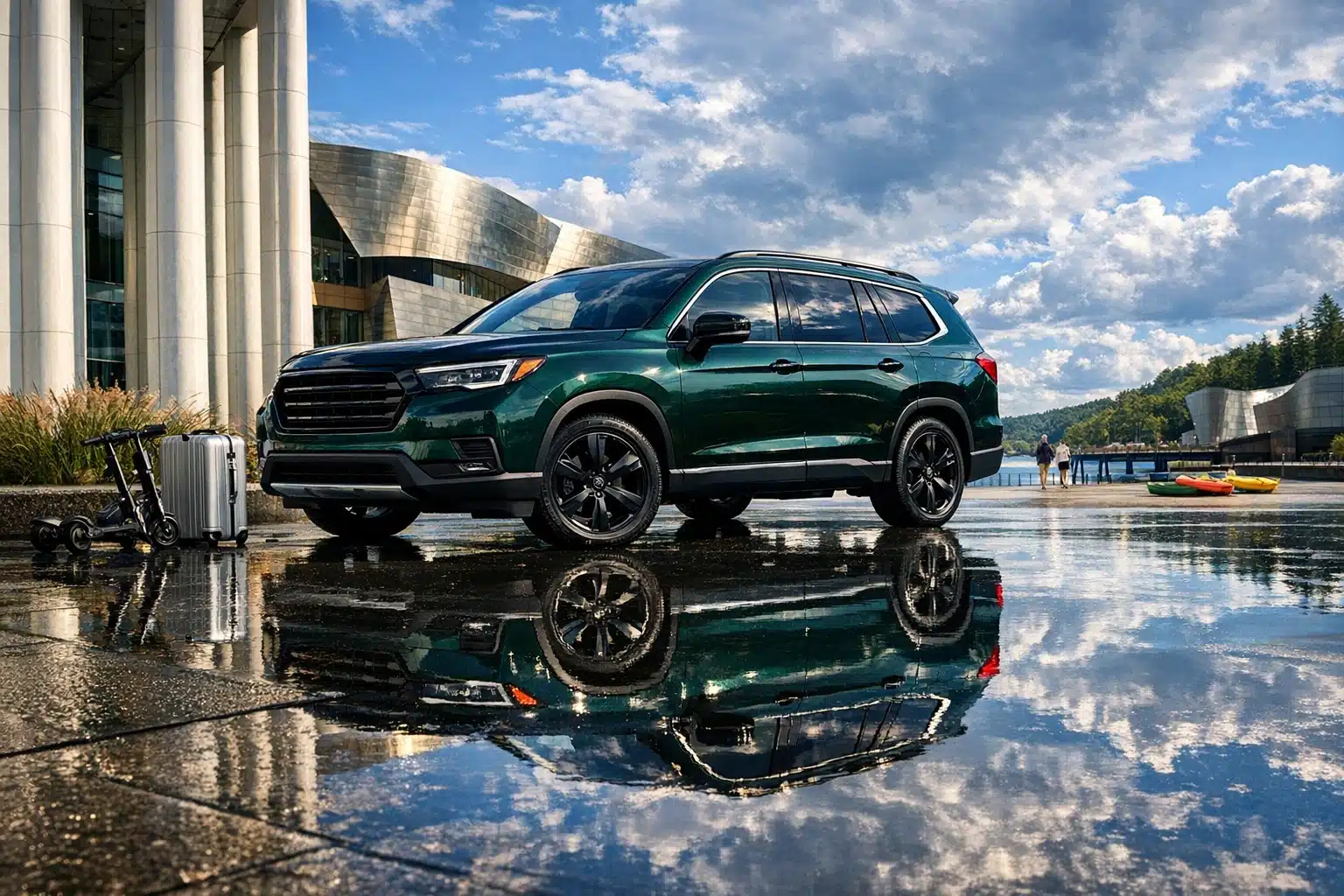
 Artificially generated image
 2026 Honda Pilot Hybrid: What to Know
Three-row SUVs are no longer judged only by space and horsepower; families now expect lower fuel bills, cleaner packaging, and the kind of everyday ease that makes school runs and road trips less draining. That is why interest in the 2026 Honda Pilot Hybrid feels especially relevant. Buyers want to know whether Honda can pair the Pilot’s roomy, practical character with a meaningful jump in efficiency. This guide separates solid context from educated expectation so you can follow the story without getting lost in rumor.
Outline and Market Context: Why a Pilot Hybrid Matters
The idea of a Honda Pilot Hybrid attracts attention because it sits right at the intersection of two strong trends. First, buyers still want three-row SUVs that can handle family duty without feeling like a compromise. Second, many of those same buyers are growing tired of watching a large gasoline SUV drink fuel on daily commutes, school pickups, and weekend highway runs. In other words, the market has changed. A midsize family SUV is no longer just a box with cupholders and decent power. It is expected to be efficient, refined, tech-friendly, and flexible enough to carry seven or eight people without making the driver feel like they are steering a moving storage closet.
Honda already has a strong reputation for packaging, comfort, and user-friendly controls, which is why the prospect of a hybrid Pilot feels so natural. The current Pilot is known for its roomy cabin, easy driving manners, and family-focused practicality. What it has not offered, at least in the known recent North American lineup, is a hybrid option. That gap matters because several competitors have already trained shoppers to ask a new question before they even look at paint colors: how much fuel will this thing use in real life?
This article follows a simple outline so readers can move from broad context to useful buying insight:
• why the model matters in today’s SUV market
• what is known, what is likely, and what is still unconfirmed
• how a Honda hybrid powertrain could change performance, refinement, and fuel economy
• what families should watch for in cabin space, technology, safety, and ownership costs
• how a potential Pilot Hybrid may compare with rival three-row SUVs
That outline matters because the 2026 Honda Pilot Hybrid, if it arrives in the form many shoppers expect, would not just be another trim level. It would represent a strategic answer to a market where Toyota has leaned hard into hybrid SUVs, Kia has expanded efficient family options, and buyers increasingly want lower running costs without moving into a full battery-electric vehicle. For plenty of households, a hybrid three-row SUV is the practical middle path: fewer fuel stops than a V6-only model, less charging anxiety than an EV, and enough space for real family life rather than brochure life.
What We Know, What Seems Likely, and What Remains Unconfirmed
When discussing the 2026 Honda Pilot Hybrid, the most important habit is separating evidence from assumption. A lot of online conversation about future vehicles blurs that line. The current-generation Honda Pilot, introduced for the 2023 model year in North America, uses a naturally aspirated 3.5-liter V6 paired with a 10-speed automatic transmission. It has been positioned as a refined, practical, and relatively traditional family SUV, with available all-wheel drive and towing capability that can reach 5,000 pounds when properly equipped. Those facts give us a baseline for understanding what a hybrid version would need to preserve.
We also know Honda is not new to hybrids. The brand’s two-motor hybrid system has already appeared in models such as the Accord Hybrid and CR-V Hybrid. In those vehicles, Honda has shown a preference for smooth low-speed response, good everyday efficiency, and a driving character that feels more natural than many older hybrid systems. That track record makes a Pilot Hybrid believable from an engineering and business perspective. It also tells buyers something important: if Honda does add electrification to the Pilot, it will probably aim for usability first rather than chasing flashy headline numbers alone.
What is not safe to present as settled fact is the exact configuration, release timing, output, trim structure, or pricing of a 2026 Pilot Hybrid. Public rumors can be noisy, and supplier chatter or forum claims are not the same as an official announcement. Until Honda publishes specifications, everything from battery size to drivetrain layout should be treated as provisional. A careful shopper should keep an eye on the following evidence points:
• manufacturer press releases
• auto show reveals or product briefings
• EPA certification documents and fuel economy listings
• official dealer ordering information
• final trim and pricing announcements
There are also practical reasons a Pilot Hybrid could take time to define. A three-row SUV is heavier than a compact crossover, demands more cooling capacity, and often needs to protect towing ability, passenger space, and cargo versatility all at once. Packaging a battery without hurting third-row usability is not as simple as dropping a system from a smaller vehicle into a larger shell. So while the logic behind a Pilot Hybrid is strong, the details matter. Families are not waiting for a science project. They are waiting for a real-world machine that can carry kids, luggage, groceries, and patience over the long haul.
Powertrain Expectations: Efficiency, Performance, Towing, and Driving Feel
If Honda brings a hybrid system to the Pilot, the biggest question will not be whether the SUV can be made more efficient. It almost certainly can. The real question is how Honda balances efficiency with the traits Pilot buyers already value: smooth acceleration, confident highway merging, quiet cruising, and useful towing capacity. That balancing act is where the engineering story gets interesting.
Honda’s recent two-motor hybrid setups have generally emphasized electric responsiveness at lower speeds and efficient engine operation during cruising. In simple terms, that means they tend to feel pleasantly immediate when pulling away from a stop, with less of the sluggish tip-in that can make some large SUVs feel heavy-footed in traffic. In a Pilot-sized vehicle, that could be a real benefit. A family SUV spends a huge amount of its life in the messy middle of driving: roundabouts, parking lots, stoplights, short ramps, crowded suburbs, and low-speed rolling traffic. Strong electric assistance can make those everyday moments feel lighter and calmer.
Fuel economy is where expectations will be especially high. A current gasoline Pilot typically lands around the low-20s in combined driving, depending on trim and drivetrain. A competitive hybrid version would need to improve that number enough for shoppers to notice the difference not just on paper, but in weekly life. If the gain were only minor, many buyers would struggle to justify the extra cost and complexity. By contrast, a move into the low-30-mpg range would look much more persuasive in this class, especially against hybrid rivals that already market their efficiency aggressively. That is not a confirmed target, but it is a reasonable expectation for the segment.
Towing will be another major point to watch. Hybrid systems can deliver impressive low-end torque, but family buyers who tow small campers, utility trailers, or boats will want to know whether a Pilot Hybrid keeps the capability of the V6 model or gives some of it away. There is no universal rule here. Some hybrids tow well; others prioritize efficiency over heavy-duty use. Buyers should be ready for trade-offs in one of these directions:
• strong efficiency with reduced towing limits
• similar towing but with a more expensive, more robust hybrid setup
• different tow ratings depending on drive configuration or trim
Finally, there is the matter of driving character. A well-tuned hybrid Pilot could feel quieter, more relaxed, and more refined than the current V6 in daily use, especially in town. That matters because refinement often shapes owner satisfaction more than raw acceleration numbers. No one remembers a spec sheet at 7:15 a.m. in school traffic, but everyone remembers whether the SUV felt smooth, easy, and civilized.
Cabin, Technology, Family Practicality, and Real Ownership Questions
For many readers, the engine story is only half the story. A three-row SUV succeeds or fails in the cabin, where family routines expose every design shortcut. That is why the most important question about a possible 2026 Honda Pilot Hybrid may be surprisingly simple: can it stay a great Pilot while becoming a better commuter? If the answer is yes, the model could be compelling. If hybrid packaging cuts too deeply into cargo space or third-row comfort, the appeal becomes narrower.
The existing Pilot already gives Honda a strong starting point. It is known for easy entry, sensible controls, useful storage, and a cabin layout that feels built by people who have actually traveled with children. Features such as multiple cupholders, flexible seating, and accessible infotainment matter more in real life than flashy dashboard theatrics. A future hybrid version would ideally preserve that straightforward, family-first design rather than overcomplicating it. One area to monitor closely is battery placement. In many hybrids, the battery is tucked under the floor or beneath seating, and that can affect cargo height, underfloor storage, or spare tire packaging.
Technology expectations are also rising. Even shoppers who claim they “just want something reliable” usually expect wireless smartphone integration, plenty of charging ports, clear camera views, and advanced driver-assistance features that work smoothly rather than intrusively. Honda Sensing safety tech would almost certainly remain central to the Pilot’s appeal, but buyers should still evaluate the details instead of assuming all systems perform equally well. Important considerations include:
• how natural lane-centering feels on long highway drives
• whether adaptive cruise behaves smoothly in traffic
• rear-seat USB charging access
• second-row flexibility for child seats and adult passengers
• cargo room with the third row up and down
Ownership costs deserve the same attention as features. Hybrids often reduce fuel spending, and the difference can add up quickly. For example, a driver covering 15,000 miles per year at 22 mpg would use roughly 682 gallons of fuel. At 32 mpg, that drops to about 469 gallons. At $3.50 per gallon, the gap works out to roughly $745 annually. That is meaningful, especially for households holding onto a vehicle for six to eight years. On the maintenance side, hybrids can benefit from reduced brake wear thanks to regenerative braking, though tire costs, insurance, and routine service still matter. In the United States, hybrid battery-related components are also commonly covered by long emissions warranties, which helps ease ownership anxiety for shoppers making their first move away from a purely gasoline SUV.
How a Pilot Hybrid Could Compare With Rivals and Who Should Wait for It
The three-row SUV market does not leave much room for vague ideas. If Honda brings out a Pilot Hybrid, it will enter a space where several competitors already have strong talking points. Toyota has spent years making hybrid power a normal part of the family-SUV conversation, and that matters because habit shapes shopping. A buyer who has already driven a Highlander Hybrid or Grand Highlander Hybrid will arrive expecting strong efficiency, quiet operation, and a clear long-term savings story. Kia, meanwhile, has offered efficient SUV alternatives with attractive feature content, while plug-in models from brands like Mazda target shoppers who want some electric-only driving without committing to a full EV. Honda would need to carve out its own identity rather than simply arrive late.
Its likely strength would be balance. The Pilot has traditionally appealed to buyers who want a roomy, no-drama family SUV with solid ergonomics and a comfortable driving experience. That can be a powerful advantage because not every rival feels equally spacious in the third row, equally intuitive inside, or equally relaxed over rough pavement. If Honda manages to add a hybrid powertrain without compromising those core traits, the Pilot Hybrid could stand out as the practical thinker’s choice rather than the spec-sheet champion.
Still, rivals will pressure it in different ways:
• Toyota may remain the benchmark for hybrid reputation and strong fuel economy
• Kia may undercut it on value-per-feature depending on trim and incentives
• plug-in options from competitors may appeal to short-distance commuters who can charge at home
• non-hybrid gasoline rivals may still win on towing, lower upfront price, or simpler availability
So who should wait for a Pilot Hybrid? Shoppers who love the Pilot’s packaging, want better fuel economy, and do not need to buy immediately are the strongest candidates. Families with high annual mileage, especially those mixing city driving with weekend travel, stand to benefit most if Honda delivers a meaningful efficiency jump. On the other hand, buyers who need a vehicle now, prioritize maximum towing, or prefer the proven familiarity of the V6 may be better served by the current Pilot or by cross-shopping already-established hybrid rivals. There is also the usual first-model-year caution: early adopters often enjoy the newest hardware, but patient buyers sometimes benefit from updated pricing, wider inventory, and early reliability feedback from real owners. Waiting can be smart, but only if the vehicle’s eventual strengths match your actual life rather than your idealized shopping list.
Conclusion: What Family SUV Shoppers Should Take Away
For families watching the 2026 Honda Pilot Hybrid, the big takeaway is simple: the idea makes strong market sense, but the details will determine whether it becomes a standout or just a curiosity. Honda already has the brand trust, packaging know-how, and hybrid experience to make a compelling three-row SUV. What buyers should look for is not hype, but balance: real fuel-economy gains, intact cabin usability, competitive technology, and enough performance for daily life to feel easy rather than strained.
If you are a practical buyer who wants one vehicle to handle commuting, road trips, carpools, and long-term ownership costs, this is a model worth tracking closely. If official specifications deliver the right mix of space, refinement, and efficiency, a Pilot Hybrid could become one of the most sensible choices in the segment. Until then, the smartest move is to follow confirmed information, compare it with current rivals, and match the vehicle to your own priorities instead of chasing rumors. In the family SUV world, the best choice is rarely the loudest one. It is the one that quietly works every day.