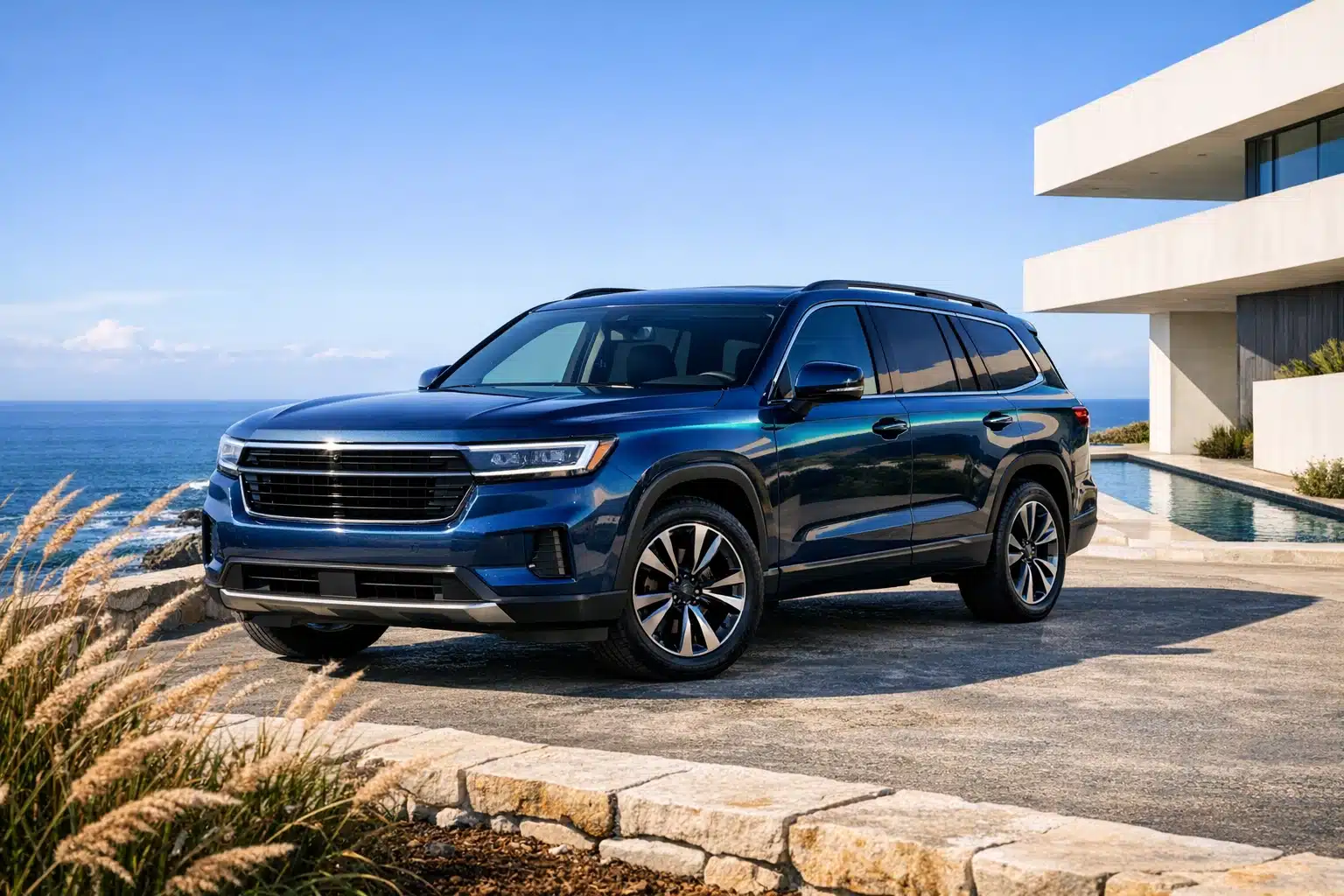
 Artificially generated image
 2027 GMC Acadia Gets New Colors and a Fully Redesigned Interior
The 2027 GMC Acadia enters a three-row SUV market where style and cabin quality often sway buyers just as much as towing figures or powertrain charts. A wider set of exterior colors may sound cosmetic, yet paint choices shape first impressions, resale appeal, and even how premium a vehicle feels on the road. The bigger story is the redesigned interior, because that is the part owners touch, see, and live with every day. For families, commuters, and upgrade-minded shoppers, this update is relevant well beyond the showroom floor.
This article begins with a simple outline, then expands each point in depth so readers can understand not just what is changing, but why it matters.
- How the Acadia’s latest update fits into the fiercely competitive midsize SUV segment
- Why new exterior colors can influence brand image, buyer psychology, and market appeal
- What a fully redesigned interior should improve in layout, materials, and technology integration
- How cabin changes affect real-world usability for families, road-trippers, and daily drivers
- Which shoppers should pay closest attention, especially when comparing the Acadia with major rivals
The Bigger Picture: Why the 2027 Acadia Update Matters
It is easy to dismiss color revisions and interior redesigns as superficial mid-cycle marketing moves, but that view misses how today’s SUV buyers actually shop. In the three-row crossover market, the buying decision is rarely based on a single headline number. Yes, horsepower matters. Cargo room matters. Safety technology matters. But once several vehicles offer broadly similar utility, the emotional layer becomes decisive. That is where color, cabin design, and the overall sense of atmosphere suddenly become powerful tools.
The GMC Acadia sits in an especially interesting part of the market. It is not trying to be a full luxury SUV, yet it clearly wants to rise above bare-bones family transport. Buyers often look at GMC as a step up from mass-market choices without paying premium-brand prices. That middle ground can be rewarding, but it is also demanding. If the vehicle looks too ordinary, shoppers drift toward value-focused alternatives. If it becomes too expensive without feeling special enough, rivals from Hyundai, Kia, Honda, Toyota, Ford, and even Chevrolet start looking sharper on paper.
That makes the 2027 update strategically important. New colors help GMC refresh the Acadia’s visual story without reshaping the entire vehicle. Interior changes go deeper. A redesigned cabin can improve the driver’s line of sight, make controls easier to reach, create more intelligent storage, reduce visual clutter, and lift the perceived quality of every drive. In a family SUV, those details are not decoration. They influence whether a center console becomes cluttered, whether rear-seat passengers stay comfortable on a road trip, and whether the dashboard feels intuitive in morning traffic.
Consumer expectations have also changed dramatically over the last decade. Many buyers now want a cabin that feels almost like a mobile living space. They notice stitching, screen placement, ambient lighting, seat contouring, cupholder design, and whether second-row passengers get thoughtful amenities instead of afterthought treatment. A redesigned interior therefore says something bigger than “new model year.” It signals that the manufacturer understands the vehicle’s role in real life.
For GMC, this matters because the Acadia competes in a segment where shoppers compare trim details with remarkable intensity. One buyer may be cross-shopping a Telluride for its upscale feel, a Pilot for its practicality, and an Explorer for its brand familiarity. Another may be weighing the Acadia against the Chevrolet Traverse, which shares a broader corporate orbit but serves a slightly different personality. In that environment, design is not fluff. Design is product strategy wearing nice shoes.
New Colors, New Mood: How Exterior Choices Can Reshape the Acadia’s Character
Exterior color is one of the most underestimated elements in automotive design. Mechanically, it changes nothing. Emotionally, it changes everything. The same SUV can look athletic, elegant, rugged, or anonymous depending on the shade wrapped around its sheet metal. For the 2027 GMC Acadia, the addition of new colors matters because GMC has long balanced two identities at once: professional toughness and near-premium polish. Paint is often the first clue buyers receive about which side of that personality the vehicle wants to emphasize.
If GMC expands the palette intelligently, the Acadia can reach several types of shoppers at once. Dark metallic grays and blacks typically reinforce a more upscale, urban image. Deep blues can make a three-row SUV feel composed and contemporary without turning flashy. Warm metallic tones and subtle greens or earth-inspired finishes can speak to buyers who want a slightly more adventurous look. White, silver, and neutral shades remain staples because they tend to age well visually and often support stronger resale demand, but fresh variations within those familiar categories can still keep the lineup from feeling stale.
There is also a practical side to color strategy. Dealers know that certain shades move quickly because they are safe, widely acceptable, and easy to recommend. Yet brands need standout choices too, because halo colors attract attention online and on lots. A shopper may not buy the boldest tone, but that striking display model can be the one that gets them to stop scrolling and click. In the age of thumbnail shopping, color has become part of digital merchandising.
Well-chosen color updates can also highlight exterior design lines more effectively. The Acadia’s body surfacing, grille treatment, wheel designs, and lighting signature all read differently depending on contrast and reflectivity. Metallic finishes reveal sculpting. Flat neutrals can emphasize mass and presence. Richer colors can soften a large SUV visually, making it feel less blocky and more tailored. It is a little like stage lighting in a theater: the actor is the same, but the mood changes with the spotlight.
A few reasons color matters more than many buyers realize include:
-
It affects first impressions in person and in online listings.
-
It can influence perceived trim level, even when the equipment is unchanged.
-
It plays a role in resale desirability depending on market trends.
-
It helps distinguish the Acadia from close competitors in parking lots full of similar shapes.
For GMC, the real opportunity is not simply to add “more colors.” It is to make the Acadia look more intentional. When a vehicle’s palette aligns with its design language, the whole product feels more coherent. That can make buyers think, even before they open the door, that this SUV has been carefully considered rather than merely refreshed.
Inside the Redesign: What a Fully Reworked Cabin Should Deliver
If the new colors are the handshake, the interior is the conversation that follows. This is where the 2027 GMC Acadia has the chance to make its strongest impression. In the current market, a redesigned cabin is judged on much more than screen size. Buyers are now sensitive to layout logic, tactile quality, seat geometry, visibility, storage, and whether the technology feels integrated or simply stacked onto the dashboard like an afterthought.
A truly redesigned interior should start with architecture. That means the relationship between the instrument panel, center display, climate controls, center console, door panels, and seating position. Drivers want a cockpit that feels modern without becoming busy. Screens should be easy to read at a glance. Climate functions should remain quick to access. The steering wheel should not block critical information. Wireless charging pads should be placed where phones stay secure instead of sliding around every corner. These are small points on paper, yet they define whether an interior feels relaxing or irritating after a month of ownership.
Material choice is equally important. GMC’s challenge is to make the Acadia feel meaningfully elevated without crossing into pricing territory where luxury badges begin to dominate the conversation. Soft-touch surfaces on high-contact areas, more convincing trim finishes, tighter panel fit, and better texture coordination can dramatically lift perceived quality. Even stitching patterns and color contrast play a role. A cabin does not need exotic materials to feel expensive; it needs consistency. When the upper dashboard, armrests, and controls feel cohesive, the interior communicates maturity.
Technology integration is another major test. Many midsize SUVs now offer displays ranging from roughly 12 to 17 inches, but bigger screens do not guarantee a better experience. Buyers increasingly value these qualities:
-
Fast response times and simple menu structures
-
Clear smartphone integration for Apple CarPlay and Android Auto
-
Useful camera views for parking and trailer maneuvering
-
Digital gauges that provide information without becoming distracting
-
Physical shortcuts for common tasks such as audio and cabin temperature
A redesigned Acadia interior should also pay attention to passenger hierarchy. Too many three-row SUVs still treat the third row like an apology. If GMC improves access, charging availability, cupholders, air vents, and seat comfort throughout the cabin, the vehicle becomes more persuasive for growing families. Likewise, a more refined ambient lighting approach, smarter sound insulation, and better storage around the first and second rows can change the ownership experience in ways spec sheets rarely capture.
There is a storytelling element here too. When a cabin is redesigned well, it does not just look new; it feels like the brand has edited out little frustrations owners used to tolerate. That is the difference between an update that photographs nicely and one that wins loyalty over thousands of ordinary miles.
Daily Life in the Cabin: Comfort, Usability, and Family-Focused Improvements
The most beautiful interior in the showroom still has to survive school runs, grocery stops, coffee cups, charging cables, backpacks, road-trip snacks, and the occasional chaos of modern family logistics. That is why the redesigned interior of the 2027 GMC Acadia needs to be evaluated not as a design object alone, but as a working environment. A three-row SUV succeeds when it quietly makes busy days easier.
Seating is the first piece of that puzzle. Front seats must support long-distance comfort without feeling overstuffed, and second-row accommodations need enough flexibility to suit both children and adults. Captain’s chairs can create a more premium feel and easier third-row access, while a bench may appeal to buyers who want the maximum possible passenger count. Whichever layout GMC emphasizes, the real test is how easy it is to get in, settle down, and stay comfortable. Cushion length, backrest angle, and step-in height matter more than flashy brochure phrasing.
Storage is another battlefield where SUVs win or lose hearts. Shoppers increasingly expect practical solutions, not just volume claims. A useful cabin redesign may include better door pockets, deeper console bins, a more thoughtfully shaped shelf for everyday items, and smarter placement for USB ports. Cupholders sound boring until they are too shallow for a reusable bottle or blocked by a gear selector. In family vehicles, boring details are often the ones owners notice the most.
There is also the matter of noise and visual calm. A redesigned interior can improve the sense of refinement through thicker insulation, cleaner control placement, and reduced clutter. Even if the powertrain remains familiar, a quieter cabin can make the whole SUV feel more expensive. That matters on highways, in school pickup lines, and during long drives where passenger fatigue becomes part of the ownership equation.
Several practical gains would make the Acadia especially compelling for daily users:
-
More intuitive access to third-row seats
-
Improved small-item storage in the first two rows
-
Better charging options for multiple devices at once
-
Easier cleaning surfaces for family use
-
A clearer division between driver controls and passenger storage space
This is where the redesigned interior could become more than a styling upgrade. It could alter the Acadia’s ownership rhythm. When an SUV supports morning routines, weekend trips, and unplanned errands without making the cabin feel crowded or confusing, it earns trust. Buyers do not always phrase it that way, of course. They simply say the vehicle feels easier to live with. In this segment, that may be the highest compliment of all.
Conclusion: What the 2027 GMC Acadia Means for Today’s SUV Shopper
For the right buyer, the 2027 GMC Acadia could become much more than a familiar name with a fresh coat of paint. New exterior colors give GMC an opportunity to make the vehicle more expressive and contemporary, while the fully redesigned interior has the potential to affect nearly every part of daily ownership. That combination is especially relevant for shoppers who want a three-row SUV that feels more polished than basic mainstream options, but who are not necessarily ready to jump into luxury-brand pricing.
The Acadia’s success will depend on execution. If the new colors are thoughtful rather than random, they can strengthen the SUV’s visual identity and help it stand out in a segment full of look-alike crossovers. If the interior redesign focuses on usability as much as appearance, GMC can turn the update into a meaningful advantage. Buyers today are quick to notice when a vehicle chases trends without solving real problems. They are equally quick to reward a product that feels coherent, comfortable, and smartly arranged.
When comparing the Acadia with key rivals, prospective owners should look beyond headline equipment and ask a few grounded questions:
-
Does the cabin feel intuitive after five minutes, not just impressive for thirty seconds?
-
Are the materials and controls consistent with the price being asked?
-
Do the color choices make the vehicle feel distinctive in a good way?
-
Will the seating, storage, and charging solutions fit real family routines?
-
Does the Acadia strike a better balance of presence and practicality than competing models?
For families, commuters, and buyers moving up from smaller crossovers, those questions matter more than marketing slogans. The redesigned interior is likely to carry the biggest weight because that is where convenience, comfort, and quality intersect. Still, the color updates should not be overlooked. They are part of how the Acadia introduces itself, and first impressions remain powerful in dealership lots and online search results alike.
In the end, the 2027 GMC Acadia seems positioned to compete on feel as much as function. If GMC gets the details right, this update could make the Acadia a stronger option for shoppers who want room, technology, and a more upscale everyday experience without stepping too far outside the mainstream. That is not a small ambition, and it is exactly why this model-year change deserves attention.