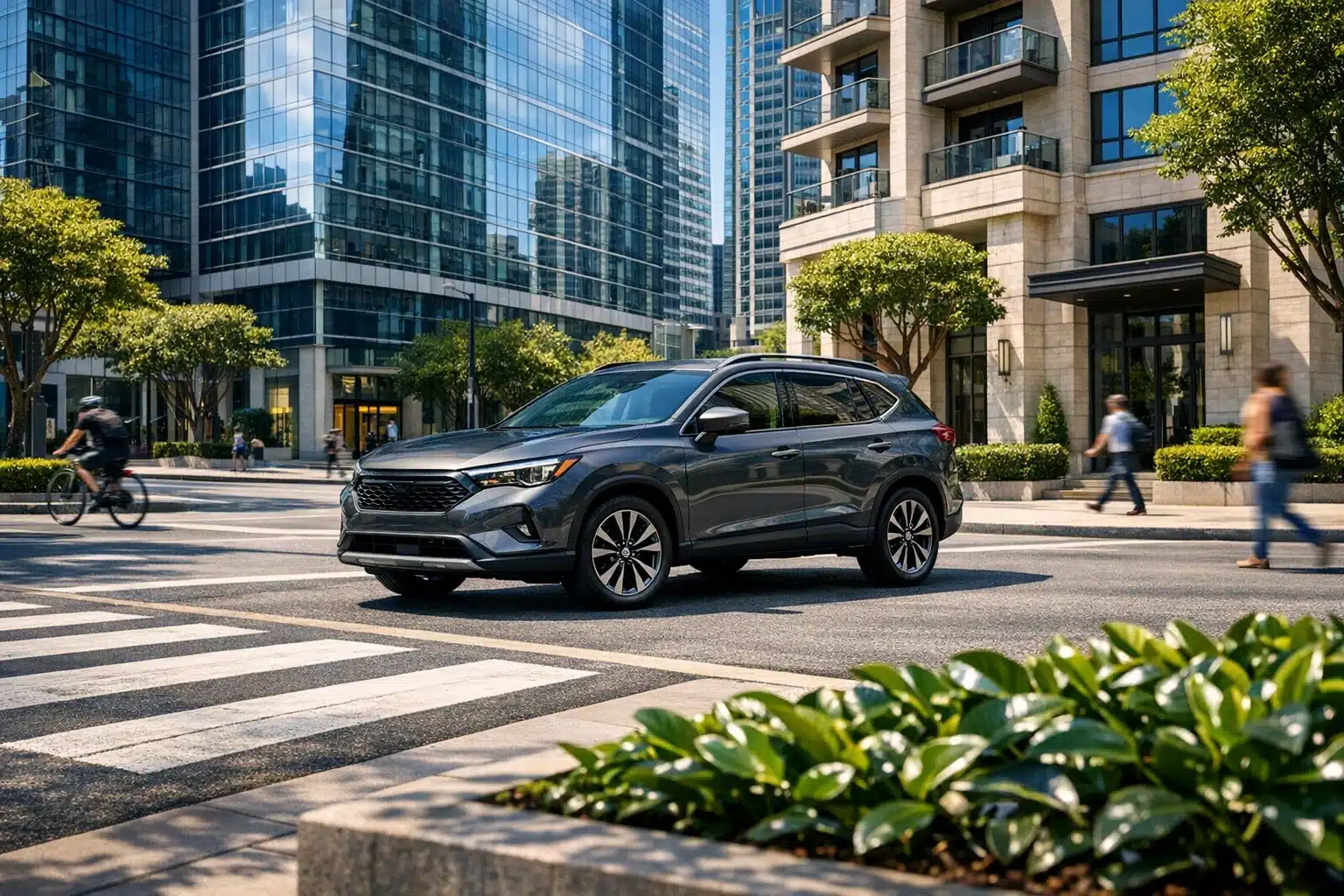
 Artificially generated image
 2027 Nissan Rogue: What to Expect
The Nissan Rogue sits in one of the toughest corners of the auto market, where families want comfort, efficiency, safety, and useful tech without drifting into luxury-car prices. That makes a look toward the 2027 Rogue more than simple curiosity. It is a practical way to judge how Nissan may respond to newer hybrid rivals, changing buyer habits, and higher expectations for everyday versatility. If you are mapping out a future purchase, the clues already make this SUV worth watching.
Article outline:
- How the Rogue fits today’s compact SUV market and where its design may be headed
- What powertrain options make the most sense, including the growing case for a hybrid or e-POWER setup
- Which interior, comfort, cargo, and infotainment upgrades buyers should reasonably expect
- How safety, trim strategy, pricing, and competitors will shape the Rogue’s appeal
- What all of this means for future buyers deciding whether to wait, compare, or shop sooner
Market Position and Design Direction: Why the 2027 Rogue Matters
The Rogue is important because the compact SUV class is where mainstream brands either win trust for a decade or fade into the background. This is the space ruled by familiar names like the Toyota RAV4, Honda CR-V, Hyundai Tucson, Kia Sportage, and Mazda CX-50. These vehicles are not just transportation; they are school-run shuttles, airport companions, grocery haulers, road-trip machines, and, for many owners, the closest thing they have to an all-purpose tool. Nissan knows that every detail matters here, from the width of a center console to the way headlights shape first impressions in a parking lot.
Looking ahead to 2027, one of the biggest questions is timing. The current Rogue generation arrived for the 2021 model year in the United States, and recent updates have already refreshed its styling and technology. By 2027, Nissan will almost certainly need either a substantial redesign or a very deep overhaul to stay visually and functionally current. That does not mean the Rogue must become radical. In fact, the better strategy may be the opposite: keep the clean, approachable look that made it popular, then sharpen it with more confidence, better proportions, and stronger trim differentiation.
There are several reasons that expectation makes sense:
- Rivals have become more expressive, with bolder lighting signatures and more upscale cabins.
- Buyers increasingly expect an SUV to look durable without becoming awkwardly oversized.
- Aerodynamics matter more now because efficiency and wind noise are part of the shopping conversation.
Nissan’s recent design language suggests a likely path. Expect a more sculpted front fascia, slimmer lighting elements, and a grille treatment that feels less busy than older crossover designs. The Rogue has traditionally leaned toward a polished, city-friendly look rather than a rugged one, and that identity should remain. Still, adventure-themed styling has become good business, which is why trims with dark cladding, roof rails, and distinctive wheels may continue. Recent model years have already shown Nissan exploring that lane.
The smartest design move for a 2027 Rogue would be to blend familiarity with maturity. Think less costume, more confidence. The compact SUV buyer is often cautious, but not boring. A well-judged Rogue should look modern in a suburban driveway and equally believable outside a downtown apartment building. That balance is hard to nail, yet it is exactly where success in this class is earned.
Powertrain Expectations: Gas Engine Strengths, Hybrid Pressure, and the e-POWER Question
If there is one area where the 2027 Nissan Rogue faces real pressure, it is under the hood. The current Rogue uses a 1.5-liter variable-compression turbocharged three-cylinder engine paired with a continuously variable transmission. On paper, that setup is not weak at all. In recent model years, it has offered around 201 horsepower and 225 lb-ft of torque, which is a healthy output for a compact crossover focused on efficiency and daily drivability. In its most efficient front-wheel-drive form, the Rogue has also posted fuel economy figures that reach roughly 30 mpg in the city and 37 mpg on the highway, making it one of the thriftier non-hybrid entries in the segment.
That sounds solid, and it is. The problem is that the market has moved. Hybrid versions of the RAV4, CR-V, Tucson, and Sportage have changed buyer expectations. A shopper who once felt pleased with a strong gas-only crossover now notices that hybrid rivals often deliver combined fuel economy in the upper 30s or low 40s while offering smoother low-speed response. In traffic, electrification has become less of a niche feature and more of a sanity-saving tool.
This is where the 2027 Rogue becomes especially interesting. Nissan already has a global technology story to tell through e-POWER, a system used in some overseas models in which a gasoline engine primarily generates electricity while an electric motor drives the wheels. That creates an experience that can feel more EV-like in day-to-day motion than a traditional hybrid. If Nissan brings a version of that idea to a future Rogue for North America, it would not merely close a gap. It could give the vehicle a distinctive personality in a class where many powertrains blur together.
Key possibilities include:
- A refined version of the current turbo engine for entry models
- A hybrid or e-POWER option for buyers focused on lower fuel use
- Improved all-wheel-drive calibration for better confidence in poor weather
- Noise and vibration tuning to make the cabin feel calmer at cruising speeds
What should buyers realistically expect? At minimum, Nissan needs a stronger electrification answer by 2027. A gas-only Rogue could still appeal if priced smartly, but it would be swimming against the current. The compact SUV market is now asking for efficiency without compromise, and a future Rogue will need to answer in a voice that sounds current, not defensive. That may be the single most important factor in whether it merely remains competitive or becomes genuinely compelling.
Interior, Technology, and Everyday Practicality: Where Families Will Notice the Difference
Compact SUVs live or die by the small moments. Not the brochure moments, but the daily ones: how easy it is to slide a bag behind the front seat, how fast the infotainment wakes up on a cold morning, how comfortable the rear bench feels after two hours on the highway, and whether the cargo area can swallow a stroller without turning loading into a puzzle. The Rogue has long been strong in this part of the job description, and that gives Nissan a useful foundation for 2027.
Recent Rogue models have offered an interior that feels calm, straightforward, and more upscale than some shoppers expect from the badge. Nissan’s well-known seat design has been a selling point, and the brand would be wise to keep comfort near the top of its priorities. That matters because this segment is full of vehicles that impress during a ten-minute test drive but become less charming once real commuting begins. A future Rogue should aim for the opposite effect: familiar at first, better over time.
Technology is where expectations have risen sharply. Buyers increasingly assume that a new compact SUV will offer fast connectivity, sharp screens, wireless phone integration, multiple USB ports, and usable driver-assistance displays. Recent Rogue updates have already moved in that direction with available larger digital displays in upper trims. By 2027, however, “available” may no longer be enough. Features that once felt premium should become common much lower in the trim ladder.
Areas where Nissan can make the biggest impact include:
- Standard wireless Apple CarPlay and Android Auto on most versions
- More responsive voice controls and over-the-air software capability
- Better rear-seat amenities such as charging ports, vents, and storage solutions
- A cleaner interface that reduces menu hunting while driving
Practical space will matter just as much as screen size. The current Rogue offers roughly 36 cubic feet of cargo room behind the rear seats, which is competitive, though rivals like the Honda CR-V and Hyundai Tucson often push a bit higher. Nissan can respond in several ways even without a dramatic size increase: reshape the cargo floor, widen the hatch opening, improve seat-fold mechanisms, and keep clever storage features such as configurable cargo dividers. These changes do not create flashy headlines, but they make ownership easier.
The best 2027 Rogue cabin would feel like a well-packed weekend bag: neat, flexible, and quietly smarter than it first appears. If Nissan improves usability as much as it upgrades visuals, the interior could become one of the vehicle’s strongest arguments.
Safety, Trims, Pricing, and Competition: The Business Case Behind the Next Rogue
A future Nissan Rogue will not be judged only by styling and mpg. It will also be judged by how intelligently Nissan packages the vehicle. That means safety content, trim logic, feature availability, and final price will matter just as much as horsepower. In a segment this crowded, value is never a side note. It is the main plot.
Nissan already has credible safety technology to build on. Recent Rogue models have offered the Safety Shield 360 suite, which can include automatic emergency braking, blind spot warning, rear cross traffic alert, lane departure warning, high beam assist, and rear automatic braking. ProPILOT Assist has also given the Rogue a stronger footing in highway driver-assistance conversations. By 2027, many of these features will need to feel less like optional sophistication and more like basic citizenship. Competitors are steadily broadening standard safety equipment, and consumers now notice when a brand appears stingy.
Trim structure is another big issue. The current Rogue lineup has generally moved from practical entry versions to more upscale models, with adventure-themed variations added in recent years. That gives Nissan room to target different buyers, but it can also create confusion if the most desirable features are locked too high in the range. A strong 2027 strategy would keep the lineup simple enough to understand at a glance:
- A value-focused base trim with the key safety and connectivity items already included
- A mid-grade model that represents the sweet spot for most families
- A premium version with richer materials, better audio, and advanced assist systems
- A tougher-looking lifestyle trim for buyers drawn to outdoorsy styling
Pricing will be crucial because the compact SUV class has crept upward. Today, mainstream models commonly begin somewhere in the high-$20,000 range or around the low-$30,000 mark once destination charges are considered, and better-equipped trims can rise quickly beyond that. Nissan has an opportunity if it avoids getting too ambitious. The Rogue does not need to impersonate an entry-level luxury crossover. It needs to feel honestly worth the money.
Competition will remain fierce. The RAV4 brings reputation and strong resale. The CR-V balances polish and space. Tucson and Sportage lean hard into technology and warranty appeal. Mazda offers style and road manners. For the 2027 Rogue to stand out, Nissan must package comfort, safety, and efficiency with fewer compromises than before. In this class, shoppers do not reward drama alone. They reward a product that makes sense every single month they own it.
Final Thoughts for Future Rogue Shoppers
If you are the kind of buyer who plans ahead, the 2027 Nissan Rogue is worth tracking closely, but it should be tracked with realistic expectations. Nissan has not fully detailed the vehicle, so the smartest approach is to look at market direction, current Rogue strengths, and the gaps Nissan still needs to close. From that angle, the picture becomes fairly clear. A future Rogue will likely need fresher design, stronger electrification, more standard technology, and a sharper value story if it wants to do more than simply remain present in the segment.
Different shoppers should read that picture in different ways. If you are happy with a current Rogue and mainly want dependable daily usability, there may be little reason to wait several model years unless a hybrid matters deeply to you. If you are shopping specifically for better fuel economy, the 2027 model becomes more interesting because Nissan is under clear pressure to offer a stronger answer to hybrid-heavy rivals. If your priorities are family comfort, quietness, cargo flexibility, and easy controls, then the Rogue already has a good base identity, and the next version could become more appealing if Nissan improves function instead of chasing gimmicks.
A practical way to think about it is this:
- Wait for 2027 if you want to see whether Nissan expands hybrid or e-POWER options.
- Compare carefully if value and standard features matter more than brand loyalty.
- Shop sooner if a current Rogue meets your needs and incentives make the numbers work.
- Watch competitor updates, because the segment moves fast and good alternatives are everywhere.
The Rogue has always been strongest when it behaves like a sensible companion rather than a flashy experiment. That is not faint praise. In the real world, sensible can be excellent. School bags still need a place to go, traffic still eats time, and winter mornings still test patience. A well-executed compact SUV earns its reputation in those ordinary scenes.
For future buyers, the best conclusion is simple: the 2027 Rogue has a believable path to relevance if Nissan pairs its comfort-oriented character with a more modern efficiency strategy and smarter feature packaging. Keep an eye on official announcements, compare it against hybrid leaders, and judge it by how well it solves daily life. If Nissan gets the next move right, the Rogue could feel less like a safe fallback and more like a genuinely smart choice.