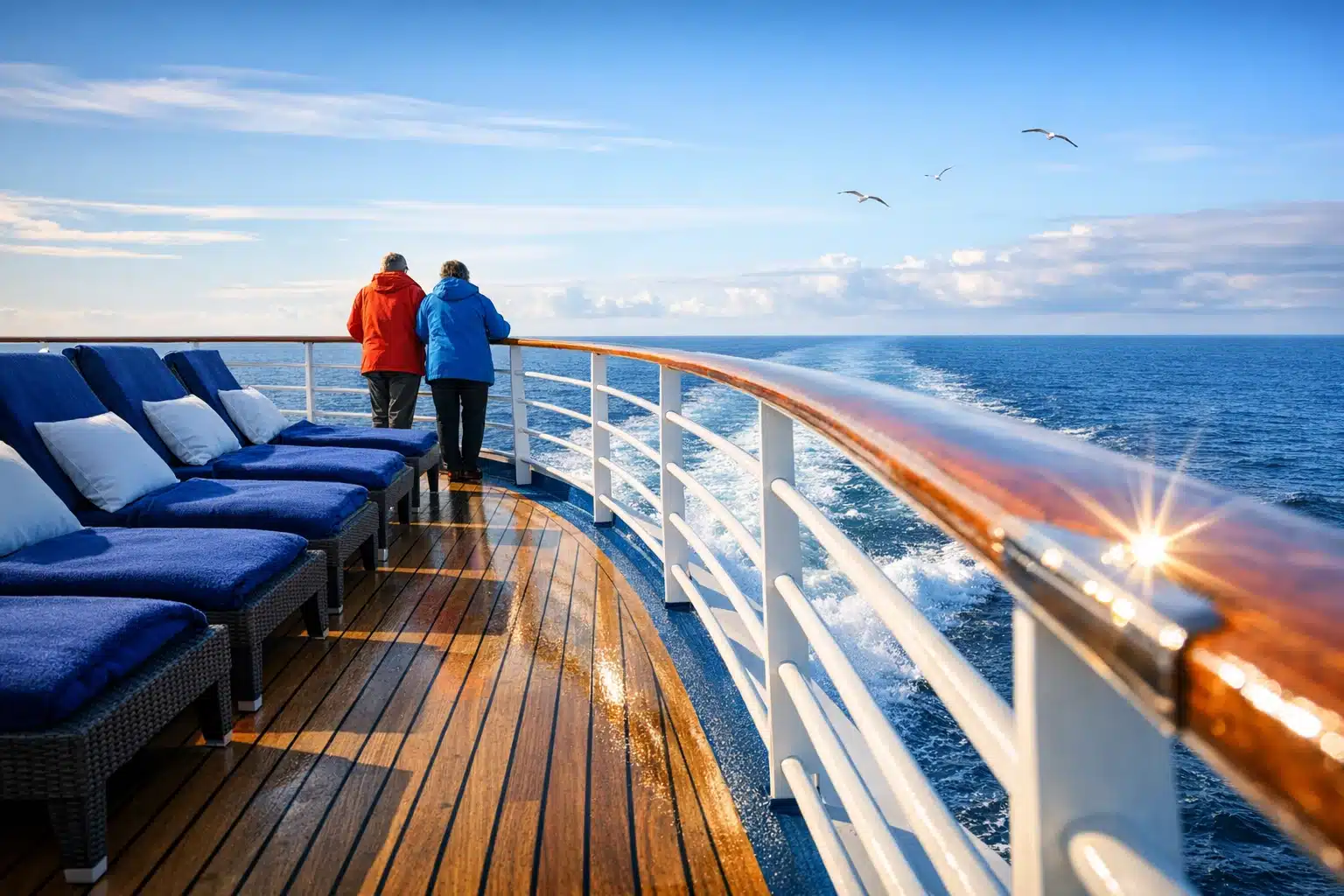
 Artificially generated image
 4-Night Mini Cruise from Belfast to Bruges
A 4-night mini cruise from Belfast to Bruges offers a neat answer to a common travel question: how do you fit a proper escape into a busy week without turning the planning into a second job? The appeal is simple but strong, combining the rhythm of a short sea voyage with access to one of Belgium’s most admired cities. For couples, friends, and first-time cruisers, it sits in that useful middle ground between a weekend break and a full holiday. Understanding what the trip includes, where the hidden costs can appear, and how to use your shore time well makes the experience far more rewarding.
Article Outline
- What this mini cruise usually includes and why the Belfast to Bruges route remains popular.
- What life on board is really like, from cabins and dining to entertainment and sea-day pacing.
- How to make the most of your stop for Bruges, including transfers, landmarks, food, and time management.
- How the costs compare with a flight-based city break and where the real value of the trip sits.
- Practical planning advice, seasonal considerations, and a final view on who this short cruise suits best.
What a 4-Night Mini Cruise from Belfast to Bruges Usually Includes
At first glance, the idea sounds almost too tidy: step aboard in Belfast, settle into your cabin, enjoy a few nights at sea, and wake up within reach of Bruges, a city that seems built for postcards and slow wandering. In practice, that is more or less the shape of the trip, which explains why this route remains attractive to travelers who want simplicity without feeling short-changed. A 4-night mini cruise is not meant to replace a longer European holiday. Its role is different. It offers a self-contained break where transport, accommodation, and much of the entertainment are bundled into one itinerary.
Most sailings marketed as “Belfast to Bruges” actually dock at Zeebrugge, the coastal port that serves as the gateway to Bruges. That detail matters, because travelers should know they are not stepping directly into the old medieval center. Bruges lies roughly 15 kilometers inland, and the final stretch is usually handled by coach transfer, cruise shuttle, or train depending on the operator and the arrangements you choose. Even so, the onward journey is manageable, and the reward is substantial: Bruges is a UNESCO World Heritage city known for its canals, stepped gables, market squares, and remarkably preserved historic core.
The structure of a 4-night sailing often looks like this:
- Embarkation in Belfast and departure in the evening
- One or more periods of relaxed onboard time while crossing the sea
- A day in port for Bruges via Zeebrugge
- Return sailing with another overnight stay onboard
- Arrival back in Belfast on the final morning
That format makes the trip especially relevant for travelers who value convenience. Compared with a standard city break, you remove several planning layers: there is no airport transfer to coordinate at dawn, no hotel check-in puzzle, and no need to repack every time you move between places. The ship becomes your moving hotel, and that changes the mood of the holiday. You unpack once, learn the layout, and let the journey itself become part of the experience.
There is also a psychological appeal that is easy to underestimate. Leaving Belfast by sea creates a stronger sense of transition than simply boarding a short flight. The city skyline fades, the deck air sharpens, and ordinary routine begins to loosen its grip. Even travelers who are not committed cruise fans often enjoy this part. It feels ceremonial in the best sense, as if the holiday announces itself properly. For anyone weighing whether four nights is enough, the answer depends on expectations. It is enough for a refreshing break, a taste of cruise travel, and a well-paced visit to Bruges. It is not enough for deep immersion in Belgium, but it does not pretend to be.
Life On Board: Cabins, Dining, Entertainment, and the Rhythm of a Short Voyage
The onboard experience is what turns this route from a transport option into a genuine holiday. On a short sailing, every element matters a little more because there is less time to “grow into” the ship. That means choosing the right cabin, understanding what is included, and setting expectations about the atmosphere can make a noticeable difference. A mini cruise generally feels more lively than a long-haul itinerary. People know the trip is brief, so they tend to use the bars, lounges, restaurants, and show spaces with enthusiasm. The mood is often sociable rather than formal.
Cabin choice is one of the first decisions that shapes value. Inside cabins are usually the most budget-friendly and work well for travelers who see the room mainly as a place to sleep and shower. Outside cabins add natural light, which many people find improves comfort on sea days. Balcony cabins, where available, offer the most privacy and a stronger connection to the voyage itself, though the price jump can be significant on a short itinerary. For four nights, the right answer is less about luxury in the abstract and more about your habits. If you enjoy quiet mornings, an outside or balcony cabin can feel worthwhile. If you plan to spend most of your time exploring the ship, dining out, and going ashore, an inside cabin may be perfectly sensible.
Dining on mini cruises is usually one of the easiest pleasures. Main dining rooms and buffet areas cover most needs, while specialty restaurants may be available at an extra cost. The practical point is that meals are not just refueling stops; they help structure the day. Breakfast gives the morning direction, lunch breaks up the onboard hours, and dinner creates a natural evening centerpiece before a show, live music, or a late drink. On a short route, this rhythm works almost like gentle choreography. Without planning much at all, you find yourself slipping into holiday time.
Entertainment varies by ship, but common features include live music, quizzes, bars, casual performances, cinema screenings, shopping areas, and family-friendly options. Travelers should still check details before booking, especially if one aspect matters a lot. Useful questions include:
- Is evening entertainment included in the fare?
- Are specialty dining venues extra?
- Is Wi-Fi included or sold as a package?
- Are there quiet lounge areas for reading or conversation?
- Does the ship cater more to families, couples, or adult groups?
Sea days also deserve honest attention. Some travelers picture endless glamour and are surprised to discover that part of cruise enjoyment is wonderfully ordinary: coffee by a window, watching the horizon shift, reading three chapters without interruption, or lingering over dessert because no one needs the table. That quieter side is not a flaw in the experience. It is one of the reasons people book it. A mini cruise from Belfast to Bruges is often at its best when you let the ship slow you down a little before the city speeds you up again.
Bruges in a Day: Transfers, Priorities, and How to Use Limited Shore Time Well
Bruges is one of those places that can suffer from its own reputation if you approach it badly. People arrive expecting a fairy-tale set, try to do everything at once, and end up rushing past the details that make the city memorable. On a mini cruise, time in port is valuable, so the goal is not to “complete” Bruges. The goal is to build a satisfying day with a few well-chosen highlights, a realistic pace, and enough breathing room to enjoy the city rather than chase it.
The first practical point is access. Cruise ships usually dock at Zeebrugge, not Bruges itself, so you need to account for transfer time. Depending on the operator and method, the journey into Bruges may take roughly 20 minutes by train or around 30 to 45 minutes by coach or shuttle. Traffic, queues, and port logistics can affect this, so padding your schedule is wise. Many travelers choose an organized transfer for simplicity, while independent visitors may prefer local transport if the arrangements are clear and timings suit the ship’s schedule. Whichever route you choose, keep a close eye on the all-aboard time. Medieval charm is lovely; missing the ship is not.
Once in Bruges, the city center is relatively compact, which works in your favor. The Markt, with its colorful facades and the Belfry towering above, is a natural starting point. From there, Burg Square, the Basilica of the Holy Blood, and the network of lanes leading toward the canals create a route that feels both scenic and efficient. Rozenhoedkaai is one of the classic viewpoints, and while it is popular for a reason, the nearby side streets often provide the more lasting impression: stone bridges, quiet water, and the faint feeling that the city is speaking in a lower voice than most modern destinations.
A sensible short-visit plan might include:
- A transfer straight into the historic center
- A walk through Markt and Burg Square
- A canal-side stroll or boat trip if queues are reasonable
- Lunch featuring Belgian specialties such as mussels, fries, waffles, or local chocolate treats
- Time for one museum, church, or tower climb rather than trying to fit in several
- A final stop in a café before heading back with time to spare
Choosing priorities matters because Bruges offers more than a single mood. Some visitors want architecture and history. Others are there for chocolate shops, lace, beer culture, art collections, or simply the pleasure of wandering. If you enjoy museums, the Groeningemuseum can reward focused visitors with Flemish art rather than broad spectacle. If you prefer atmosphere, the Beguinage and Minnewater area can feel calmer than the busiest core. If food is part of the point, resist the urge to buy the first thing you see on the main square. A slightly quieter street often leads to a better lunch and a more relaxed table.
The best approach is disciplined curiosity: see enough to feel the city’s character, but leave yourself one reason to return. That balance turns a short shore day into a genuinely rich travel memory rather than a checklist with cobblestones.
Cost, Value, and How This Mini Cruise Compares with a Flight-Based City Break
Value is where the Belfast to Bruges mini cruise becomes especially interesting. It is not always the absolute cheapest way to spend four nights away, but cost alone is too narrow a measure. What travelers are really comparing is the total package: transport, accommodation, meals, entertainment, convenience, and time spent organizing the trip. On those broader terms, a mini cruise can compete surprisingly well with a short flight-based break, particularly for people departing from Northern Ireland who would otherwise need airport transfers, baggage planning, hotel stays, and separate food budgets layered onto the journey.
One of the strongest advantages is bundled structure. Your cabin functions as accommodation throughout the trip, and a substantial portion of meals is usually included in the fare. Entertainment is often part of the package as well. By contrast, a city break built around flights may look inexpensive at first and become less modest once seat selection, luggage, airport parking, taxis, hotel taxes, breakfasts, and evening spending are all added. The cruise model does not erase extra costs, but it makes them easier to identify.
Common additional expenses on a mini cruise can include:
- Upgraded cabin categories
- Drinks beyond standard inclusions
- Specialty dining
- Wi-Fi packages
- Port transfers or shore excursions
- Travel insurance and parking at the departure port
- Souvenirs, snacks, and spending ashore in Bruges
This is why comparing headline price alone can be misleading. A smart traveler compares final spend, not just the first number shown on a booking page. For some people, the cruise will come out ahead because it reduces fragmented spending. For others, especially those happy with ultra-budget flights and very basic accommodation, a DIY city break may still be cheaper. But even then, the comparison should include effort. Convenience has value. Not everyone wants to coordinate multiple bookings for a trip of only a few days.
There is also the question of experience density. In four nights, a mini cruise gives you two holiday modes in one purchase: time at sea and time in a major European destination. That combination can feel more generous than a standard out-and-back city break because the journey itself is part of the entertainment. You are not just “getting to” Bruges. You are beginning the break when you board in Belfast.
Compared with a longer cruise, of course, the trade-off is depth. You do not get multiple countries, extended port days, or the sort of slow immersion that a week or more at sea can provide. Yet the shorter format has its own advantage: lower commitment. It suits people who are cruise-curious, testing whether they enjoy ship life before booking something longer and more expensive. It also works well for anniversaries, birthdays, friend-group escapes, and shoulder-season travel when a full holiday may not fit the calendar. In plain terms, the value of this route lies in its compactness. It turns limited time into a change of scene that still feels substantial.
Who This Trip Suits Best, Practical Planning Tips, and Final Thoughts
If you are considering a 4-night mini cruise from Belfast to Bruges, the smartest final question is not “Is it good?” but “Is it good for me?” This route has a clear personality. It suits travelers who enjoy a mix of structure and freedom, who like the idea of travel being part of the holiday, and who do not mind that the visit to Bruges is short rather than deep. It is often a very good fit for couples looking for an easy escape, groups of friends wanting a sociable break, and first-time cruisers who want to sample ship life without committing to a longer voyage.
Practical planning starts with season and weather. Spring and early autumn tend to offer a pleasing balance: cooler air, decent walking conditions, and enough daylight to enjoy Bruges properly. Summer can be lively and attractive, though busier in the city center. Winter sailings have their own charm, especially if festive markets or cold-weather atmosphere appeal to you, but sea conditions and shorter days can alter the tone of the trip. In all seasons, packing layers is wise. Even when the weather looks mild on land, sea air has a habit of sharpening the edges.
A few planning basics make the journey smoother:
- Check passport and travel document requirements well in advance.
- Review luggage rules, boarding times, and transfer options before departure day.
- Book any must-have extras early, such as preferred dining times or port transfers.
- If you are prone to motion sickness, bring suitable remedies and consider cabin location carefully.
- Wear comfortable shoes for Bruges, where cobbled streets are charming but unforgiving.
- Leave enough margin when returning from shore; ships do not wait for late independent explorers.
It is also worth being honest about who may not love this format. Travelers who dislike confined travel environments, crave long stays in one place, or want several full days of cultural immersion may feel the schedule is too compressed. Similarly, anyone expecting a silent retreat could find a short cruise a little too energetic, especially on popular sailings. None of that makes the trip weaker; it simply means the match between traveler and itinerary matters.
For the right audience, though, this mini cruise has real appeal. It lowers the planning burden, offers a touch of occasion from the moment of departure, and gives Bruges just enough room to enchant. You may not return home as a Belgium specialist, but that is not the promise here. The promise is smaller and more realistic: a short break that feels complete, scenic, and pleasantly different from an ordinary weekend away. If you want a manageable European escape from Belfast with a built-in sense of journey, this route is easy to recommend.