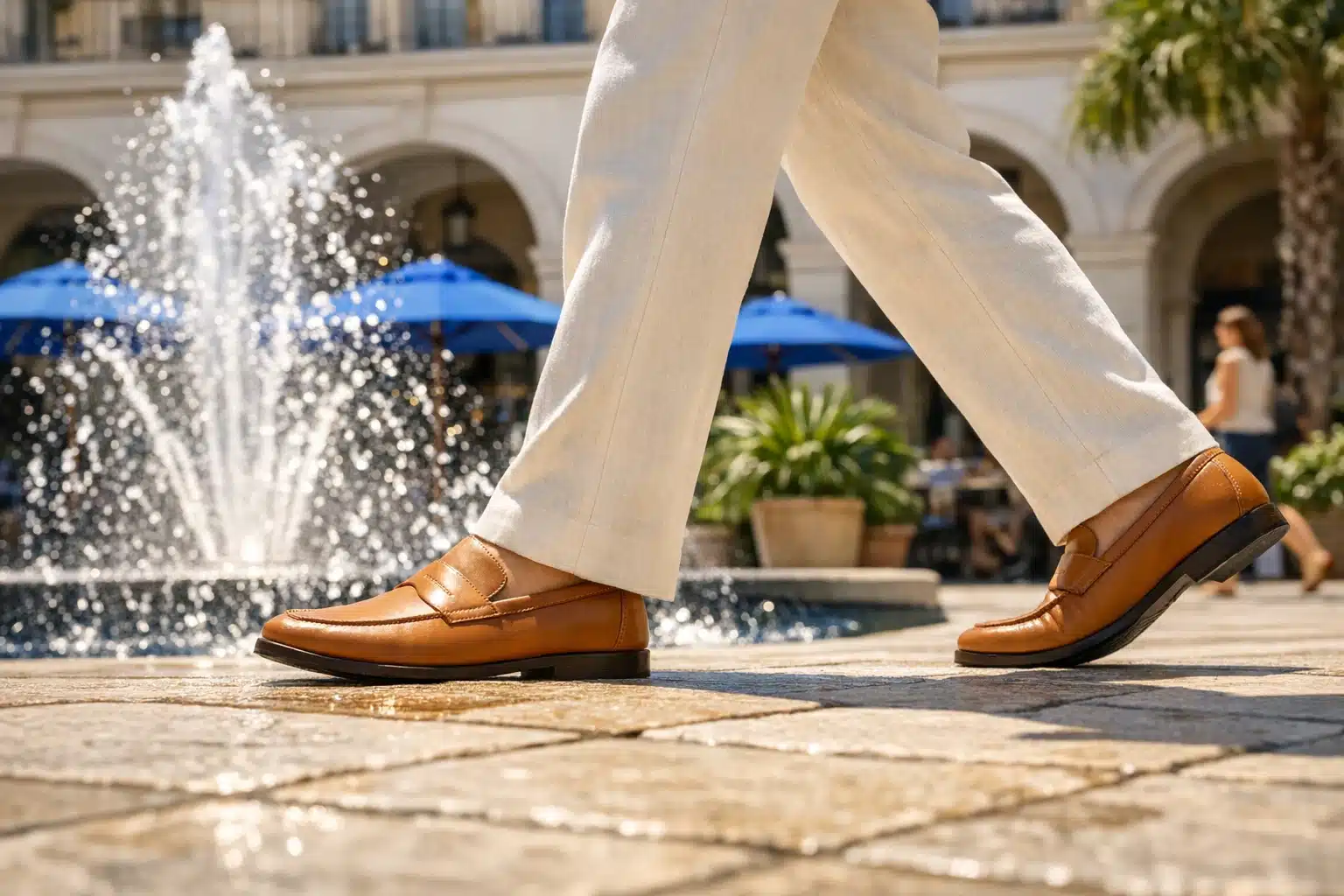
 Artificially generated image
 Dillard’s Extended July 4th Clarks Shoes Sale
Holiday sales can look noisy from a distance, yet a focused event like Dillard’s extended July 4th Clarks shoes sale deserves a closer look because it brings together a trusted comfort brand and a seasonal retail window that often rewards patience. For shoppers weighing price, fit, and long-term wear, the value is not just in a lower tag but in buying the right pair at the right time. That mix makes the sale relevant well beyond the holiday weekend.
Outline
– Why an extended July 4th Clarks sale at Dillard’s stands out
– How to tell whether the advertised savings are actually useful
– Which Clarks categories tend to deliver the strongest everyday value
– How Dillard’s compares with brand stores and other retailers
– Final buying advice for shoppers who want comfort, versatility, and smart timing
Why This Extended Holiday Sale Gets Attention
There is a reason shoppers tend to pause when Clarks footwear appears in a holiday sale at a major department store. The name Clarks carries a practical reputation built over generations, especially among buyers who care less about flash and more about comfort, durability, and a style that slips easily into daily life. Dillard’s, meanwhile, sits in a useful middle ground in the retail landscape. It is large enough to offer breadth, yet familiar enough to attract customers who still want to browse recognizable brands rather than sift through a chaotic marketplace. When those two elements meet during an extended July 4th sale, the event becomes more than a seasonal headline. It becomes a moment when timing, inventory movement, and buyer habits overlap.
July 4th promotions matter because they arrive at an interesting point in the shopping calendar. Spring merchandise is no longer fresh, late-summer assortments are approaching, and retailers are often motivated to keep traffic strong during a period when many consumers are thinking about travel, outdoor plans, or budget resets. Extended sales are especially appealing because they soften the pressure of a one-day rush. Instead of making a panicked choice, shoppers may have more room to compare colors, read sizing notes, and think about whether a pair of sandals, loafers, wedges, or casual lace-ups actually fits their life.
That matters even more with footwear. A shirt bought in the wrong shade is inconvenient; shoes bought in the wrong fit can end up sitting in the closet like a small monument to bad timing. Clarks has long been associated with comfort-focused construction, cushioned footbeds, and wearable shapes that often appeal to professionals, travelers, and anyone who spends meaningful time on their feet. In that context, a sale is not just about getting more for less. It is about making a considered purchase on something you may use for commuting, weekend errands, informal events, or longer walks.
A few reasons this sale format tends to draw interest include:
– Clarks shoes often straddle comfort and polish better than purely athletic or purely dress options.
– Department-store promotions can expose a wider mix of sizes and silhouettes in one place.
– Extended timing gives shoppers a better chance to compare function, not just price.
– Holiday periods often encourage wardrobe refreshes before late summer and early fall.
In other words, this type of sale resonates because it meets a very ordinary but important need: finding shoes that work hard without making the shopping process feel like hard labor.
How to Evaluate the Sale Beyond the Banner Price
A sale headline can be seductive, but the smartest shoppers know that the real story lives a few steps below the surface. When looking at Dillard’s extended July 4th Clarks shoes sale, it helps to treat the promotion like a small investigation rather than a treasure hunt. The first question is not simply, “How much is this pair marked down?” A better question is, “Am I getting meaningful value for the type of shoe I actually need?” That shift in mindset changes everything. It moves the focus away from the thrill of reduction and toward purchase quality.
Start with the original role of the shoe. Clarks produces a range that can include sandals, casual sneakers, loafers, dress-casual slip-ons, wedges, boots, and comfort-oriented walking styles. Each category behaves differently in a sale. A seasonal sandal marked down at the height of summer may still be useful for months, especially in warm climates or for travel. A suede boot with a modest discount may be a better buy if it fills a gap in your fall wardrobe and reflects stronger materials or more versatile design. Price alone does not settle the question.
Look next at construction and materials. Full-grain leather, soft suede, rubber outsoles, and cushioned insoles often justify a somewhat higher price than synthetic alternatives, assuming the design matches how you will wear the shoes. Clarks is widely known for emphasizing comfort, but comfort itself is not a single feature. It can come from padding, arch support, sole flexibility, heel height, upper softness, or the shape of the toe box. Reading product descriptions closely can help separate a pair meant for occasional use from one built for all-day wear.
Practical evaluation points include:
– Compare the sale price to the typical price range for similar Clarks styles, not just the crossed-out number.
– Check whether your size is available in standard, narrow, or wide widths if offered.
– Read customer feedback for break-in time, traction, and true-to-size notes.
– Notice return policies, especially for final-sale or heavily reduced items.
– Ask whether the shoe works with at least three outfits you already own.
This last point may be the quiet hero of smart shopping. A beautiful shoe that only matches one outfit can become an expensive decoration, even at a discount. A well-priced neutral loafer, leather sandal, or versatile casual shoe may earn its keep quickly because it enters heavy rotation. The most useful sale purchase often feels less dramatic in the moment but more satisfying over time. Like a good travel companion, it does not demand constant attention; it simply proves reliable again and again.
Which Clarks Styles Often Offer the Strongest Value
Not every discounted shoe delivers the same long-term payoff, and that is particularly true in a brand line as broad as Clarks. When people think of value, they often imagine the lowest sticker price, yet footwear value is more accurately measured by cost per wear, comfort consistency, and wardrobe flexibility. If you are scanning Dillard’s extended July 4th Clarks shoes sale, some categories deserve special attention because they tend to bridge everyday practicality and lasting usefulness more effectively than trend-driven pieces.
Casual leather loafers and slip-ons are usually strong contenders. They work in offices with relaxed dress codes, pair easily with jeans or chinos, and can handle the in-between territory that many wardrobes live in. They are neither fully formal nor too laid-back, which gives them more opportunities to be worn. For shoppers who want one pair that can move from weekday errands to casual dinners, this category often punches above its weight. When Clarks gets the fit right in this segment, the result can feel like a quiet workhorse: understated, comfortable, and unexpectedly dependable.
Comfort sandals are another practical area to watch. During a July sale, sandals make obvious seasonal sense, but their value depends on design. A neutral leather sandal with decent support may stay useful for vacations, weekends, and warm-weather dressing across multiple seasons. A highly embellished fashion sandal, by contrast, may have a narrower window of usefulness. The same logic applies to wedges. A medium-height wedge in a stable, wearable shape may offer more real-world value than a more dramatic dress pair that only leaves the closet twice a year.
Then there are Clarks casual lace-ups and comfort-oriented walking styles. These can be especially appealing for travelers, commuters, and shoppers who prioritize time on foot over sharp visual drama. If the sale includes pairs with lightweight cushioning, breathable lining, and flexible soles, the purchase may serve daily use better than a cheaper shoe with weak support. Comfort is not glamorous copy, but after the third long day in a row, it becomes unforgettable.
Styles that often justify closer consideration include:
– Neutral loafers in black, tan, or dark brown
– Leather sandals with adjustable straps
– Everyday wedges with moderate heel height
– Casual lace-ups suited to travel and commuting
– Desert-inspired boots or classic casual ankle styles for transitional seasons
The best value choice depends on your life, not on the display order of the page. Someone working in a hybrid office may benefit most from loafers; a summer traveler may get far more mileage from sandals; a frequent walker may care most about sole comfort and flexibility. The goal is not to buy the most exciting shoe in the sale. It is to find the pair that will quietly earn repeat use, season after season, without demanding constant second thoughts.
Dillard’s Versus Other Ways to Shop for Clarks
One of the most useful ways to approach Dillard’s extended July 4th Clarks shoes sale is to see it in context rather than isolation. Shoppers today can buy footwear from brand websites, department stores, outlet channels, marketplace sellers, and specialty shoe retailers, each with its own advantages and trade-offs. Dillard’s occupies a specific lane that can be genuinely helpful for Clarks buyers, especially those who want a balance between selection, presentation, and traditional retail safeguards.
A department store environment often makes comparison easier because shoppers can view multiple brands and multiple Clarks categories in one place. That matters when you are not yet sure whether you want a sandal, slip-on, wedge, or casual walking shoe. Brand websites can be excellent for seeing the fullest expression of a company’s collection, but they may guide shoppers toward the brand’s own storytelling first and broad price comparison second. Dillard’s can function more like a practical showroom of options within a retail framework people already understand. For some buyers, familiarity reduces friction. Returns, order tracking, and promotional structures feel less mysterious, and that can be a deciding factor.
There is also the question of curation. A department store typically selects styles it believes will resonate with its own customer base. That means the assortment may be narrower than a brand-direct site, but it can also be easier to navigate. Instead of hundreds of near-variations, shoppers may find a more edited spread of everyday winners. For people who do not enjoy endless browsing, a somewhat tighter selection is not a drawback. It is relief.
Still, comparison shopping remains wise. Consider checking:
– Whether the same Clarks style appears elsewhere at a similar or lower price
– Whether Dillard’s offers a color or width that another retailer does not
– Shipping costs and return conditions across sites
– The difference between current-season stock and outlet-oriented product lines
– Available customer reviews, especially if one retailer has more detailed fit feedback
The idea is not to prove one retailer is universally better. It is to identify the best shopping route for the pair you want. Dillard’s may be especially appealing when the sale price is competitive and the buying experience feels straightforward. Brand-direct shopping may be stronger when you need the broadest range of styles or size options. Specialty retailers may shine when fit expertise or niche comfort selection is the priority. The smartest shopper moves between these channels with calm attention, like someone comparing maps before a trip. The destination is simple: a pair of shoes worth keeping, wearing, and remembering fondly for the right reasons.
Conclusion: How Deal-Focused Shoppers Can Make the Most of It
For the target audience of this sale, the big takeaway is refreshingly simple: Dillard’s extended July 4th Clarks shoes sale is most useful when approached with clarity, not speed. If you are a shopper who values comfort, moderate style, and a sensible price, this is the kind of promotion that can pay off. But it pays off best when you know what role the shoe needs to fill. A commuter needs something different from a vacationer. A shopper replacing worn-out office flats has a different checklist from someone seeking weekend sandals. The more precise your purpose, the better the sale becomes.
That precision helps filter out the noise. Instead of asking which pair looks most dramatic on the screen, ask which pair solves the most problems in your closet. Can it handle long days? Does it coordinate with clothing you already wear? Is the material suited to your climate? Will you still want it once the holiday graphics vanish and ordinary life returns? These questions are not glamorous, but they lead to better purchases. Good shoes do not need fireworks. They need usefulness.
If you are still deciding, this simple decision path may help:
– Choose comfort first if you stand or walk often.
– Choose versatility first if you want the highest cost-per-wear value.
– Choose seasonal relevance first if you need immediate use during summer.
– Choose classic styling first if you want the pair to stay current next year.
– Skip the purchase entirely if the fit, material, or return terms feel uncertain.
That last point deserves emphasis. Passing on a mediocre deal is often wiser than forcing a purchase because the word sale creates urgency. The best bargains are not the ones that disappear fastest; they are the ones that remain satisfying after weeks and months of wear. Clarks has the kind of reputation that attracts practical buyers for a reason, and a retailer like Dillard’s can make the search easier when the assortment and timing align. So if this extended July 4th event catches your eye, approach it with patience, compare carefully, and choose the pair that earns a real place in your routine. When the box arrives, the goal is not to feel triumphant for one afternoon. It is to feel comfortable every time you lace up, slip in, or head out the door.