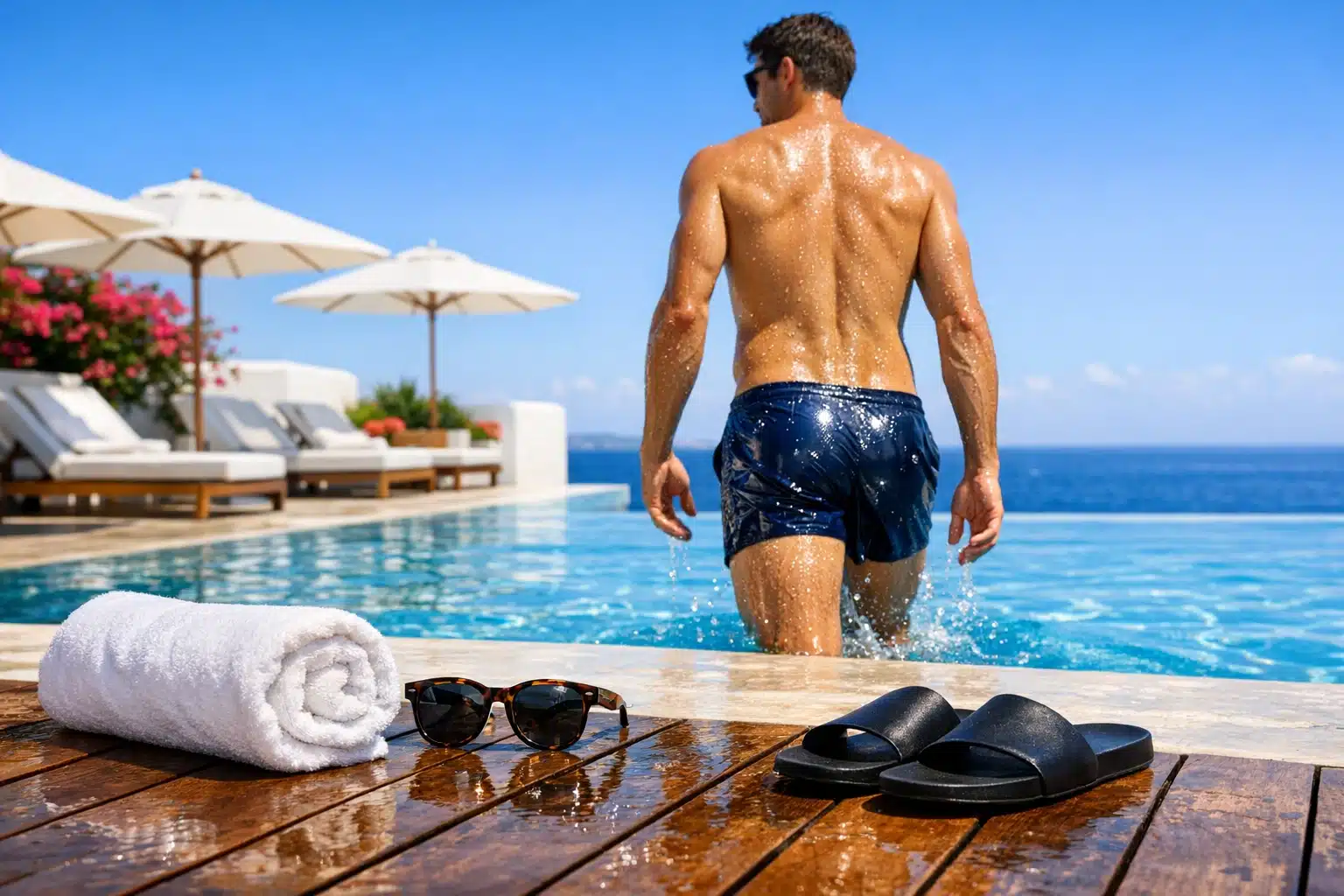
 Artificially generated image
 A Guide to Wet Look Swimwear for Men
Wet look swimwear for men sits at an interesting crossroads of fashion, function, and personal confidence. It borrows the sleek shine of performance fabrics and turns an ordinary poolside outfit into a deliberate style choice, whether you prefer understated trunks or bold briefs. As beachwear becomes more design-driven, understanding fit, fabric, durability, and setting helps you choose pieces that look sharp, feel comfortable, and suit real-world use.
Outline
- What the wet look aesthetic actually means and why it remains popular
- How different swimwear cuts change comfort, support, and visual balance
- Which materials, finishes, and construction details affect performance and durability
- How to style wet look swimwear for beaches, resorts, pools, and travel
- What to check before buying and how to care for your swimwear afterward
1. What Wet Look Swimwear Means and Why It Has Lasting Appeal
Wet look swimwear for men refers to swimsuits made with fabrics or finishes that reflect light in a glossy, smooth, almost liquid way. The effect can be subtle, like a polished sheen on a fitted square-cut trunk, or much more dramatic, like a coated brief that catches the sun with a mirror-like edge. The important point is that the phrase does not simply mean swimwear that becomes shiny after getting wet. In most cases, the look is built into the garment through fabric choice, fiber blend, dye treatment, or surface coating.
This category has stayed relevant because it sits neatly between sport and style. Matte swim trunks often read as casual and practical, while highly glossy fabrics look more deliberate and fashion-aware. That balance is attractive to many men who want swimwear that feels modern but still wearable. A good wet look design can create cleaner lines across the hips and thighs, making even a simple cut appear more tailored. Under sunlight, the finish can emphasize shape and movement in a way flat fabrics do not. Think of it as the visual difference between a chalk wall and a satin-painted surface: both do the job, but one plays with light.
There are also several versions of the wet look effect, and understanding them helps you shop more intelligently.
- Light sheen: common in performance-inspired nylon and elastane blends
- Gloss finish: more reflective, often found in fashion-forward briefs and trunks
- Coated look: the boldest option, usually chosen for statement styling rather than intense lap swimming
- Metallic-adjacent shine: not true metallic fabric, but reflective enough to create a polished visual impact
One reason this swimwear attracts attention is that it feels intentional. Even when the cut is minimal, the finish signals design. This can work especially well in environments where style matters as much as utility, such as resort pools, beach clubs, or vacation destinations where swimwear is part of the overall look rather than just a functional layer. Still, appeal is not limited to trend-conscious buyers. Men who appreciate clean silhouettes, compact packing, and lightweight fabrics often find that glossy swim materials also perform well in real conditions.
The lasting appeal comes down to three things: visual structure, fabric innovation, and personal expression. Wet look swimwear gives men another option beyond loud prints and basic solids. Instead of relying on pattern, it uses texture and reflection. That makes it distinctive without requiring a tropical motif or oversized branding. For the right wearer, it feels less like a novelty and more like a sharper version of classic swimwear.
2. Choosing the Right Cut: Briefs, Trunks, Square-Cuts, and Jammers Compared
Once you understand the finish, the next decision is shape. Wet look swimwear can appear dramatically different depending on whether it is built as a brief, trunk, square-cut, or jammer. The same glossy fabric that looks sleek in one cut can feel too loud or too restrictive in another. That is why fit matters just as much as finish. Good swimwear should support movement, sit securely at the waist, and create proportion rather than distraction.
Briefs are the most direct expression of the wet look aesthetic. Because they use less fabric, the shine is concentrated and visually clean. Many men choose briefs for tanning, swimming freedom, and a more athletic silhouette. They work especially well for men who prefer minimal drag in the water or who simply like a streamlined look. The trade-off is that fit errors become obvious very quickly. If the waistband digs in, the leg opening gaps, or the front support is weak, the entire piece feels off.
Trunks offer a middle ground. They usually provide more coverage through the seat and upper thigh while still maintaining a fitted outline. In wet look fabrics, trunks can feel versatile because they nod to fashion without demanding quite as much confidence as a brief. Square-cuts go a step further toward a balanced shape. Their straight leg opening and compact body can flatter a wide range of builds, especially men who want structure without excess fabric bunching at the hips.
Jammers are the most performance-oriented option. They extend to the thigh and are often associated with training and competitive swimming. In a glossy finish, they look technical and sharp, though they can feel too serious for casual beach lounging. They are ideal for men who want compression, coverage, and a sport-first attitude.
When comparing cuts, a few guidelines help:
- Shorter men often benefit from higher-cut legs or shorter trunks that visually lengthen the leg line
- Taller men can usually handle more fabric, including square-cuts and jammers, without looking overwhelmed
- Athletic builds often suit briefs and fitted trunks because the silhouette stays clean
- Men who want a more forgiving shape may prefer square-cuts with a supportive lining
Waist rise matters too. A lower rise can look contemporary, but if it sits too low, it may feel less stable during active swimming. A mid-rise waist is often the most practical option, especially for first-time buyers. Drawstrings, front lining, and seam placement all influence comfort. Flatlock seams reduce rubbing, while contoured pouch construction can improve support without adding unnecessary bulk.
The best cut is not the one that looks boldest on a hanger. It is the one that lets you move naturally and feel at ease from sun lounger to shoreline. Wet look swimwear works best when the shine complements the body instead of fighting the garment’s structure.
3. Fabrics, Construction, and Performance: What Separates Quality from Flash
Shiny swimwear can be visually impressive, but the real test begins when fabric meets chlorine, salt, sun, and repeated wear. A strong wet look swimsuit is not just about appearance. It should hold shape, recover after stretching, resist fading, and remain comfortable against the skin. That is where fabric composition and construction details become much more important than product photos.
Most men’s wet look swimwear is made from blends that include nylon or polyester with elastane. Nylon-elastane blends are often softer, smoother, and more fluid in feel, which makes them popular for fashion-led swimwear. They tend to drape well and produce a richer sheen. Polyester-based blends are usually better for chlorine resistance and color retention, which can matter if you spend a lot of time in treated pools. Elastane, often ranging from around 10 to 20 percent, provides stretch and helps the swimsuit return to shape after movement.
Some garments use coatings or specialized finishes to intensify gloss. These can look striking, but they should be approached with realistic expectations. A coated surface may feel less breathable and may require gentler care than standard swim fabric. For occasional resort wear, that may be perfectly fine. For frequent training or long beach days, a softer performance blend is usually the smarter choice.
Construction details tell you a lot about longevity:
- Fully lined fronts often improve support and reduce cling
- Double-stitched seams tend to hold up better under repeated stress
- Quality waist elastic should feel secure without twisting inside the casing
- Flat seams help reduce friction during active swimming
- Dense fabric usually offers better durability and a cleaner silhouette than thin, flimsy material
One useful shopping habit is to think beyond shine. A very cheap glossy finish can sometimes signal a fabric that looks good under store lighting but loses structure quickly after a few wears. Recovery is key. If the swimsuit stretches out and does not return cleanly, the fit will deteriorate fast. Better fabrics snap back into form, which is essential for both appearance and comfort.
Care also affects performance. Rinsing after each use is simple but important, especially after chlorine or salt exposure. Harsh detergent, hot water, and tumble drying can break down elastane and dull coated finishes. Air drying in shade is usually safest. If you travel often, it helps to roll the suit in a towel after use rather than wringing it, which can distort seams and stress the waistband.
In practical terms, a quality wet look swimsuit should feel like a real piece of swimwear, not a costume approximation of one. The best versions combine sleek surface appeal with technical fundamentals. That balance is what turns a clever idea into a useful garment you will actually want to pack, wear, and keep.
4. Styling Wet Look Swimwear with Confidence and Good Judgment
Wet look swimwear tends to attract attention, but that does not mean it has to feel theatrical. Styling it well is mostly about context, proportion, and ease. The shine already does part of the visual work, so the smartest approach is usually to build a clean, simple look around it. If the swimsuit is the lead singer, the rest of the outfit should be the steady band behind it.
Color choice plays a major role. Black, navy, charcoal, and deep green often deliver the most versatile wet look effect because they reflect light without becoming chaotic. They are easier to style with neutral cover-ups, slides, and beach shirts. Brighter shades like red, cobalt, or white can look strong as well, but they demand more attention and can feel more fashion-specific. Men trying the look for the first time often do best with a darker tone in a trunk or square-cut silhouette.
To make the overall outfit feel deliberate, pair the swimwear with pieces that support its sleekness:
- A lightweight camp-collar shirt worn open or loosely buttoned
- A clean linen shirt for beach clubs or resort lunches
- Minimal slides or leather sandals rather than bulky athletic shoes
- A simple tote, sunglasses, and a solid-color towel instead of loud accessories
Confidence is less about body perfection and more about fit and setting. A well-fitted wet look suit worn at the right place feels natural. A poor fit in the wrong setting feels awkward. That is why location matters. At a style-conscious resort, a glossy brief may seem perfectly normal. At a family water park with a very casual dress code, a fitted trunk may be the more comfortable choice. Knowing the environment is not about hiding your taste; it is about reading the room.
There is also a practical side to confidence. If you spend the entire day adjusting the waistband or wondering whether the leg openings are shifting, you will not enjoy wearing the suit. Try moving in it before committing to a purchase. Sit, bend, walk, and if possible, test it in water. A swimsuit that looks impressive standing still but fails in motion is like a sports car that cannot take a corner.
And then there is the mood factor. Wet look swimwear has a cinematic quality. Under bright sun, on a boardwalk, with salt in the air and a shirt thrown over one shoulder, it can feel crisp and modern rather than overdone. The secret is restraint. Let the texture create interest. Keep the rest sharp and uncomplicated. When styled with intention, wet look swimwear does not wear you; it simply gives your summer wardrobe a stronger line and a little more edge.
5. Buying Smart, Avoiding Disappointment, and Making Your Swimwear Last
Buying wet look swimwear well means looking past the first impression. Glossy fabric is easy to notice, but long-term satisfaction comes from fit, construction, care needs, and whether the swimsuit matches how you actually spend time near water. A piece that seems exciting online can become dead weight in a drawer if it pinches, fades, or feels out of place where you wear it most.
Start with honest use-case questions. Are you shopping for regular pool sessions, beach holidays, resort wear, tanning, or occasional travel? If swimming performance matters most, prioritize secure fit, chlorine resistance, and a fabric with strong stretch recovery. If style is the main goal, you can consider bolder finishes or more fashion-led cuts, but comfort should still rank high. The best swimsuit is one you reach for repeatedly, not one that only works in theory.
When evaluating a product listing or trying one on, check the basics carefully:
- Read the fabric blend and care instructions before buying
- Look for lining details, especially in lighter colors or minimal cuts
- Check whether the waistband has an internal drawstring for extra security
- Pay attention to return policies, since swimwear sizing can vary widely between makers
- Review photos in natural light when possible, because studio lighting can exaggerate shine
Price can tell part of the story, but not all of it. Very inexpensive pieces may use thin fabric, weak elastic, or coating treatments that degrade quickly. On the other hand, a higher price does not automatically guarantee better performance. What usually justifies added cost is superior fabric density, more reliable stitching, better lining, and a more refined cut. In other words, you are paying for consistency, not just appearance.
Sizing deserves extra patience. Wet look swimwear often appears tighter because glossy fabrics highlight tension lines more clearly than matte ones. That does not always mean you need to size up. Instead, compare measurements, especially waist and hip guidance, and think about your preferred feel. Some men like a compressive fit, while others want a slightly more relaxed profile. If you are between sizes, the decision often depends on fabric recovery: a sturdier blend can support a close fit, while a softer fashion fabric may become uncomfortable if pushed too far.
Once purchased, maintenance is simple but worth taking seriously. Rinse after use, wash gently, skip harsh heat, and dry flat or hang in shade. Rotate between two suits if you swim often, since elastane benefits from recovery time. Store the suit clean and dry rather than folded damp in a travel bag. These small habits protect both shine and shape.
For men interested in wet look swimwear, smart buying is really about alignment. Choose a style that suits your comfort level, a fabric that fits your environment, and a cut that makes movement easy. Done right, this is not just a visual trend. It becomes a dependable part of a refined warm-weather wardrobe.
Conclusion for Men Choosing Wet Look Swimwear
Wet look swimwear works best for men who want something sharper than standard trunks but still rooted in practical design. The key is to treat it like any other serious wardrobe choice: understand the fabric, respect the fit, and match the style to the setting. A subtle sheen in a well-cut trunk may be ideal for one man, while a glossy brief or square-cut may suit another better. There is no single correct version, only the version that feels comfortable, looks intentional, and performs the way you need it to. If you shop with a clear eye and care for the garment properly, wet look swimwear can be a stylish, durable addition to your beach or pool rotation rather than a short-lived impulse buy.