 Artificially generated image
 2-Night Mini Cruise from Hull to Amsterdam: What to Expect
A 2-night mini cruise from Hull to Amsterdam offers something many short breaks struggle to deliver: the sense of a genuine journey without needing a full week away. For travellers in northern England, it pairs the ease of a nearby departure with the novelty of reaching the Netherlands by sea. The trip matters because it blends transport, accommodation, and sightseeing into one compact package. Before booking, it is worth understanding the route, timing, onboard experience, and limits of a very short stay.
Outline: this article looks at five practical parts of the experience: how the itinerary usually works, what life on board is really like, how to use your hours in Amsterdam well, how the costs compare with other short-break options, and which travellers are most likely to enjoy this style of trip.
1. How the 2-Night Mini Cruise Itinerary Usually Works
The first thing many travellers should know is that a mini cruise sold as “Hull to Amsterdam” is usually not a ferry that sails directly into Amsterdam city centre. In most cases, the ship crosses overnight from Hull to Europoort, the ferry terminal near Rotterdam, and passengers then continue to Amsterdam by coach transfer or make their own onward arrangements. That detail matters, because it shapes the rhythm of the whole trip and helps set realistic expectations.
A typical schedule starts in Hull in the late afternoon or early evening, with check-in completed before departure. Once on board, passengers settle into their cabin, explore the ship, have dinner, and spend the evening in bars, lounges, or entertainment spaces while the vessel heads across the North Sea. The crossing itself is often around 11 to 12 hours, depending on conditions and operational factors. By morning, the ferry arrives in the Netherlands, and the “Amsterdam” part of the trip begins with a transfer inland rather than a gangway directly into the city.
This structure creates both advantages and trade-offs. On the positive side, you avoid airport queues, baggage restrictions are usually easier to manage than on a budget flight, and the overnight sailing means travel time can feel like part of the holiday rather than dead space between destinations. There is a pleasant old-fashioned charm to it as well: you watch Hull fade into evening light, sleep at sea, and wake up on the continent. It feels more like travelling and less like being processed.
There are, however, limits. Because the trip is so compact, your actual sightseeing time in Amsterdam may be shorter than the headline suggests. Depending on the package, traffic, and boarding schedules, you may have several hours in the city rather than a full overnight stay. That is enough for a satisfying taste of Amsterdam, but not enough to see everything at an unhurried pace.
It helps to think of this break as a hybrid between a ferry crossing and a city sampler. It is not the same as a deep-dive weekend with two hotel nights in the centre. It is better suited to travellers who enjoy the journey itself and who do not mind a structured timetable. In practical terms, the itinerary usually looks like this:
• Day 1: check in at Hull, board, dine, and sail overnight.
• Day 2: arrive at Europoort, travel onward to Amsterdam, explore the city, return to port, and sail back overnight.
• Day 3: disembark in Hull after breakfast.
Seen that way, the mini cruise makes perfect sense. It is a short escape with movement, atmosphere, and a strong sense of occasion, but it works best when booked with clear expectations about route, timing, and the amount of time actually spent in Amsterdam.
2. What Life On Board Is Really Like
For many people, the ship is not just transport; it is half the experience. A 2-night mini cruise from Hull gives you two evenings and two cabin stays on board, which means comfort matters more than it would on a simple daytime ferry. Most ships on overnight North Sea routes are designed to keep passengers occupied, fed, and reasonably well rested, and that creates a very different atmosphere from a quick channel crossing.
Cabins are usually the foundation of the trip. Even the most basic inside cabins give you a private space to sleep, shower, and leave your bags, which immediately makes the journey feel calmer than overnight travel by coach or rail. Outside cabins add a sea view, though on a short itinerary some travellers decide the upgrade matters less because much of the crossing happens in darkness. Families or groups may prefer larger cabins, while couples often choose a standard twin or double arrangement depending on availability.
Dining is another central part of the onboard experience. Ferries on this route often offer a mix of self-service dining, bars, coffee spots, and sometimes more formal meal options. Pre-booking dinner and breakfast can simplify the trip, especially on busy sailings. Food quality varies by sailing and menu choice, but most travellers can expect practical, filling meals rather than fine dining. That is not a criticism; on a breezy evening at sea, a hot plate and a warm drink can feel surprisingly satisfying.
The atmosphere after departure often shifts in stages. Early on, there is the bustle of boarding, passengers finding cabins, and people stepping out on deck for one last look at land. Later, the ship develops its own evening rhythm: glasses clink, live music or entertainment may begin, duty-free shopping tempts casual browsers, and corridors settle into a quiet hush as some people stay up while others turn in early. The ship becomes a little floating high street, a little hotel, and a little viewing platform all at once.
Travellers comparing this with flying should consider the trade-off carefully. Flying is usually faster, but the ferry offers:
• more room to move around
• a proper bed rather than a fixed seat
• a slower, more social start to the break
• the novelty of travelling overnight by sea
Of course, the ship is not a luxury cruise liner, and it should not be judged as if it were one. On rougher nights, passengers who are sensitive to motion may notice the sea. Entertainment is enjoyable rather than extravagant. Cabins are functional rather than lavish. Yet that is part of the appeal. The mini cruise feels accessible, grounded, and slightly nostalgic. There is something memorable about standing on deck at dusk, wrapped in a coat, with the wind pulling at your sleeves while the shoreline recedes behind you. In that moment, even a brief trip can feel larger than its timetable suggests.
3. Making the Most of Your Time in Amsterdam
Because the visit to Amsterdam is limited, planning matters. This is not the kind of break where you can drift aimlessly for hours and still expect to cover major sights. The city rewards wandering, certainly, but mini-cruise passengers get the best results when they decide in advance what kind of Amsterdam they want to see: canals and cafés, museums and landmarks, or simply the pleasure of walking through one of Europe’s most distinctive urban landscapes.
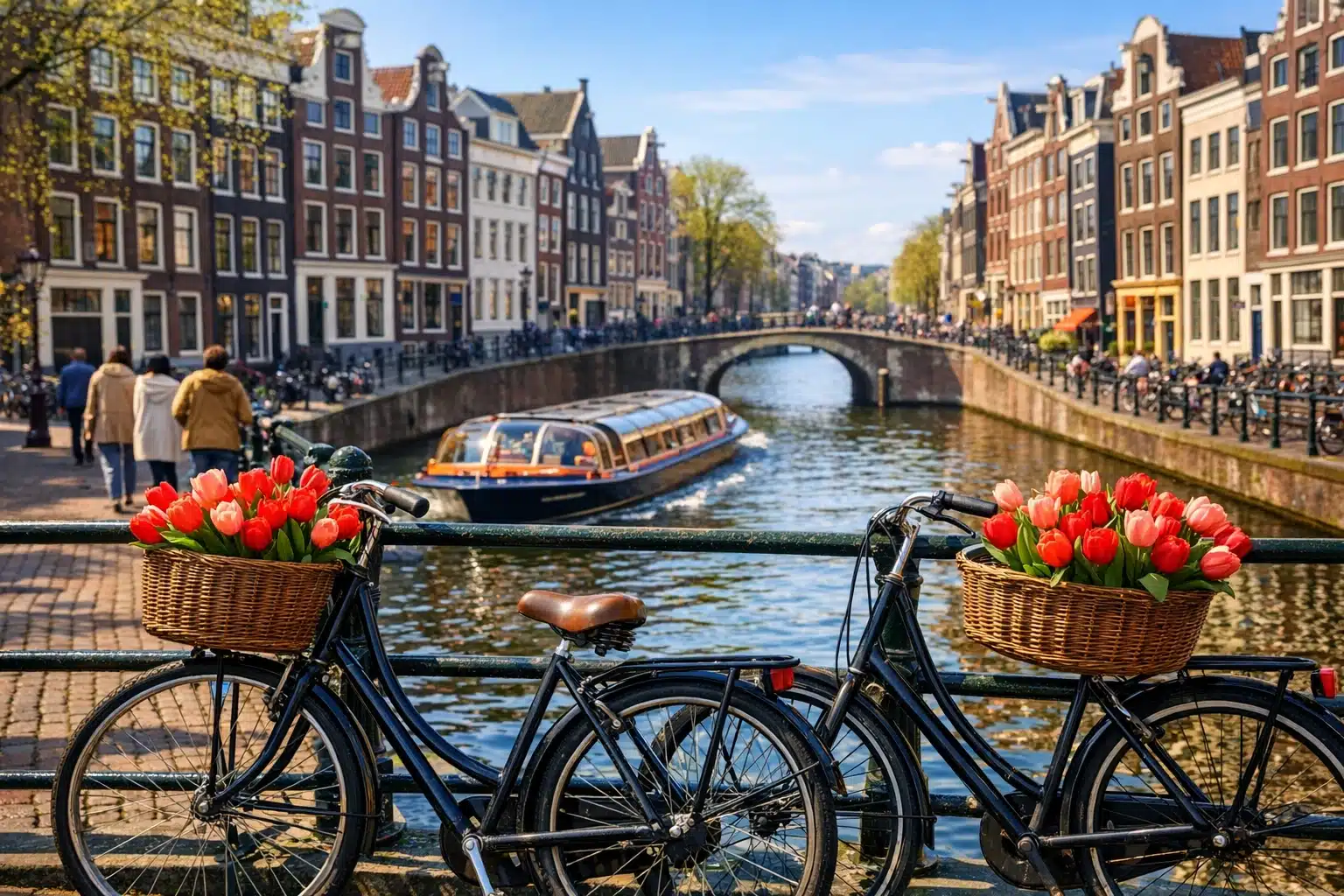
Once you arrive from the port transfer, the city can feel instantly cinematic. Narrow canal houses lean with quiet confidence. Cyclists slide past with the ease of people who have places to be and no reason to rush. Water catches the light in ribbons between brick streets and bridges. Even travellers with only a handful of hours can experience the atmosphere that makes Amsterdam so recognisable.
The challenge is choosing what not to do. The Rijksmuseum, the Van Gogh Museum, Anne Frank House, canal cruises, the Jordaan district, Dam Square, the flower market, and the Nine Streets all compete for attention. Trying to fit too much into one visit can turn a pleasant day into a brisk march between queues. If your time ashore is limited, grouping activities by area is usually smarter than crossing the city repeatedly.
One practical approach is to build the day around one anchor activity and then let the rest unfold nearby. For example, you might choose a canal cruise plus a walk through the central canals, or one major museum followed by lunch and browsing independent shops. Museum lovers should be aware that timed-entry attractions can sell out, so advance booking is often sensible. Travellers who prefer a lighter schedule may get more enjoyment from simply walking, taking photos, sitting for coffee, and soaking up the street life.
A realistic short-visit plan might include:
• arrival and transfer into the city
• a canal-side walk and early coffee
• one main attraction or a canal cruise
• lunch in a central neighbourhood
• time for shopping or a second shorter stop
• a careful return to the coach meeting point with time to spare
That final point is important. Amsterdam is easy to enjoy and easy to lose track of time in. Missing the return transfer is not a small inconvenience; on a ferry itinerary, it can seriously disrupt the whole trip. Leave a buffer. Check the meeting instructions. Keep your phone charged. Carry the paperwork you need.
Compared with a full weekend break, the mini-cruise version of Amsterdam is necessarily selective. You are seeing highlights, moods, and fragments rather than mastering the city. Yet there is real value in that. A short first visit can help you decide whether Amsterdam deserves a longer return. Many travellers come away with a list already forming in their heads: next time, more museums; next time, a slower canal district morning; next time, an extra night. In that sense, the mini cruise is not only a trip in itself. It can also be a very good first chapter.
4. Cost, Value, and Practical Planning Before You Book
Mini cruises are often attractive because the headline price can look competitive, especially when compared with a city break that requires flights, hotel nights, baggage fees, and transfers. Still, value depends less on the advertised fare alone and more on what is actually included. A low entry price may cover the crossing and a basic cabin, while meals, drinks, entertainment extras, parking, city transfers, and attraction tickets may add to the total. The smartest way to assess cost is to build the complete trip price before you commit.
For couples or friends travelling from Yorkshire, the Humber region, or nearby parts of northern England, departing from Hull can save both money and hassle. There is no airport hotel the night before, no long security line at dawn, and no scramble over cabin-bag dimensions. On the other hand, travellers coming from farther away may find that a flight to Amsterdam or a hotel-based city break offers more time in the city for a similar overall spend. The mini cruise is therefore not automatically the cheapest choice in every case; it is a different type of value proposition.
Its strongest selling point is bundled experience. You are paying for transport, accommodation, a night-at-sea atmosphere, and a day trip rolled into one. If you enjoy ferries, like the idea of overnight travel, or want a short escape without airport stress, that package can feel worthwhile even if it is not the mathematically cheapest option. If your top priority is maximum sightseeing time in Amsterdam, a flight-plus-hotel plan may compare better.
When budgeting, look at these common extras:
• cabin upgrades, especially from inside to outside cabins
• dinner and breakfast packages
• drinks, snacks, and café purchases on board
• coach transfers into Amsterdam, if not included
• museum or canal cruise tickets
• parking at or near the port
• travel insurance and flexible booking options
Practical preparation matters just as much as price. Passport validity, entry requirements, and travel documents should be checked well in advance. Pack for a moving schedule rather than a static hotel stay: comfortable shoes, layers for wind on deck, a small day bag for Amsterdam, and any motion-sickness remedies you might need. It also helps to remember that ferry travel is paced differently. Boarding takes time, disembarkation takes time, and port areas are operational spaces rather than scenic welcome halls. Patience is part of the deal.
One useful way to compare options is to ask a simple question: what are you buying? If the answer is “the fastest way to be in Amsterdam,” this may not be it. If the answer is “a short break where the journey is part of the fun,” then the mini cruise has a clearer advantage. Framed honestly, it can be very good value for the right traveller, especially when booked with realistic expectations and a thoughtful eye on the full cost rather than the first number shown in an advertisement.
5. Final Thoughts: Who This Mini Cruise Suits Best
The 2-night mini cruise from Hull to Amsterdam suits travellers who like the idea of travel as an experience in its own right. It works especially well for couples wanting a compact getaway, groups of friends looking for a sociable break, and first-time cruise-curious travellers who want to sample life on board without committing to a longer voyage. It can also appeal to people who live within reach of Hull and would rather start their holiday at a port than at an airport gate before sunrise.
It is particularly strong as a “taster” trip. You get an overnight sailing, your own cabin, meals and entertainment on board, a change of country, and time in one of Europe’s most popular cities. That is a lot to fit into a short schedule. For people who enjoy movement, variety, and a bit of atmosphere, the format can feel lively and rewarding. It has a pleasing rhythm: embark, settle in, sail, arrive, explore, return, and wake up back on the English coast with the trip still fresh in your mind.
At the same time, this is not the ideal break for everyone. Travellers who dislike rigid timetables may find the structure limiting. Those whose main goal is to spend long, unbroken hours in museums or neighbourhood cafés may feel the day ashore passes too quickly. Anyone prone to seasickness should plan carefully, and people expecting a luxury-cruise standard of space or entertainment may be comparing the experience to the wrong category. A North Sea mini cruise is simpler, shorter, and more functional than a full-scale cruise holiday.
For the right audience, though, that simplicity is part of the charm. There is no need to overcomplicate it. You board in Hull, sleep at sea, spend a day exploring Amsterdam, and come home with the pleasant feeling that you have gone farther than the calendar suggests. It is a manageable adventure, not a major expedition, and that is exactly why it fits so well into a busy life.
If you are considering booking, the best approach is straightforward:
• check whether your package includes the Amsterdam transfer
• compare the full cost, not just the base fare
• pre-plan one or two priority sights in the city
• choose a cabin and meal setup that suits your budget
• treat the crossing as part of the holiday, not merely the route to it
For readers who want a short European break with personality, the Hull to Amsterdam mini cruise can be a smart choice. It offers more texture than a simple flight, more novelty than a standard hotel weekend, and enough structure to make a two-night window feel usefully filled. Go expecting a compact, well-paced escape rather than an expansive city stay, and you are far more likely to enjoy exactly what this trip does best.