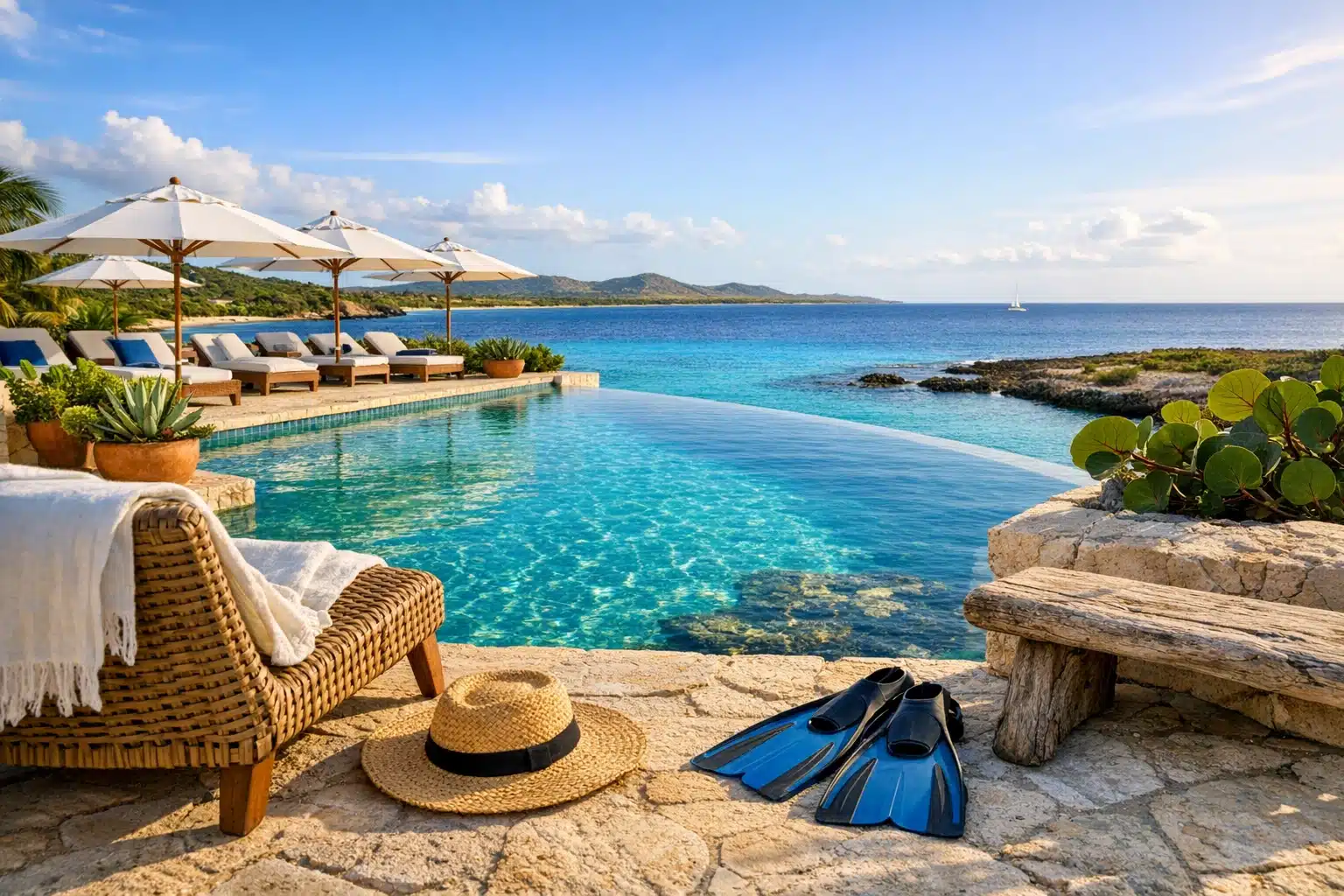
 Artificially generated image
 7 Safest Islands in the Caribbean
Introduction and Outline: How to Think About Safety in the Caribbean
The Caribbean sells a dream of bright water and easy afternoons, but smart travelers know that peace of mind matters as much as a pretty beach. Choosing an island with dependable infrastructure, stable local institutions, reliable transport, and a lower level of serious crime can change the entire shape of a trip. This guide looks at seven islands often viewed as safer bets for families, couples, solo travelers, and first-time visitors. It also explains why safe never means carefree, because context, timing, and good judgment still matter.
Safety in the Caribbean is never one single number. A destination can have a calm resort district, good health services, and a strong tourism economy, yet still require caution in isolated areas or late at night. That is why this article looks at several factors together: general reputation for lower violent crime, quality of roads and public services, ease of communication, hurricane exposure, airport access, and the everyday rhythm of visitor life. Travel advisories from major governments can help, but so can practical details on the ground, such as whether taxis are regulated, whether streets are well lit, and whether there are established tourist zones where help is easy to find.
Here is the outline for the islands covered in this guide:
- Aruba, often praised for organized tourism, strong visitor infrastructure, and its position outside the main hurricane belt
- Curaçao, a colorful Dutch Caribbean option with a more urban feel and generally solid amenities
- Barbados, an English-speaking favorite known for convenience and a mature tourism sector
- Grand Cayman, polished, well serviced, and especially appealing to travelers who value order and ease
- Anguilla, small, relaxed, and low key, with a reputation for peaceful beach-focused travel
- St. Barts, upscale and compact, with strong hospitality standards and a very controlled visitor environment
- Bonaire, calm, practical, and especially attractive for divers and travelers who like a quieter pace
This is not an absolute ranking carved in stone. Conditions can change with season, economic shifts, local events, and weather disruptions. Still, these seven islands appear again and again in conversations about safer Caribbean travel because they combine lower stress, better visitor support, and a more predictable experience than many alternatives. Think of this guide as a map, not a guarantee. The sea may sparkle like spilled glass under the sun, but even paradise rewards travelers who pay attention.
Aruba and Curaçao: Dutch Caribbean Favorites for Easy, Structured Travel
Aruba and Curaçao often rise to the top when travelers ask where they can feel relatively comfortable moving around without the constant edge of uncertainty. Both belong to the Dutch Caribbean sphere, both benefit from established tourism industries, and both sit outside the main hurricane belt, which matters more than many first-time visitors realize. Weather risk is not the same as crime risk, but disruptions from major storms can affect transportation, services, and medical access. In that sense, Aruba and Curaçao gain an important practical advantage before you even unpack your suitcase.
Aruba is usually the easier of the two for beginners. Its tourism model is highly developed, the main resort areas are compact, English is widely spoken, and many travelers describe the island as orderly and intuitive. Palm Beach and Eagle Beach are built for comfort, with major hotels, active beach zones, recognizable taxi service, and plenty of daylight foot traffic. That does not mean you should leave your phone unattended or wander into empty areas after midnight, but Aruba tends to feel manageable. Families often like it because logistics are simple. Couples like it because they can mix beach time with dining and nightlife without turning every evening into a planning exercise.
Curaçao is just as appealing in a different register. It has more of a city pulse, especially around Willemstad, and that gives it cultural depth along with a slightly higher need for situational awareness. The famous waterfront architecture, museums, cafes, and neighborhoods make it feel lived in rather than staged. Independent travelers often enjoy that richness, but Curaçao rewards people who research where they are staying and how they will get around. Driving is common, and choosing accommodations in well-reviewed areas can make a noticeable difference to comfort.
- Choose Aruba if you want streamlined resorts, broad appeal, and a straightforward first Caribbean trip.
- Choose Curaçao if you want color, history, diving, and a more local urban atmosphere.
- Choose either one if hurricane season worries you, since both sit in a lower-risk weather zone than many islands farther north and east.
In a direct comparison, Aruba feels smoother, while Curaçao feels more layered. Aruba suits travelers who want fewer variables. Curaçao suits travelers who enjoy exploration but still want a destination with solid infrastructure. Neither island is risk free, and petty theft remains possible on both. Yet when people talk about Caribbean destinations where they can blend beach time with a reasonable sense of order, these two islands usually enter the conversation early and stay there.
Barbados and Grand Cayman: Strong Services, Familiar Systems, and High Comfort Levels
Barbados and Grand Cayman are often recommended to travelers who value ease, communication, and a polished tourism environment. They are quite different in personality, yet both stand out because they make the practical side of travel feel less complicated. Barbados has a long-established visitor economy, broad flight connections, and the advantage of English as the primary language, which removes one barrier immediately for many travelers from North America and the United Kingdom. Grand Cayman, meanwhile, often attracts visitors who want a highly organized destination with quality roads, upscale hotels, and a reputation for efficient services.
Barbados works well for a wide range of visitors. It has lively areas, quiet areas, family beaches, surfing stretches, luxury resorts, and smaller guesthouses, so travelers can choose the level of activity that suits them. The island feels social and accessible rather than sealed off. That can be a strength because it allows visitors to experience more than a hotel compound. Areas on the west and south coasts are especially popular for their balance of beaches, dining, and accommodation choices. Public transport exists, taxis are common, and the island generally feels legible to outsiders. As always, common sense matters. Nightlife districts require the same awareness you would use anywhere, and valuables should not be left visible in parked cars or unattended on the sand.
Grand Cayman is a different kind of safe-feeling destination. It is more expensive, more curated, and often more polished. Seven Mile Beach is famous not only because it is beautiful, but because it sits inside a visitor ecosystem that is designed for convenience. Hotels, restaurants, water sports operators, and transport options are well developed, and many travelers appreciate the island’s dependable rhythm. For solo travelers or older visitors who prioritize comfort over improvisation, that predictability can be a major advantage. If Barbados feels like a confident host inviting you into an island society, Grand Cayman can feel like a smooth-running resort city with Caribbean light.
- Barbados usually offers more variety in atmosphere and often a wider spread of mid-range lodging.
- Grand Cayman often delivers a more premium experience, though costs for hotels and dining are typically higher.
- Both islands are better suited to travelers who want clear systems, easy communication, and reliable services.
One more point matters: comfort is not only about crime. It is also about healthcare access, road quality, and how easy it is to fix a problem if one appears. On that broader measure, both Barbados and Grand Cayman do well. If you want a Caribbean holiday that feels less like navigating the unknown and more like settling into a well-run base by the sea, these two deserve serious attention.
Anguilla and St. Barts: Small-Scale Luxury with a Calm, Controlled Atmosphere
Anguilla and St. Barts are often described as peaceful for a simple reason: both islands operate on a smaller, more controlled scale than many larger Caribbean destinations. They are not places built around giant party corridors or sprawling urban centers. Instead, they lean toward boutique hotels, villa stays, refined dining, and beach days that unfold at a gentler tempo. That smaller footprint can create a real sense of ease. You are less likely to feel swallowed by traffic, confusion, or large crowds, and more likely to feel as if the island is quietly holding together around you.
Anguilla is one of the region’s classic low-drama escapes. Its beaches are the main event, the pace is relaxed, and the social temperature stays mild. Visitors who choose Anguilla are often looking for rest rather than nonstop entertainment, and that travel style matters. Destinations with less aggressive nightlife and fewer dense nightlife districts can feel more comfortable, especially for couples, honeymooners, and older travelers. Anguilla does not ask much from the visitor beyond planning transport and budgeting properly. It is not the cheapest island, but many people find the calm worth the premium.
St. Barts, or Saint Barthélemy, offers a different version of that same appeal. It is chic, French-influenced, and visibly upscale, with elegant boutiques, orderly harbors, and a hospitality culture that prizes discretion and service. Gustavia, the capital, is compact and polished, and the island’s small size helps visitors get their bearings quickly. However, there are practical details to remember. Roads can be narrow and hilly, and scooters or small rental vehicles require caution. St. Barts often feels safe because it is well maintained and carefully managed, not because risks vanish. A traveler who drives too fast on a winding road can create a problem even in a destination that otherwise feels serene.
- Anguilla suits travelers who want barefoot luxury, quiet beaches, and a simple, restorative rhythm.
- St. Barts suits travelers who enjoy high-end dining, stylish surroundings, and a compact island with strong service standards.
- Both islands are best for visitors whose budgets can handle higher room rates, meals, and transfers.
Compared with bigger islands, Anguilla and St. Barts offer fewer moving parts. That is their secret. Less sprawl, less chaos, and fewer friction points can make a destination feel safer even before you measure anything formally. For travelers who want their Caribbean trip to feel composed, not improvised, these two islands are often among the strongest contenders.
Bonaire and How to Choose the Right Safe Island for Your Travel Style
Bonaire is sometimes the quiet achiever on lists like this. It does not always receive the same mainstream attention as Aruba or Barbados, yet seasoned travelers often mention it with real affection. Part of that comes from atmosphere. Bonaire is low key, practical, and strongly shaped by diving, snorkeling, and outdoor life rather than large-scale nightlife. The island also shares a major advantage with Aruba and Curaçao: it sits outside the main hurricane belt, which can make travel planning less stressful during storm season. If you are the kind of traveler who values calm mornings, clear water, and a schedule built around reefs instead of bar crawls, Bonaire has a compelling logic.
Safety on Bonaire is tied closely to its pace. The island is small enough to feel manageable, tourism is established without being overwhelming, and many visitors spend their time around marine activities, shore dives, rental trucks, and casual waterfront dining. That creates a different rhythm from destinations where crowded entertainment zones dominate after dark. Bonaire still requires the same sensible habits you would use anywhere. Lock vehicles, avoid leaving gear visible, and do not assume every beach parking area is risk free. Yet many travelers find the island reassuring because it feels steady, readable, and unhurried.
When comparing Bonaire with the other islands in this guide, the distinction is useful:
- Choose Bonaire if diving, snorkeling, and a peaceful atmosphere matter more than nightlife or shopping.
- Choose Aruba for the smoothest first-time resort experience.
- Choose Curaçao for culture and a more urban, exploratory feel.
- Choose Barbados for variety and an easy English-speaking environment.
- Choose Grand Cayman for premium convenience and highly developed services.
- Choose Anguilla or St. Barts for a smaller, upscale escape with a calmer social scene.
Whichever island you prefer, a few habits improve safety everywhere. Book transport through reputable providers, read recent accommodation reviews, keep digital copies of documents, respect local advice about neighborhoods and beach conditions, and do not confuse a beautiful setting with automatic security. Paradise is still a real place with roads, weather, people, and occasional surprises.
For families, Aruba, Barbados, and Grand Cayman are often the easiest starting points. For couples, Anguilla, St. Barts, and Bonaire offer very different but equally appealing moods. For solo travelers, Aruba, Barbados, and Curaçao can provide a useful mix of comfort and activity. The best safe island is rarely the flashiest one. It is the one that fits your style, budget, and habits well enough that the trip feels open, light, and genuinely enjoyable.
Conclusion: A Safer Caribbean Trip Starts with the Right Match
If your goal is a Caribbean holiday with fewer unknowns, these seven islands are strong places to begin. Aruba, Curaçao, Barbados, Grand Cayman, Anguilla, St. Barts, and Bonaire each offer their own version of reassurance, whether that comes from better infrastructure, smaller scale, calmer tourism patterns, or lower storm exposure. None of them removes the need for awareness, but all can make travel feel more relaxed when chosen for the right reasons. Pick the island that matches how you move through the world, and the trip is far more likely to feel not only beautiful, but comfortable from arrival to departure.