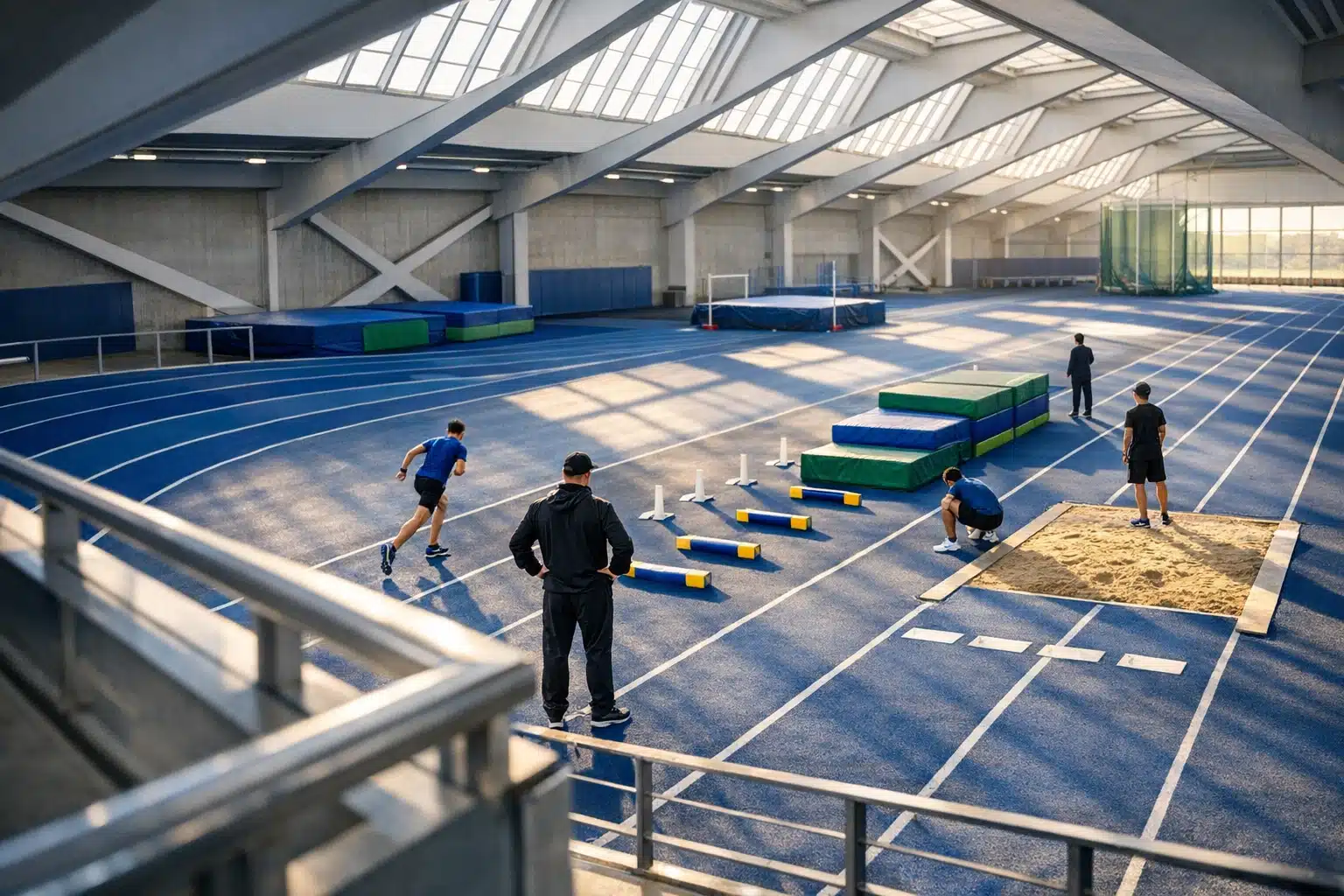
 Artificially generated image
 Guide to World Athletics Coaching Courses
Athletics looks simple from the stands, yet good coaching is a careful blend of science, observation, planning, and human connection. A World Athletics coaching course matters because it helps coaches move beyond instinct and build sessions that are safer, more purposeful, and better matched to age, ability, and event demands. Whether someone works with school children or developing club athletes, the course framework offers a common language that strengthens standards across the sport.
Outline
- What World Athletics coaching courses are and why they matter
- How the pathway is structured, from entry level to advanced learning
- The key subjects covered, from technique teaching to athlete development
- Assessment, delivery formats, costs, and practical considerations
- Who benefits most and how to turn the qualification into long-term coaching growth
What a World Athletics Coaching Course Is and Why It Matters
A World Athletics coaching course is not simply a badge for a tracksuit or a line on a resume. It is part of a broader coaching education system connected to the international governing body for athletics, known today as World Athletics, formerly the IAAF. In practice, many of these courses are delivered through national member federations, regional associations, or approved education partners. That structure matters because it gives the learning a shared foundation while still allowing for local realities such as language, facilities, climate, competition calendars, and participant age groups.
The biggest value of this type of course is consistency. Athletics includes sprints, hurdles, middle distance, long distance, jumps, throws, race walking, relays, and combined events. Without a clear educational framework, coaches can rely too heavily on personal experience, internet clips, or outdated drills. A stopwatch can record a result, but it cannot explain why an athlete plateaus, breaks down technically, or loses confidence. A formal course helps fill that gap by connecting practice with coaching principles, athlete development stages, and safety standards.
Compared with general fitness qualifications, athletics-specific education is more targeted. A personal training certificate may cover exercise instruction, anatomy, and broad programming, but it usually does not go deep into block starts, takeoff mechanics, relay exchanges, or throwing progressions. World Athletics-aligned learning is designed around the technical and developmental needs of track and field. It also tends to stress observation and correction, which are central to coaching in an event-based sport where small details can change performance significantly.
Its importance is also global. World Athletics oversees a sport practiced in more than 200 member federations, and coaching education helps create a common reference point across that vast network. A youth coach in Nairobi, a club coach in Manchester, and a development coach in Kingston may work in very different settings, yet they still benefit from shared principles such as progression, athlete welfare, and event-appropriate teaching.
At a practical level, these courses help coaches do several things better:
- Plan sessions with clear goals instead of random drills
- Teach technique through progressions rather than guesswork
- Match training to age and readiness, not just ambition
- Reduce avoidable injury risk through smarter load management
- Communicate more effectively with athletes, parents, and clubs
That is why the course matters. It does not magically create great coaches overnight, but it gives them a more reliable map. In a sport where margins are fine and development can take years, a good map is worth far more than loud confidence.
Understanding the Course Pathway, Levels, and Progression
One of the first questions prospective coaches ask is simple: where do I start? The answer depends on the country, the national federation, and the coach’s background. World Athletics provides an education framework, but the exact naming, timetable, and prerequisites can vary by region. Even so, most pathways follow a familiar shape. Beginners usually enter at an introductory or foundational level, then move toward event-group specialization, advanced planning, and higher-performance coaching as they gain experience.
For newcomers, the opening stage is often designed for volunteer coaches, school sport leaders, assistant coaches, and former athletes moving into instruction. These courses focus on the essentials: safe session management, basic technical teaching, athlete engagement, and the principles of long-term development. The emphasis is not on producing elite coaches in a weekend. It is on helping participants understand how to teach well, organize safely, and recognize what athletes need at different stages.
After that, the pathway usually becomes more specific. A coach may progress into event-group areas such as:
- sprints and hurdles
- endurance and middle-distance events
- jumps
- throws
- combined events or youth development modules
This progression matters because athletics is wonderfully broad. Coaching a young high jumper requires a different eye from coaching a 400-meter runner or a junior javelin thrower. At higher levels, courses often expect the coach to analyze movement more precisely, plan across a season, monitor adaptation, and solve performance problems with evidence rather than routine.
There is also a clear contrast between informal learning and a staged pathway. Informal learning can be rich and useful, especially through mentorship, observing experienced coaches, or reflecting on one’s own sporting past. Yet it can also be uneven. A structured pathway provides checkpoints. It asks: Can the coach teach safely? Can the coach explain technique? Can the coach design progression? Can the coach adapt when an athlete improves, struggles, or changes event focus?
Entry requirements vary, but candidates are often asked to meet practical conditions such as minimum age, federation registration, safeguarding awareness, or first-aid familiarity. Some advanced stages may require proof of previous certification or active coaching hours. Increasingly, blended formats are common too, with theory delivered online and practical work completed in person.
For the learner, the path is best viewed as a ladder, not an elevator. Each step builds on the last. A coach who skips fundamentals may still sound impressive, but athletes usually notice the difference when session quality, feedback, and planning are put to the test. Solid progression produces coaches who can grow with their athletes rather than chase quick status.
What You Learn: Technical Teaching, Planning, Athlete Growth, and Modern Coaching Skills
The most useful part of a World Athletics coaching course is often the curriculum itself. Good programs do not only tell coaches what to do; they explain why certain methods work, when they fit, and how they should change across age groups and event demands. This makes the course valuable for both complete beginners and coaches who already spend several evenings a week on the track but want to sharpen what they see and how they respond.
A core theme is athlete development. Rather than treating all athletes as smaller or slower versions of elites, modern coach education usually emphasizes progression by stage. A child in a school athletics setting needs enjoyment, movement literacy, coordination, and confidence. A teenage athlete may need more technical structure and training habits. An advanced performer may need detailed periodization, competition planning, and event-specific refinement. The course helps coaches understand those differences so they do not overload one athlete or under-challenge another.
Technical teaching is another central pillar. Athletics rewards precision, yet precision is rarely taught through long lectures alone. Coaches learn to break down movements into teachable parts. A sprint coach, for example, may focus on posture, front-side mechanics, acceleration angles, rhythm, and relaxation. A jumps coach might teach approach consistency, penultimate step control, takeoff timing, and safe landing habits. A throws coach must think about sequencing, balance, force production, and age-appropriate implements. Even endurance coaching requires more than mileage; it involves pacing judgment, running economy, intensity control, and recovery awareness.
Many courses also cover planning and organization, including:
- session objectives and structure
- warm-up design and movement preparation
- load management and recovery
- season planning and competition timing
- observation, feedback, and evaluation
Importantly, feedback is not presented as endless correction. Good coaches learn when to speak, when to demonstrate, and when to let the athlete feel the change. Sometimes a single cue works better than five technical comments. Sometimes a drill clears confusion faster than a speech. This teaching craft is one of the reasons a formal course can be so useful: it turns knowledge into coachable action.
Modern programs often include areas that earlier generations treated too lightly. Safeguarding, inclusion, and athlete welfare now sit much closer to the center of coach education. So do anti-doping awareness, ethics, and communication. A coach may know biomechanics well and still fail if athletes feel unsafe, misunderstood, or poorly managed. The strongest courses recognize that performance and welfare are not competing ideas. In the long run, they support each other.
There is also room for science, but usually at an applied level. Coaches may study basics of anatomy, energy systems, training adaptation, and injury prevention. The goal is not to turn every participant into a laboratory specialist. It is to help them make better real-world decisions on the field, at the runway, beside the circle, or next to lane one when the session begins to wobble and practical judgment matters most.
How the Courses Are Delivered, Assessed, and Chosen in Real Life
Once a coach understands the purpose and content of the qualification, the next practical issue is delivery. World Athletics coaching education is often offered through national federations, and the exact format can differ significantly from one country to another. Some programs run across a few intensive weekends. Others are spread over several weeks with assignments between contact days. A growing number combine online study with in-person practical sessions, which can be especially useful for coaches balancing work, family life, and club commitments.
There are advantages and trade-offs in each model. In-person delivery tends to be stronger for live demonstration, peer discussion, practical correction, and event-specific observation. If a tutor can watch a candidate teach a relay exchange or set up a high jump session, the feedback is often sharper and more immediate. Online elements, by contrast, are convenient for theory, background reading, quizzes, and reflective tasks. They save travel time and can widen access for coaches in remote areas, though they may feel less dynamic if not designed well.
Assessment usually aims to test both knowledge and application. Depending on the course, a candidate may be asked to complete some combination of:
- written or online knowledge checks
- practical coaching demonstrations
- session plans or season plans
- observed teaching with feedback from tutors
- reflective logs based on coaching experience
This is an important distinction. A strong course does not only test whether you can recall theory. It also asks whether you can use that theory under ordinary coaching conditions. Can you explain a drill clearly? Can you adapt when a group is mixed in age or ability? Can you maintain safety and purpose when the weather turns, equipment is limited, or an athlete does not respond to the first cue? These are everyday coaching questions, and practical assessment tries to capture them.
Cost and access vary widely. In some systems, federations subsidize entry-level education to help grow participation. Elsewhere, candidates pay a more substantial fee, especially for advanced modules or residential workshops. The cheapest option is not always the best, but price should be weighed against tutor quality, course recognition, practical relevance, and follow-up support. A short course with weak mentoring may cost less today and deliver less for years.
Choosing well means asking a few grounded questions. Is the course recognized by your federation or club system? Does it suit the athlete group you currently coach? Will it provide usable feedback rather than just a certificate? Is there a progression route after completion? When those answers are clear, the course becomes more than an event on a calendar. It becomes part of an actual coaching plan.
Who Should Take One and How to Turn the Qualification into Better Coaching
A World Athletics coaching course is especially valuable for people standing at a familiar crossroads in sport. Perhaps they are former athletes who miss the rhythm of training and want to give back. Perhaps they are parents or volunteers helping at a local club and realizing that goodwill alone is not enough. Perhaps they are PE teachers looking for stronger event-specific understanding. Or perhaps they are already coaching and have reached the point where instinct needs support from structure. For all of these groups, the course offers something practical: a clearer way to think, plan, teach, and improve.
What it does not offer is instant authority. A qualification can increase credibility, but the real impact comes afterward. Coaches who gain the most from the course usually keep learning once the formal sessions end. They observe better coaches, reflect on their own sessions, compare athlete responses over time, and refine what they do. In that sense, the certificate is less like a finish line and more like a starter’s pistol.
The benefits can show up in several settings. In clubs, trained coaches often deliver more organized sessions and communicate more clearly with athletes and parents. In schools, they can build programs that are safer and more inclusive, especially for children who are not yet confident in sport. In performance settings, further education helps coaches support athletes with stronger planning, better technical problem-solving, and more measured progression. It may also open doors to workshops, federation networks, and mentoring relationships that would otherwise be harder to access.
For coaches thinking about long-term growth, a sensible approach is to pair the qualification with a simple action plan:
- apply one or two new ideas immediately instead of changing everything at once
- keep brief notes after sessions to track what worked and what did not
- seek feedback from tutors, peers, or experienced coaches
- continue with event-specific study as athlete needs become clearer
- treat athlete welfare and communication as core coaching skills, not extras
For the target audience, the message is straightforward. If you want to coach athletics with more confidence, better structure, and a stronger understanding of how athletes develop, this kind of course is a smart investment of time. It will not replace experience, but it will improve the quality of that experience. For volunteers, teachers, developing club coaches, and former competitors alike, the best reason to take the course is not prestige. It is the chance to serve athletes more effectively, from first session to long-term progress, with fewer guesses and far better judgment.