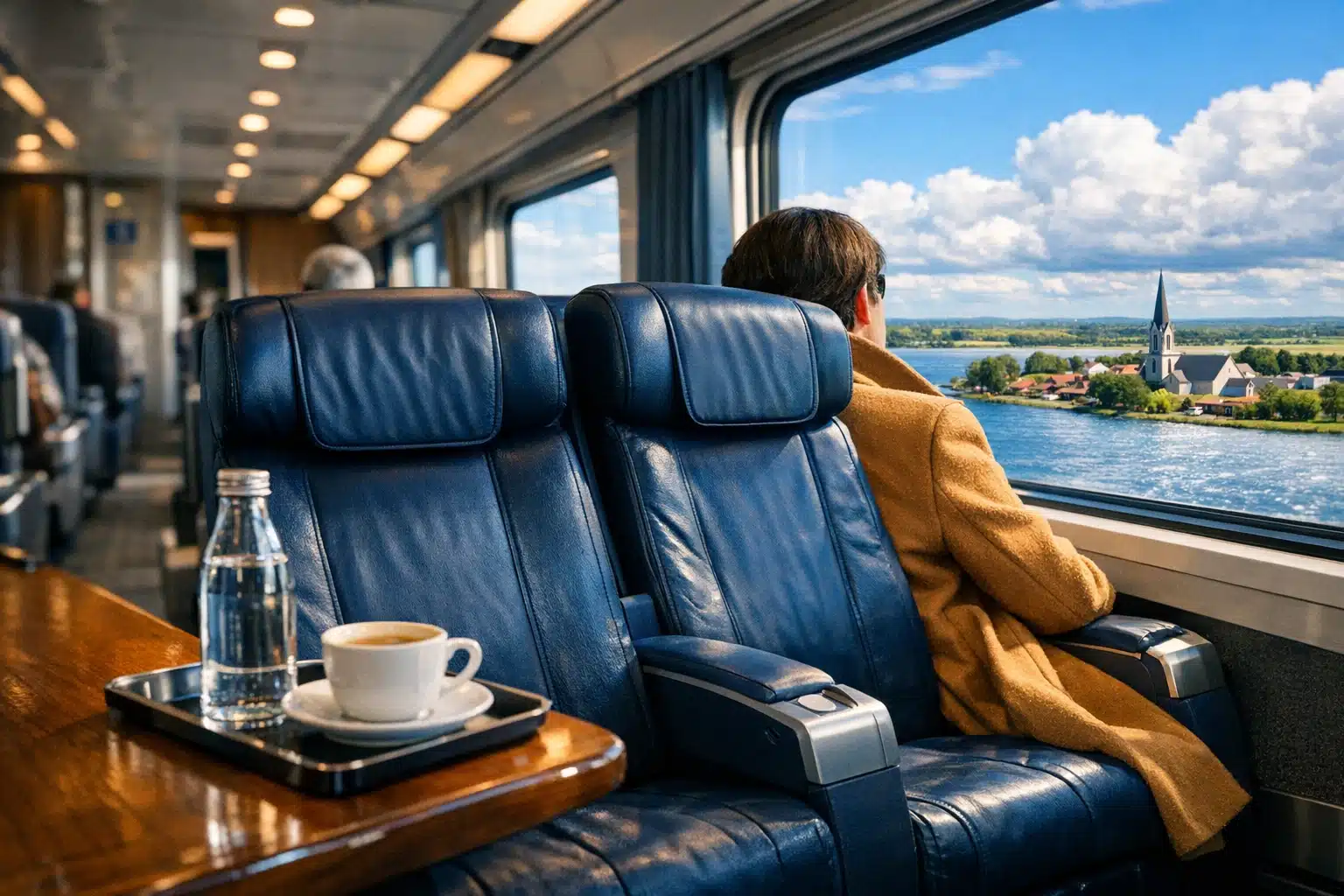
 Artificially generated image
 4-Day Toronto to Quebec City Rail Package
Overview and Article Outline: Why This Rail Journey Still Matters
A 4-day rail package from Toronto to Quebec City invites travelers to see eastern Canada at a human pace, where towers slowly yield to shoreline, farmland, and old stone streets. Its relevance is easy to understand: many people want more than a fast transfer, preferring a trip that blends comfort, culture, and simple logistics. This route meets that demand by turning the journey itself into part of the holiday rather than merely the space between departures and arrivals.
Before getting into the details, it helps to look at the structure of a typical package. Most versions use scheduled passenger rail along the busy Toronto to Montreal to Quebec City corridor, then combine transportation with centrally located hotels and free time for self-guided sightseeing. Some packages add breakfast, city tours, or baggage handling, while others keep things flexible and let travelers choose their own pace. In practical terms, that balance is the appeal: enough planning to remove stress, enough independence to avoid feeling boxed in.
- Day 1: Depart Toronto and travel to Montreal, with time for an evening walk and dinner.
- Day 2: Explore Montreal, then continue by rail to Quebec City.
- Day 3: Spend a fuller day in Quebec City, focusing on Old Quebec and nearby landmarks.
- Day 4: Enjoy a final morning before checkout, or extend the trip on your own.
Rail packages on this route remain relevant because they answer several common travel frustrations at once. Flying can be fast in the air but slower door to door once airport transfers, security, and early arrival requirements are counted. Driving offers flexibility, yet it also brings fuel costs, parking fees, traffic around major urban centers, and fatigue. The train sits in the middle ground: it is slower than a direct flight but more relaxed than both alternatives, especially for travelers who want to read, work, or simply stare out at the landscape without gripping a steering wheel.
Another reason the journey matters is cultural density. In just four days, travelers can move between Canada’s largest city, its French-speaking metropolis, and one of North America’s most historic urban centers. That is a remarkable concentration of experiences for a short break. Toronto offers modern scale, Montreal brings culinary depth and bilingual energy, and Quebec City delivers atmosphere with its fortifications, steep lanes, and stone facades. Few short rail vacations connect such distinct urban personalities so cleanly. For first-time visitors to eastern Canada, this package works as both an introduction and a sampler, giving enough variety to feel substantial without becoming exhausting.
How a Typical 4-Day Itinerary Unfolds, Day by Day
The exact schedule varies by operator, but the most common version begins in downtown Toronto, usually from Union Station. That starting point matters more than it may seem. Rather than beginning a vacation with highway traffic or an airport commute, travelers step into a major rail hub with direct links to transit, taxis, and nearby hotels. The first leg to Montreal generally takes about five hours, depending on the chosen departure. Along the way, the view alternates between industrial edges, waterfront glimpses, open fields, and the quietly handsome towns of the corridor. It is not a mountain route, but it has its own rhythm: broad skies, church spires in the distance, and the subtle pleasure of seeing geography change gradually rather than all at once.
Arriving in Montreal on Day 1 usually leaves enough time for a light evening program. That may mean walking through Old Montreal, having dinner in the Plateau or downtown, or simply stretching your legs after the journey. Many packages reserve this first evening as unstructured time, which is often a smart design choice. Travelers arrive with different energy levels, and a rigid tour schedule can feel like homework. Montreal rewards improvisation anyway. One traveler may choose a riverside walk, another a bistro meal, another a quick visit to Notre-Dame Basilica if hours allow.
Day 2 is often divided between Montreal sightseeing and the onward train to Quebec City. This is where a package can be especially useful. With hotel and rail timing coordinated, there is less guesswork about checkout, luggage, and station arrival. A few common Day 2 options include:
- A short guided city overview in the morning
- Free time in Old Montreal or around Mount Royal
- An afternoon departure to Quebec City, usually around three to three and a half hours by rail
By the time the train reaches Quebec City, the mood changes. Montreal feels kinetic and layered; Quebec City feels more enclosed, textured, and theatrical in the best sense. Evening arrival often leads straight into the most memorable part of the package: entering Old Quebec, where narrow streets, lit windows, and elevated views over the St. Lawrence can make even a short stroll feel cinematic.
Day 3 is the strongest sightseeing day. Travelers can focus on Place Royale, Terrasse Dufferin, the area around Château Frontenac, the Citadel, or a ferry view from Lévis if time permits. Day 4 is usually shorter, meant for a final breakfast, a museum stop, or one last walk before checkout. That last morning often becomes the part people remember most clearly, because the pressure is gone and the city finally feels familiar.
What the Package Usually Includes and How the Value Compares
When people hear the phrase rail package, they sometimes assume it is either a luxury splurge or a bargain-basement bundle. In reality, most offerings fall somewhere in the middle. A standard 4-day Toronto to Quebec City arrangement often includes one-way rail transportation, three nights of accommodation, and a planned sequence of hotel stays that lines up with train times. Some providers include breakfast, station transfers, or sightseeing passes, while others leave meals and local transportation to the traveler. That difference matters, because two packages with similar headline prices can deliver very different real-world value.
For independent travelers building the same trip on their own, costs usually break down into three major categories: rail tickets, hotels, and local spending. Depending on season, booking window, and room type, a self-arranged mid-range version may land roughly in the CAD 900 to CAD 1,400 per person range when two people share a room. Higher-end plans with upgraded rail seating and premium properties can rise well beyond that. Packaged versions may cost more on paper, but that extra amount sometimes buys better central hotel locations, smoother timing, and reduced planning effort. If a company has contract rates with hotels or rail providers, the numbers can occasionally come out close to what a traveler would pay independently.
Comparisons with other modes of travel are equally important. Consider the three most obvious alternatives:
- Flying: faster in pure travel time, but airports add check-in rules, security lines, and transfers to and from city centers.
- Driving: flexible and useful for detours, yet the Toronto to Quebec City route is roughly 800 kilometers and can take eight to nine hours or more without meaningful sightseeing stops.
- Rail: slower than air, faster on nerves than a long highway drive, and easier for travelers who dislike navigating large cities.
There is also the hidden-value question. A train ticket allows passengers to move around, use the washroom freely, read without turbulence restrictions, and arrive in city centers rather than on the outskirts. That is hard to price, but frequent travelers know it changes the texture of a trip. Instead of losing half a day to airport routines or arriving too tired to enjoy the evening, rail passengers often step off ready for dinner and a walk.
The best value usually comes from booking in shoulder seasons such as late spring or early autumn, when hotel rates are not at their peak and cities remain lively. Weekend departures may cost more than midweek travel, and holiday periods can raise prices noticeably. For travelers who care less about chasing the lowest possible fare and more about getting a clean, coordinated short escape, a well-constructed package can be a sensible purchase rather than an indulgence.
Onboard Experience, Scenery, Seasons, and Practical Planning Tips
The onboard experience is one of the main reasons to choose this route. In the Quebec City to Windsor corridor, trains are designed for practical intercity travel rather than sightseeing glamour, so expectations should be realistic. This is not a glass-domed wilderness expedition. Still, there is a specific charm in settling into a wide seat, placing a bag overhead, and watching the day slide past through the window while someone else handles the movement. That charm becomes even more noticeable if your recent trips have involved packed airports or long drives through heavy traffic.
Travelers can usually expect reserved seating, washrooms, power access on many trains, and space to stand or walk during the trip. Wi-Fi may be available, though reliability can vary, so it is wise to download maps, entertainment, and booking confirmations before boarding. Food service also differs by train and class of service. Some departures offer a café car or at-seat options, while others make it smarter to carry snacks and a refillable water bottle. Practical preparation tends to improve rail journeys more than people realize.
The scenery on this route is subtle rather than dramatic, but subtle does not mean dull. The pleasure comes from accumulation: stretches of Lake Ontario, old industrial districts giving way to calmer land, rows of houses in smaller communities, church towers, farm fields, rivers, bridges, and eventually the approach into French-speaking urban landscapes. It feels like reading a novel with shifting chapters rather than flipping channels. For travelers who enjoy noticing regional detail, the route is rewarding.
Seasonal timing changes the mood of the package considerably:
- Spring brings milder temperatures, fewer peak-season crowds, and fresh energy in city parks.
- Summer offers long daylight hours and festival season, especially in Montreal and Quebec City, but prices can be higher.
- Autumn often gives the trip its richest visual texture, with cooler air and attractive foliage in parts of the corridor.
- Winter adds atmosphere in Quebec City, though snow, early darkness, and heavier coats make planning more important.
A few practical tips can make the trip smoother. Arrive at stations early enough to orient yourself without rushing. Keep one small day bag with valuables, medication, chargers, and documents rather than burying essentials in larger luggage. Choose hotels near the station or in walkable central districts when possible. In Quebec City especially, remember that charming streets may also be steep streets, so good footwear matters. And if you hope to dine at popular restaurants in either Montreal or the old town, reserve ahead. The package handles the broad strokes, but the small decisions still shape the quality of the experience.
Who This Trip Suits Best and Final Thoughts for Short-Break Travelers
This kind of package is especially well suited to travelers who value movement without chaos. First-time visitors to eastern Canada often benefit most, because the route connects three very different urban experiences in one compact plan. Couples tend to enjoy it for obvious reasons: rail travel softens the transition between destinations, and both Montreal and Quebec City reward strolling, dining, and unhurried evenings. Solo travelers may also find it appealing because the logistics are straightforward and the cities themselves are easy to enjoy independently. Older travelers and anyone uneasy about winter driving frequently appreciate the comfort of staying off the highway while still reaching central neighborhoods.
That said, this is not the ideal trip for everyone. Travelers looking for wild landscapes, remote nature, or major outdoor adventure may find the corridor too urban. Those who want to maximize attractions at a rapid pace might prefer flying directly and spending more time in one place. Families with very young children can still enjoy the train, but the success of the trip will depend on pacing, hotel choice, and realistic expectations about museum time versus downtime. In other words, the package works best when travelers want atmosphere, food, architecture, and convenience more than checklist tourism.
The strongest argument in favor of the Toronto to Quebec City rail package is not simply that it is easy. Plenty of trips are easy. The stronger point is that it organizes a short holiday around continuity. You board in one major city, pass through another, and finish in a destination that feels unmistakably different in language, texture, and history. There is no need to pretend it is the fastest option, because speed is not the real product. The real product is coherence: downtown to downtown travel, manageable planning, and enough free time to let each place register properly.
For the target traveler, that combination has real value. If you want four days that feel fuller than a standard city break but calmer than a rushed multi-flight itinerary, this route deserves serious attention. It offers a measured introduction to eastern Canada, lets you sample two of the country’s most character-rich cities beyond Toronto, and keeps the transition between them pleasantly legible. In a travel world often dominated by urgency, this package makes a quiet but persuasive case for going well instead of merely going fast.