3-Night Norway Northern Lights Cruise from Hull
Outline and Why This Cruise Has Real Appeal
A 3-night Norway Northern Lights cruise from Hull sits in a useful middle ground between a simple mini-break and a more ambitious winter holiday. It gives travellers a realistic taste of cold-weather cruising, a chance to reach Norwegian waters without flying, and the small but memorable thrill of stepping onto an open deck after dark to scan the sky. For many people in northern England, that mix of convenience, atmosphere, and novelty is exactly what makes the trip appealing.
Before looking at the finer details, it helps to frame the article around a clear outline. This guide covers five core areas:
• why a short winter cruise from Hull is relevant
• what a 3-night itinerary usually looks like
• how realistic Northern Lights viewing really is
• what cabins, meals, and pricing mean for value
• who this kind of trip suits best and how to prepare well
The importance of the topic lies in the way travel habits have changed. Many people want shorter breaks that still feel distinctive. A week in the Arctic is attractive, but not everyone can spare the annual leave, budget, or energy for flights, transfers, and a full expedition schedule. A sailing from Hull answers a different need. It offers a single embarkation point, a simpler packing list, and a travel style that feels more relaxed than airport hopping. That does not make it a substitute for a deep exploration of Norway, but it can be an appealing gateway into winter cruising.
Hull also matters more than it may seem at first glance. For travellers based in Yorkshire, the North East, the East Midlands, and parts of the North West, it can be far easier to reach than southern ports. That reduces one of the hidden costs of cruising: the journey to the ship itself. A departure from Southampton may involve a hotel stay, a long train ride, or a demanding drive. By contrast, a Hull sailing can turn the whole experience into a smoother start, especially for couples planning a short seasonal escape.
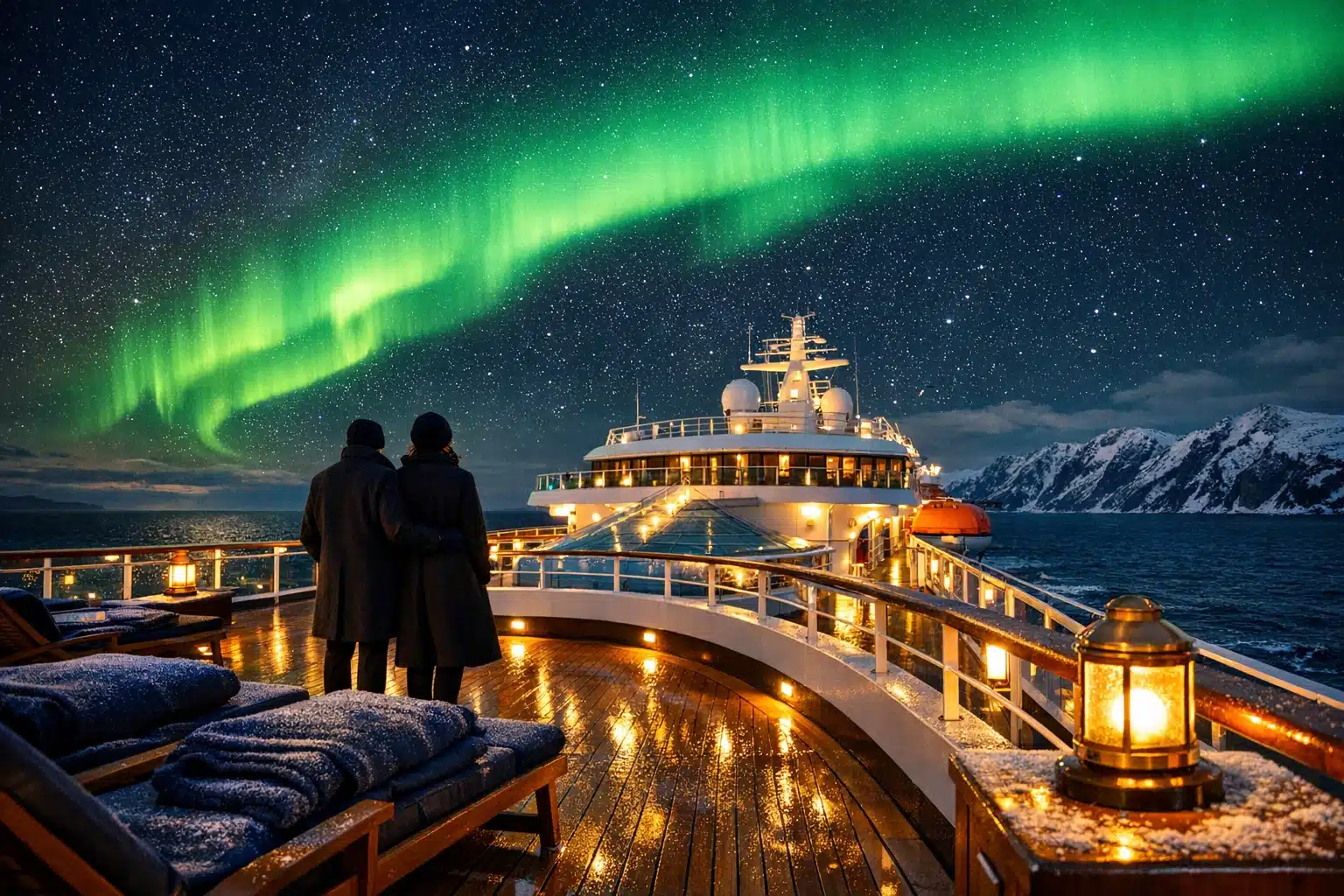
There is also a particular romance to the theme. The Northern Lights occupy a strange place in travel imagination: part science, part folklore, part pure weather gamble. On a winter cruise, that uncertainty becomes part of the atmosphere. The sea is dark, the air bites, the decks fall quiet late at night, and everyone glances upward with the same hopeful question. Even when the aurora does not appear, the setting itself can still feel cinematic. That is why this short itinerary remains relevant: it promises not certainty, but a compact, well-shaped adventure.
What a 3-Night Norway Cruise from Hull Usually Looks Like
A 3-night Norway cruise is short, so every hour matters. Unlike a longer fjord voyage or a seven-night Northern Lights itinerary, this format is built around movement rather than many destinations. In most cases, travellers board in Hull, settle into the ship in the afternoon, attend the mandatory safety drill, explore the decks, and begin sailing overnight across the North Sea. By the time the first full morning arrives, the rhythm of the trip is already clear: this is not a port-heavy holiday, but a seaborne experience where the atmosphere onboard is a major part of the product.
Specific routes vary by operator and season, so it is wise to read the itinerary carefully before booking. Some sailings focus on scenic cruising along the Norwegian coast, while others may include a brief stop in a southern or western Norwegian port if conditions and scheduling allow. On a trip this short, however, you should not expect to visit multiple towns in depth. That is one of the key differences between a mini-cruise and a longer Norwegian voyage. A seven-night route might offer Bergen, Ålesund, Tromsø, or other stops with meaningful time ashore. A 3-night version is more about reaching Norwegian waters, enjoying the winter setting, and returning with the feeling of having sampled something bigger than an ordinary weekend away.
The onboard rhythm tends to follow a pleasant pattern:
• embark, unpack, and explore the ship
• enjoy sea views and winter light during the crossing
• attend talks, listen to live music, or take part in low-key entertainment
• head outside after dark when aurora alerts or clear skies create interest
• return to Hull after a compact but eventful break
Because there is limited shore time, travellers should think of the ship almost as the destination. That changes expectations in a healthy way. If your dream holiday involves long hikes, museums, rail journeys, and deep cultural immersion, a short cruise will feel too compressed. If, however, you enjoy sea travel, evening dining, a comfortable cabin, and the idea of watching Norway emerge through cold morning light, this format can feel wonderfully efficient.
Compared with a fly-cruise or a land-based Norway trip, the biggest advantage is ease. There are no airport queues, baggage transfers between hotels, or domestic connections within Norway. The trade-off is obvious: less time on land and less geographical reach. In practical terms, a 3-night itinerary works best when viewed honestly. It is not a grand Arctic expedition. It is a short northern escape with a strong sense of place, and when marketed that way, it makes good sense.
Northern Lights Chances, Conditions, and the Reality Behind the Dream
The phrase Northern Lights can make any itinerary sound magical, but it deserves a sober explanation. The aurora is a natural phenomenon caused by charged solar particles interacting with gases in the upper atmosphere, and it is never guaranteed on any trip. Marketing often focuses on possibility rather than certainty, which is sensible, because even in famous aurora regions the final result depends on darkness, cloud cover, solar activity, and your exact location. A 3-night cruise from Hull offers a chance, not a promise, and understanding that distinction is the key to enjoying the voyage properly.
Geography matters a great deal. The auroral oval is usually strongest at higher latitudes, often around areas in northern Norway such as Tromsø or Alta. A short cruise from Hull may reach waters that are notably farther south, depending on the route. That does not rule out sightings. Strong geomagnetic activity can push the display farther south, and dark winter skies over the sea can create memorable viewing conditions. Still, compared with a longer itinerary in far northern Norway, the statistical odds are generally lower. In plain terms, if your one absolute goal is to maximize aurora probability, a dedicated land trip in the high north usually beats a brief cruise from the UK. If your goal is a stylish winter break where the aurora is an exciting bonus, the cruise makes much more sense.
Timing is another major factor. Northern Lights cruises are usually scheduled in the darker months, often from late autumn into winter, because darkness is essential. Even then, the best onboard viewing moments tend to happen late in the evening or during the quiet early hours. Some ships provide announcements or app alerts when conditions improve, which is helpful because passengers cannot spend every night minute on deck. One of the small pleasures of this style of travel is the communal anticipation. Someone spots a pale green ribbon, another person grabs a coat over evening clothes, and suddenly a cold deck becomes the most popular place on the ship.
For better odds and a better experience, practical habits matter:
• choose sailings during the darkest months
• watch weather forecasts, but remember they can change quickly
• stay patient and keep expectations flexible
• bring warm layers so you can remain outside comfortably
• learn simple night photography settings before departure
Cloud is often the biggest spoiler. You can have excellent solar activity and still see nothing if the sky stays covered. Conversely, a modest display on a clear night can feel unforgettable at sea, because the darkness around the ship enhances the sense of isolation and scale. Think of the aurora here as the possible climax of the trip, not the only reason for taking it. That mindset usually leads to a better holiday and far less disappointment.
Cabins, Dining, Budget, and How the Value Compares
Value is where a 3-night Norway Northern Lights cruise from Hull becomes especially interesting. On paper, a short cruise can look expensive when divided by the number of nights. In practice, the calculation is broader than that. Your fare often includes accommodation, main meals, onboard entertainment, and transport between the UK and Norwegian waters. When you compare that with a winter city break involving flights, hotel rates, airport transfers, restaurant spending, and luggage fees, the cruise can look more competitive than expected. The key is to examine what is included and what will still cost extra.
Cabin choice shapes both comfort and price. Inside cabins are usually the most economical option and can work very well on a short break, especially if you expect to spend most of your waking time in lounges, restaurants, or on deck. Ocean-view cabins add natural light, which many travellers appreciate in winter. Balconies sound attractive, but on a cold-weather mini-cruise they are not always the clear winner they appear to be. Wind, temperature, and darkness can limit how much private outdoor time you actually use. For some guests, that added cost is justified by the privacy and the instant access to fresh air. For others, the public decks are more than enough.
The budget picture usually includes more than the fare:
• drinks beyond standard tea, coffee, or water options
• specialty dining if offered
• travel insurance
• parking or rail travel to Hull
• gratuities, depending on cruise line policy
• shore excursions, if any are available on the itinerary
Pricing changes constantly, so fixed figures age quickly, but short UK-departure cruises often start in the low hundreds of pounds per person during promotions and can rise substantially for better cabin grades, flexible booking terms, or peak-date departures. This is why early comparison matters. A deal fare on an inside cabin may represent very solid value for a couple wanting a memorable winter break. A premium suite booking on the same sailing turns the trip into a different purchase entirely: still enjoyable, but not budget-led.
Compared with flying to northern Norway, the cruise usually wins on simplicity and may reduce hidden travel stress. Compared with a longer Norwegian cruise, it wins on time efficiency but loses on destination depth. Compared with a weekend hotel break in the UK, it wins on novelty and atmosphere. That is the fairest way to judge it. The best value comes when your priorities match the product: comfortable travel, a compact schedule, maritime scenery, and the possibility of a sky show that no theatre can stage.
Who This Cruise Suits Best, How to Prepare, and Final Thoughts for Travellers
This kind of cruise suits travellers who like the idea of winter adventure without the logistics of a major trip. Couples often find it appealing because the format feels naturally self-contained: board, settle in, dine well, watch the horizon, and let the ship do the travelling. First-time cruisers can also benefit, since three nights is long enough to understand whether they enjoy life at sea without committing to a week or more. For people living within relatively easy reach of Hull, the practical advantage is even stronger. A straightforward drive or train journey can place you on a ship bound for Norway by evening, which is a very different emotional experience from the usual airport routine.
That said, it will not suit everyone. Travellers who are highly prone to motion sickness should think carefully, because North Sea conditions can be lively in winter. People whose main goal is extensive sightseeing may feel under-served by the limited time ashore. Serious aurora chasers who want the best possible statistics may be happier booking a longer stay in northern Norway, where multiple nights on land increase both flexibility and probability. A short cruise is strongest as a balanced experience rather than a specialist expedition.
Preparation is simple but important:
• pack warm layers, gloves, and a hat for late-night deck viewing
• bring shoes with decent grip for wet outdoor surfaces
• check passport and entry requirements with the cruise line before travel
• consider seasickness remedies if you are unsure how you cope at sea
• keep a camera or phone accessible, but do not spend the whole trip behind a screen
There is also a useful mindset to carry onboard. Treat the cruise as a compact northern escape, not a box-ticking mission. Enjoy the departure from Hull, the winter sea, the Norwegian backdrop, the contrast between warm interiors and cold open decks, and the quiet suspense that arrives after sunset. If the aurora appears, the trip gains a sparkling highlight. If it does not, the voyage can still deliver a fresh and distinctive break that feels far removed from everyday routine.
For the target audience, the conclusion is fairly clear. If you want a short, manageable, atmospheric holiday with no flights and a realistic possibility of seeing the Northern Lights, a 3-night Norway cruise from Hull is worth serious consideration. If you need a longer itinerary, deeper exploration, or the strongest aurora odds available, it is better viewed as a stepping stone rather than the final word. In the right frame, though, this small voyage can feel unexpectedly rich: a few days, a northern sea, and the irresistible habit of looking up into the dark.