A Guide to Airplane Cleanup Crew Careers
Behind every smooth boarding call is a crew that steps in after the last traveler leaves, restoring order in a cabin where time is short and standards are high. Airplane cleanup work matters because cleanliness supports passenger comfort, operational efficiency, and a professional image for airlines and airports. For job seekers who want a realistic entry point into aviation, this career offers hands-on work, quick routines, and room to learn how the airport machine truly runs.
Outline: What This Guide Covers and Why the Role Matters
This guide begins with a roadmap because airplane cleanup crew work is often misunderstood. Many people imagine a simple janitorial role, but the job sits inside a larger system that depends on timing, security rules, teamwork, and consistent service standards. A delayed cleanup can ripple outward into late boarding, stressed gate agents, and frustrated passengers. A well-executed cleanup, on the other hand, helps an aircraft feel reset, ready, and respectful to the next group of travelers. In aviation, even quiet work can have loud consequences.
The article unfolds in five practical parts so readers can assess the career from several angles rather than from a single job ad. Here is the outline in plain terms: • what airplane cleanup crews actually do during short turnarounds and deeper cleaning shifts • which skills, qualifications, and habits help candidates get hired and succeed • how pay, schedules, pressure, and physical demands compare with related airport jobs • what growth paths exist for workers who want to move into lead, supervisory, or broader ground operations roles • how job seekers can decide whether this career matches their temperament, energy level, and long-term plans.
This structure matters because career decisions are rarely about duties alone. A person may be perfectly capable of wiping surfaces, collecting waste, and restocking supplies, yet still dislike overnight work, strict deadlines, or the noise and security routines of the airport environment. Another person may thrive in exactly that setting, enjoying visible results and the rhythm of task-based work. The difference often comes down to fit, not talent.
Airplane cleanup crew roles are also relevant in a broader employment sense. Airports are busy ecosystems with many entry-level and mid-level positions, and cabin cleaning can open a door into aviation without requiring years of study or a highly specialized license. Employers often look for reliability, safe work habits, and punctuality more than polished corporate resumes. That makes the field especially interesting for career changers, students seeking shift work, and workers who prefer practical responsibilities over desk-based routines.
Think of the job as backstage theater during a scene change. The audience sees only the polished set, never the hurried hands pulling cables, sweeping confetti, and placing every prop back where it belongs. Airplane cleanup crews play a similar role. Passengers walk into a cabin expecting freshness, order, and calm, but the polished impression is built by workers who move fast, notice details, and know how to complete dozens of small tasks without missing the departure clock. Understanding that hidden importance is the first step in deciding whether this career deserves a serious look.
What Airplane Cleanup Crew Members Actually Do
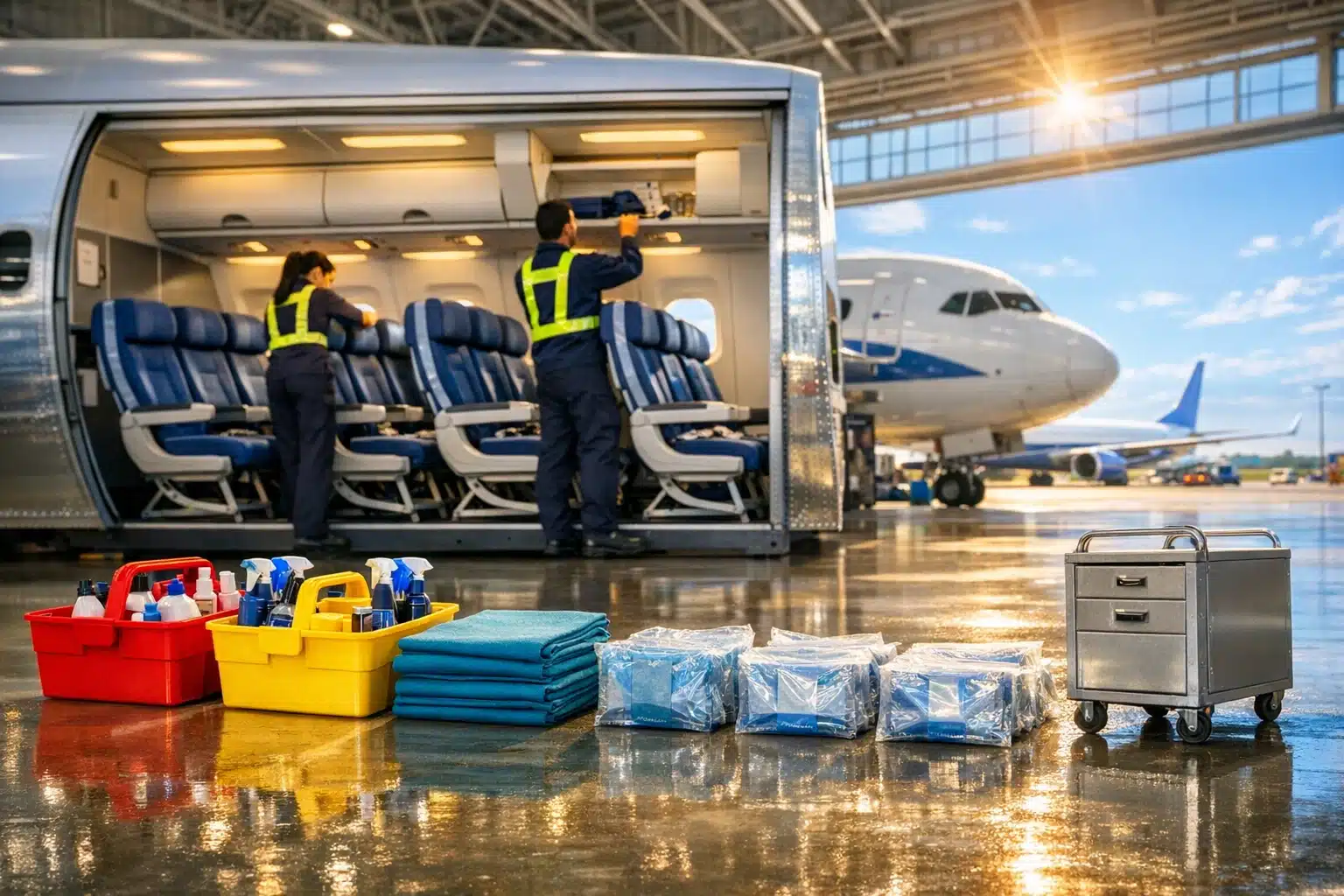
The daily work of an airplane cleanup crew changes with the type of flight, the airline standard, and the amount of time available on the ground. In a quick turnaround, the team may have only a brief window to enter the aircraft, collect visible trash, check seat pockets, straighten seatbelts, wipe tray tables, tidy lavatories, and prepare the cabin for the next boarding group. On an overnight shift or a scheduled deep clean, the assignment can become far more detailed, including carpet care, galley wipe-downs, tougher stain removal, and more thorough sanitizing of high-touch surfaces.
At a practical level, the job usually combines speed with a sequence. Workers often start at one end of the cabin and move row by row so nothing is skipped. Common tasks include: • removing newspapers, cups, food wrappers, and other passenger waste • checking for left-behind belongings and reporting them according to company procedure • cleaning armrests, tray tables, window ledges, lavatory fixtures, and mirrors • replacing supplies such as toilet paper, soap, paper towels, and sickness bags • aligning seatbelts and seatbacks to create a neat, inspection-ready appearance. These steps sound straightforward, but the pressure rises when the aircraft is due out soon and multiple teams are working around each other.
Cleaners also have to respect safety and security rules. They may not handle suspicious items casually, and they must follow procedures for sharps, spills, biohazard materials, and restricted areas. Specialized personnel may handle certain maintenance, fueling, or lavatory servicing tasks, so a cleaner must know where their responsibility ends and when to notify another department. That awareness is one reason the role is more operational than many outsiders assume.
The work environment adds its own layer of complexity. Cabins can be cramped, overhead bins may need checking, and narrow aisles force people to move carefully while carrying bags, wipes, or waste containers. During busy shifts, one aircraft can blur into the next: a domestic narrow-body jet, then a larger international cabin, then another short-haul rotation with a different layout and cleaning checklist. Attention to detail matters because each cabin configuration, airline standard, and turnaround timeline may differ.
There is also a customer service dimension, even when passengers are not present. A spotless tray table, a restocked lavatory, and a fresh-looking seat area shape how travelers judge the airline. People may never applaud the cleanup crew, yet they instantly notice when the job is done poorly. That silent accountability is central to the career. It is a role where the best work often becomes invisible, because the result looks effortless even when the process was anything but easy.
Skills, Qualifications, and Training for Getting Hired
One reason airplane cleanup crew careers appeal to many job seekers is that the barrier to entry is often lower than in highly technical aviation roles. Still, lower barriers do not mean lower standards. Employers usually need workers who can pass background checks, meet airport security requirements, arrive on time for irregular shifts, and follow procedures without constant supervision. Because airports operate across early mornings, late nights, weekends, and holidays, flexibility is often one of the most valuable qualifications on an application.
Physical capability matters as much as paperwork. The role often involves standing for long periods, bending into rows, lifting bags of waste, pushing carts, working quickly in tight spaces, and repeating the same motions across multiple aircraft. That does not mean candidates must be athletes, but they should be ready for a job that feels active rather than sedentary. People who enjoy movement and practical tasks often adapt better than those who prefer slower, individually paced work.
Soft skills are equally important. Strong candidates usually bring: • attention to detail, because missed messes are easy to spot later • teamwork, since cabin cleaning is often coordinated with gate, catering, and ramp schedules • communication, especially when reporting lost items, damage, or safety concerns • time discipline, because a few lost minutes can affect an entire departure chain • professionalism, even in back-of-house roles where passengers may not see the staff directly. A reliable worker who stays calm under time pressure is valuable in any airport setting.
Training commonly covers cleaning standards, chemical handling, use of personal protective equipment, waste disposal, infection-control practices, and emergency or reporting procedures. New hires may shadow experienced staff before taking a full workload. Some employers provide role-specific instruction for different aircraft types, while others focus on standardized checklists that apply across fleets. Workers also need to understand what should be cleaned, what should be documented, and what should be escalated to another team, such as maintenance or security.
It helps to compare this job with similar airport positions. A general janitorial role in a terminal may involve broader public-space cleaning with less aircraft-specific procedure. A ramp role may be more exposed to weather and more focused on baggage or ground equipment. Cabin cleaning sits in the middle: physically active, deadline driven, and shaped by airline presentation standards. For some people, that mix is ideal.
Applicants can strengthen their chances by highlighting punctuality, shift availability, safety awareness, and any history in hospitality, housekeeping, logistics, transportation, or industrial cleaning. Even retail or food service experience can help if it demonstrates stamina, routine compliance, and the ability to work during peak periods. Employers are often trying to answer a simple question: can this person be trusted to show up, move quickly, and do the job right when the clock is running? A resume that answers that clearly has a real advantage.
Schedules, Pay Expectations, Working Conditions, and Job Comparisons
Before pursuing an airplane cleanup crew position, it is worth looking beyond the job title and into the daily trade-offs. The schedule is one of the biggest factors. Airports rarely sleep, so cleaning crews may work very early departures, late arrivals, split shifts, weekends, and holidays. Overnight assignments are common because some deep cleaning is easier when aircraft remain parked for longer periods. For workers who like nontraditional hours or need weekday flexibility, that can be a benefit. For others, the schedule is the hardest part of the role.
Pay varies by employer, airport, region, union status, and whether the work is contracted or handled directly by an airline or airport service company. In many markets, airplane cabin cleaning sits near the entry to mid-range of airport support wages, with potential boosts from night differentials, overtime, seniority, and lead responsibilities. Benefits can also vary widely. Some positions include paid time off, health coverage, retirement options, or travel-related perks, while others are more limited. Job seekers should read listings closely and ask whether the role is full-time, part-time, seasonal, or temporary.
The working conditions deserve honest attention. Airplane cabins can become warm, stuffy, or cluttered between flights. The pace may be brisk, and supervision can be strict because delays cost money and disrupt tightly planned operations. Noise from the ramp area, repetitive movement, exposure to cleaning chemicals, and the need to meet appearance standards under pressure can wear people down. On the positive side, many workers appreciate the structure. The tasks are concrete, the results are visible, and the shift often moves quickly because there is always another aircraft, another cabin, another checklist waiting.
Compared with related airport jobs, airplane cleanup work has a distinctive profile. Consider a few contrasts: • terminal custodial roles may involve more public interaction and larger walking areas but less aircraft-specific time pressure • baggage handling can offer higher physical intensity and more outdoor exposure • passenger service positions may require stronger front-facing communication skills and conflict management • cabin cleaning tends to blend presentation, speed, and operational discipline in a more controlled space. None of these jobs is automatically easier; they simply demand different strengths.
There is also a psychological element. Some people find satisfaction in transforming disorder into readiness. A cabin that begins the shift scattered with wrappers, crumbs, and half-finished travel chaos can end it looking composed and prepared, almost as if the last flight never happened. That reset has a certain craft to it. Yet the work is not glamorous, and anyone entering the field should be comfortable with that reality. It is practical labor in a high-visibility industry, performed mostly out of the spotlight. For the right worker, that is not a drawback at all. It is the appeal.
Career Growth, Job Search Strategies, and Final Advice for Future Applicants
An airplane cleanup crew role can be a destination job for people who value stable task-based work, but it can also serve as a springboard. Airports are full of internal pathways, and workers who build a reputation for reliability may move into lead cleaner roles, shift coordination, quality control, training, dispatch support, terminal operations, or other ground service positions. Growth depends on the employer, the size of the airport, and whether the company promotes from within, but aviation often rewards people who understand operations from the ground up.
Job seekers who want to enter this field should approach the search strategically. Instead of applying blindly, look at the kinds of organizations that hire for cabin cleaning: airlines, airport service contractors, facility management companies, and ground handling firms. Read the job description for clues about the real nature of the role. Does it mention overnight shifts, aircraft detailing, team leads, secure area access, or union pay scales? Those details reveal far more than a generic title ever will. During interviews, useful questions include: • how long are the typical shifts • is the work focused on rapid turnarounds, overnight cleaning, or both • what training is provided • how performance is measured • what advancement paths exist after six months or a year.
To stand out, tailor the resume around proof of dependability. Attendance records, shift flexibility, housekeeping standards, warehouse accuracy, hospitality experience, and safe chemical handling all translate well. If you have worked in an environment where timing mattered, say so. If you have handled repetitive physical work without sacrificing quality, say that clearly too. Employers in this space often prefer direct evidence over decorative language.
For the target audience, the final question is simple: does this kind of work fit the life you want right now? If you enjoy clear responsibilities, movement, teamwork, and the satisfaction of leaving a space better than you found it, airplane cleanup may be a strong match. If you need a traditional nine-to-five schedule, low physical strain, or a slow pace, another airport role may fit better. There is no shame in either answer.
Conclusion: A Practical Aviation Career for People Who Like Results
Airplane cleanup crew careers are important, demanding, and more operationally significant than many job seekers realize. They support passenger experience, help airlines maintain standards, and contribute to the fast rhythm that keeps airports functioning. For newcomers to aviation, this work can offer a genuine foothold, especially when approached with realistic expectations about shifts, stamina, and pressure. If you are looking for a role where effort turns into visible results by the end of each shift, this career is worth exploring with open eyes and a grounded mindset.