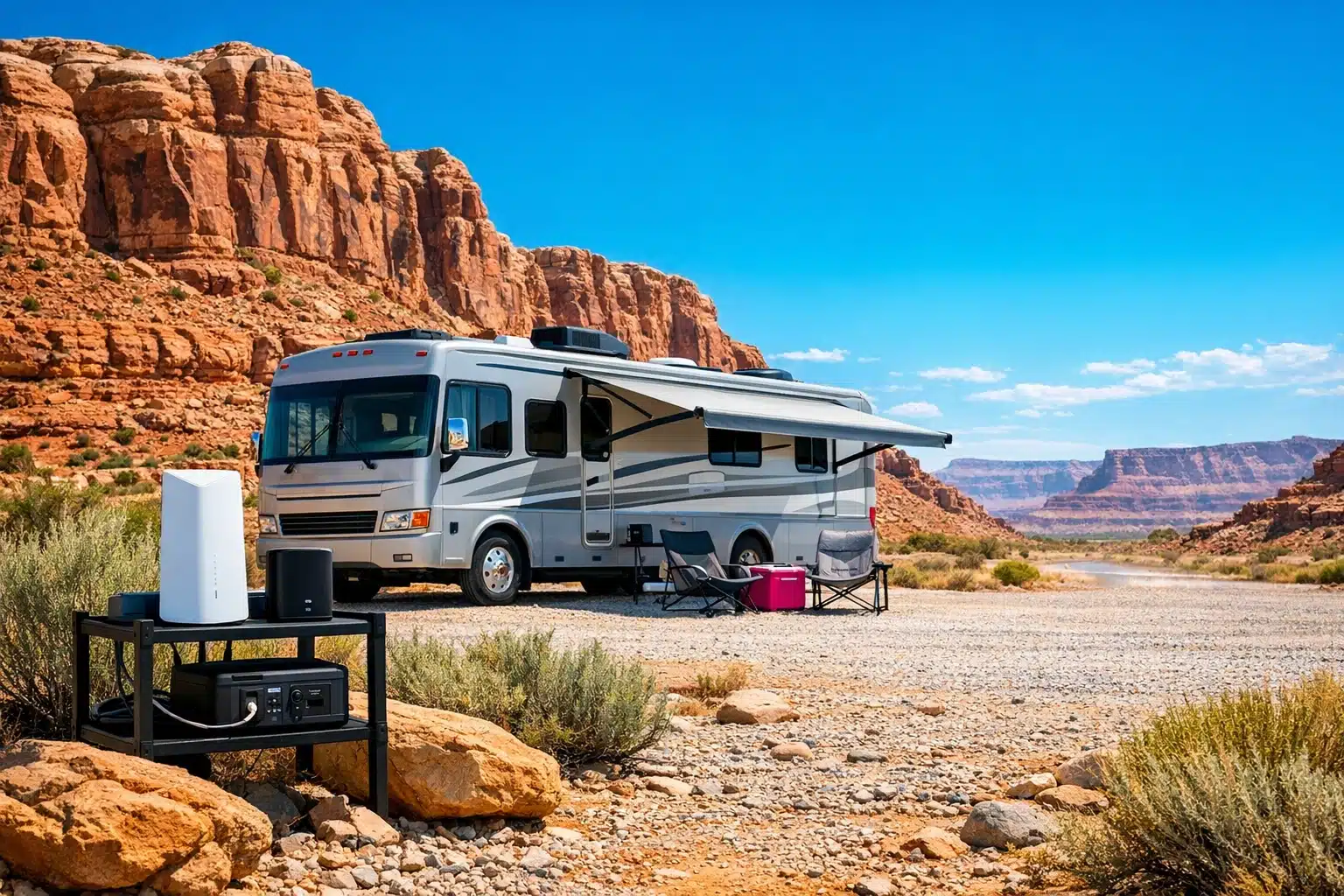
 Artificially generated image
 Understanding the Costs of T-Mobile RV Internet Service in 2026
Outline and Why T-Mobile RV Internet Costs Matter in 2026
In 2026, RV internet is no longer a nice extra for digital nomads and weekend campers; it is the thread that keeps work calls, maps, streaming, and emergency check-ins stitched together. T-Mobile has become part of that conversation because its wireless options can look simpler and cheaper than satellite, yet the real cost depends on coverage, device choices, throttling rules, and how often your rig actually moves. This guide breaks the numbers into practical pieces so you can budget with fewer surprises.
Before getting into pricing, it helps to frame the article like a route plan. The topic sounds simple at first glance, but the phrase T-Mobile RV internet can describe more than one setup. Some travelers use a fixed wireless gateway where the plan terms allow it. Others rely on mobile hotspot lines, tablet data plans, or a phone-based tethering strategy. A growing number build a layered system with T-Mobile as the main connection and another provider as backup. That is why the cost discussion needs an outline before it needs a number.
- The first part looks at what you may actually be paying for, not just the advertised monthly rate.
- The second part explains the variables that can make two RVers with the same carrier have very different bills.
- The third part compares T-Mobile with other common RV internet choices in 2026.
- The final part focuses on value, helping different kinds of travelers decide whether T-Mobile fits their budget and style.
The reason this matters is straightforward: internet cost on the road is rarely isolated from the rest of the travel budget. If connectivity fails, the effects spill into work income, campground choices, fuel usage, and even trip timing. A family that depends on online schooling or a retiree who uses telehealth appointments sees internet as infrastructure, not entertainment. One weak signal in a canyon campground can suddenly turn a low monthly rate into an expensive problem if you need a second line, an antenna, or a last-minute move to better coverage.
There is also a broader market shift behind the question. By 2026, RV internet shoppers are comparing not just price, but reliability, portability, and flexibility. T-Mobile tends to attract attention because it can undercut satellite on recurring cost in the right areas, and it often feels easier to understand than piecing together several prepaid plans. Still, the cheapest plan on paper is not always the least expensive choice in practice. If it forces you to buy extra hardware, tolerate inconsistent service, or keep a backup provider active all year, your true cost may look very different. That is the lens for the rest of this article: not a shiny sticker price, but the total cost of staying connected while your front yard changes every week.
Breaking Down the Base Price: Plans, Equipment, and Setup Costs
When people ask what T-Mobile RV internet costs in 2026, they usually want one clean figure. The reality is closer to a menu than a single price tag. Depending on how T-Mobile structures its mobile internet offerings, RV users may encounter several possible paths: a home-style wireless gateway plan, a mobile hotspot plan, a tablet data line, or a bundle built around a phone account. That means your baseline expense often starts with a likely range rather than one universal rate.
For many travelers, the most affordable scenario is a single unlimited wireless internet line that works well in the regions they visit most. In broad market terms, that kind of setup often lands somewhere around the lower end of the RV connectivity spectrum, frequently cheaper than satellite service. A practical estimate for 2026 is that many users may see a monthly cost in a band roughly similar to about 50 to 75 dollars for a primary T-Mobile internet line, though promotions, autopay discounts, and plan eligibility can change the exact number. That estimate should be treated as a budgeting guide, not an official quote.
Once you move beyond the headline rate, three other cost buckets appear:
- Equipment: a gateway, hotspot device, or router, sometimes included, sometimes rented, and sometimes purchased separately.
- Activation and setup: possible one-time fees, shipping, or accessory purchases such as mounts and cables.
- Add-on connectivity: extra hotspot lines or data pools for backup, remote work, or travel through weak-signal areas.
Equipment matters more than many buyers expect. If T-Mobile provides a gateway as part of the service, the upfront cost may be modest. If your plan requires a separate hotspot device, an unlocked router, or external gear for better placement inside the RV, the startup total can climb quickly. Even a relatively simple launch can include a device charge, a protective power setup, and one or two accessories that seemed optional at checkout but become essential after the first dropped video call.
A realistic way to think about 2026 pricing is through traveler profiles. A light-use weekend camper who only needs browsing, navigation, and occasional streaming may keep the monthly total close to the base plan. A couple working part time from the road may spend more, perhaps layering in a second line or hotspot for redundancy. Full-time remote workers often treat connectivity like a business utility and may build a T-Mobile-centered system that ends up costing far more than the advertised rate once backup capacity is included.
Here is a sensible planning framework:
- Light user: about 50 to 80 dollars a month if one line is enough.
- Moderate user: about 80 to 140 dollars a month with a main line and occasional backup needs.
- Heavy or mission-critical user: about 140 to 220 dollars a month when redundancy and better hardware enter the picture.
Those ranges are not official product tiers. They are budgeting lanes based on how RV connectivity usually evolves in real life. The key takeaway is simple: the base price is important, but it is only the front door. The full house includes hardware, backup planning, and the cost of making the connection dependable enough for life on the move.
What Changes the Real Monthly Bill on the Road
The biggest mistake RV shoppers make is assuming a mobile internet bill behaves like a home utility bill. In a house, your location stays still and the service adapts around it. In an RV, the service quality changes every time you point the windshield toward a new horizon. That is why the real cost of T-Mobile internet in 2026 is shaped by travel behavior just as much as plan pricing.
Coverage is the first and most obvious variable. If your routes cluster around interstates, suburban edges, and well-populated destinations, T-Mobile may deliver strong value. If you spend long stretches in mountain valleys, high desert public lands, dense forest corridors, or isolated lakeside campgrounds, the picture can change fast. A plan that looked economical in town can become frustrating in places where signal is weak or congested. At that point, many travelers spend extra money on one of the following:
- An external antenna to improve reception.
- A signal-aware router or hotspot with better placement options.
- A backup carrier to avoid being stranded with one unusable connection.
Network prioritization is another quiet cost driver. Even on plans described as unlimited, performance may vary depending on tower load, location, and plan terms. For a casual browser, slower speeds in the evening may be a mild annoyance. For a remote employee trying to upload files before a deadline, it can feel like the clock is melting over the dashboard. When congestion turns a primary line unreliable, the hidden cost is not only money but also time, stress, and lost flexibility.
Power and device management can add smaller but still meaningful expenses. A gateway running all day inside an RV draws power, and some travelers add inverters, battery upgrades, or better ventilation to keep equipment stable in hot weather. These are not always internet line items on a spreadsheet, yet they belong in the same financial conversation because they support the connection. The same is true for mounts, spare charging cables, and weather-conscious placement strategies that keep hardware functioning while the RV itself becomes office, cinema, classroom, and kitchen.
Travel frequency also matters. A stationary seasonal camper may get away with a simple T-Mobile setup and enjoy a comparatively low cost per month. A traveler who changes location every few days often pays more in indirect ways. They may need more flexible gear, more troubleshooting time, and a broader tolerance for backup spending. In practice, many RVers eventually discover that the lowest recurring bill is not always the cheapest total ownership model.
There are also behavioral costs that do not show up on the invoice right away:
- Streaming in high definition can make weak-service evenings feel worse, nudging you toward more robust plans or secondary options.
- Video meetings and cloud backups reward stronger, steadier connections, which can mean better devices and more network redundancy.
- Frequent boondocking may increase the value of having a second service even if it raises the monthly budget.
In other words, the real bill is part accounting and part geography. T-Mobile can be a cost-effective anchor for RV internet in 2026, but your actual spending will be determined by where you go, how critical the connection is, and how much inconvenience you are willing to tolerate before paying for extra reliability.
How T-Mobile Compares with Satellite, Phone Hotspots, and Campground Wi-Fi
Cost only makes sense in context, so T-Mobile RV internet becomes easier to judge when placed beside the main alternatives. In 2026, most RV travelers compare four broad choices: T-Mobile-based wireless internet, satellite service, phone hotspot use, and campground Wi-Fi. Each option solves a different problem, and each carries a different financial personality.
T-Mobile often stands out for recurring affordability in areas with solid coverage. Compared with satellite, a T-Mobile-led setup may have a lower monthly cost, lower power demands, and simpler installation. That makes it appealing for travelers who spend much of their time near towns, highways, or established camping corridors. If strong cellular service follows your route, the value can be excellent. You may get enough speed for streaming, work, browsing, and voice calls without paying the premium typically associated with more location-independent systems.
Satellite, on the other hand, usually wins on coverage reach rather than budget friendliness. It can serve travelers who camp far from cell towers or who need a connection in regions where terrestrial wireless remains inconsistent. The trade-off is that satellite systems often cost more on both the hardware and monthly service sides. For some RVers, that extra expense is worth every dollar because the alternative is no practical internet at all. For others, it is like buying hiking boots for a beach walk: technically useful, but more than they need.
Phone hotspot use is the lightweight contender. It can be the cheapest path for occasional travel, especially if your phone plan already includes a usable hotspot allowance. However, many RVers discover its limits quickly. Hotspot caps, battery drain, device heating, and modest radio performance can turn a cheap stopgap into a frustrating long-term solution. It works best for light users, short trips, and travelers who are comfortable using the internet in small bursts rather than as a full household utility.
Campground Wi-Fi is often the most tempting and the least predictable option. It can appear free or low cost, yet it frequently becomes the classic bargain that costs you patience instead of dollars. Shared networks suffer when too many campers stream at once, when access points are badly placed, or when the campground layout turns your site into a digital dead zone. Relying on it as a primary connection can work in rare cases, but most experienced RVers treat it as a bonus rather than a backbone.
- T-Mobile: often strong on value where coverage is good.
- Satellite: strongest on geographic reach, usually higher in overall cost.
- Phone hotspot: lowest barrier to entry, but limited for heavy use.
- Campground Wi-Fi: cheapest on paper, least consistent in practice.
For many people, the most rational 2026 strategy is not choosing one winner forever, but matching the tool to the travel style. T-Mobile may be the best budget anchor for semi-urban roaming, snowbird patterns, and mixed-use travel. Satellite may justify its higher price for boondockers and full-time off-grid explorers. The comparison matters because T-Mobile is rarely evaluated in a vacuum. Its real appeal emerges when it can replace a more expensive option or reduce how often you need one.
Who Gets the Best Value from T-Mobile in 2026 and Final Budgeting Advice for RV Travelers
Not every RVer needs the same internet strategy, which means not every RVer will see the same value from T-Mobile in 2026. The best fit is usually the traveler whose route overlaps with strong T-Mobile coverage, whose work or entertainment needs are meaningful but not impossible, and who appreciates a lower recurring bill more than absolute everywhere access. If that describes you, T-Mobile can be a smart core solution. If your dream campsite is always twenty miles beyond the last reliable tower, it may serve better as one layer rather than the whole stack.
The strongest value case often belongs to a few familiar groups:
- Weekend and seasonal campers who want reliable browsing and streaming without satellite-level spending.
- Snowbirds who follow predictable routes and revisit known locations with proven cellular coverage.
- Part-time remote workers who can tolerate occasional variability and maintain a backup plan for important calls.
- Budget-conscious full-timers who are willing to engineer a practical system instead of chasing a premium all-in-one setup.
For these users, the smartest budgeting approach is to think in layers. First, estimate the cost of a primary T-Mobile connection. Second, decide whether your lifestyle needs a backup network. Third, assign a realistic amount for accessories and small upgrades. This is where many buyers either overspend from fear or underspend from optimism. A balanced plan usually wins. You do not need to build a mission-control dashboard if you stream a few shows and check email. On the other hand, if your income depends on stable video meetings, pretending a bare-bones setup will magically behave like enterprise broadband can become expensive in a hurry.
A practical decision checklist looks like this:
- Map your most common routes and campsites against T-Mobile coverage before buying hardware.
- Separate must-have tasks such as remote work, schooling, or telehealth from casual wants such as evening streaming.
- Set a monthly target and a one-time startup cap so equipment costs do not quietly balloon.
- Test before committing deeply if a trial or flexible return window exists.
- Plan for at least one fallback option if internet loss would disrupt income, safety, or reservations.
The bottom line for RV travelers is refreshingly simple. T-Mobile can be one of the more cost-effective internet choices in 2026, but it delivers its best value when expectations match geography. It shines most when used by travelers who understand their route patterns, know their data habits, and budget for the full system rather than a single advertised number.
For the target audience here, whether you are a road-working couple, a family managing classes from the campsite, or a retiree who wants dependable connectivity without overspending, the goal is not to find a magical universal plan. The goal is to build a realistic budget that supports your style of travel. If you approach T-Mobile with that mindset, the cost question becomes less mysterious, and your internet setup starts feeling less like a gamble and more like good trip planning.