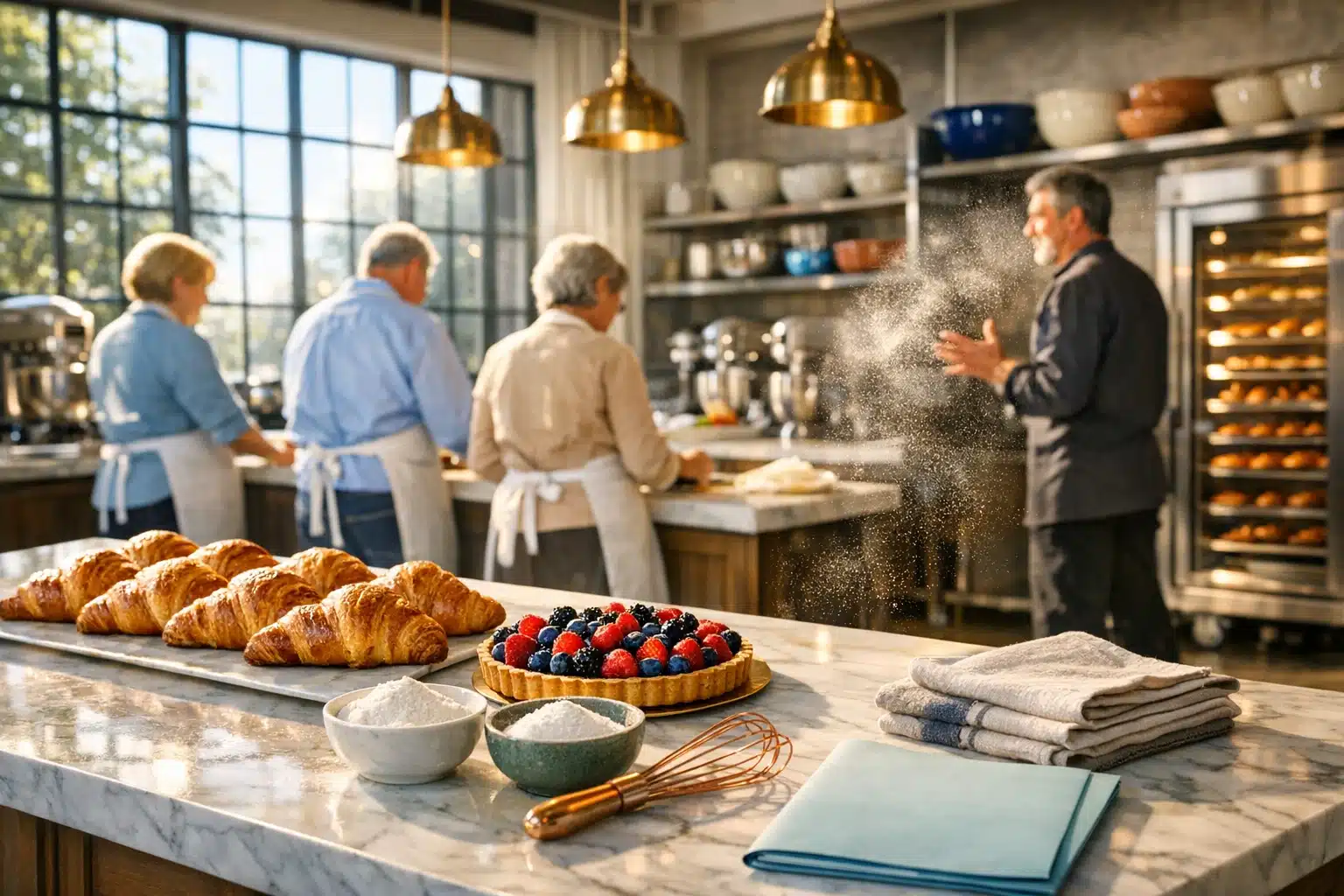
 Artificially generated image
 Baking Programs for Adults 50+ in 2026
In 2026, baking programs for adults 50+ are no longer niche classes tucked behind cookware aisles; they are structured learning experiences that blend skill building, community, and personal reinvention. Many older learners join to sharpen technique, start small food ventures, or simply enjoy a steady weekly ritual. The appeal is practical and emotional at once. A good program can teach laminated doughs and sourdough timing while also restoring confidence, curiosity, and social connection.
Outline:
• Why baking education matters after 50 in 2026
• Which program formats fit different learners
• How to compare cost, curriculum, and accessibility
• What outcomes to expect, from hobby mastery to part-time enterprise
• How to choose a program that matches your pace, budget, and ambitions
Why Baking Programs for Adults 50+ Matter More in 2026
Baking education for adults over 50 has gained real momentum because it meets several needs at once. First, it offers a practical, hands-on hobby in a world where many people are tired of passive screen time. Second, it provides structure without the pressure that often comes with full academic programs. Third, it creates a social environment that feels purposeful. A class built around dough fermentation, pastry technique, or artisan bread shaping gives people something tangible to work toward, and that matters. When a tray of rolls rises properly or a tart shell bakes evenly, progress is visible, edible, and deeply satisfying.
The relevance of these programs in 2026 is also tied to life-stage changes. Many adults in this age group are retired, semi-retired, changing careers, or adjusting to a quieter household. Some want a creative outlet after decades in office-based work. Others are reconnecting with a skill they once used informally for family gatherings and holidays. Baking fits both situations. It can be technical enough for ambitious learners and comforting enough for people who simply want to make better everyday food.
Several broader trends have shaped the current landscape. Hybrid learning is now common, so students can watch technique demonstrations online and then practice in person. Schools and community education providers are also more aware of accessibility needs than they were a decade ago. Better lighting, ergonomic workstations, printed materials with larger type, and more thoughtful scheduling have made programs more usable for older learners. Even short courses increasingly include practical supports such as recipe packets, ingredient lists, and video recaps.
There is also a meaningful wellness dimension, though it should not be overstated. Baking cannot solve every life transition, but it does encourage planning, concentration, sensory engagement, and routine. Measuring, mixing, proofing, and decorating ask the mind and hands to work together. For many participants, the classroom becomes a place where time slows down in a good way. Flour dust on the sleeve, butter folded into dough, the warm smell of cinnamon drifting from the oven: these details turn learning into a memorable experience rather than a simple lesson.
For adults 50+, the strongest programs recognize that students are not all starting from the same point. Some arrive with decades of home baking experience but want professional technique. Others are complete beginners who need confidence before complexity. The best 2026 offerings respect both groups. They do not treat older learners as fragile, nor do they assume everyone wants a fast-track certificate. Instead, they build around clarity, relevance, and enjoyment. That balance is exactly why these programs have become such a strong part of adult education.
Main Types of Baking Programs Available in 2026
One of the most useful shifts in 2026 is the variety of program formats now available. Adults 50+ are no longer limited to a single evening class at the nearest community center. Today, the market includes community college certificates, culinary school short courses, independent studio workshops, live online programs, travel-based baking retreats, and bakery mentorships. Each format offers a different mix of cost, commitment, and depth, so comparing them carefully is essential.
Community college and continuing education programs are often the most balanced option for learners who want structure and affordability. These courses usually run for several weeks, follow a syllabus, and provide regular access to instructors. They are especially useful for students who want progressive learning, such as moving from quick breads to enriched doughs, then to laminated pastry and plated desserts. The trade-off is that class times may be fixed, and the atmosphere can feel more formal than some hobbyists prefer.
Private culinary schools tend to offer shorter, more polished experiences. Their facilities are often excellent, instructors may have commercial kitchen backgrounds, and the curriculum can be highly specialized. One course might focus entirely on sourdough, another on French patisserie, and another on holiday baking. These programs can be inspiring, but they are usually more expensive. For learners who want a premium environment and concentrated instruction, that may be worth it. For others, the price-to-practice ratio needs close examination.
Live online baking programs have improved significantly. Multiple camera angles, downloadable formulas, real-time feedback, and replay libraries make virtual learning more practical than it once was. This format is especially attractive for people in rural areas, those with mobility concerns, or anyone who prefers learning from home. Still, online study has limits. Instructors cannot always correct hand position, dough texture, or oven management with the same precision as in person. It works best for self-motivated learners who are comfortable experimenting independently.
Independent workshops and retreat-style programs occupy a middle ground between education and experience. A weekend pie intensive, a bread camp at a farm school, or a pastry retreat in a regional culinary destination can be joyful and memorable. These are ideal for learners who want immersion and inspiration. However, they may emphasize experience over long-term progression.
A quick comparison can help:
• Community colleges: strongest for steady progression and value
• Culinary schools: strongest for specialized technique and facilities
• Live online programs: strongest for flexibility and home-based learning
• Retreats and workshops: strongest for immersive inspiration
• Bakery mentorships: strongest for real-world pace and practical exposure
No single model is automatically best. A retired engineer who loves precision may thrive in a certificate program. A traveler who wants a creative weekend may prefer a retreat. A grandparent balancing family commitments may choose live online classes with recordings. In 2026, the smart choice is less about prestige and more about fit. When the format matches the learner, progress feels natural instead of forced.
How to Compare Programs: Curriculum, Cost, Access, and Teaching Quality
Choosing a baking program well means looking beyond attractive photos of croissants and glossy fruit tarts. The strongest programs are built on thoughtful teaching design, transparent pricing, and realistic learner support. For adults 50+, those details matter even more because time, energy, and budget are often invested with greater intention. A course should not merely look enjoyable; it should also make sense for your schedule, your body, and your goals.
Start with curriculum depth. Some classes promise a lot but actually offer scattered demonstrations without a clear learning path. A better program shows how skills build over time. For example, a solid bread course might begin with flour types and hydration, then move into mixing methods, fermentation control, shaping, scoring, and troubleshooting. A pastry course should explain why techniques work, not just ask students to copy motions. Understanding gluten development, butter temperature, sugar behavior, and oven spring gives learners the power to adapt recipes later.
Instructor quality is the next major factor. Strong teachers do more than bake well. They explain clearly, correct kindly, and know how to support mixed-ability groups. It is helpful when instructors have both practical experience and teaching experience, because commercial skill alone does not guarantee good instruction. Look for evidence of demonstration time, Q and A opportunities, written feedback, or post-class support. In 2026, many reputable programs also offer short preview videos or sample syllabi, which make evaluation easier.
Cost comparisons should include more than tuition. Ingredient fees, equipment requirements, uniforms, transport, parking, and optional textbooks can change the real total quickly. Some premium classes appear manageable at first glance, then become much more expensive after extras are added. Likewise, a modestly priced community course may deliver excellent value if materials are included and class hours are generous.
Useful questions to ask before enrolling include:
• Is the class mostly hands-on, mostly demonstration, or a mix of both?
• How many students share one instructor?
• Are recipes and lesson notes provided in print or digital form?
• Is the kitchen designed with safe flooring, clear lighting, and accessible work areas?
• What happens if a student misses a class?
• Are beginner, intermediate, and advanced learners separated?
Accessibility deserves direct attention, not polite silence. Adults 50+ may vary widely in stamina, mobility, vision, hearing, and comfort with long standing sessions. A good provider will explain whether seating is available, whether heavier mixing tasks can be adapted, and whether printed materials are easy to read. That is not a special favor; it is part of good course design.
Finally, consider whether the program outcome matches the marketing. If a school suggests that a short hobby course can instantly prepare someone for professional production, that is a warning sign. Genuine programs are clear about scope. They tell you what you will learn, how much practice you will need, and where the course fits in a larger journey. In other words, the best baking programs do not sell fantasy. They offer a reliable recipe for progress.
Matching the Right Program to Your Goals After 50
The ideal baking program depends less on age itself and more on what a learner wants next. Adults 50+ often arrive with a stronger sense of purpose than younger students. They may not want to “try something someday.” They want something meaningful now. That goal might be mastering artisan bread, baking confidently for family events, building a small cottage-food business where local rules allow, volunteering in community kitchens, or simply replacing a passive routine with an active and rewarding one. The right course should reflect that destination.
For hobby-focused learners, the best programs usually emphasize repetition, technique, and manageable complexity. A strong home baker does not necessarily need restaurant-style production training. Instead, they benefit from classes that teach consistency: even mixing, accurate scaling, dough handling, timing, flavor balance, and reliable troubleshooting. If the goal is better baking at home, a course that includes adaptable formulas, household-scale methods, and oven-specific advice will often be more useful than one designed around industrial equipment.
For adults considering income from baking, program selection becomes more strategic. In that case, it is wise to look for coursework that touches on costing, menu planning, shelf life, labeling, food safety, packaging, and batch workflow. Some continuing education providers in 2026 now offer short modules for microbusiness skills alongside baking instruction. That can be valuable for learners exploring farmers markets, special-order cakes, or bread subscriptions. It is still important to research local regulations independently, but a program with practical business context can save time and prevent avoidable mistakes.
There is also a social and emotional dimension that should not be underestimated. Many adults are not looking for a credential at all. They want belonging. A warm kitchen classroom can offer gentle conversation, shared effort, and the small but real pleasure of learning beside others. In a good class, people compare shaping methods, laugh over a collapsed sponge, and celebrate a tray of glossy buns as if it were a minor holiday. That atmosphere matters. It often determines whether someone finishes a course and keeps practicing afterward.
Different goals often match different formats:
• Home mastery: local multi-week classes or live online practice series
• Occasional celebration baking: weekend workshops and seasonal specialty courses
• Small business exploration: certificate-style programs with sanitation and costing topics
• Social enrichment: recurring community classes with collaborative work
• Skill refresh after years away: beginner-to-intermediate bridge courses
When goals are clear, decision-making gets easier. A learner who wants to bake excellent sourdough every week should not feel pressured into advanced sugar artistry. Someone dreaming about market stalls may outgrow a casual demonstration course quickly. In 2026, the most successful students are not those who choose the flashiest option. They are the ones who choose the program that fits the life they actually want to live.
Conclusion for Adults 50+: Choosing a Program That Feels Worth Your Time
If you are considering a baking program in 2026, the encouraging news is that the field has matured. There are more choices, better formats, and more thoughtful learning environments than many adults would have found even a few years ago. That means you do not have to settle for a class that is either too basic, too rushed, or poorly suited to your pace. You can look for a program that respects your experience while still challenging you to grow.
The smartest approach is to begin with three questions: What do I want to learn, how do I learn best, and what kind of commitment feels sustainable? Those answers will guide nearly every other decision. If you value structure and affordability, community-based programs may be ideal. If you want focused expertise and polished facilities, a culinary school short course may be a better fit. If flexibility matters most, live online learning can open doors that distance once kept closed.
It also helps to remember that baking progress rarely arrives in one dramatic leap. It usually comes in layers, much like a well-made pastry. One class improves your dough handling. Another sharpens your timing. A later course teaches flavor balance, finishing, or production planning. Over time, those pieces form real competence. Adults 50+ often bring patience, discipline, and perspective to this process, which can be an enormous advantage. You do not need to race. You need a program that keeps you interested enough to continue.
As you compare options, give equal weight to substance and atmosphere. The curriculum should be clear, the teaching should be practical, and the class design should support your comfort and participation. Yet the room should also feel inviting. Baking is technical, but it is also deeply human. It carries memory, hospitality, celebration, and care. A worthwhile program makes space for all of that.
For this audience, the best baking program is not simply the one with the most advanced recipes. It is the one that helps you build skill with confidence, enjoy the process, and see a future in the work, whether that future means better weekend loaves, festive cakes for family, or a carefully planned second-act venture. When you choose with intention, the next lesson is more than a class. It is the start of a richer rhythm, one batch at a time.