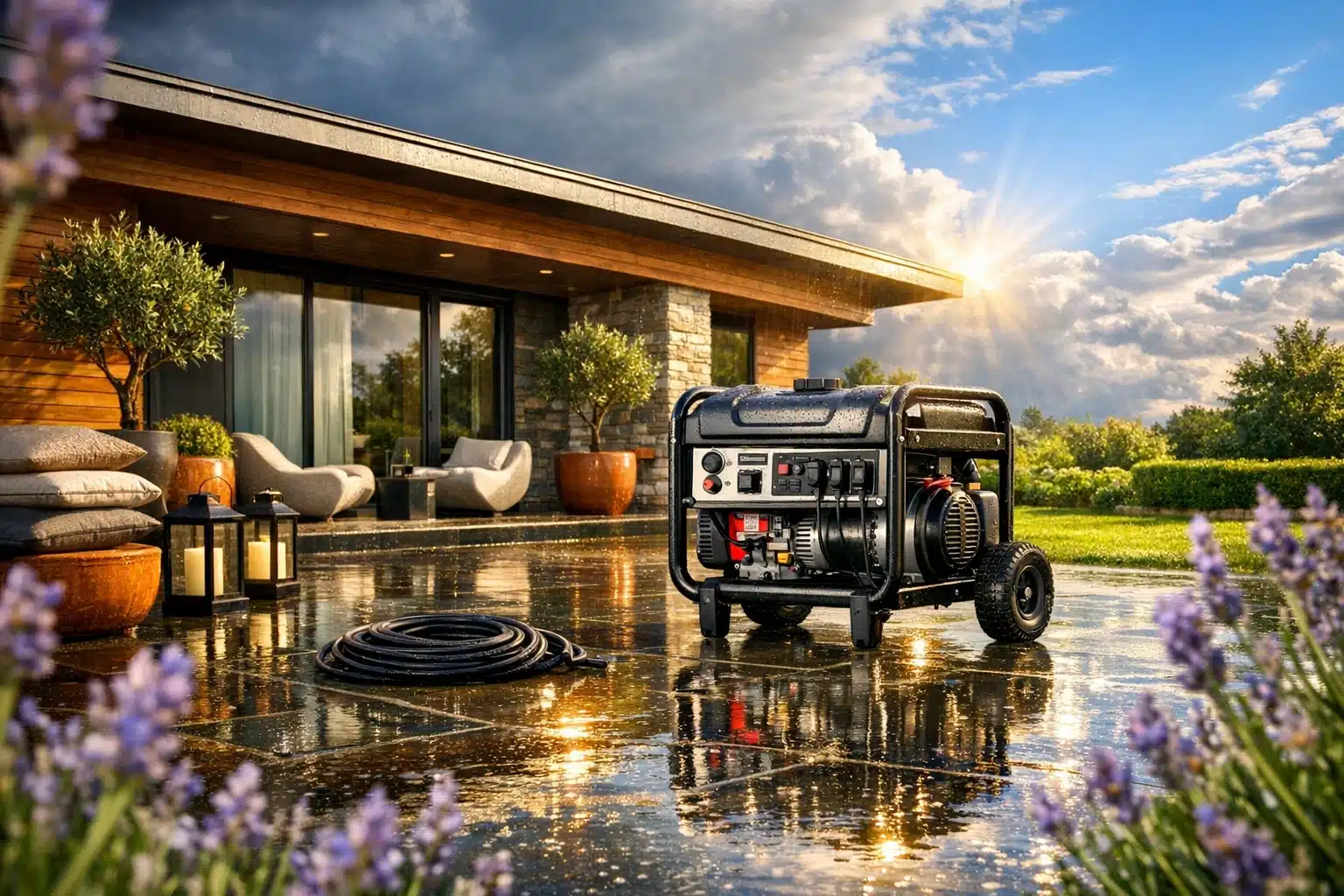
 Artificially generated image
 Best Portable Generators: A Practical Buying Guide
A portable generator can turn a stressful outage, a remote job site, or a rain-soaked campsite into a manageable situation, but only if you buy one that truly fits the way you live. This guide breaks down the choices in plain English, from basic wattage math to fuel options and noise levels. Instead of chasing hype, you will learn how to match power, portability, safety, and budget. Read on, and the crowded generator aisle starts to look far less intimidating.
Outline
- How different users define the “best” portable generator in very different ways.
- The core numbers to understand before buying: running watts, starting watts, runtime, and fuel type.
- The main generator categories, with practical comparisons for home backup, camping, RV use, and work.
- The features that matter most once the spec sheet starts to blur together.
- How to buy, use, and maintain a portable generator safely and economically over time.
How the Best Portable Generator Depends on Your Real-World Needs
The phrase “best portable generator” sounds decisive, but in practice it is more like asking for the best pair of shoes without saying whether you are climbing a mountain, walking into an office, or running a marathon. A homeowner preparing for storm season, a camper seeking quiet evenings, and a contractor powering saws all need something different. That is why the smartest buying process starts with your use case, not with a brand logo or a flashy wattage number.
For home backup, the key question is not whether a generator can power the whole house, but whether it can carry the essentials you care about most. Many households are looking to support a refrigerator, freezer, a few lights, a modem, phone chargers, perhaps a sump pump, and sometimes a microwave or small window air conditioner. That often pushes buyers into the 3,000 to 8,000 watt range, depending on the appliances involved and whether any of them have heavy startup loads. A compact inverter generator may be enough for a short outage if you are only keeping food cold and internet working. A larger dual-fuel unit makes more sense if you want wider coverage and more flexibility.
Camping and tailgating create a very different checklist. Noise matters more. Weight matters more. Clean, stable electricity matters more if you are charging drones, laptops, cameras, or medical devices. In that setting, inverter generators dominate because they are usually quieter, more fuel-efficient at lighter loads, and gentler on electronics. Many people shopping for leisure use are happiest in the 1,000 to 2,500 watt class, especially when portability is a bigger priority than brute force.
RV owners add another layer. If you want to run an air conditioner, you must pay close attention to startup surge, outlet type, and whether the unit is RV-ready. Job-site users often need rugged frames, larger fuel tanks, and enough output for power tools rather than sensitive electronics.
A good way to narrow the field is to list your likely scenario first:
- Short home outages: prioritize reliability, runtime, and safe connection options.
- Camping and tailgating: prioritize quiet operation, low weight, and inverter power quality.
- RV travel: prioritize the correct outlet, air-conditioner startup capacity, and manageable size.
- Construction or farm work: prioritize durability, higher wattage, and easy refueling.
Once you define the job clearly, the market becomes less confusing. The “best” generator stops being a marketing slogan and starts becoming a practical fit for the life you actually lead.
Understanding Wattage, Runtime, and Fuel Before You Compare Models
If generator shopping feels confusing, it is usually because buyers jump straight to model names without understanding the few measurements that truly drive performance. The most important of these are running watts, starting watts, runtime at a stated load, and fuel type. Learn those four ideas, and a long spec sheet suddenly becomes readable.
Running watts describe the electricity a generator can supply continuously. Starting watts, sometimes called surge watts, describe the extra burst needed when motors first turn on. That distinction matters because many household appliances do not start gently. A refrigerator might run at roughly 600 to 800 watts yet need far more for a moment when the compressor kicks in. A sump pump, window air conditioner, or circular saw can show the same behavior. If you size a generator only by running watts, you may end up with a machine that looks sufficient on paper but trips as soon as something starts.
Typical household and recreational loads often fall into ranges like these:
- Refrigerator: about 600 to 800 running watts, with higher startup demand.
- Microwave: often 1,000 to 1,500 watts while operating.
- Sump pump: commonly 800 to 1,500 running watts, with a stronger surge.
- Coffee maker: roughly 600 to 1,200 watts.
- Small RV air conditioner: often around 1,200 to 2,000 running watts, sometimes more at startup.
- Laptop and phone charging: modest power draw, usually easy for even small inverter units.
Runtime is the second number buyers misread. Manufacturers often quote runtime at 25 percent or 50 percent load, not at full output. That matters because a generator that runs 10 hours at half load may run far less when heavily used. Tank size, engine efficiency, inverter technology, and ambient conditions all affect the result. When comparing two units, always look for runtime under similar load conditions.
Fuel choice is just as practical. Gasoline is widely available and usually offers strong output, but it has storage limitations and can degrade if left untreated. Propane stores longer and burns cleaner, yet it typically delivers slightly less power per given engine setup. Dual-fuel generators are popular because they give you options: gasoline for maximum output, propane for simpler storage and emergency flexibility.
A simple rule helps here: buy for the highest realistic load, not the average wish list. Leave headroom for startup surge, future needs, and hot-weather derating. A generator that works comfortably is usually more useful than one that lives at its limit.
Comparing the Main Portable Generator Categories and Their Strengths
After you understand the numbers, the next step is to compare the main categories. Portable generators are not all built for the same rhythm of life. Some whisper through a campsite morning. Others are louder, tougher, and happier with power tools than with a peaceful cup of coffee beside an RV. Knowing the strengths of each category is often more useful than comparing twenty individual products at once.
Inverter generators are the most popular choice for buyers who value quiet performance and cleaner power. They adjust engine speed to match demand, which often improves fuel economy at lighter loads and reduces noise. Many inverter models also produce low total harmonic distortion, which is helpful for electronics such as laptops, routers, televisions, and battery chargers. These units commonly shine in camping, tailgating, apartment emergency backup for small essentials, and RV use. Their main tradeoff is cost: watt for watt, they are usually more expensive than conventional open-frame designs.
Conventional open-frame generators emphasize raw output and value. If your goal is to power tools, larger appliances, or multiple circuits during an outage, this category often offers more watts per dollar. The tradeoff is that these units are generally louder, heavier, and less refined in power delivery. For a remote work site, that may be perfectly acceptable. For a quiet campground, it may be the wrong fit entirely.
Dual-fuel generators add flexibility that many emergency planners appreciate. When gasoline stations are crowded after a storm, a propane tank in the garage can suddenly look like a brilliant backup plan. These machines are especially attractive for homeowners who want several fueling options without moving up to a permanent standby system. Some RV users also favor dual-fuel models because propane handling already fits their travel setup.
A practical way to compare categories is to ask what each one does best:
- Small inverter generators: excellent for camping, tailgates, and light backup.
- Mid-size inverter generators: strong for RV use, quieter home essentials, and electronics.
- Open-frame conventional units: strong value for high output and demanding equipment.
- Dual-fuel models: especially useful where storage flexibility and emergency resilience matter.
- Large wheeled portables: better for broader home backup, though still not as seamless as standby systems.
It is also worth acknowledging a near neighbor in this conversation: battery power stations. They are not fuel-burning generators, but they appeal to people who want silent indoor-safe backup for phones, lights, laptops, and some small appliances. They do not replace gas or dual-fuel units for heavy loads, yet they are a smart alternative for certain users.
The best category is the one that matches your environment, your devices, and your tolerance for noise, weight, and operating cost. Pick the category well, and narrowing down the actual model becomes much easier.
Features That Matter Once the Basic Specs Look Similar
Once you have narrowed portable generators by wattage and category, you reach the stage where many models start to look strangely alike. This is where features make the difference between a generator that merely works and one that feels easy to live with. The best buying decisions often happen in this quieter part of the comparison, where convenience, safety, and day-to-day usability finally take center stage.
Start with outlets and compatibility. A generator may have enough total output yet still be awkward if it lacks the receptacles you actually need. RV users should check for an RV-ready outlet, commonly a TT-30 on smaller travel trailers. Home backup buyers may need 240-volt capability and a locking outlet if they plan to connect through a transfer switch or interlock setup. Campers may care more about standard household receptacles, USB charging, or the ability to run two identical inverter generators in parallel for extra capacity.
Noise level matters more than many first-time buyers expect. A machine rated around 50 to 65 decibels at moderate load can feel very different from one operating in the upper 60s or 70s. On paper, that may seem like a small gap. In a backyard during a blackout or at a campsite before sunrise, it is the difference between background hum and mechanical presence. Inverter units often win here, though larger enclosed designs across categories can also reduce noise.
Several safety and convenience features are worth treating as essentials rather than luxuries:
- Carbon monoxide shutoff, which can help stop the engine if unsafe exhaust conditions are detected.
- Low-oil shutdown to protect the engine from damage.
- Electric start or remote start for easier operation, especially in cold or wet weather.
- Fuel gauge and runtime display for planning refills.
- Wheels and folding handles for moving heavier units without a wrestling match.
- Covered outlets and durable frames for rough outdoor use.
Power quality is another quiet hero. Sensitive electronics, CPAP devices, modems, and modern chargers usually benefit from clean output. That is one reason inverter generators attract people who work remotely or travel with electronics. Warranty length, parts availability, and nearby service support also deserve attention. A generator is not just a purchase for the next weekend; it is a machine you may need unexpectedly, under pressure, when failure is least convenient.
When you compare features, think less about novelty and more about friction. Which unit is easier to start, easier to move, easier to connect safely, and easier to trust in a real emergency? Those answers often reveal the better value more clearly than a tiny advantage in wattage ever will.
Conclusion: How to Buy Safely, Maintain Properly, and Choose with Confidence
A portable generator is one of those tools that can feel ordinary on the store floor and deeply important when the grid goes dark. That is why the final stage of buying should focus on safe use, realistic maintenance, and honest budgeting rather than impulse or branding alone. For homeowners, campers, RV travelers, and contractors alike, the best generator is not the one with the loudest marketing. It is the one you can operate safely, fuel sensibly, maintain easily, and depend on without second-guessing.
Safety comes first, always. Portable generators produce carbon monoxide, so they must never be used indoors, in garages, or near doors and windows where exhaust can enter occupied spaces. Extension cords should be heavy-duty and rated for the load. If you want to power household circuits, use a properly installed transfer switch or interlock system handled by a qualified electrician. That not only improves convenience, it reduces the risk of dangerous backfeeding.
Maintenance is simpler than many people expect, but it cannot be ignored. Engines need oil checks, periodic oil changes, clean air filters, and attention to fuel storage. Gasoline should not sit indefinitely without stabilization, and generators benefit from being exercised occasionally so that seals, carburetors, and batteries do not sit neglected for years. A machine stored carefully and tested periodically is far more likely to start when you actually need it.
A short buying checklist can keep your decision grounded:
- List the appliances or tools you truly need to run.
- Add startup headroom, not just steady-state demand.
- Choose a fuel type that fits your storage habits and emergency plan.
- Decide how much noise, weight, and manual handling you can tolerate.
- Confirm the outlets, safety features, and connection method you need.
- Check warranty support, replacement parts, and realistic operating costs.
For the target reader of this guide, the smartest move is to buy one step above your realistic needs, not five steps beyond them. A carefully chosen inverter generator can be perfect for quiet recreation and small emergency loads. A larger dual-fuel portable may suit a household that wants broader outage coverage. If you match the machine to the mission, you spend more wisely, operate more safely, and gain something valuable that goes beyond electricity: peace of mind when conditions are less than ideal.