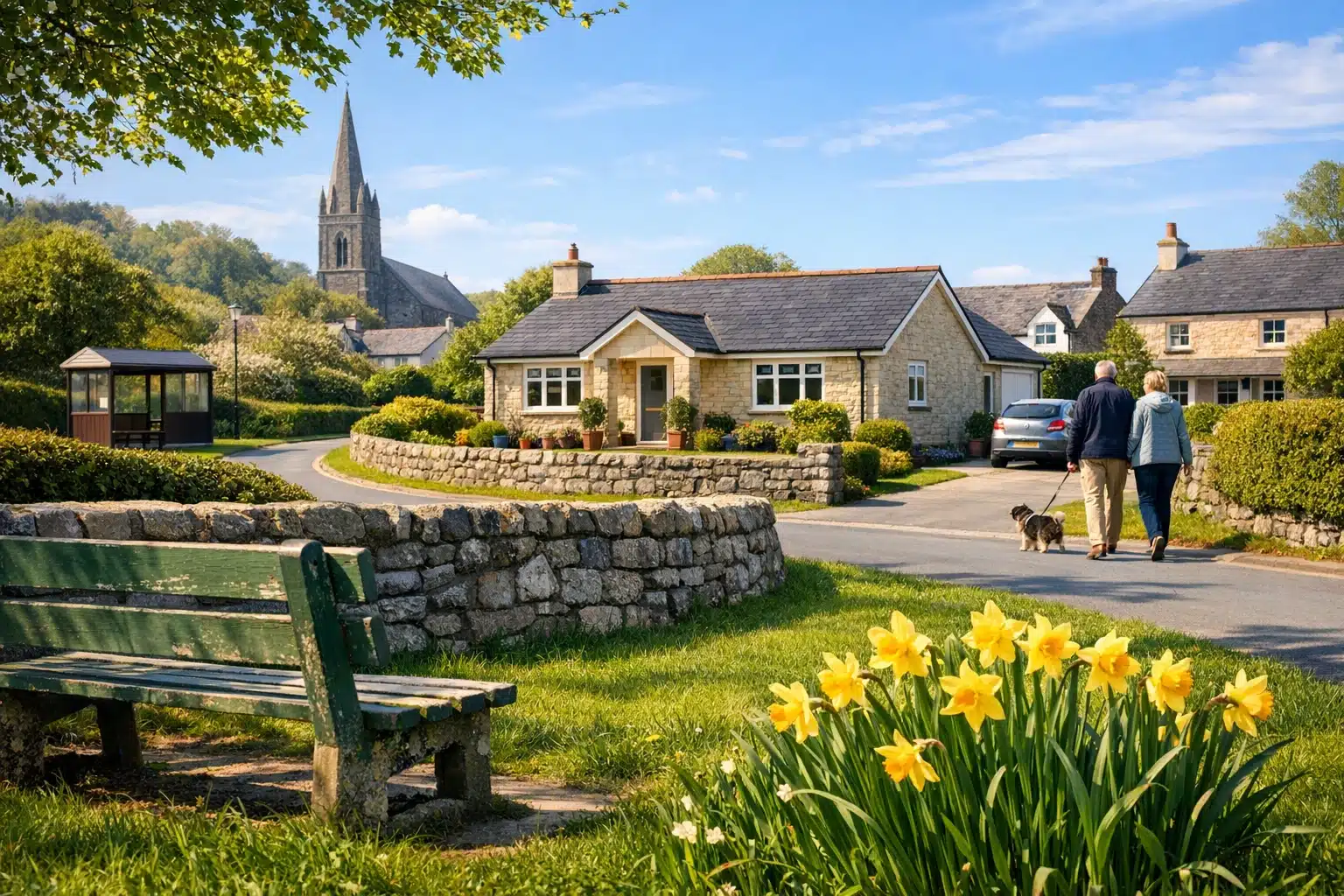
 Artificially generated image
 Bungalows for Rent in the United Kingdom: A Practical Guide
Across the United Kingdom, bungalows occupy a curious place in the rental market: familiar, often scarce, and frequently snapped up by tenants who value simplicity over extra floors. For some renters, that means step-free movement and a manageable garden; for others, it means peace, privacy, and a home that does not echo like a staircase well. Yet a smart choice depends on more than charm alone. Price, location, energy efficiency, and tenancy terms can turn a pleasant viewing into either a great decision or an expensive compromise.
This article follows five practical themes so the search feels less hazy and more structured. It begins with why bungalow rentals appeal to different kinds of tenants, then looks at where they are most common across the UK. After that, it covers rent, deposits, and tenancy rules, before moving into a detailed viewing checklist. The final section brings everything together for renters who want to choose with confidence rather than speed.
Why Bungalows Appeal to Renters in the United Kingdom
Bungalows have a distinctive role in the UK housing market because they offer something many other rental properties do not: everyday living on one level. That feature sounds simple, but its impact can be significant. A tenant with limited mobility may find a bungalow far easier to use than a maisonette or a two-storey house. A couple with a toddler may prefer to avoid stairs entirely. Someone working long hours may simply want a home that feels compact, practical, and calm. In that sense, the bungalow is less a novelty than a lifestyle choice shaped by comfort, convenience, and the rhythm of daily life.
Compared with flats, bungalows often offer more privacy, direct outdoor access, and less noise from neighbours above or below. Compared with larger houses, they can be easier to clean, heat selectively, and furnish without needing to fill spare rooms. That said, they are not automatically cheaper. In some areas, especially retirement-friendly towns, villages, and desirable coastal locations, bungalows attract strong demand precisely because they are relatively rare. A single-storey home with parking, a garden, and good transport can command a premium over a similar-sized flat.
Renters are often drawn to bungalows for a mix of practical and emotional reasons:
- Step-free or low-step layouts can be easier for older adults and people with injuries or disabilities.
- Private entrances and gardens suit pet owners and tenants who enjoy outdoor space.
- Single-storey plans may feel safer and simpler for households with young children.
- Quieter surroundings are common where bungalows sit in suburban, village, or edge-of-town settings.
There is also a less measurable advantage: the atmosphere. Many bungalow streets feel settled rather than transient. Front paths, hedges, compact lawns, and low rooflines create a very different mood from a block of rental flats. It is a kind of everyday ease, the housing equivalent of putting the kettle on before the rain starts. Still, renters should not romanticise the format. Some older bungalows have dated insulation, awkward room proportions, or limited storage. Others were designed decades ago and may not suit modern expectations for open-plan living or home working. The appeal is real, but the best results come when charm is balanced with careful inspection.
Where to Find Bungalows and How Regional Differences Shape the Search
Bungalows are available across the United Kingdom, but their supply is uneven. They are generally more common in suburban developments, post-war estates, villages, market towns, and coastal communities than in dense city centres. In practical terms, this means a renter searching in central Manchester, inner London, or the busiest parts of Birmingham may find very few options, while someone looking in Norfolk, Lincolnshire, parts of the South West, rural Wales, or selected Scottish and Northern Irish towns may see a broader mix of listings.
England contains the largest overall stock simply because of population and housing volume. In counties with older owner-occupier communities, bungalows often cluster in quiet residential roads built during the mid to late twentieth century. Areas such as East Anglia, the South Coast, and parts of the Midlands frequently show stronger supply than high-density metropolitan cores. Wales offers a different pattern: fewer listings in absolute terms, but sometimes better value in smaller towns and semi-rural districts. Scotland has bungalow rentals too, though terminology and local housing types vary, and stock may be more scattered depending on region. In Northern Ireland, single-storey homes can be found in towns and suburban areas, but the market is smaller, so timing matters.
Location shapes not only availability but also the character of the rental. A bungalow near the coast may offer sea air and a garden, yet face seasonal competition and higher demand from downsizers or holiday-home buyers in the broader market. A village bungalow may feel wonderfully peaceful, but limited bus services and longer drives to shops or healthcare can make daily life harder. By contrast, a bungalow on the edge of a larger town may strike the best balance between accessibility and convenience.
When comparing regions, renters should think beyond headline rent:
- Transport links can change the true value of a cheaper rural property.
- Local health services matter for older tenants and households with ongoing medical needs.
- Flood risk, coastal exposure, and winter heating demands vary by area.
- Competition can be intense in retirement hotspots where single-storey homes are scarce.
The most successful search usually begins with geography, not decoration. A neat kitchen can be updated in your mind; an inconvenient location stays inconvenient every day. For that reason, map the essentials first: shops, GP surgery, pharmacy, bus routes, rail access, and parking. Once those basics line up, the bungalow itself becomes much easier to judge fairly.
Budgeting for Rent, Deposits, Bills, and UK Tenancy Rules
Renting a bungalow involves more than comparing monthly asking prices. Because many bungalows come with gardens, driveways, larger footprints, or lower energy efficiency than newer flats, the total cost of living can differ sharply from the sticker price in a listing. A property that looks affordable at first glance may later reveal higher heating bills, garden upkeep, commuting expenses, or council tax obligations. Smart renters therefore build a full budget rather than a rent-only budget.
Regional variation is one of the biggest cost drivers. In broad market terms, rents tend to be highest in London, the South East, and especially desirable commuter belts or coastal retirement areas. More affordable options are often found in parts of the North East, some Midland towns, sections of Wales, and certain areas of Scotland or Northern Ireland, though individual streets can still vary widely. Scarcity also affects price. Because bungalows form a smaller slice of the housing stock than flats or standard houses, a well-kept one in a popular area may receive interest quickly, even if its rent sits above local averages.
Tenants should usually budget for the following:
- Monthly rent and the upfront holding arrangement where applicable.
- Tenancy deposit, which depends on the nation of the UK and local legal rules.
- Council tax, unless the landlord clearly states otherwise.
- Gas, electricity, water, broadband, and possibly oil or LPG in rural locations.
- Contents insurance and, where specified, basic garden maintenance responsibilities.
The legal framework also changes across the UK, which matters when reading agreements. In England, many private rentals use assured shorthold tenancy structures, and under the Tenant Fees Act 2019 most deposits are capped at five weeks’ rent when annual rent is below the higher threshold set in law. In Scotland, private residential tenancies are typically open-ended, giving a different structure and notice system from England. In Wales, occupation contracts apply under the Renting Homes framework. Northern Ireland has its own tenancy rules and practices. The lesson is simple: never assume that advice from one nation automatically fits another.
Ask direct questions before committing. What is the Energy Performance Certificate rating? Who cuts the hedges? Has the boiler been serviced recently? Are there known damp issues? Is parking allocated or merely informal? A bungalow can be wonderfully straightforward to live in, but only if the finances are equally straightforward on paper. The most reassuring rental is not the one with the prettiest photos; it is the one whose costs remain believable after you add everything up.
What to Check During Viewings: Layout, Accessibility, Condition, and Daily Practicalities
A bungalow viewing should be slower and more deliberate than many renters expect. Because the appeal of single-storey living lies in ease of use, the details of layout matter more here than they often do in a flat. One bungalow may feel airy and practical, while another with similar square footage feels cramped, dark, or oddly arranged. Hallway width, door placement, storage, ceiling height, and natural light all influence whether the property works in real life rather than just in photographs.
Accessibility is often the headline advantage, so inspect it carefully. “Single-storey” does not always mean “easy access.” There may still be steps at the entrance, a high threshold, a steep driveway, narrow bathroom space, or a bath-shower combination that limits usability. If accessibility is important for your household, bring a checklist and test the route from parking space to front door, from bedroom to bathroom, and from kitchen to garden. A bungalow that looks suitable online can prove awkward once you imagine using it every day.
Condition is equally important, especially because many UK bungalows were built decades ago. Older properties can be charming, but they sometimes come with hidden compromises. Look closely for:
- Signs of damp, condensation, or mould near external walls and windows.
- Roof age and evidence of leaks, particularly in ceilings or around extensions.
- Boiler condition, radiator placement, and the likely cost of heating a broad floor area.
- Window quality, draughts, and insulation levels.
- Storage space for coats, cleaning supplies, and garden tools.
Outdoor areas deserve attention too. A garden may sound like a bonus until you realise it needs constant upkeep or has little privacy. Check boundaries, fencing, drainage, shed access, and how much maintenance the tenancy expects from you. Parking is another surprisingly important point. Many bungalow streets were designed in earlier decades, and vehicle numbers have since grown, so ask whether the driveway fits modern cars comfortably and whether on-street parking becomes crowded.
Finally, think about rhythm. Where would groceries land when you walk in? Does morning light hit the bedroom too early? Is the home quiet in the afternoon but busy during school-run hours? A good bungalow often reveals its strengths in these ordinary moments. The best ones do not just look neat for twenty minutes; they make the day flow with less friction. That is the standard worth aiming for.
A Sensible Path to the Right Rental Bungalow
For renters in the United Kingdom, the ideal bungalow is rarely the first one that appears online, and that is not a bad thing. This part of the market rewards patience because the right property depends on fit more than spectacle. A retired couple may prioritise walkability, healthcare access, and a low-maintenance garden. A remote worker may need reliable broadband, natural light, and a quiet street. A small family may care most about storage, parking, and safe outdoor space. The common thread is that a bungalow works best when it supports daily routines gracefully rather than forcing adjustments at every turn.
By this point, a practical decision can be built from four questions. First, is the location genuinely convenient for the way you live? Second, does the layout support comfort now and not just on moving day? Third, are the full costs manageable after bills, transport, and maintenance are considered? Fourth, does the tenancy structure make sense under the rules that apply in that part of the UK? If the answer to any one of those is uncertain, slow down. In lettings, urgency often benefits the timetable, not the tenant.
A helpful final checklist looks like this:
- Compare at least three local listings, even if one seems appealing immediately.
- Read the tenancy agreement closely and ask nation-specific questions.
- Check the EPC rating and heating system before judging value.
- Visit the area at different times if possible, not only during the viewing slot.
- Measure furniture routes and note storage before paying a deposit.
The real advantage of bungalow living is not nostalgia or curb appeal, though both can play a part. It is the possibility of a home that feels calm, direct, and manageable in a rental market that often feels rushed and complicated. If you are an older renter planning ahead, a downsizer seeking ease, a couple wanting privacy, or simply someone who prefers life without stairs, a well-chosen bungalow can be an excellent fit. Search carefully, question kindly but firmly, and judge value by how the property will serve you six months after move-in, not just how it feels in the first ten minutes. That approach usually leads to the kind of rental decision you do not need to second-guess later.