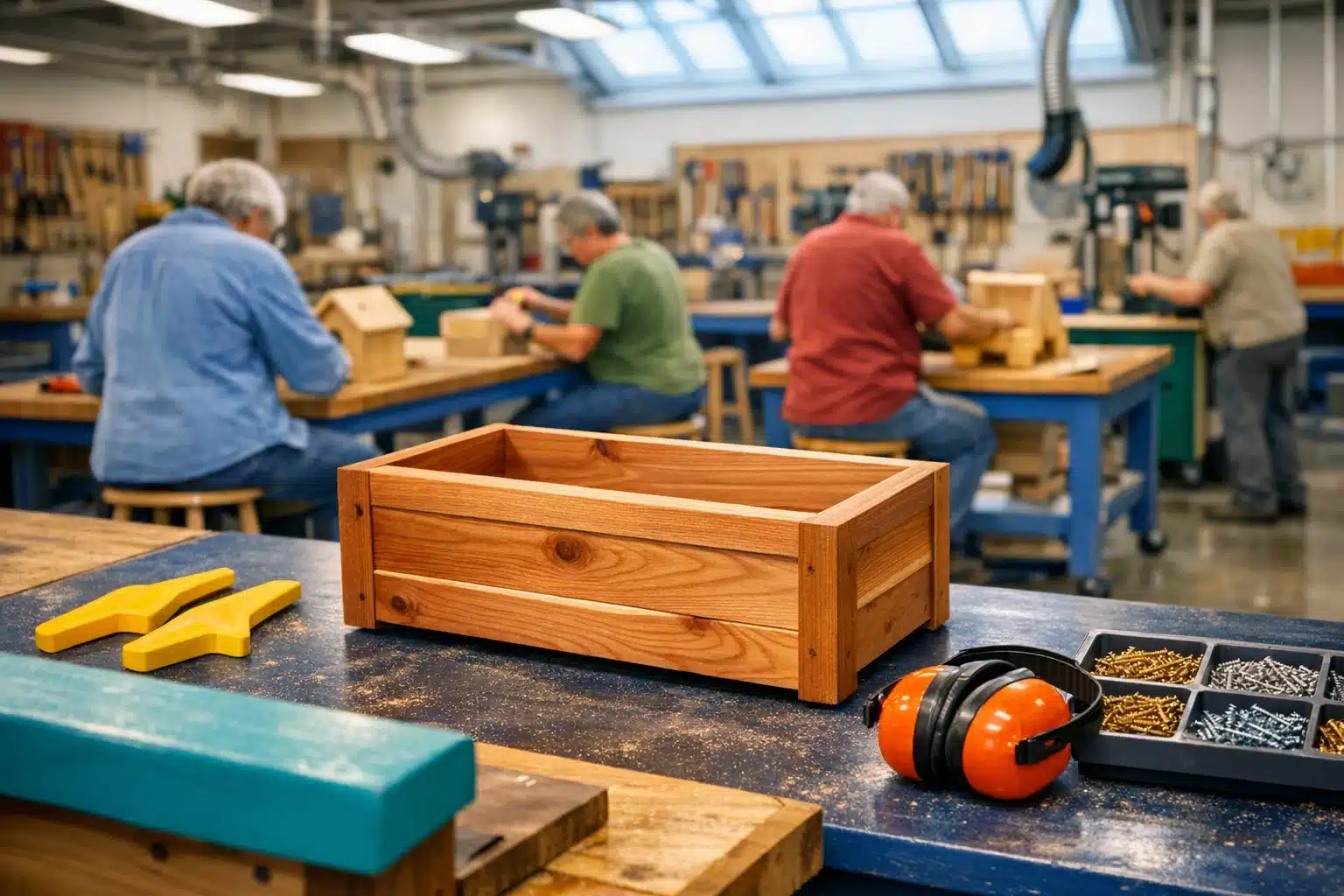
 Artificially generated image
 Carpentry Classes for Seniors: A Practical Guide to Getting Started
Introduction
Carpentry classes can be an ideal fit for seniors who want a hobby that keeps the mind busy and the hands moving. Unlike passive pastimes, woodworking blends practical problem-solving, gentle physical effort, and the quiet reward of making something useful. Classes also provide structure, safety guidance, and a social setting that makes learning feel welcoming rather than intimidating. Whether the goal is basic home projects or a fresh creative routine, the right course can turn curiosity into lasting confidence.
Outline
1. Why carpentry classes appeal to older adults and why the format works better than trying to learn entirely alone. 2. The main kinds of classes available, from senior centers to makerspaces, and how to compare them realistically. 3. Safety, tools, comfort, and accessibility, including practical adaptations for vision, grip strength, stamina, and mobility. 4. Common beginner projects, the skills they build, and how seniors can progress at a manageable pace. 5. A concluding guide for older learners who want to take the first step with clear expectations and a useful plan.
Why Carpentry Classes Can Be a Great Fit for Seniors
Carpentry has a special kind of appeal because it combines creativity with purpose. A painting may brighten a room, but a well-made shelf can brighten a room and hold the books at the same time. For many seniors, that practical side matters. A class does not simply teach how to cut wood; it teaches how to measure, plan, sequence steps, solve small problems, and turn raw materials into something that can be used every day. That sense of usefulness is one reason woodworking often feels deeply satisfying.
There are also clear lifestyle reasons why classes work well for older adults. Retirement can open welcome free time, but it can also remove structure from the week. A recurring class on a set day gives rhythm to the calendar without feeling rigid. It offers a reason to leave the house, meet people, and focus on a project that does not revolve around errands or appointments. Many senior learners say the class itself becomes as valuable as the finished object because it gives them a place to belong.
From a learning perspective, woodworking engages several mental skills at once. Students read plans, calculate dimensions, think in three dimensions, remember sequences, and adjust when a board is slightly warped or a measurement is off. Those challenges are concrete rather than abstract, which makes them enjoyable for people who like learning by doing. At the same time, most beginner tasks involve manageable movements rather than intense athletic effort. Sanding, clamping, marking lines, driving screws, and assembling small parts can often be paced according to energy level.
Some of the strongest advantages of carpentry classes for seniors include:
• hands-on learning with visible results
• opportunities for social connection
• room for personal creativity without pressure
• practical skills that can be used at home
• the option to work with hand tools, power tools, or a mix of both
Classes can also reduce frustration. Learning alone from videos can be rewarding, but it often means guessing why a joint does not fit or why a saw cut wandered off the line. A good instructor can correct posture, explain tool choice, and offer shortcuts that save both time and material. For seniors who have never touched a drill press or a miter saw, that guidance is reassuring. For those returning to woodworking after decades away, it helps rebuild confidence. In that sense, a class is not just instruction; it is a bridge between curiosity and competence.
Types of Carpentry Classes and How to Choose the Right One
Not all carpentry classes are built the same, and choosing well can make the difference between a rewarding experience and an exhausting one. Seniors often benefit from comparing classes by pace, class size, equipment access, teaching style, and comfort rather than by price alone. A cheaper class is not always the better value if it moves too quickly, lacks support, or expects students to bring tools they do not own.
Several common options are available in many areas. Community colleges often offer non-credit woodworking or shop courses that run for six to ten weeks. These classes can be affordable and structured, and they usually provide access to solid equipment. Senior centers may offer beginner-friendly workshops with a slower pace and smaller goals, such as making a birdhouse or a simple tray. Makerspaces tend to provide modern tools, open shop time, and a lively community, though some feel more independent and may suit learners who already have a little confidence. Private woodworking studios can be more expensive, but they often offer excellent instructor attention and carefully designed beginner projects. Some hardware stores and local craft schools also run short workshops, which are useful for trying the hobby before committing to a longer course.
Costs vary by location, but a one-day workshop may range from roughly 40 to 150 dollars, while multi-week courses often fall between 120 and 500 dollars. Some programs include materials, and others charge separately. Before signing up, it helps to ask practical questions:
• How many students are in each class?
• Are all tools provided?
• Is there a safety orientation for beginners?
• How long is each session?
• Are stools, bright lighting, or accessibility features available?
• Is the course project-based or skill-based?
A project-based class is often ideal for first-timers because it gives a clear finish line. Students leave with a completed item and a sense of momentum. A skill-based course may suit those who want a stronger foundation in joinery, measuring, tool use, and finishing techniques. Neither approach is automatically better; the right choice depends on personality. Someone who enjoys immediate wins may thrive in a workshop that builds a planter box in one Saturday. Someone who wants long-term competence may prefer a slower course that teaches layout, sawing, drilling, sanding, and assembly over several weeks.
Transportation and scheduling matter too. A class that starts at 8 a.m. across town may sound exciting until winter weather or traffic turns it into a chore. For many seniors, the best class is the one that is close enough, calm enough, and supportive enough to become a habit. When comparing options, think less about prestige and more about fit. The right class should feel like an invitation, not a test.
Safety, Tools, and Accessibility: Building Confidence Before Building Projects
Safety is the part of woodworking that deserves the most respect and the least drama. A good class should treat it as normal, constant, and practical rather than frightening. For seniors, safety is not only about avoiding cuts or splinters. It is also about reducing strain, improving visibility, managing noise, and making sure the workspace supports a comfortable pace. When those factors are handled well, carpentry becomes far more enjoyable.
Beginners often assume power tools are too risky and hand tools are always safer. In reality, each tool has its own learning curve. A sharp chisel used carelessly can cause trouble, while a well-guarded machine used under supervision can be quite manageable. The important difference is instruction. In a quality class, students learn where to stand, how to secure the wood, when to use push sticks, why dust collection matters, and how to stop before fatigue affects judgment. That last point is especially important. Tired hands and rushed decisions are a poor combination in any shop.
Accessibility is another major factor. Many seniors have mild arthritis, reduced grip strength, less stamina than they once had, or changing vision and hearing. None of these automatically rule out woodworking. They simply mean the setup should be thoughtful. A good classroom may offer benches at workable heights, clamps that reduce hand strain, brighter task lighting, anti-fatigue mats, magnifying aids, and hearing protection that still allows conversation. Some students do especially well with smaller projects because large pieces of lumber can be awkward to lift or position alone.
Helpful beginner gear often includes:
• wraparound safety glasses
• hearing protection
• a dust mask or respirator when appropriate
• a tape measure with large markings
• a comfortable pencil or marking knife
• work gloves for handling rough lumber, though not for operating certain machines where gloves may be unsafe
There is also a useful comparison to make between home workshops and classes. At home, people may improvise with poor lighting, an unstable table, or missing safety habits. In a class, the environment is usually designed for instruction, which makes it easier to learn correctly from the start. That matters because technique often determines comfort. A student who learns to let the saw do the work, support the material properly, and sand in stages will use less effort and get better results.
The image of woodworking as a loud, rough hobby is incomplete. In truth, it can be methodical, calm, and adaptable. The smell of fresh pine, the whisper of sandpaper, the steady line of a pencil across a board, these are small details, but they matter. They turn the shop from an intimidating place into a workable one. For seniors, confidence usually grows not from bravado, but from clear habits practiced in a safe and welcoming space.
Best Beginner Projects and the Skills They Teach
One of the smartest ways to enjoy a carpentry class is to begin with projects that are simple in structure but rich in lessons. Seniors do not need to start with a dining table or an elaborate cabinet to feel accomplished. In fact, smaller projects often teach more efficiently because they repeat core skills without demanding heavy lifting, complex joinery, or long hours on your feet. A well-made box can teach more about accuracy than a large project built in frustration.
Excellent starter projects often include picture frames, birdhouses, wall shelves, planter boxes, small stools, serving trays, and storage crates. Each one introduces a useful mix of measuring, cutting, squaring, fastening, sanding, and finishing. A picture frame teaches precise angle work. A shelf introduces load-bearing concerns and wall-mount planning. A planter box involves assembly and outdoor-friendly finishing. A small stool adds questions of stability and strength. These are modest builds, but they create a strong foundation.
Many instructors sequence projects in a way that makes sense for adult learners. A typical progression may look like this:
• project 1: measuring, marking, straight cuts, and sanding
• project 2: drilling, fastening, and simple assembly
• project 3: squaring parts, basic joinery, and clamping
• project 4: finishing techniques, edge treatment, and design choices
• project 5: a personalized item that combines earlier skills
This kind of progression is especially effective for seniors because it allows visible progress without overload. Rather than trying to master every machine at once, students build competence in layers. They learn why accuracy in layout matters before blaming the saw. They discover that sanding is not a final rescue mission but part of the plan. They begin to notice the grain, the feel of hardwood versus softwood, and the small differences between screws, nails, glue, and joinery. These details are where craftsmanship quietly takes root.
There is also real value in choosing projects that match daily life. A custom lap desk, a raised planter, a book stand, or a small entry bench can be more motivating than decorative pieces with no clear purpose. When the finished project solves a household problem, the class feels immediately worthwhile. Some seniors even use what they learn for basic repairs, such as tightening loose furniture, replacing damaged trim, or building simple storage solutions for garages and craft rooms.
Perhaps the most encouraging truth is that woodworking rewards patience more than speed. A student who moves carefully, asks questions, and checks measurements twice is often in a better position than someone who rushes. The first shelf may wobble a little, the first finish may show a brush mark, and the first miter joint may not close perfectly. That is not failure. That is how the hands learn. In carpentry, progress is often visible in wood grain and pencil lines long before it is visible in confidence, but it arrives all the same.
Conclusion for Seniors: How to Start with Realistic Expectations and Enjoy the Process
If you are a senior considering a carpentry class, the most helpful mindset is not to ask whether you are too old to begin. The better question is whether you are ready to learn in a steady, enjoyable way. Carpentry is one of those rare hobbies that can be practical, social, creative, and deeply calming at the same time. It does not demand perfection on day one. It asks for attention, patience, and a willingness to try.
A realistic starting plan is often the best one. Look for a beginner course nearby, ideally with small class sizes, clear safety instruction, and projects designed for first-time learners. Choose a schedule that leaves room for rest rather than one that packs too much into a tiring day. Wear comfortable clothes, bring reading glasses if you use them, and do not worry about knowing the names of every tool before you arrive. A good instructor expects beginners to be beginners.
It also helps to define your own reason for joining. Some seniors want a creative outlet after retirement. Others want to make gifts, organize their homes, meet new people, or revive a skill they learned decades ago. Any of those reasons is valid. Motivation matters because it shapes the kind of class that will suit you best. Someone interested in practical home projects may choose a basic carpentry course. Someone drawn to craft and design may prefer a woodworking studio with more emphasis on finish and detail.
Keep these final tips in mind:
• start with one class, not an entire toolkit
• favor comfort and safety over speed
• expect small mistakes and learn from them
• choose projects that fit your space and strength
• enjoy the community as much as the craftsmanship
The real reward of carpentry is not only the shelf, box, frame, or planter you carry home. It is the quiet change that happens while making it. You begin to see materials differently. You trust your hands a bit more. You notice that learning still feels good, maybe even better than it used to, because now it is chosen freely. For seniors, that can be the most meaningful part of all. A carpentry class is not merely a lesson in woodwork. It is a practical reminder that new skills, useful work, and creative satisfaction remain fully within reach.