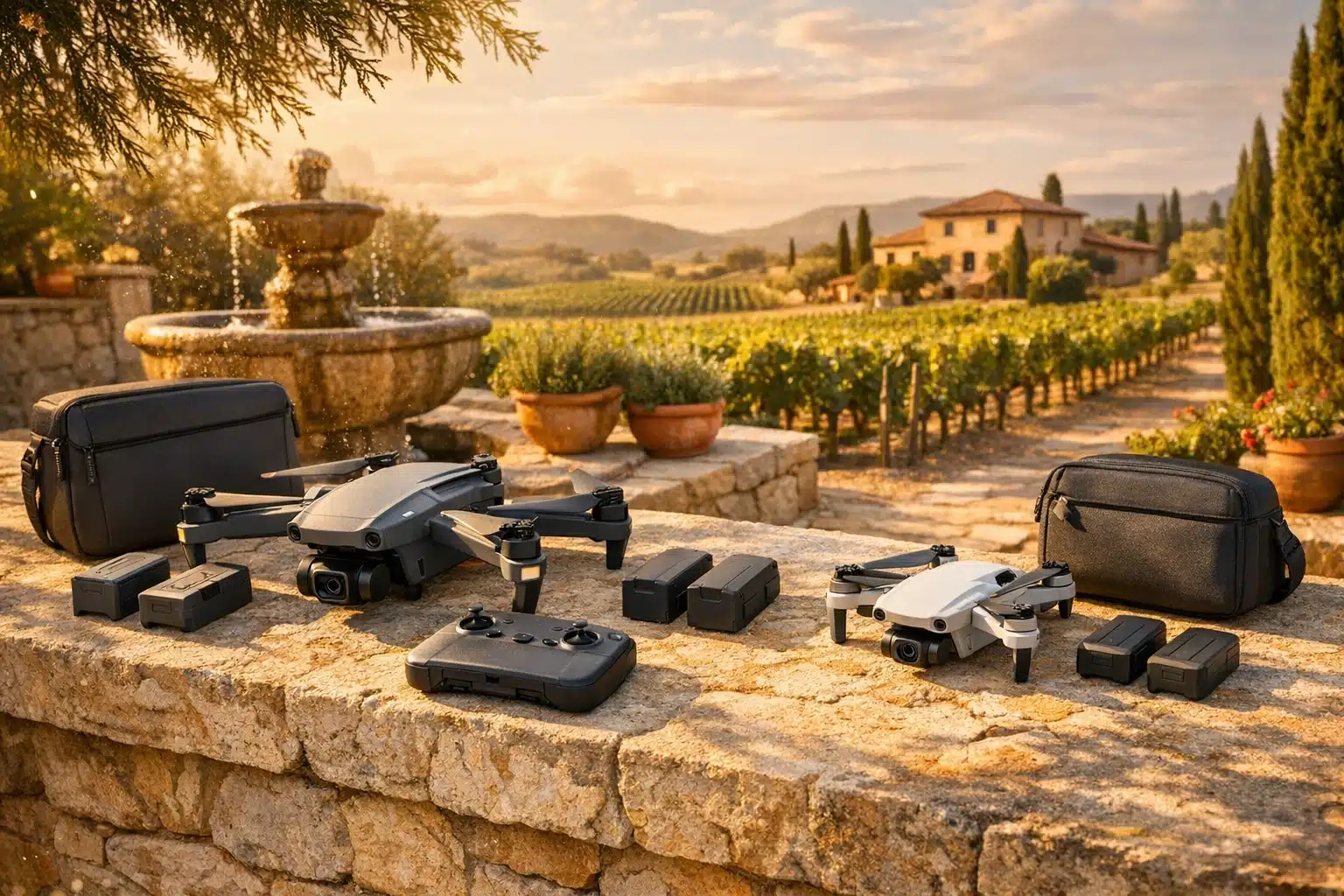
 Artificially generated image
 DJI Drone Clearance: What to Know Before You Buy
Clearance pricing on DJI drones can look like a lucky break, but a low sticker price rarely tells the whole story. Some deals are genuine chances to buy a capable aircraft for less, while others hide trade-offs in battery health, firmware support, bundled accessories, or warranty coverage. For beginners, travelers, photographers, and budget-minded hobbyists, learning to separate value from leftover stock matters. This guide explains what clearance really means and how to judge a deal before your money takes off.
This article follows five practical questions: what a clearance label usually signals, how to test whether the discount is truly worthwhile, how older DJI models compare with newer options, which rules and ownership costs deserve attention, and how different types of buyers can make a confident final decision. DJI is mentioned here for editorial and informational purposes only, with no implied affiliation or endorsement.
1. Understanding What “DJI Drone Clearance” Really Means
Before looking at prices, it helps to define the term. In retail, “clearance” usually means a seller wants to move inventory quickly. That can happen because a newer model has replaced an older one, because a warehouse is being cleaned out, because a product bundle changed, or because a unit was returned and repackaged. In other words, a clearance label describes the seller’s situation at least as much as the drone itself. That distinction matters, because two aircraft with the same model name can represent very different buying experiences depending on whether they are factory-sealed, refurbished, open-box, or previously activated.
A DJI listing marked for quick sale can fall into several categories: • discontinued but new stock • open-box inventory returned within a standard return period • refurbished units that have been inspected and tested • seasonal promotional leftovers after a holiday push • bundle versions with fewer accessories than the original launch package. Each category carries its own risk profile. Sealed stock is often the simplest case, while open-box or refurbished products require more attention to condition notes, accessory completeness, and warranty terms.
There is also a second source of confusion: some shoppers hear “drone clearance” and think of airspace approval or permission to fly in controlled zones. That is a separate issue. A product clearance sale is about price and inventory. Flight clearance involves aviation rules, local restrictions, geofencing, and in some countries formal authorization before takeoff. Mixing the two can lead to an odd situation in which a buyer gets a cheap drone but later discovers that using it conveniently near home or during travel is not as simple as expected.
Why do DJI products appear on clearance so often compared with some other electronics? The drone market moves quickly. Camera performance improves, obstacle sensing becomes more capable, transmission systems get stronger, and software features such as subject tracking or vertical video become more refined. Retailers know that once a replacement model lands, many customers lose interest in the previous generation even if it remains highly capable. That gap creates opportunities for informed buyers. A drone that no longer feels new on a product page may still produce excellent aerial photos, stable 4K video, and dependable recreational flights for years.
The key idea is simple: clearance does not automatically mean outdated junk, and it does not automatically mean a brilliant deal either. It is a signal to slow down, read closely, and ask better questions.
2. How to Tell Whether the Price Is Actually Good
The easiest mistake in clearance shopping is to focus only on the headline discount. A drone advertised at a much lower price than its launch figure can still be poor value if the package is incomplete or if ownership costs rise immediately after purchase. With drones, the total package matters almost as much as the aircraft. One battery may be enough for a quick backyard flight, but many people discover that 25 to 40 minutes of advertised flight time rarely translates into a relaxed afternoon of filming once wind, travel time, and setup are factored in. Buying extra batteries later can narrow or erase the apparent savings.
When evaluating a listing, compare more than the aircraft body. Look at the controller, charger type, battery count, propeller condition, storage case, charging hub, and memory card support. A lower clearance price may hide the fact that the bundle uses a basic phone-connected controller, while a slightly pricier listing includes a screen-equipped remote that improves convenience in the field. Those differences change real-world value. A traveler who wants fewer cables may prefer the package with the integrated display, even if the initial cost is higher.
A practical review checklist can save money: • compare the clearance price to current street prices, not only the original launch MSRP • verify whether the unit is new, refurbished, or open-box • ask about battery cycle count if the item is used or previously activated • confirm the return window and warranty coverage in writing • check whether replacement batteries and props are still easy to buy • inspect shipping costs, taxes, and any activation or service fees. A deal that looks sharp in a search result can soften quickly once these numbers are added together.
Hypothetical examples make the point clearer. Suppose Drone A is on clearance for $599 with one battery and a basic controller, while Drone B costs $749 and includes three batteries, a charging hub, and a better remote. The cheaper option may feel smarter at first glance, but if two extra batteries and a hub later cost $250 or more, the balance changes. The same logic applies to refurbished stock. If a certified refurbished drone comes with a solid warranty and meaningful savings, it can be excellent value. If the price is only slightly below new, the risk-adjusted choice may be the untouched unit.
Also pay attention to support lifespan. A discounted aircraft can remain fully usable for a long time, yet the ownership experience may become less convenient if spare parts, batteries, or app compatibility gradually narrow. A good clearance purchase is not simply the lowest price on the screen. It is the option that keeps total cost, usability, and future support in healthy proportion.
3. Comparing Older DJI Drones With Newer Alternatives
The most interesting clearance decision is rarely “cheap or expensive.” It is usually “older and stronger in one area, or newer and better balanced overall?” DJI’s product lineup creates that exact puzzle. An older premium drone can outperform a newer entry-level model in image quality or wind handling, while a newer compact drone may win on portability, obstacle sensing, battery efficiency, software intelligence, and travel friendliness. That is why comparison matters more than the discount badge.
Take a common type of comparison: an older midrange aircraft with a larger camera sensor versus a newer sub-250-gram model. A drone such as the Air 2S became popular partly because of its 1-inch sensor, which still attracts buyers who care about dynamic range and low-light results. By contrast, newer Mini-series models emphasize extreme portability, lighter regulatory burdens in many places, and clever features such as advanced obstacle sensing and vertical shooting for social platforms. One is not universally better. The answer depends on how, where, and why you plan to fly. If your priority is backpack travel and convenience, the smaller option may feel liberating. If your priority is image depth and steadier performance in breezy conditions, the older but more substantial aircraft may still deserve attention.
The same trade-off appears higher up the ladder. A discounted older flagship can look tempting because it once sat near the top of the range, yet a newer midrange drone may include fresher transmission hardware, more refined tracking, and a lower ongoing cost of ownership. For photographers, sensor size and lens behavior often justify paying attention to older premium models. For many casual creators, however, the difference between “excellent” and “slightly more excellent” matters less than portability, charging speed, and ease of setup on a busy weekend trip.
Here is a simple way to frame the comparison: • older premium models often offer stronger cameras, larger airframes, and better wind resistance • newer lightweight models often offer easier travel, simpler operation, and lighter regulatory friction • recent midrange models may bring the best balance of smart features and modern software support. The trap is buying the biggest bird in the bargain bin just because it once carried a luxury reputation. What mattered at launch may not match your current use case.
If you mainly want scenic footage for vacations, real estate previews for practice, or family travel clips, the newest drone you can comfortably support may serve you better than an older aircraft with headline specs you rarely use. If you already understand color grading, manual exposure, and post-production, a discounted model with stronger imaging hardware may be the more satisfying tool. Clearance shopping rewards honesty. The right drone is the one that fits your workflow, not the one that merely looks impressive on a comparison chart.
4. Regulations, Safety, Batteries, and Other Ownership Realities
A drone purchase does not end at checkout. Rules, maintenance, and after-sale support shape whether a bargain stays pleasant or turns into a shelf ornament. This is especially important with clearance inventory because older models may come from a different regulatory moment than the one buyers face today. If you are in the United States, for example, many recreational flyers can use some sub-250-gram drones with fewer registration hurdles, while heavier aircraft generally trigger registration requirements. Recreational users also need to complete the FAA’s TRUST safety test, and commercial activity may bring additional obligations. Many recent DJI models include Remote ID capability, but buyers should still confirm current local requirements rather than assuming every drone fits every scenario.
Outside the United States, the picture changes again. European, UK, Canadian, Australian, and other national frameworks differ in categories, weight thresholds, operator responsibilities, and permitted flight areas. A great discount can lose shine if the drone’s weight or classification creates more restrictions than you expected. Clearance shopping therefore works best when paired with location-based research. A few minutes with official aviation guidance can be worth more than another ten percent off the selling price.
Safety and maintenance deserve equal attention. Lithium batteries age with time, and storage conditions matter. A battery that spent long periods at full charge in a hot environment may not perform like one that was cared for properly. Props are inexpensive but important. A bent blade, minor crack, or hard-to-see chip can affect both efficiency and safety. Firmware support matters too. You want an aircraft that still works smoothly with current apps, current mobile devices if needed, and current geofencing systems.
Ask practical ownership questions before buying: • Is the drone already activated, and if so, when? • Are batteries original and healthy? • Is the charger included and correct for the region? • Are spare parts still easy to source? • Does the seller offer a real inspection period? • Is there any crash history or past repair record? These are not fussy details. They directly affect reliability.
One more point often gets overlooked: clearance pricing does not erase the need for safe flying habits. Use prop guards where appropriate, keep visual line of sight when required, respect privacy, and check weather before launch. Drones can make a quiet field feel cinematic in seconds, but they remain aircraft, not toys in the casual sense. The smartest buyers treat low prices as an invitation to prepare well, not as permission to skip the basics.
5. Final Thoughts: Who Should Buy a DJI Clearance Drone?
A DJI drone on clearance can be a very sensible purchase for the right person. It can also be the wrong shortcut for someone who wants the easiest setup, the broadest support runway, or the least complicated ownership experience. The best candidates are usually buyers who know their priorities. A beginner who wants to learn basic flight and capture vacation footage may do very well with discounted stock from a reputable seller, especially if the package includes extra batteries and a clear warranty. A traveler may prefer a lighter, newer model even if the discount on a larger aircraft seems dramatic. A serious hobbyist who understands manual camera control may see exceptional value in an older model with stronger imaging hardware. Meanwhile, anyone planning commercial work should think beyond the purchase price and consider reliability, legal compliance, battery availability, and turnaround time if repairs are needed.
If you want a quick decision framework, use this one: • buy now if the seller is reputable, the condition is clearly documented, support and accessories remain easy to find, and the bundle genuinely fits your needs • wait if the price gap between old and new is small, especially when the newer model offers better portability, software support, or safety features • walk away if the listing is vague about battery health, return terms, activation history, or included parts. Ambiguity is often more expensive than impatience.
The target audience for this topic is broad, but the central advice stays the same. Shop with the discipline you would use for any camera system, not with the impulse that often follows a red discount label. Drones are part aircraft, part imaging tool, and part software platform. That combination means value comes from the whole ecosystem, not only from the body price. The clearance shelf can hold excellent options, especially when a model’s core strengths still align with what you need today.
In the end, a good purchase should feel calm rather than dramatic. You should know why the price is low, what trade-offs come with it, and what kind of flying you expect to do in the next year. If those answers are clear, a DJI clearance deal can be a practical way to enter aerial photography or upgrade on a budget. If those answers stay fuzzy, the wisest move may be to keep your wallet grounded until the right opportunity appears.