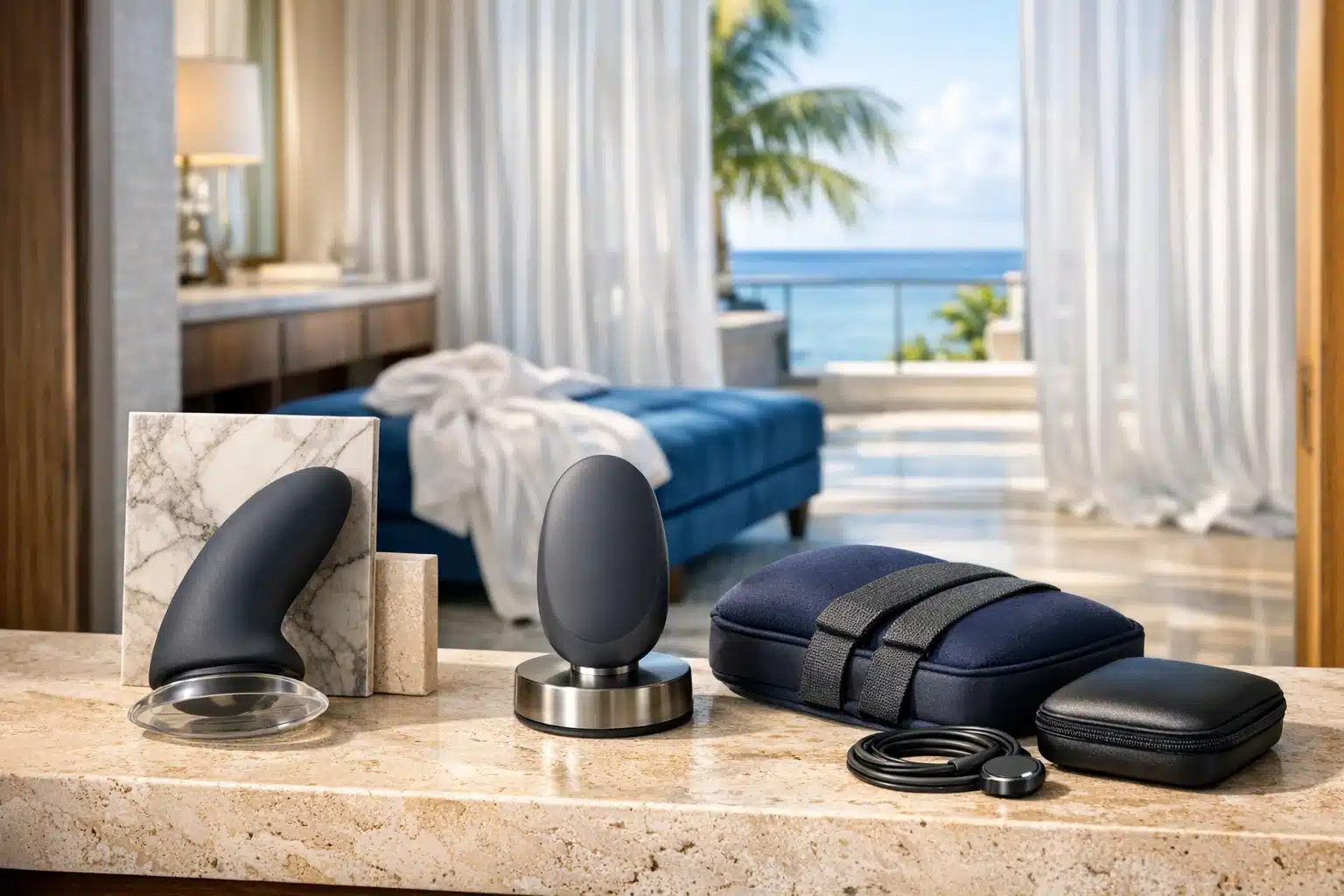
 Artificially generated image
 Guide to Mountable Massage Devices for Men
Interest in mountable massage devices for men has grown as personal wellness products become more ergonomic, quieter, and easier to clean. What once felt niche now sits at the crossroads of stress relief, convenience, and private self-care. For buyers, the real challenge is not finding an option, but sorting through mounting styles, materials, safety features, and price tiers. A clear guide helps turn curiosity into an informed decision.
Outline:
- What mountable massage devices are and why they appeal to many men.
- How suction, strap, cushion, and fixed-base mounting systems compare in real use.
- Which materials, motors, and controls influence comfort, noise, and longevity.
- Why cleaning, storage, and safety habits matter just as much as power.
- How to choose the right model for your budget, routine, and living space.
What Mountable Massage Devices Are and Why They Matter
Mountable massage devices for men are hands-free personal wellness tools designed to stay in position during use rather than being held the entire time. That single change in design can alter the whole experience. Instead of forcing the user to manage grip, angle, and pressure at once, a mounted device lets the setup do part of the work. For many men, that means better consistency, less awkward repositioning, and a more relaxed routine. In an age where convenience shapes nearly every purchase, from cordless vacuums to standing desks, it is no surprise that personal massage products have moved in the same direction.
There is also a broader wellness angle here. The modern buyer is not only looking for intensity or novelty. He is often looking for privacy, predictability, and easier cleanup. Mountable designs can meet those needs when they are built well. They may suit men who live alone and want a quick setup, men in shared homes who value discreet storage, or experienced buyers upgrading from basic handheld options that never felt quite right. In that sense, these products are not simply about function; they are about reducing friction in a private routine that many people would prefer to keep efficient and low-stress.
The category is diverse, which is why it helps to know what separates a useful product from a disappointing one. A strong buying decision usually comes down to a few practical questions:
- Will the mounting system stay secure on the surfaces available at home?
- Is the material non-porous and easy to sanitize?
- Does the motor offer controlled variation rather than raw noise?
- Can the device be stored discreetly without special conditions?
- Is the shape designed for comfort over repeated use?
That last point matters more than many product pages admit. A device can look sleek in photos and still feel clumsy in practice. A good mountable model should balance ergonomics, stability, and maintenance. Think of it like choosing a chair for a home office. The flashy color matters for five seconds; the support matters for years. The same logic applies here. Buyers who focus on everyday usability usually end up more satisfied than those who chase only aggressive marketing terms.
Another reason this category matters is that it has matured. Earlier generations of adult wellness products often leaned on gimmicks. Today, better options reflect lessons borrowed from mainstream consumer design: quieter motors, safer materials, USB charging, splash resistance, and simpler interfaces. That means buyers can approach the category with the same practical mindset they would use for grooming tools or recovery gear. The smartest question is not, “Which device looks the most exciting?” It is, “Which design makes the most sense for my routine, my space, and my standards for comfort and care?”
Comparing Mounting Systems, Stability, and Real-World Use
The term mountable sounds straightforward, but the mounting method is often the difference between a product that feels reliable and one that ends up unused. Most devices in this category fall into a few broad groups: suction-based models, strap-mounted designs, cushion-compatible options, and units with a fixed or weighted base. Each approach solves a different problem, and no single format is automatically better for everyone.
Suction-mounted models are popular because they are simple and flexible. When paired with a smooth, non-porous surface such as tile, sealed glass, polished metal, or certain laminated finishes, a strong suction cup can create a secure hold without hardware. This makes such devices attractive for users who want quick setup and removal. The downside is equally practical: suction strength can vary sharply depending on the surface, humidity, dust, or even minor texture. A wall that looks flat may still fail a suction test. If your living space lacks suitable surfaces, the most powerful motor in the world will not rescue a weak mounting situation.
Strap-mounted and cushion-compatible models take a different path. Instead of relying on a sealed surface, they attach to a pillow-like support, furniture edge, or purpose-built frame. These options tend to be more forgiving in apartments or rooms where hard surfaces are limited. They can also feel less clinical and more adaptable. On the other hand, they usually take up more storage space and may require more setup time. For some men, that extra minute is nothing. For others, convenience is the whole point, so any added step becomes a reason to skip use altogether.
Weighted-base or fixed-base models offer another style of stability. These are often designed to stay planted on the floor or another stable platform. Their value lies in predictability. Once positioned correctly, they may provide a more grounded feel than lightweight suction designs. The tradeoff is portability. They are not always the easiest to tuck away, and lower-cost versions can become bulky without actually becoming stable.
When comparing mounting systems, it helps to think in terms of environment rather than features alone:
- Smooth bathroom tile or glass: suction may work well.
- Bedroom setup with soft furnishings: cushion or strap systems may fit better.
- Dedicated private space: a weighted or semi-fixed base may offer the most consistency.
There is a small but important design lesson hidden here: stability is a comfort feature. If the device shifts, slides, or needs constant correction, the experience becomes less relaxed and more mechanical. The best mounting system is the one that disappears into the background, doing its job quietly while you focus on comfort instead of troubleshooting. In product comparison terms, that often makes surface compatibility more important than raw power, and it is why careful buyers read setup details before they ever look at pattern counts or control modes.
Materials, Motors, Controls, and the Features That Actually Make a Difference
Once the mounting style makes sense, the next layer is product engineering: materials, internal motor quality, control layout, and weather resistance. This is where many buyers either make a very smart purchase or get distracted by decorative features that add little value. In adult wellness, surface material is not a minor detail. It affects comfort, hygiene, odor retention, and long-term durability.
Non-porous silicone is often the benchmark for good reason. It tends to feel softer than hard plastic, is easier to clean thoroughly, and does not trap residue the way porous materials can. ABS plastic, commonly used for housing or structural sections, can also be durable and easy to maintain. By contrast, lower-grade jelly-like compounds may feel soft at first but can age poorly, hold onto smells, or become harder to sanitize. Buyers who want a product that lasts should pay close attention here. A bargain that degrades quickly is not a bargain for long.
Motor design deserves similar scrutiny. Many listings advertise powerful vibration or multiple patterns, yet power alone rarely predicts satisfaction. A better motor delivers controlled output, smooth ramping, and less rattling noise at mid-level settings. That matters because mountable devices are often used in spaces where discretion matters. A product that sounds like a loose electric shaver can ruin confidence, no matter how many modes it claims. In general, quieter, better-tuned devices cost more, but they often feel more refined in daily use.
Controls are another overlooked factor. Some users prefer on-device buttons because they are simple and direct. Others like remotes for easier adjustment once the device is positioned. Rechargeable models with magnetic charging or sealed USB ports are now common, and many are easier to live with than older battery-based designs. Waterproof or splash-resistant construction can be valuable too, not just for flexible use but because sealed construction often simplifies cleaning.
Useful feature comparisons usually look like this:
- Silicone exterior versus porous material: better hygiene and easier maintenance.
- Quiet motor tuning versus raw intensity: more comfort in shared spaces.
- Simple controls versus overloaded interfaces: faster learning curve and fewer mistakes.
- Rechargeable power versus disposable batteries: lower long-term hassle.
- Sealed construction versus exposed seams: easier cleanup and better durability.
It is also worth watching out for feature inflation. A product boasting 20 or 30 patterns may sound impressive, but many users end up cycling between only a few settings. A device with fewer, better-calibrated modes often feels more premium than one with endless variations that blur together. The same applies to materials and finish. Matte silicone, smooth edging, and solid seam construction can be more important than decorative lighting or dramatic packaging. In other words, the best product pages are not always the loudest ones. The strongest designs are often quietly competent, like a well-made tool that does not need to brag because it simply performs as expected.
Safety, Cleaning, Storage, and Long-Term Care
For all the attention buyers give to appearance and power, long-term satisfaction often comes down to care habits. A mountable massage device is personal-use equipment, which means hygiene is not optional or cosmetic. It is part of the product experience. A device that is difficult to wash, slow to dry, or annoying to store tends to get used less often, even if it performs well. Convenience lives or dies in the details.
The safest maintenance routine starts with the material itself. Non-porous silicone and sealed hard plastic surfaces are easier to clean with mild soap and warm water or a cleaner designed for body-safe adult wellness products. Porous materials are more complicated because they can retain moisture and residue, which is one reason many experienced buyers avoid them. Before first use and after every use, the device should be cleaned thoroughly and dried fully. If the product contains seams, textured channels, or removable parts, those areas deserve special attention. A rushed rinse is not really a cleaning routine.
Lubricant compatibility is another practical issue, especially in this category. Many silicone-based products are best paired with water-based lubricants because certain silicone-on-silicone combinations can affect the finish over time. Manufacturer instructions matter here. This is not glamorous advice, but it is the kind that protects the product and makes ownership less frustrating. The same realism applies to charging. Devices should be charged with the included cable or approved equivalent and stored away from extreme heat, moisture, or dust.
A smart care checklist looks like this:
- Wash before and after use with suitable cleaner or mild soap and warm water.
- Dry completely before storing to reduce odor and material wear.
- Use compatible lubricant, usually water-based unless the manufacturer states otherwise.
- Inspect suction cups, straps, or base components for wear before use.
- Store in a dust-free pouch or box away from sharp objects and direct sunlight.
Safety also includes common-sense setup. A mount should be tested before full use, especially with suction systems. Surfaces should be clean, flat, and stable. If the device shifts during a test fit, that is a warning, not a challenge to push through. Stability should be confirmed early, not discovered halfway through use. Likewise, any device that causes discomfort, pinching, or unusual heat should be stopped immediately. Better adult wellness products are designed for comfort and control, not guesswork.
There is an almost boring honesty to this section, and that is exactly the point. The products that stay in rotation are rarely just the most powerful. They are the ones that clean up quickly, store easily, and feel dependable every time. A device can promise a lot on the box, but if ownership becomes a chore, enthusiasm fades. Good care turns a one-time purchase into a reliable part of a private wellness routine, and that is where real value begins to show.
How to Choose the Right Model for Your Budget, Space, and Routine
Choosing the right mountable massage device for men is less about finding a universally superior product and more about matching design to real life. The ideal model for a first-time buyer in a small apartment may be very different from the best option for an experienced user with a private bathroom, more storage, and a higher budget. This is where honest self-assessment helps. Think less like a collector and more like a practical shopper: where will this be used, how often, and what tradeoffs are acceptable?
For beginners, simplicity usually wins. A mid-range model made from body-safe silicone, with a dependable mount, a few well-tuned settings, and easy cleaning, is often a stronger choice than a premium-looking product overloaded with modes and accessories. The learning curve matters. If the setup is intuitive and the care routine is manageable, the product is more likely to become a comfortable part of regular self-care. If everything feels fiddly, the device may spend more time hidden away than actually used.
Budget also shapes the decision, but price should be read alongside lifespan. Entry-level models can be useful if the material is sound and the mount is secure. Still, this is one category where ultra-cheap products often reveal their limits quickly through noisy motors, weak suction, or awkward seams. Mid-range options usually offer the best balance between quality and affordability. Premium models may justify their cost through quieter engineering, better ergonomics, stronger sealing, and more reliable long-term performance, but not every buyer needs top-shelf refinement.
A simple buying framework can narrow the field:
- Small space and shared home: prioritize quiet operation, discreet storage, and quick cleanup.
- Minimal setup preference: look for reliable suction or an easy fixed-base design.
- Frequent use: spend more on materials, motor quality, and sealed construction.
- First purchase: choose clear controls and proven basics over feature overload.
- Upgrade purchase: focus on comfort refinement, noise reduction, and stronger stability.
For the target audience, the biggest takeaway is this: the best device is the one that fits your habits without adding friction. You do not need exaggerated claims or a pile of unnecessary modes to make a good choice. You need stable mounting, body-safe materials, sensible care requirements, and performance that feels consistent rather than chaotic. A well-chosen mountable massager can offer convenience, privacy, and a more tailored sense of comfort, especially for men who value hands-free design and streamlined personal wellness tools.
In the end, buying well means asking calm, practical questions. Does it fit your space? Can you clean it easily? Will it stay secure? Does it seem built for repeat use rather than a flashy first impression? Answer those honestly, and the shopping process becomes much easier. Instead of chasing hype, you end up with a product that serves your routine, respects your privacy, and feels like a smart addition rather than an impulsive purchase.