Guide to the Costco 14-Day Japan Tour Package
Japan sits high on many travelers’ wish lists because it blends efficient modern infrastructure, layered history, memorable food culture, and scenery that can shift from neon avenues to temple gardens in a single afternoon. A Costco 14-day Japan tour package is relevant because it offers structure in a country that can feel complex to first-time visitors, while still opening the door to famous cities and cultural landmarks. The real question is whether that convenience delivers enough value, flexibility, and comfort to justify choosing a package over planning everything on your own.
1. Why a Costco 14-Day Japan Tour Package Appeals to So Many Travelers
For many people, Japan is not a casual weekend booking. It is a major long-haul trip, often saved for years, and travelers understandably want the experience to feel smooth rather than stressful. That is where a package sold through a well-known membership retailer attracts attention. Costco is associated with value, simplified purchasing, and bundled deals, so the idea of applying that same formula to a two-week Japan trip is naturally appealing. It suggests fewer moving parts, fewer surprise costs, and less time spent comparing train passes, hotel neighborhoods, and airport connections late at night.
There is also a psychological benefit to packaged travel. Japan is famously efficient, but it can still feel intimidating at the planning stage. Travelers may worry about navigating Tokyo Station, forwarding luggage, interpreting hotel room sizes, or deciding whether Kyoto should come before Osaka. A guided or semi-guided package reduces those frictions. Instead of building every day from scratch, the traveler starts with a framework and adjusts from there. That structure is especially useful for first-time visitors, multigenerational groups, and anyone whose vacation time is limited and expensive.
To keep this guide practical, here is the outline the rest of the article follows:
- What a 14-day Japan package usually includes and what it often leaves out
- How a typical two-week route through Japan is structured
- How the package compares with booking trains, hotels, and activities independently
- Which kinds of travelers benefit most from the Costco approach
- What to check before booking so the trip matches your expectations
This is also an important point: package details can vary by season, departure city, travel partner, and year. Costco Travel may list Japan vacations through different operators, and itinerary design can change. So the most useful way to read a package is not as a fixed fantasy brochure, but as a planning tool. Think of it like a well-drawn map. It may not tell you how every meal will taste or whether the cherry trees will bloom on cue, but it can tell you whether the journey’s pace, logistics, and inclusions are likely to fit your travel style. That is the real value of evaluating a 14-day Japan package carefully before you click “book.”
2. What the Package Usually Includes, and What You Should Check Closely
When people ask whether a Costco 14-day Japan tour package is worth it, the answer usually depends less on the headline price and more on what that price actually covers. On paper, bundled travel can look expensive compared with booking a flight alone. In practice, once you add hotels, rail travel, intercity transfers, attraction admissions, and some meals, the comparison becomes more nuanced. A strong package can reduce both cost uncertainty and planning fatigue, but only if the inclusions align with what you would have bought anyway.
Many Japan packages of this length commonly include several core elements:
- International airfare from select gateways or an air-credit structure
- Hotel stays in major cities, often in business-class or mid-range properties
- Daily breakfast and occasionally selected lunches or dinners
- Ground transportation, such as motorcoach segments, rail tickets, or airport transfers
- Sightseeing admissions for major temples, gardens, castles, or museums
- Guide services for all or part of the itinerary
That bundle matters because Japan’s logistics add up quickly. A one-way shinkansen trip between Tokyo and Kyoto is often around the equivalent of roughly ¥14,000 per person in ordinary class, and hotel prices in major tourist seasons can rise noticeably in cities like Kyoto and Tokyo. Airport transfers, local transit cards, and baggage handling may sound minor when considered separately, but together they influence both budget and energy. A package can absorb those details into one purchase.
Still, the exclusions are just as important. Travelers should always read for the items that remain their responsibility. Those may include city taxes, some meals, travel insurance, optional excursions, gratuities where applicable, visa-related costs if any are required for your nationality, seat upgrades, and personal expenses such as eSIM service or luggage forwarding. In Japan, independent diners often enjoy the freedom to explore local ramen shops, izakaya, sushi counters, or department-store food halls. If a package includes too many preset meals, some travelers may feel over-managed rather than supported.
Room type also deserves close attention. Japanese hotel rooms can be compact by North American standards, and a package that looks generous at first glance may still involve smaller-than-expected accommodations. If you value larger rooms, private baths in ryokan stays, or frequent luxury upgrades, a standard package may not fully meet those preferences. On the other hand, if your priority is a reliable, organized trip where the transportation and hotel booking work has largely been handled for you, these bundles can be very attractive. The smartest approach is to compare the package against the trip you would honestly book for yourself, not against an imaginary ultra-cheap version that leaves out comfort, convenience, or popular sightseeing.
3. A Typical 14-Day Japan Itinerary: How the Route Often Flows
Although exact Costco-listed packages can change, many two-week Japan tours follow a recognizable rhythm because the country’s transportation network and tourism geography naturally support it. In simple terms, the route often starts in Tokyo, moves through one or more scenic or historic regions, continues into Kansai for Kyoto, Nara, and Osaka, and may then extend farther west or loop back with extra free time. It is a route shaped by both practicality and atmosphere: fast trains connect major cities efficiently, while each stop offers a different version of Japan.
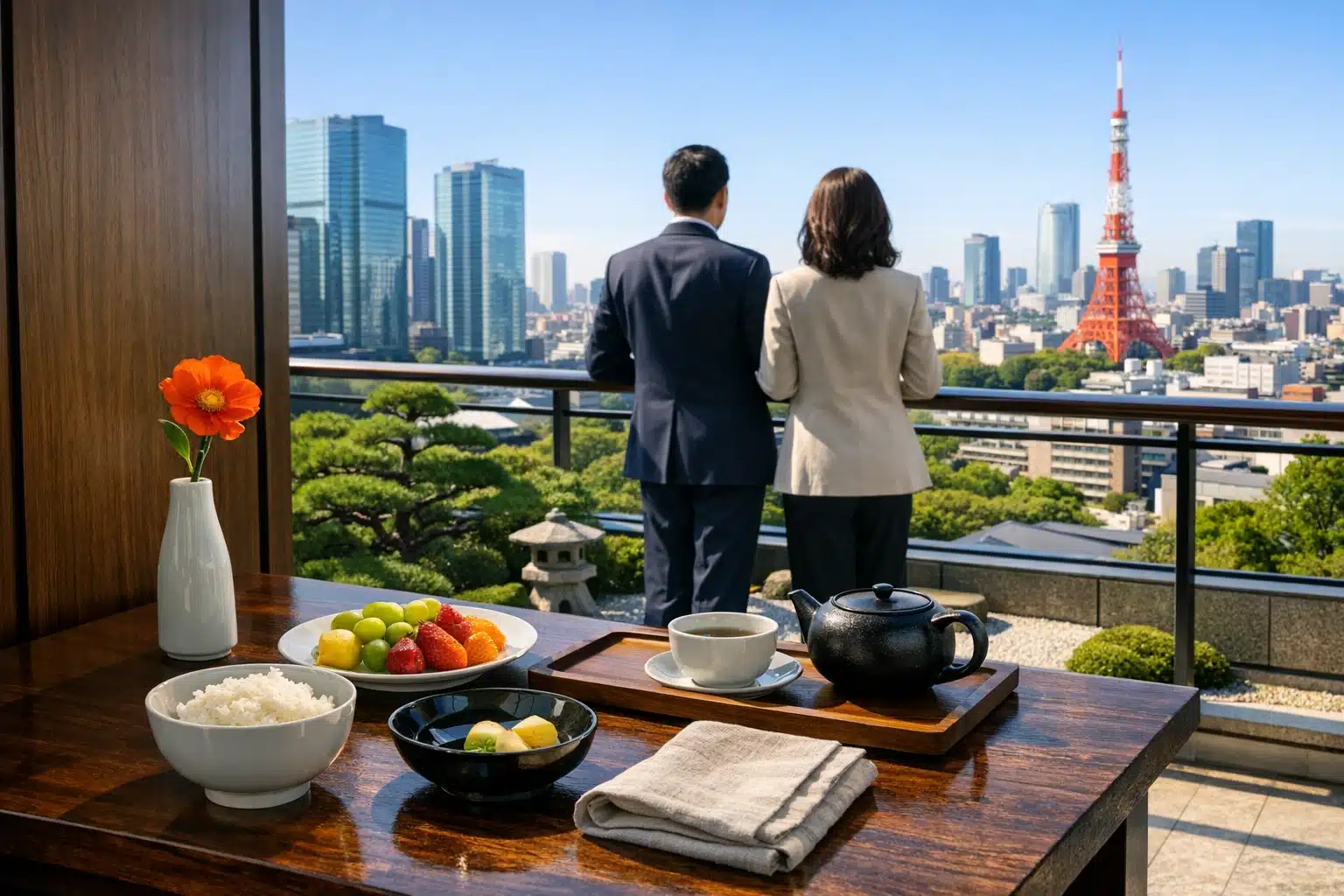
A common opening is Tokyo for three to four nights. This gives travelers time to adjust to the time difference and experience neighborhoods with very different personalities. One day may be built around Meiji Shrine, Shibuya, and Harajuku; another might focus on Asakusa, the Tokyo Skytree area, or Ueno museums. Tokyo is where many travelers first feel the electric contrast that defines the country. One minute, crossing lights flash over crowds and giant video screens; the next, you step into a quiet garden where gravel, moss, and still water seem to lower the volume of the city itself.
From there, many itineraries move toward Mount Fuji or Hakone. This segment is popular because it provides a visual and emotional reset after Tokyo’s scale. Depending on weather, travelers may see Fuji from lakeside viewpoints or from the train. Some packages include a ryokan-style stay, an onsen experience, or a scenic cruise, though those features vary widely and should never be assumed without checking the listing.
Kyoto usually occupies the emotional center of the trip. With thousands of temples and shrines in the wider prefecture, no package can cover everything, so most tours focus on highlights such as Kinkaku-ji, Fushimi Inari Taisha, Arashiyama, or Kiyomizu-dera. A day trip to Nara is also common because it introduces another layer of classical Japan through Todai-ji and Nara Park. Osaka often appears either as a hotel base, a food-focused evening, or a shorter city visit emphasizing Dotonbori or Osaka Castle.
Some 14-day packages then continue to Hiroshima and Miyajima, which adds historical depth and a distinct regional perspective. Others may include Kanazawa, Takayama, or another culturally rich stop to diversify the experience beyond the Tokyo-Kyoto axis. The strongest itineraries balance three things well:
- Urban energy and traditional heritage
- Guided sightseeing and personal free time
- Efficient transit days and enough rest to enjoy each destination
If the route looks too crowded, the trip can become a checklist. If it is too empty, you may wonder why you paid for a guided framework. The best version sits in the middle, giving you enough structure to move confidently across Japan while still leaving room for spontaneous discoveries, whether that is a hidden coffee shop in Kyoto or a tiny station bakery that ends up being one of your favorite memories.
4. Value for Money: Package Travel Compared with Booking Japan Independently
The most useful way to judge a Costco 14-day Japan tour package is to compare it with a realistic do-it-yourself alternative, not with the lowest possible trip assembled from budget compromises you would never actually accept. Japan can be done independently and very successfully. The rail system is excellent, local signage is often multilingual, and online booking tools are better than they once were. Still, “possible” and “easy for your specific travel style” are not the same thing. A package earns its place when it meaningfully reduces friction, risk, or time spent planning.
Independent travel usually offers better flexibility. You choose your hotel areas, stay longer where you want, chase seasonal events, and build your days around personal interests like architecture, anime, gardens, food, or hiking. You are not tied to a coach departure time or a group lunch stop. If your dream is to spend half a day browsing secondhand camera shops in Tokyo or to wake early for a quiet temple visit before the crowds arrive, DIY planning is hard to beat.
But that freedom carries costs, some financial and some mental. Japan’s intercity travel is efficient, yet buying the right tickets, understanding seat reservations, comparing regional rail passes, and coordinating luggage between cities can take significant effort. Hotel selection also matters more than many first-time visitors expect. A lower room rate in the wrong location can cost precious time every day. During high-demand periods like cherry blossom season and autumn foliage, availability tightens and prices move upward, especially in Kyoto.
A package can create value in several specific ways:
- It bundles transportation that many travelers would otherwise book at higher last-minute rates
- It reduces planning time for people who value convenience as part of the purchase
- It may include admissions and local guide insight that improve context at major sites
- It can smooth airport, hotel, and intercity transfers, which is especially helpful after long flights
That said, packaged value is not automatic. Some tours move quickly, use standardized hotels, or include limited free time. If you already enjoy trip planning, are comfortable with trains, and want total control over meals and neighborhoods, independent travel may deliver greater satisfaction for the same or even lower total cost. In contrast, travelers who dislike travel admin may find that a package’s convenience is worth paying for. Time has value, and so does peace of mind.
The practical takeaway is this: build a side-by-side comparison. Add up flights, hotels, major rail legs, airport transfers, must-see admissions, and your own likely meal budget. Then compare that number with the package price, while also asking how much your flexibility is worth. For some travelers, the Costco route will look like a sensible middle path between luxury escorted touring and fully self-managed travel. For others, it will be a comfortable starting point that still leaves room for personal discoveries between the scheduled moments.
5. Who Should Book It, What to Confirm Before Purchase, and Final Thoughts
A Costco 14-day Japan tour package is not for everyone, and that is exactly why it deserves a careful, honest evaluation. It tends to work best for first-time visitors to Japan, couples who want a major trip without the burden of assembling every detail, older travelers who appreciate transfers being organized, and families or friend groups who prefer one main booking rather than several separate reservations. It can also be a good fit for busy professionals who would rather spend their evenings dreaming about Japan than comparing train schedules and cancellation policies.
Before booking, travelers should confirm several details that can significantly shape the experience:
- How many fully free days or half-days are included
- Whether the trip is guided throughout or only on selected days
- Which meals are included, and whether dietary needs can be accommodated
- The hotel names or at least the class and neighborhood locations
- How luggage is handled between cities
- The average activity level, walking distance, and stair exposure
- What cancellation, change, and refund rules apply
- Whether airfare is included and from which departure gateways
These points matter because Japan travel can look deceptively easy on a brochure. In reality, a beautiful temple day may also involve early departures, long walks on stone paths, train platforms, and crowded stations. A traveler with mobility concerns should not rely on vague descriptions. Likewise, food-focused travelers should check how much independent dining time exists. Japan rewards curiosity at street level: basement food halls, neighborhood cafes, tiny soba shops, and department-store desserts are part of the experience, not just side notes.
Season is another major factor. Spring and autumn are popular for obvious reasons, but summer can be hot and humid, while winter can offer lower crowds in some regions along with a different aesthetic mood. One traveler dreams of cherry blossoms; another prefers crisp skies, quieter temple grounds, and fewer lines. The right season is the one that matches your priorities, not simply the one most photographed online.
Conclusion for Travelers Considering the Package
If you want Japan with reduced planning stress, a clear route through major highlights, and one purchase that brings flights, hotels, transportation, and some sightseeing under the same roof, a Costco 14-day package can be a sensible option. If your ideal trip depends on spontaneity, niche interests, and full control over where you stay and how you spend each day, independent planning may serve you better. The best choice is the one that fits your energy, confidence, budget, and travel habits. Read the itinerary slowly, compare it with the trip you would actually build yourself, and you will be far more likely to arrive in Japan ready to enjoy it rather than manage it.