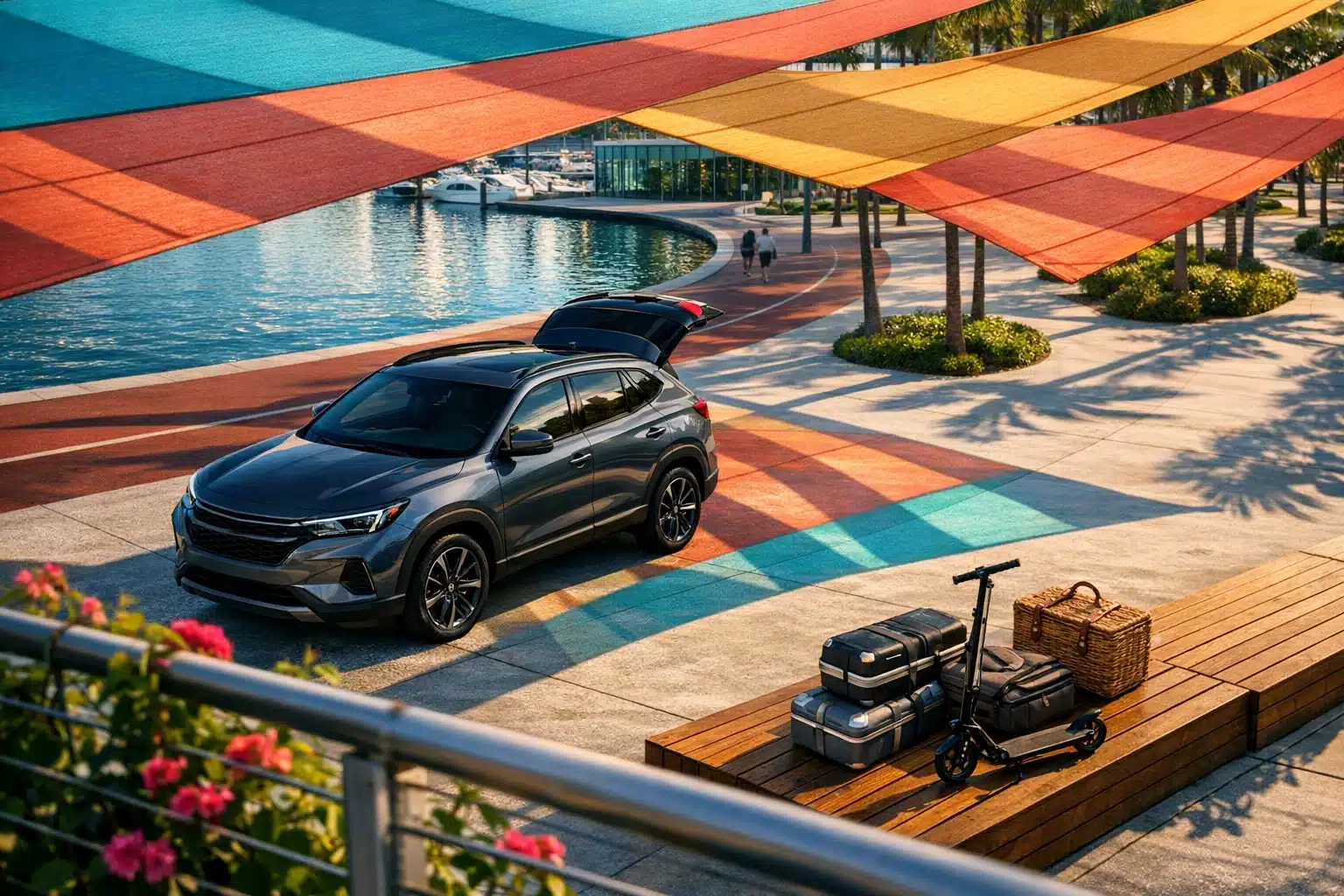
 Artificially generated image
 Honda CR-V: Features, Reliability, and Buying Considerations
The Honda CR-V has earned its place in driveways across the world because it answers a very modern question: how do you fit family duty, fuel awareness, weekend cargo, and daily comfort into one sensible machine? In the compact SUV class, where nearly every brand promises the perfect balance, the CR-V keeps returning to the shortlist through practicality, strong packaging, and a reputation that buyers usually trust, though not blindly.
Outline
- The CR-V’s history, market position, and the reasons it became a benchmark in the compact SUV category
- Interior design, passenger comfort, cargo flexibility, and the technology features that shape daily usability
- Engines, hybrid options, driving behavior, efficiency, and safety systems in real-world ownership
- Reliability patterns, maintenance needs, common trouble spots, and expected running costs
- Buying considerations for new and used shoppers, trim selection, comparison points, and a focused conclusion
1. Why the Honda CR-V Became a Compact SUV Reference Point
The Honda CR-V did not become popular by accident. From its early years, it arrived with a clear purpose: give buyers the higher seating position and flexible cargo space of an SUV without the bulky feel or fuel appetite of a traditional truck-based utility vehicle. That formula sounds ordinary today, but in the late 1990s and early 2000s it helped define what the modern compact crossover would become. Many families, commuters, and downsizing empty nesters wanted a vehicle that felt manageable in traffic yet capable enough for groceries, sports gear, road trips, and awkward home-improvement purchases. The CR-V spoke that language fluently.
Over several generations, Honda refined the idea rather than reinventing it. The CR-V grew in size, improved its safety structure, added more insulation for quieter travel, and adopted increasingly advanced driver-assistance technology. That steady evolution matters because buyers in this class often value consistency as much as novelty. A car can have dramatic styling or flashy screens, but if it is difficult to live with, the shine fades quickly. The CR-V has generally avoided that trap by focusing on what owners notice every day: visibility, seat comfort, a usable rear bench, a low-stress driving character, and cabin storage that actually makes sense.
Its competition is fierce. Rivals such as the Toyota RAV4, Mazda CX-5, Hyundai Tucson, Kia Sportage, Nissan Rogue, and Subaru Forester all compete for the same households. Each tends to have a calling card. The Mazda often leans more premium in feel, the Subaru emphasizes standard all-wheel drive in many markets, and the Toyota is especially strong in hybrid recognition. The CR-V usually answers with balance rather than extremism. It may not dominate every single category, yet it often scores well across almost all of them, which explains its staying power.
A few qualities explain its long relevance:
- It offers a broadly useful shape with easy access for passengers and cargo.
- It has historically delivered strong resale value in many regions.
- Honda’s engineering approach tends to emphasize efficiency and everyday refinement.
- The model appeals to a wide audience, from young families to older drivers seeking a practical upgrade.
In simple terms, the CR-V became a reference point because it understood a quiet truth about car buying: most people are not chasing drama on their morning commute. They want something dependable, roomy, efficient, and easy to recommend. The CR-V built its name by doing the ordinary parts unusually well, and that is often far harder than producing a one-season headline car.
2. Interior Comfort, Practicality, and Everyday Features
If the CR-V has a home-field advantage, it is usually found inside the cabin. Honda has long been skilled at packaging, and the CR-V benefits from that talent in ways that become obvious the moment you start loading bags, adjusting child seats, or spending an hour in mixed traffic. The seating position is upright without feeling commercial, and visibility is typically one of the vehicle’s quiet strengths. In a class where some competitors sacrifice glass area for style, the CR-V generally prioritizes outward confidence, which can reduce fatigue for new drivers and frequent urban commuters alike.
Passenger space is one of the reasons the CR-V remains relevant. Rear-seat accommodation is often generous for the segment, especially in legroom and ease of entry. That matters more than brochures suggest. A compact SUV is frequently asked to do midsize-family tasks, and the CR-V usually handles them with less compromise than many hatchbacks or smaller crossovers. Adults can sit in the second row without feeling like temporary luggage, and parents dealing with booster seats or rear-facing child seats tend to appreciate the square roofline and wide door openings.
Cargo capacity has also been one of the CR-V’s strongest arguments. The rear opening is typically wide, the floor is practical, and folding the rear seats creates the kind of usable area that encourages spontaneous errands. A stroller, a week’s worth of groceries, carry-on luggage, flat-packed furniture, or a dog crate can often fit without elaborate rearrangement. This is where the CR-V feels a bit like a good kitchen drawer: not glamorous, just intelligently shaped for real life.
Recent versions have improved interior presentation with better materials, cleaner dashboard design, and larger infotainment displays. Depending on trim and market, buyers may find:
- Wireless Apple CarPlay and Android Auto
- USB charging ports for front and rear passengers
- Heated front seats and, on some trims, heated rear seats
- A power tailgate, sometimes hands-free
- Digital instrument displays and upgraded audio systems
That said, the CR-V is not always class-leading in every luxury detail. Some rivals offer more dramatic screens, flashier color themes, or richer trim textures. Honda’s design language tends to be restrained, sometimes almost conservative. For many owners, that is a benefit rather than a flaw. Controls are usually easier to understand, the layout avoids gimmicks, and day-to-day interaction feels natural.
For buyers who value comfort over spectacle, the CR-V makes a convincing case. It is the kind of cabin that grows on you because it removes friction from daily routines. On paper, that may sound modest. On a rainy school morning with coffee in one hand and backpacks in the other, it feels like very smart engineering.
3. Performance, Fuel Economy, and Safety in Real Use
The Honda CR-V has rarely tried to be the sportiest option in its class, but it has usually aimed to be one of the easiest to drive well. That distinction matters. A family-focused compact SUV does not need dramatic exhaust notes or track-day ambitions; it needs predictable steering, stable braking, sensible acceleration, and a chassis that remains calm over broken pavement. In that context, the CR-V has often performed with quiet competence.
Depending on generation and market, the CR-V has been offered with naturally aspirated four-cylinder engines, turbocharged gasoline engines, and hybrid powertrains. In recent North American versions, shoppers have commonly encountered a 1.5-liter turbocharged gasoline engine or a hybrid system with combined output around the low-200-horsepower range. The exact figures vary by model year and region, so checking the specific vehicle specification is essential. What matters more than the headline number is the character. The turbo gasoline version usually feels adequate and smooth for routine use, while the hybrid tends to deliver stronger low-speed response and better fuel economy, especially in stop-and-go driving.
Fuel efficiency is one of the CR-V’s major advantages. Hybrid versions are particularly appealing for commuters who spend time in suburban traffic or city conditions, where electrified assistance can pay real dividends. Gasoline models may suit buyers who prioritize a lower upfront cost, prefer simpler shopping in markets with fewer hybrid trims, or spend more time on open highways where differences can narrow. Either way, the CR-V generally lands in the efficient half of its class, which helps long-term ownership costs.
The driving experience is usually tuned for comfort and composure. Typical strengths include:
- Light, easy steering for parking and city use
- A settled ride that handles rough surfaces reasonably well
- Stable highway manners with low driver stress
- Predictable throttle and brake responses suited to family driving
All-wheel drive is available in many markets and can be valuable for rain, snow, gravel roads, and added confidence during cold-weather travel. It is not a substitute for dedicated off-road hardware, but that is not the CR-V’s mission. This vehicle is designed for realistic versatility, not dramatic wilderness branding.
Safety is another area where the CR-V has built trust. Honda Sensing, the company’s suite of driver-assistance features, has included systems such as forward collision mitigation, lane keeping assistance, adaptive cruise control, and road departure mitigation on many recent models. Independent crash-test performance has also been strong across multiple generations, though ratings can vary depending on the year, body style, and tested equipment. Buyers should always verify the precise safety specification of the vehicle they are considering.
In real use, the CR-V’s appeal comes from its measured personality. It does not push the driver to do anything heroic. Instead, it creates a smooth, low-drama environment that feels especially valuable after a long day, a crowded commute, or a weekend run with a full cabin. That kind of capability may be subtle, but subtle is often exactly what makes a family vehicle successful.
4. Reliability, Maintenance, and Ownership Costs
Reliability is one of the first topics that comes up in any CR-V conversation, and for good reason. Honda has built a strong reputation over decades, but the smartest approach is to separate brand image from specific model-year reality. The CR-V has often performed well in long-term ownership, yet no vehicle is perfect, and different generations can have very different trouble spots. A buyer who assumes every CR-V is automatically trouble-free may overlook the details that matter most.
Broadly speaking, the CR-V tends to be seen as a durable, low-drama vehicle when maintained properly. Routine servicing, timely fluid changes, tire rotation, brake inspections, and recall follow-up go a long way. Like many modern crossovers, however, it includes systems that reward attentive ownership. Turbocharged engines need proper oil service, continuously variable transmissions benefit from correct maintenance intervals, and hybrid models add another layer of technical complexity, even if they are often very efficient and refined.
Some common ownership themes mentioned by mechanics and long-term drivers have included air-conditioning issues on certain older generations, suspension wear as mileage climbs, battery replacements, infotainment glitches, and occasional concerns tied to specific powertrain years. For example, some 1.5-liter turbo CR-V discussions have involved oil dilution concerns in particular climates and model years, though the relevance depends heavily on region, usage pattern, software updates, and the exact vehicle involved. That is why research by generation is far more useful than broad internet folklore.
A practical inspection checklist should include:
- Complete service history with evidence of regular oil and transmission fluid changes
- Confirmation that all recall work has been completed
- Cold-start behavior, warning lights, and idle smoothness
- Condition of tires, brakes, suspension components, and underbody
- Operation of the infotainment system, climate control, and power accessories
- Signs of water leaks, accident repair, or inconsistent panel gaps
Ownership costs are usually reasonable rather than unusually cheap. Parts availability is generally good in many markets, independent mechanics often know the model well, and fuel use is competitive. Insurance depends on region, age, and driver profile, but the CR-V’s mainstream positioning often helps keep it within predictable limits. Resale value can also soften the real cost of ownership, especially for well-kept examples with strong records.
New buyers should understand that modern reliability is partly mechanical and partly administrative. A sturdy engine matters, but paperwork matters too. A CR-V with verified maintenance, timely software updates, and careful previous ownership can be a better purchase than a neglected example wearing the right badge. Reliability, in other words, is not magic living under the hood. It is the result of design quality meeting consistent care over time.
5. Buying Considerations and Conclusion for SUV Shoppers
Choosing the right Honda CR-V depends less on hype and more on a few honest questions about budget, driving style, passenger needs, and how long you plan to keep the vehicle. If you are shopping new, the main decision often comes down to trim level and powertrain. If you are shopping used, the biggest variables shift toward model year, maintenance history, mileage, and whether the vehicle was treated as a sensible family tool or a neglected appliance on wheels.
For new buyers, the CR-V usually makes the most sense when you want a polished compact SUV with broad usability rather than a sharply specialized personality. Entry trims can already provide important safety features, which is good news for practical households. Mid-level trims often hit the sweet spot by adding convenience items such as upgraded infotainment, enhanced interior finishes, and easier cargo access without pushing too far into luxury-car pricing. Higher trims may be worth it if you value quieter cabins, better sound systems, larger displays, and comfort extras that make daily commuting more pleasant.
Used shoppers should be more selective. A careful pre-purchase inspection is not optional; it is part of the price of shopping wisely. Focus on a full maintenance record, clean title status, consistent tire wear, proper operation of all electronics, and evidence that the previous owner handled recalls and recommended service. Mileage matters, but history matters more. A higher-mileage CR-V with excellent documentation can be a safer bet than a lower-mileage example with blank spaces in its story.
When comparing the CR-V with alternatives, think in terms of priorities:
- Choose the CR-V if you want an all-rounder with strong packaging, easy manners, and wide appeal.
- Consider a Mazda CX-5 or CX-50 if interior richness or sharper handling ranks higher.
- Look at a Toyota RAV4 if hybrid availability and brand familiarity are central to your decision.
- Explore a Subaru Forester if visibility and standard all-weather confidence are especially important.
For the target audience, which includes families, commuters, retirees seeking one versatile vehicle, and buyers who prefer function over fashion theater, the CR-V remains a very sensible choice. It does not win attention by being outrageous. It wins by being useful in the ways that continue to matter after the first week of ownership. There is room for people, room for luggage, room for mistakes in a tight parking lot, and usually room in the budget for years of steady service if you buy carefully.
The final takeaway is simple. The Honda CR-V is most compelling when you judge it as a complete ownership package rather than a single spec-sheet hero. Look at the generation, inspect the details, match the trim to your real life, and resist paying extra for features you will never use. Do that, and the CR-V has every chance to feel less like a trendy purchase and more like one of those quietly excellent decisions that keeps proving itself on ordinary Tuesdays.