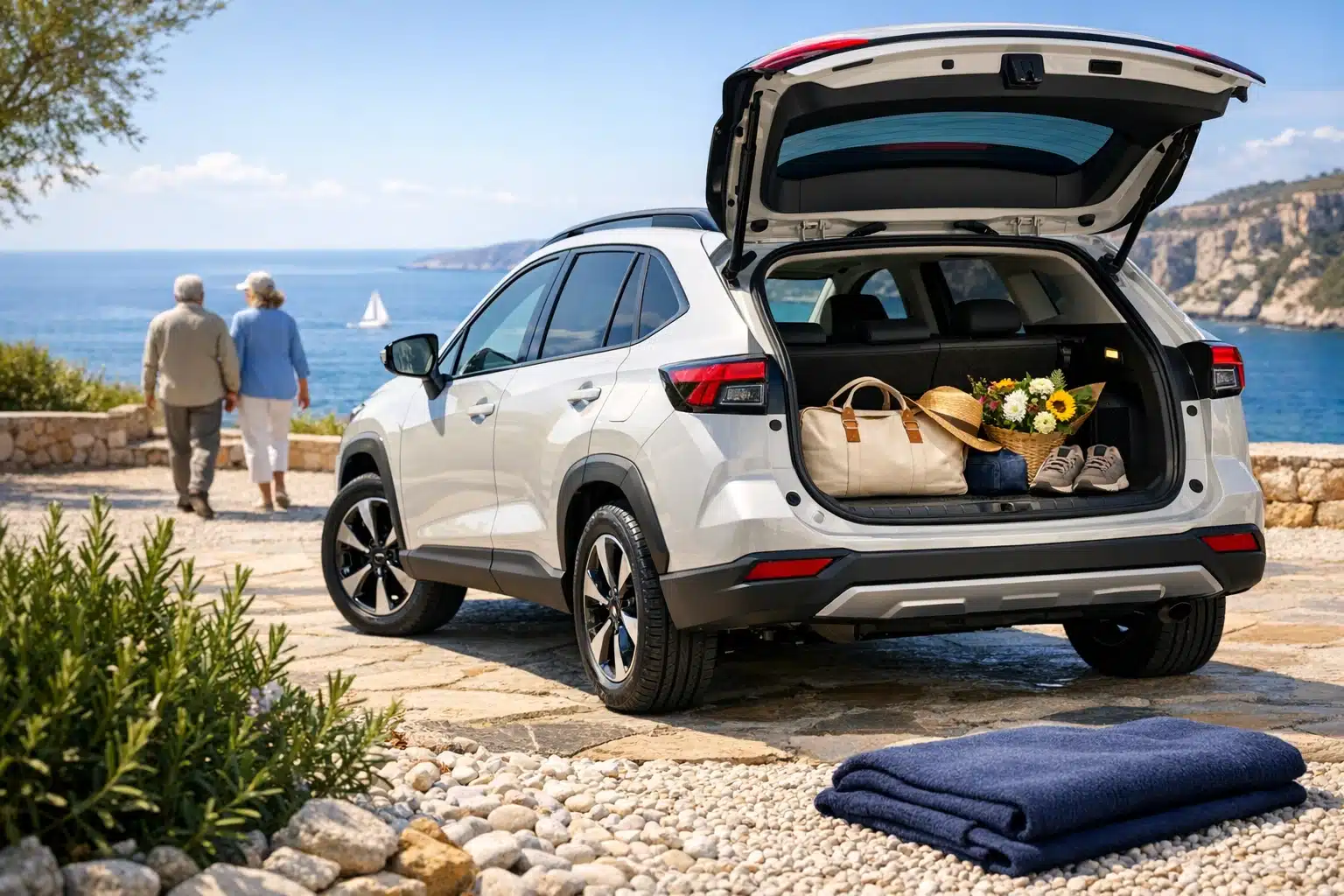
Hyundai Tucson Senior Citizen Discounts: What Buyers Should Know
Introduction and Article Outline
Buying a Hyundai Tucson can feel straightforward until the pricing talk begins, and that is where many older shoppers want clearer answers. The phrase senior citizen discount sounds simple, yet in real dealerships it can mean anything from a small courtesy reduction to a bundle of unrelated incentives. This guide sorts fact from assumption, showing where genuine savings may appear and where expectations should stay grounded. If you want a comfortable SUV without paying for avoidable extras, the details matter.
The Hyundai Tucson sits in one of the busiest corners of the market: the compact SUV segment. That alone makes the subject relevant, because seniors are often looking for a vehicle that is easy to enter, comfortable on longer drives, practical for groceries or travel bags, and equipped with modern safety features without becoming complicated to use. The Tucson often makes the short list because it combines a roomy cabin, a relatively calm ride, available driver-assistance technology, and in many cases strong warranty coverage on new vehicles. Yet none of those strengths automatically tells you whether a dealership will lower the price for your age group.
That is why the most useful question is not simply, Does Hyundai offer a senior citizen discount? The better question is, What kinds of discounts are actually available, who controls them, and how can an older buyer turn a confusing offer into a clear out-the-door number? In practice, buyers may encounter manufacturer incentives, local dealer promotions, low-rate financing, trade-in bonuses, certified pre-owned savings, and occasional courtesy discounts that are discussed informally rather than listed on a giant banner. Some are real. Some are limited. Some are just different names for ordinary negotiation.
This article follows a clear path so the shopping process feels less like guesswork and more like a well-lit road map.
- First, it explains whether a true senior discount exists for the Tucson in a consistent, reliable way.
- Next, it compares the most practical ways older shoppers can save on a new or used model.
- Then, it looks at features, ownership costs, and trim considerations that matter beyond the sticker price.
- Finally, it closes with a focused checklist and conclusion for seniors who want value, clarity, and fewer surprises at signing.
Think of this as a shopping companion rather than a sales pitch. The goal is not to chase a mythical discount, but to help you recognize real value when it appears.
Understanding Whether a Hyundai Tucson Senior Discount Really Exists
The most important point comes first: there is generally no widely advertised, nationwide Hyundai Tucson senior citizen discount that applies uniformly to every buyer and every dealership. That does not mean seniors cannot save money. It means the savings usually come from a mix of sources, and age-based pricing is often less formal than buyers expect. In the U.S. auto market, manufacturer incentives and dealer discounts are separate things. Hyundai may offer promotions tied to financing, loyalty, model-year clearance, leases, or regional campaigns, while an individual dealer may independently decide to honor a small senior courtesy discount, waive a fee, include accessories, or sharpen the selling price to win the sale.
This distinction matters because many shoppers hear the words senior discount and imagine a fixed program with a published percentage. In reality, auto pricing is more fluid. A dealer could say, We take care of seniors here, and then apply a discount that is simply part of its normal negotiation range. Another store may offer no age-based benefit at all but still provide a better final price through straightforward competition. For that reason, older buyers should focus less on the label and more on the final written numbers.
Here is how Tucson pricing usually breaks down:
- Manufacturer incentives: These can include low APR financing, lease specials, loyalty offers, or regional cash incentives. They are not typically senior-specific.
- Dealer discounts: These are store-level price reductions that may vary greatly from one location to another.
- Trade-in adjustments: A stronger appraisal on your current vehicle can effectively lower the cost of the Tucson.
- Fee changes or extras: Some dealers may reduce add-on costs, include floor mats, or remove accessory packages.
For seniors, the practical takeaway is simple. Ask direct questions and ask them early. A good script is: Do you have any discounts specifically available for older buyers, retirees, or local residents, and can you show me the out-the-door price in writing? This wording is helpful because it invites the salesperson to mention legitimate store-level benefits without assuming one exists. It also steers the conversation away from vague promises.
It is also wise to verify whether the quoted savings are genuine. A dealer may advertise a discount, then reintroduce the amount through extras such as paint protection, nitrogen tires, theft etching, or inflated documentation charges. Seniors who value clarity should request an itemized buyer’s order and compare several dealers. A claimed $750 courtesy discount means very little if another store simply starts $1,200 lower.
In short, the answer is nuanced. There may be senior-friendly deals on a Hyundai Tucson, but shoppers should not assume Hyundai runs one universal age-based program. The stronger strategy is to treat every quote like a puzzle: identify what comes from Hyundai, what comes from the dealer, what is optional, and what truly changes your total cost.
Practical Ways Older Buyers Can Lower the Price of a Tucson
If there is no guaranteed nationwide senior discount, how can an older buyer still bring down the cost of a Hyundai Tucson in a meaningful way? The answer lies in stacking practical savings instead of waiting for a single magic rebate. This is where careful shopping often beats hopeful shopping.
Start with the biggest decision: new, certified pre-owned, or used. A new Tucson may come with the strongest warranty benefits and newer driver-assistance technology, but it will usually carry the highest upfront price. A certified pre-owned Tucson can be the sweet spot for many retirees or budget-conscious households because it may combine a lower purchase price with inspection standards and some form of manufacturer-backed limited coverage. A non-certified used Tucson can cost even less, though buyers should budget more carefully for maintenance history, tire condition, brakes, and feature availability.
Then consider timing. Dealers are often more flexible when they need to meet monthly, quarterly, or year-end goals, or when a newer model year is arriving. If you are not in a rush, checking inventory near the end of a sales period can help. This does not guarantee a bargain, but it can improve your leverage. The same applies if a dealer has several similar Tucson units on the lot. Choice is power, especially when you can point to comparable vehicles nearby.
Another strong savings tool is financing discipline. Hyundai dealers may advertise promotional APR on selected models for qualified buyers. Even if a senior is able to pay cash, it is still worth comparing:
- dealer-arranged financing,
- your bank or credit union,
- and the total cost difference between cash and financed offers.
Sometimes a dealer discount applies only if you finance through a specific lender. Other times, paying cash gives you negotiating simplicity but no extra pricing benefit. A rate difference of even one percentage point on a multi-year auto loan can amount to several hundred dollars over time, so financing should never be treated as a side note.
Trim choice matters just as much. Many buyers walk in dreaming of a high trim with every convenience feature, yet a mid-level Tucson often delivers the best value. If heated seats, advanced safety systems, and easy smartphone connectivity matter more to you than larger wheels, panoramic roofs, or appearance packages, you may save significantly by choosing the trim that fits your life instead of the one that looks best under showroom lights. That bright showroom can be persuasive; your monthly budget is usually more honest.
Do not overlook ownership costs, either. Recent Tucson gasoline models are typically rated around the mid-to-upper 20s mpg combined depending on drivetrain and trim, while Tucson Hybrid variants can reach roughly the high 30s combined. For seniors who drive often, that fuel gap can influence the real cost of ownership more than a modest upfront discount. Insurance rates, tire sizes, and maintenance expectations can also differ by trim.
Finally, use your trade-in strategically. Get at least two or three outside valuations before visiting the dealership. If a dealer knows you understand your current vehicle’s market value, the negotiation becomes cleaner. The best deal on a Tucson is not always the one with the loudest advertised discount. It is the one with the strongest overall math.
Choosing the Right Tucson for Comfort, Safety, and Long-Term Value
A lower price is helpful, but it should never be the only goal, especially for older buyers planning to keep a vehicle for years. The right Hyundai Tucson is the one that fits your body, your driving habits, and your daily routines without asking you to adapt to the car. That sounds obvious, yet many purchases go wrong because shoppers focus on discount language first and livability second.
One of the Tucson’s broad appeals is cabin usability. In many recent versions, the vehicle offers a comfortable seating position, a decent view of the road, and a practical cargo area for shopping bags, mobility aids, luggage, or gardening supplies. For seniors, easy entry and exit can be more important than raw horsepower. A compact SUV like the Tucson often sits at a height that feels friendlier than a low sedan without becoming as tall or bulky as a larger three-row model. That balance is a major reason buyers in this age group often consider it.
Safety technology is another reason the Tucson stays relevant. Depending on trim and model year, buyers may find features such as forward collision warning, automatic emergency braking, lane keeping support, blind-spot monitoring, rear cross-traffic alerts, parking sensors, or a surround-view camera. These features do not replace attentive driving, but they can reduce stress in crowded parking lots, unfamiliar intersections, and rainy evening traffic. For someone who wants peace of mind rather than gadget overload, the ideal approach is to test the systems during the drive and ask how easily alerts can be adjusted.
Comfort features are worth weighing carefully as well. Ask yourself which items add genuine daily value:
- power-adjustable seats, especially with lumbar support,
- heated seats or a heated steering wheel in colder climates,
- a hands-free liftgate for easier loading,
- clear climate controls and a readable touchscreen,
- and a quiet cabin that reduces fatigue on longer trips.
These are not luxuries in the abstract. For many older drivers, they are quality-of-life tools.
There is also the matter of engines and efficiency. If your driving is mostly local errands with occasional highway trips, a standard gasoline Tucson may be sufficient and simpler to shop for on the used market. If you cover more miles or dislike frequent fuel stops, a hybrid can be attractive. The purchase price may be higher, but the savings at the pump may offset part of that gap over time. The key is to estimate your real mileage rather than buying around a theoretical number.
Warranty coverage can influence value as much as equipment. Hyundai has long been known in the U.S. for strong new-vehicle warranty terms, though exact details can vary by ownership status and model year. That can matter to seniors who want predictable costs and fewer major surprises. Still, warranty strength should complement, not replace, a sensible choice of trim, condition, and dealership reputation.
In other words, the best Tucson deal is not the cheapest one on paper. It is the one that leaves you comfortable getting in, confident on the road, and reasonably protected from avoidable ownership headaches.
Conclusion and Smart Buying Checklist for Senior Shoppers
For seniors considering a Hyundai Tucson, the clearest conclusion is also the most useful one: do not shop for a slogan, shop for a verified deal. A true, standardized senior citizen discount is not something most buyers should assume exists across every Hyundai store. What does exist, however, is room for smart savings through comparison, calm negotiation, selective trim choices, trade-in preparation, and careful review of every line on the worksheet. That approach may not sound flashy, but it is usually far more effective than waiting for a mysterious age-based program to appear.
At this stage, the process should feel less intimidating. You now know that a dealership’s mention of a senior-friendly offer is worth hearing, but not worth trusting until it appears in writing and improves the actual out-the-door price. You also know that a Tucson can be a strong option for older buyers because of its practical size, available safety features, everyday comfort, and broad range of trims and powertrains. The challenge is not whether the vehicle can fit a senior household. The challenge is making sure the purchase structure fits your finances just as well.
Before signing, use a short checklist that keeps the conversation grounded:
- Ask whether any age-based, retiree, local, loyalty, or financing incentives apply to your purchase.
- Request a complete out-the-door quote, including taxes, fees, accessories, and dealer add-ons.
- Compare at least two or three dealerships, even if one is more convenient.
- Test seat comfort, entry height, visibility, and screen readability instead of focusing only on styling.
- Check fuel economy expectations, insurance costs, and tire replacement prices for the specific trim.
- Get outside trade-in estimates before accepting the dealer’s valuation.
- Review financing terms separately from the sale price so one does not hide the other.
There is something satisfying about buying a vehicle with your eyes wide open. No drama, no inflated promises, no paperwork fog. Just a fair number, a suitable SUV, and the confidence that the decision was made on substance rather than sales language.
For the target audience here, that confidence is the real discount. If you are a senior shopper looking at the Hyundai Tucson, your best advantage is not age alone. It is patience, preparation, and the willingness to ask one extra question before agreeing to anything. Done well, that is how a good purchase becomes a comfortable one for years to come.