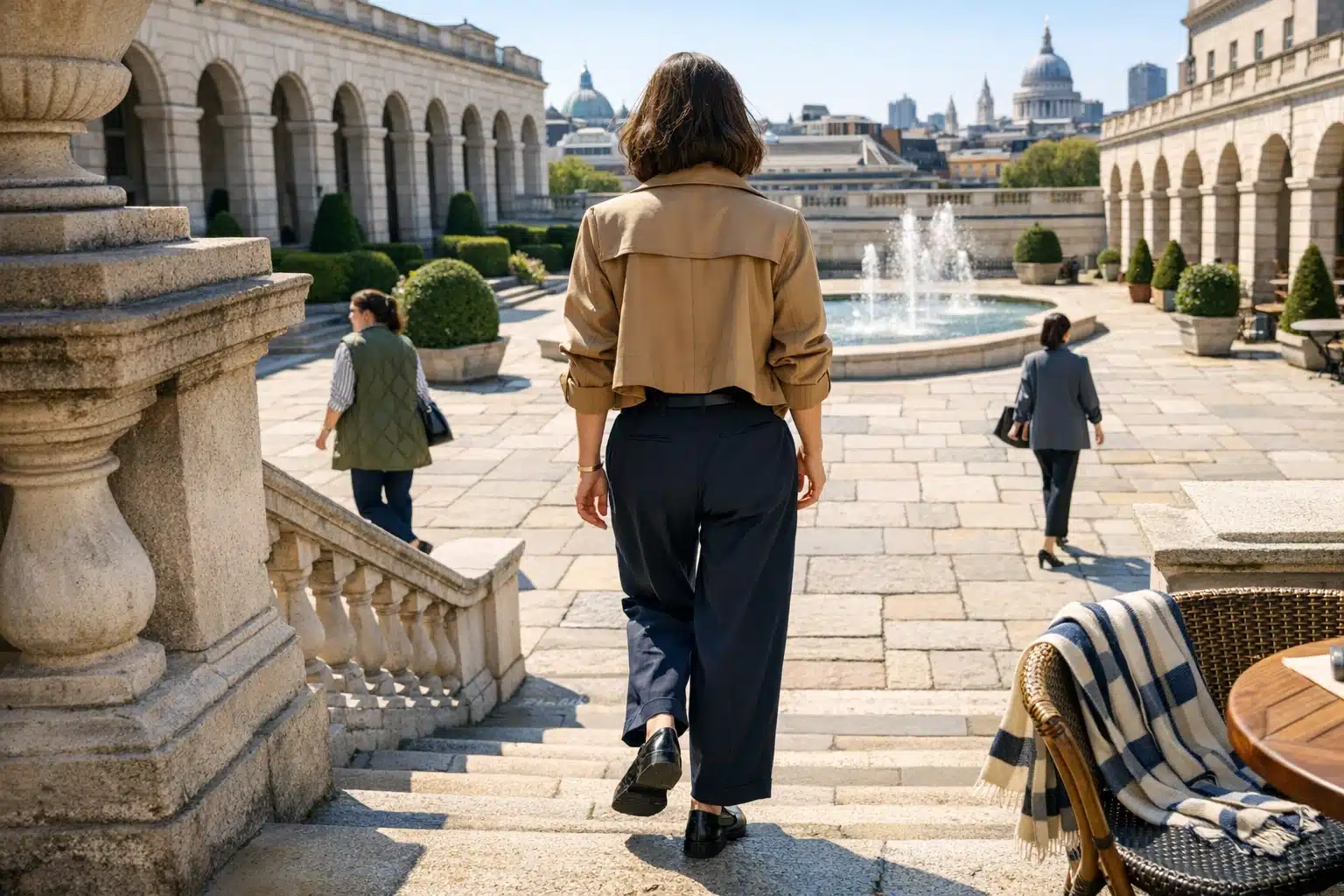
 Artificially generated image
 Is Your Jacket Style Outdated? What London Women Are Wearing Now
A jacket can quietly date an entire outfit, even when the rest of your wardrobe still works. In London, where women balance weather, movement, polish, and personality in one look, outerwear is often the first thing that signals whether a style feels current or stuck. That makes this topic especially relevant now, as silhouettes, fabrics, and proportions have shifted away from the fitted formulas many people still rely on. Understanding those changes helps you update smartly instead of buying blindly.
Outline: this article first explains why certain familiar jacket styles now feel old-fashioned in London’s fashion landscape. It then looks at the key jackets women are actually wearing now, followed by the styling choices that make those pieces feel fresh. After that, it breaks down the details that can date a jacket and how to fix them. Finally, it closes with practical advice for building a more modern jacket rotation that suits real life, real budgets, and personal taste.
1. Why Some Jacket Styles Suddenly Look Out of Step
If your favorite jacket has started to feel oddly wrong, the problem may not be the item itself so much as the way fashion has moved around it. London style changes in a practical way before it changes in a flashy one. This is a city of walking, layering, changing weather, crowded trains, office dress codes, vintage shops, and people who want to look considered without seeming overly arranged. Because of that, jacket trends in London usually shift through proportion and texture rather than loud costume-like statements.
For years, many wardrobes were built around jackets that were sharply fitted, cropped at the narrowest point of the waist, and designed to create a neat, contained silhouette. Think tight leather bikers, blazers with obvious tailoring through the middle, short puffers with high-shine finishes, and trench coats styled in a very polished, belt-pulled way. None of these pieces are banned, of course, but they can now read as attached to an older styling formula, especially when paired with skinny jeans, ankle boots, and a large statement bag. What has changed is not only the jacket but the visual language around it.
Street style coverage from London Fashion Week, edits from UK retailers, and what circulates most on resale platforms all point in a similar direction: women are favoring ease, depth, and usefulness. The common thread is simple:
• roomier cuts
• tactile fabrics
• quieter color palettes
• functional details that do not look overly sporty
That shift matters because jackets are no longer just there to “finish” a look. They often define it. A boxy field jacket can make plain jeans and a white T-shirt look current. A softly oversized blazer can turn trainers and tailored trousers into something sharper. A quilted liner can give a dress more intelligence than a delicate cropped jacket ever could. In other words, the jacket now sets the tone rather than politely sitting on top of it.
London women have also embraced a more layered silhouette overall. Wider trousers, longer skirts, relaxed shirting, and substantial shoes all work better with outerwear that has presence. A very tight jacket can interrupt that balance and make the whole outfit feel dated, even if each piece is technically fine on its own. Fashion often works like that: nothing is wrong, yet something feels ten years behind. The new mood is less “perfectly fitted” and more “confidently composed,” and jackets are one of the clearest places to see the change.
2. The Jacket Styles London Women Are Wearing Now
So what has replaced those older formulas? Not one single hero piece, but a small group of jackets that share the same values: shape, practicality, texture, and understated cool. On a grey London morning, the right jacket works like punctuation. It gives the outfit rhythm. Right now, the most convincing jackets are the ones that look as though they can handle real life while still carrying taste.
One of the strongest examples is the barn or field jacket. Often seen in waxed cotton, washed canvas, or sturdy twill, it has a rural heritage but feels unexpectedly chic in the city. Styles inspired by Barbour remain especially visible, but the wider appeal goes beyond one brand. The appeal is easy to understand: a slightly boxy cut, useful pockets, a collar that adds contrast, and a finish that looks better with wear. Worn with jeans, pleated trousers, or even a slip skirt, it gives an outfit character without requiring much styling effort.
Another major player is the oversized or boxy blazer. This is not the ultra-skinny office blazer of the 2010s. The current version has straighter lines, a touch of shoulder structure, and enough room to layer a knit or shirt underneath. London women often wear it with wide-leg trousers, loafers, slim scarves, or simple trainers. It bridges work and weekend well, which is one reason it keeps appearing in both high street and designer collections.
Then there is the quilted liner jacket, often collarless, lightweight, and deceptively useful. It slots neatly under coats in winter and works on its own in transitional weather. Because London weather is famous for changing its mind halfway through the day, that kind of versatility matters. Modern versions tend to avoid glossy finishes and instead lean into matte fabrics and clean stitching.
Suede and leather bombers are also rising. They offer a softer alternative to the very fitted biker jacket and feel more current because the cut is easier and the attitude is less aggressive. In brown, tobacco, black, or deep burgundy, they bring warmth and texture to simple basics. Cropped trench jackets and short car coats are another favorite, especially for women who want polish without wearing a full-length coat.
The strongest current categories can be summed up like this:
• waxed or canvas field jackets
• boxy blazers
• quilted liner jackets
• suede or leather bombers
• cropped trenches and clean car coats
What ties them together is that none of them look fussy. They have enough shape to feel deliberate, enough practicality to feel believable, and enough restraint to work across many outfits. That is very London: stylish, but never too precious to step into the rain.
3. How London Women Style Jackets So They Look Modern
Owning the right jacket is only half the story. A modern piece can still look stale if it is styled with old habits, while a familiar jacket can sometimes feel fresh again if the surrounding proportions change. This is where London women are especially instructive. Their styling tends to avoid extremes. It is neither aggressively trend-driven nor conventionally polished. Instead, it often relies on balance: one relaxed element, one clean line, one useful layer, one interesting texture.
The biggest change is proportion. Current styling often pairs a boxier jacket with a longer or wider base. A field jacket might sit over straight jeans with a turn-up hem and sturdy loafers. A blazer might go over puddled trousers and a fine knit. A suede bomber may be worn with a column skirt and flat boots. These combinations work because the outfit holds the eye in a smooth vertical line instead of chopping the body into tight little sections.
Layering also matters more now than decoration. London style rarely depends on large statement necklaces, dramatic belts, or obviously “finished” outfits. Instead, interest comes from stacking useful pieces together. For example:
• a striped shirt under a crew-neck knit under a blazer
• a white tee with a quilted liner and long wool scarf
• a tank, straight-leg jeans, and a cropped trench with ballet flats
• a fine roll-neck under a suede bomber with tailored trousers
Color is another clue. The current palette is rich but restrained: olive, navy, ecru, stone, chocolate, charcoal, faded black, burgundy, and camel. Rather than relying on one bright jacket as the main event, many London dressers prefer tonal outfits where the jacket adds depth through fabric and cut. A brown suede bomber over cream trousers and a grey knit can look more directional than a loud printed jacket over basics.
Footwear plays a supporting role too. The move away from skinny silhouettes has encouraged shoes with a bit more visual weight: loafers, retro trainers, flat knee boots, square-toe ankle boots, or substantial ballet flats. These anchor the relaxed jacket shapes better than delicate heels or very slim ankle boots. Bags have changed in a similar way, with softer totes, east-west shapes, and crossbody styles replacing some of the heavily structured “statement” handbags that once dominated outfits.
The real secret is that the outfit should not look overexplained. London women often appear as though they got dressed quickly, but the effect is usually built on careful choices. The jacket feels modern when it has room to breathe, when the layers underneath do not fight it, and when the accessories support the silhouette rather than shout over it. That quiet confidence is exactly what makes these looks persuasive.
4. The Details That Make a Jacket Look Dated and How to Update Them
It is tempting to label whole categories as outdated, but that is usually too simplistic. Fashion is rarely a courtroom where one hemline is sentenced forever. More often, what dates a jacket is a cluster of details: the length, the finish, the cut through the shoulder, the way it closes, or the way it is styled with everything else. If you want to know whether a jacket is working against you, look closely at those smaller signals.
One common issue is overfitting. Jackets that cling tightly through the arms and waist can make an outfit feel stuck in an older ideal of “flattering,” especially when the rest of fashion has moved toward ease. Very short blazers that stop abruptly at the waist can also look less current unless they are intentionally styled with high-rise volume. Another giveaway is excessive hardware: too many zips, shiny buttons, oversized buckles, or heavy logo detailing can push a jacket from refined to overdesigned.
Fabric can age a piece just as quickly. High-shine synthetic finishes, stiff faux leather that creases unnaturally, flimsy trench material, or quilting with an overly busy pattern often read cheaper and older than matte, textured fabrics. Color matters too. A timeless black jacket can still work beautifully, but harsh, cold black in a synthetic finish may feel less modern than washed black, dark brown, olive, or deep navy.
Here are several signs a jacket may need reconsidering:
• sleeves are so tight that layering is impossible
• the waist is aggressively nipped in
• the hem cuts across the body at an awkward point
• the finish is shiny rather than textured
• the styling only works with skinny jeans and a heeled ankle boot
• it looks “dressy” in a way your life no longer does
The good news is that not every outdated jacket needs to be discarded. Some can be updated through styling. A fitted blazer may look better open over a loose shirt and wide trousers. A leather jacket can feel newer when worn with a long skirt and simple flats instead of bodycon pieces. Swapping a dated belt, replacing buttons, or taking a jacket to a tailor for small structural improvements can help too. Sometimes the smartest update is simply admitting that a once-useful jacket belonged to a different phase of your wardrobe.
The goal is not to erase personality. If you love a classic biker or a neat trench, keep them. Just check whether the rest of the outfit reflects today’s proportions. The line between timeless and tired is often not the jacket alone but the story surrounding it. Change the supporting cast, and the lead may suddenly make sense again.
5. Conclusion: How to Refresh Your Jacket Wardrobe Without Losing Your Style
If this topic feels personal, that is because jackets are personal. They travel with you through commutes, weather shifts, office days, dinners, school runs, weekends, and those in-between moments when you want to look pulled together but not theatrical. For many women, a jacket is the most visible part of daily dressing for much of the year. Updating it can therefore change the entire mood of a wardrobe faster than buying five new tops ever will.
The smartest way to refresh your selection is not to chase every trend appearing on social media. Instead, look at your real routine and build around that. If you need weekday polish, a boxy blazer or clean car coat may do more for you than a dramatic suede bomber. If you walk often and dress casually, a field jacket or quilted liner could be the stronger investment. If you already own good basics, one well-cut modern jacket can make them feel newly relevant.
A useful reset might look like this:
• keep one polished jacket for work or smarter occasions
• add one practical everyday piece such as a field jacket or car coat
• choose one texture-rich option like suede, leather, or quilted cotton
• make sure at least one jacket allows comfortable layering
• review your shoes and trousers so the new silhouette has proper support
Budget matters too, and fortunately this trend cycle is friendly to secondhand shopping. Vintage suede bombers, oversized wool blazers, waxed jackets, and classic trench shapes often show up well on resale platforms and in charity shops. Because the current look values character and fabric over pristine perfection, a little wear can actually help. That makes updating more affordable and often more individual than buying everything new.
Most of all, remember that modern style does not require a complete reinvention. London women are not compelling because they all dress the same. They are compelling because they understand proportion, function, and mood. Their jackets work because they feel lived in, intentional, and suited to the day ahead. If your outerwear looks outdated, the solution is probably not louder fashion but better shape, better layering, and better context. Start there, and your wardrobe will not just look newer. It will feel more like you, only sharper.