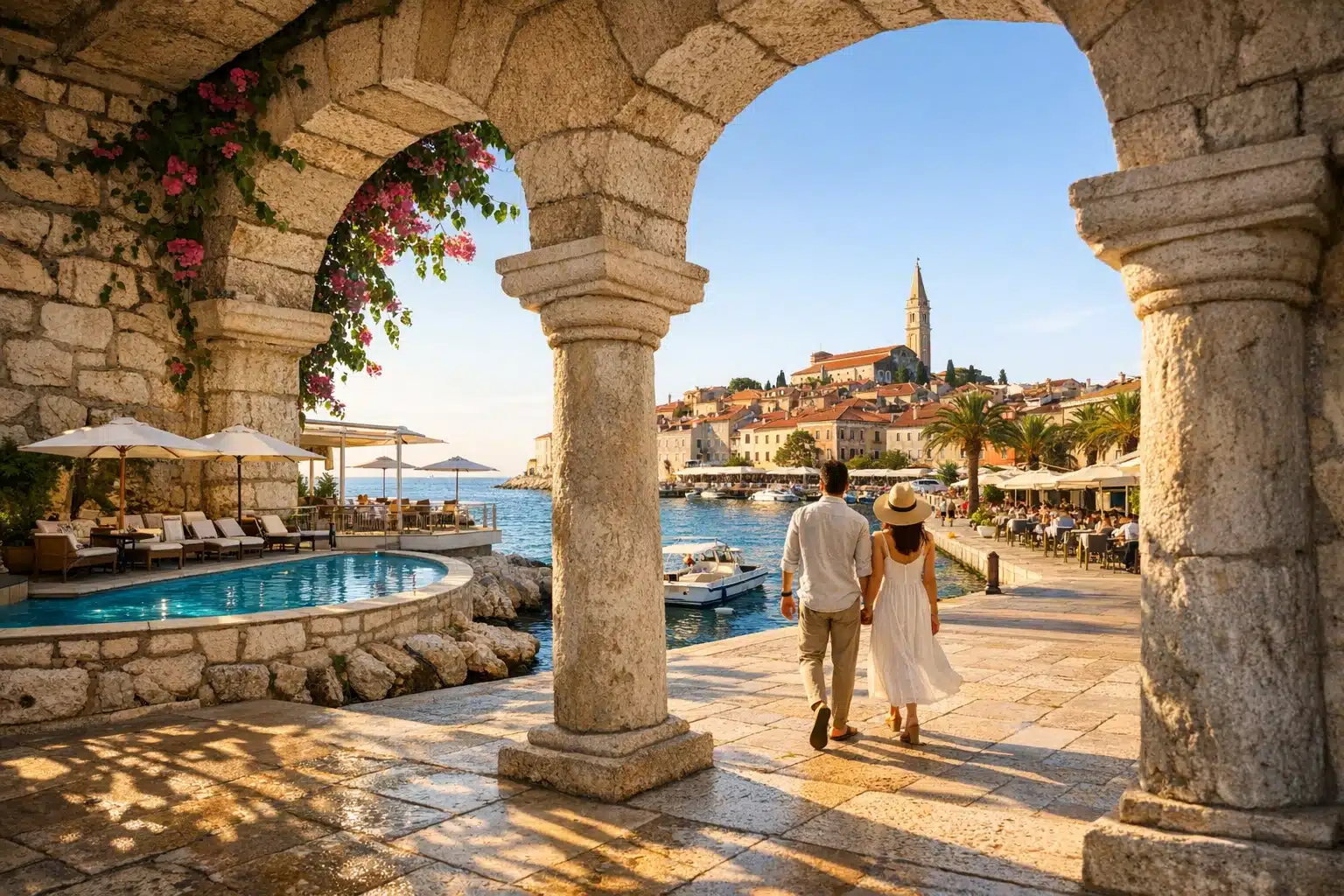
 Artificially generated image
 Mediterranean All-Inclusive Vacations in Croatia: A Practical Travel Guide
Croatia has quietly become one of the Mediterranean’s smartest vacation choices for travelers who want clear water, historic towns, and easier budgeting in one trip. Although the country is less dominated by mega-resorts than Spain, Turkey, or parts of Greece, its all-inclusive options often feel more local, more scenic, and more connected to the coast itself. That makes planning especially important, because the right package can combine simplicity, culture, and beach time without the usual guesswork.
Outline
- What all-inclusive usually includes in Croatia
- The best Croatian coastal regions for different types of travelers
- Typical costs and how Croatia compares with other Mediterranean markets
- How to choose the right season, resort style, and package
- Who gets the most value from a Croatian all-inclusive vacation
What “All-Inclusive” Usually Means in Croatia
One of the most useful things to understand before booking is that Croatia does not always define all-inclusive in the same way as classic package-heavy destinations such as Turkey, Egypt, or some Spanish islands. In those markets, travelers often expect unlimited buffet dining, snacks throughout the day, open bars, and large entertainment teams as standard. In Croatia, the model is usually more varied. Some properties do offer a familiar full all-inclusive format, but many others operate with versions such as full board with drinks, half board plus selected extras, or family-oriented packages that include meals and activities without an around-the-clock resort structure.
This matters because Croatia’s appeal is different by nature. The country has more than 1,000 islands and islets, over 1,700 kilometers of mainland Adriatic coastline, and a tourism identity built as much around old towns, coves, ferries, promenades, and local cuisine as around closed resort compounds. In practice, that means many travelers spend part of the day outside the hotel anyway. An all-inclusive stay in Croatia often works best as a convenience tool rather than a stay-inside-the-gates experience. You may have breakfast with sea views, lunch after a swim, dinner included, and still walk into a nearby harbor town for gelato, a sunset drink, or an evening stroll through Roman ruins and Venetian streets.
When reading package details, pay close attention to the exact wording. Terms that sound similar can lead to very different experiences.
-
All-inclusive may include buffet meals, local alcoholic and non-alcoholic drinks, pool access, and some daytime activities.
-
Light all-inclusive often covers meals and selected beverages, but not a full open bar or premium drinks.
-
Full board usually means breakfast, lunch, and dinner, with drinks sometimes charged separately.
-
Family packages may add kids’ clubs, sports courts, or beach equipment without broad food-and-drink coverage.
The upside is that Croatia can feel less artificial than resort belts designed almost entirely around package tourism. Mornings often begin with a bright Adriatic shimmer, not a loud activity microphone, and that quieter rhythm is exactly what many visitors want. The trade-off is that you should not assume every package includes premium cocktails, nonstop entertainment, airport transfers, or private beaches. Croatia rewards travelers who read inclusions carefully. Do that, and the result can be excellent: a vacation with predictable costs, good regional food, access to beautiful water, and enough freedom to enjoy the country beyond the buffet line.
Best Regions for Mediterranean All-Inclusive Vacations in Croatia
Croatia’s coastline is not one uniform destination, and choosing the right region can shape the entire trip. The broadest divide is between Istria and Kvarner in the north, and Dalmatia farther south. Both offer clear sea, historic towns, and resort stays, but the mood, scenery, pricing, and sightseeing options differ. For travelers looking for the widest choice of larger family-friendly properties, Istria is often the easiest starting point. Towns such as Poreč, Rovinj, and Umag are well set up for holiday complexes, beach clubs, cycling paths, and organized activities. The region is also convenient for visitors driving from Central Europe, which helps explain why it is popular with families who want practical logistics along with polished seaside infrastructure.
Kvarner, which includes places such as Crikvenica, Rabac, and islands like Krk and Rab, often feels like a bridge between resort convenience and a more old-school Adriatic holiday. It can be a strong option for travelers who want a coastal base without going too far south, and for mixed-age groups who value calm waters, walkable seafronts, and moderate transfer times from Rijeka or Zagreb connections. Prices here can be competitive outside peak summer, and some properties offer family packages that feel more spacious and relaxed than southern hotspots during July.
Dalmatia tends to be the image many travelers have in mind when they picture Croatia: stone towns, island silhouettes, pine-fringed beaches, and luminous water that changes color with the angle of the sun. Zadar and Šibenik offer a practical mix of history and easier access to national parks, while the Split region adds major transport links, ferry connections, and famous islands such as Brač and Hvar. Around Split, all-inclusive and resort-style hotels are available, but many travelers also choose semi-inclusive stays and use the city as a launch point for day trips. Dubrovnik and the far south deliver dramatic scenery and prestige, though they are often less about classic value-focused all-inclusive vacations and more about scenic premium stays.
-
Choose Istria if you want family resorts, good road access, and a balanced mix of beaches and towns.
-
Choose Kvarner if you prefer a quieter coastal atmosphere and manageable travel distances.
-
Choose Central Dalmatia if you want iconic views, island options, and broad sightseeing potential.
-
Choose Dubrovnik’s area if scenery and atmosphere matter more than maximizing traditional all-inclusive value.
For many first-time visitors, the smartest decision is not chasing the most famous name, but matching the region to the trip’s purpose. Families often do best in Istria or northern Dalmatia. Couples who want scenery and excursions may lean toward Split or the islands. Travelers who care deeply about old towns, seafood dinners, and cinematic coastlines can justify southern Dalmatia even if it costs more. Croatia is generous with beauty almost everywhere; the trick is choosing the beauty that fits your pace.
Costs, Value, and How Croatia Compares with Other Mediterranean Destinations
Croatia can offer strong value, but it helps to frame that value correctly. It is not always the cheapest all-inclusive option in the Mediterranean, especially when compared with large-scale resort markets where competition drives down package prices. Turkey, for example, often wins on sheer volume of inclusions for the money, with bigger buffets, more extensive entertainment, and wider drink coverage at comparable rates. Some Greek and Spanish destinations also provide broader resort ecosystems. Croatia’s advantage lies elsewhere: scenery, atmosphere, manageable travel distances, clean swimming water, historic towns, and a sense that the destination still exists beyond the hotel gate.
Pricing varies sharply by season, region, hotel category, and package type. As a general planning rule, shoulder-season rates for upper-midrange coastal properties can start around the lower hundreds of euros per night for two people, while July and August can push similar rooms much higher, particularly in well-known areas or on islands. Family resorts in popular coastal zones often become significantly more expensive once school holidays begin. Luxury waterfront hotels can move well beyond that range. The important point is that Croatia usually rewards travelers who book early and travel slightly outside the peak window. Late May, June, and September frequently deliver the best balance of weather, lower crowd pressure, and more attractive pricing.
Budgeting also requires looking beyond the headline room rate. In Croatia, some extras that travelers assume are included may still carry charges. These can include parking, sun loungers in premium beach zones, airport transfers, premium alcohol, ferry tickets, excursions, or spa access. On the other hand, Croatia can save you money in ways that are easy to overlook. Distances between coastal towns are often short enough to combine beach time with sightseeing efficiently, and many of the country’s pleasures are simple: swimming, walking promenades, exploring old streets, or taking a modestly priced boat trip rather than paying for large-scale resort entertainment.
-
Best value months: May, June, and September are often the sweet spot for price and comfort.
-
Highest prices: Late July and most of August usually command peak rates.
-
Common extra costs: parking, transfers, premium drinks, excursions, and some wellness facilities.
-
Value advantage: scenery, swimming quality, and the ability to combine resort ease with authentic town visits.
For travelers who define value as “how much resort stuff can I consume,” Croatia may not always beat its rivals. For travelers who define value as “how much beauty, convenience, and atmosphere can I get without overcomplicating the trip,” it often looks very competitive. That distinction is the key to booking wisely. Croatia is not pretending to be a bargain-basement resort machine. Its better sales pitch is subtler: fewer gimmicks, more coastline, and plenty to enjoy once you step outside for an hour and hear church bells drift over the harbor at dusk.
How to Choose the Right Resort, Season, and Travel Style
The right Croatian all-inclusive vacation starts with a simple question: what kind of days do you want to have? Families with younger children usually need different things from couples, solo travelers, or active groups. If your priority is low-stress logistics, look for larger coastal resorts with children’s pools, easy beach access, and structured meal times. These are especially useful in Istria and parts of northern or central Dalmatia. Parents often benefit from packages that include drinks with meals, kids’ clubs, and nearby walking areas, because that reduces the number of small daily decisions that quietly drain energy on family trips.
Couples, by contrast, may be happier with a softer version of all-inclusive: breakfast and dinner included, attractive pool areas, a spa, and a town or marina within walking distance. Croatia is particularly good for this style because so much of the romance is outside the room. A stone lane glowing under evening lights, a terrace above the sea, or a short boat ride to a nearby island often becomes more memorable than endless on-site entertainment. For active travelers, the best fit may be a resort near cycling routes, national parks, paddle sports, or ferry hubs. Croatia is excellent for travelers who want a base rather than a bubble.
Season matters enormously. Coastal weather is usually warmest and busiest in July and August, when daytime highs commonly reach the upper 20s to low 30s Celsius in many seaside areas. The sea is warmest then as well, but crowds, traffic, and prices peak. June and September are often ideal for many visitors: the water is generally pleasant for swimming, daylight is long, and the atmosphere feels more breathable. May can be beautiful for sightseeing and walking, though sea temperatures may feel brisk for some travelers. October can still be lovely in the south, but resort services may begin to scale back.
-
For families: prioritize resort facilities, shallow-entry beaches, and school-holiday booking lead time.
-
For couples: choose scenic locations with easy access to a town, harbor, or island excursions.
-
For active trips: look for nearby hiking, cycling, kayaking, diving, or national park access.
-
For shoulder season: confirm which restaurants, bars, kids’ programs, and pools remain open.
Transport should be part of the choice, not an afterthought. Croatia’s main coastal gateways include Pula, Rijeka, Zadar, Split, and Dubrovnik, but the “best” airport depends on your final destination and whether a ferry transfer is required. Island stays can be magical, yet they add timing pressure and luggage logistics. Mainland resorts are usually easier for short breaks. If you want the smoothest possible holiday, a mainland coastal hotel within an hour of the airport often wins. If you are willing to trade convenience for atmosphere, an island resort can feel like a world with its own clock, where the pace loosens the moment the ferry pulls away from shore.
Conclusion: Who a Croatian All-Inclusive Vacation Suits Best
A Croatian all-inclusive vacation makes the most sense for travelers who want the Mediterranean to feel scenic and lived-in, not only packaged. It suits people who like the reassurance of prepaid meals and a comfortable resort base, but still want room for local character, harbor walks, old towns, and spontaneous swims in startlingly clear water. If your ideal holiday involves staying entirely inside a giant complex with nonstop shows, unlimited premium drinks, and a heavily programmed schedule, Croatia may not be the strongest match in the region. If, however, you want a blend of convenience and place, the country becomes much more compelling.
Families are often among the biggest winners, especially when they choose well-located properties in Istria, Kvarner, or selected parts of Dalmatia. The combination of safe-feeling coastal towns, beach access, family facilities, and manageable sightseeing options can create a trip that feels both easy and memorable. Couples also tend to do well, particularly if they choose a package that covers the basics while leaving evenings free for waterfront dinners, sunsets, and short explorations beyond the hotel. Travelers in shoulder season may enjoy the best overall experience of all: warm weather, lower rates, lighter crowds, and enough calm to appreciate the Adriatic’s quieter mood.
The smartest approach is to book Croatia for what it actually does well. Expect strong scenery, quality swimming, interesting regional food, and resorts that often feel less generic than those in more standardized package markets. Read the inclusions carefully, compare regions rather than chasing the most famous name, and think honestly about your pace. Do you want convenience, culture, beach time, and a bit of movement? Croatia answers that beautifully. Do you want maximum resort consumption from dawn until midnight? Another destination may offer more volume for the same money.
For the right traveler, that is not a weakness at all. It is precisely the appeal. Croatia offers a vacation where breakfast can be easy, afternoons can be unplanned, and evenings can belong to the coast rather than the timetable. The result is a Mediterranean holiday that feels organized without feeling overmanaged. If that sounds like your kind of trip, Croatia deserves a very serious place on your shortlist.