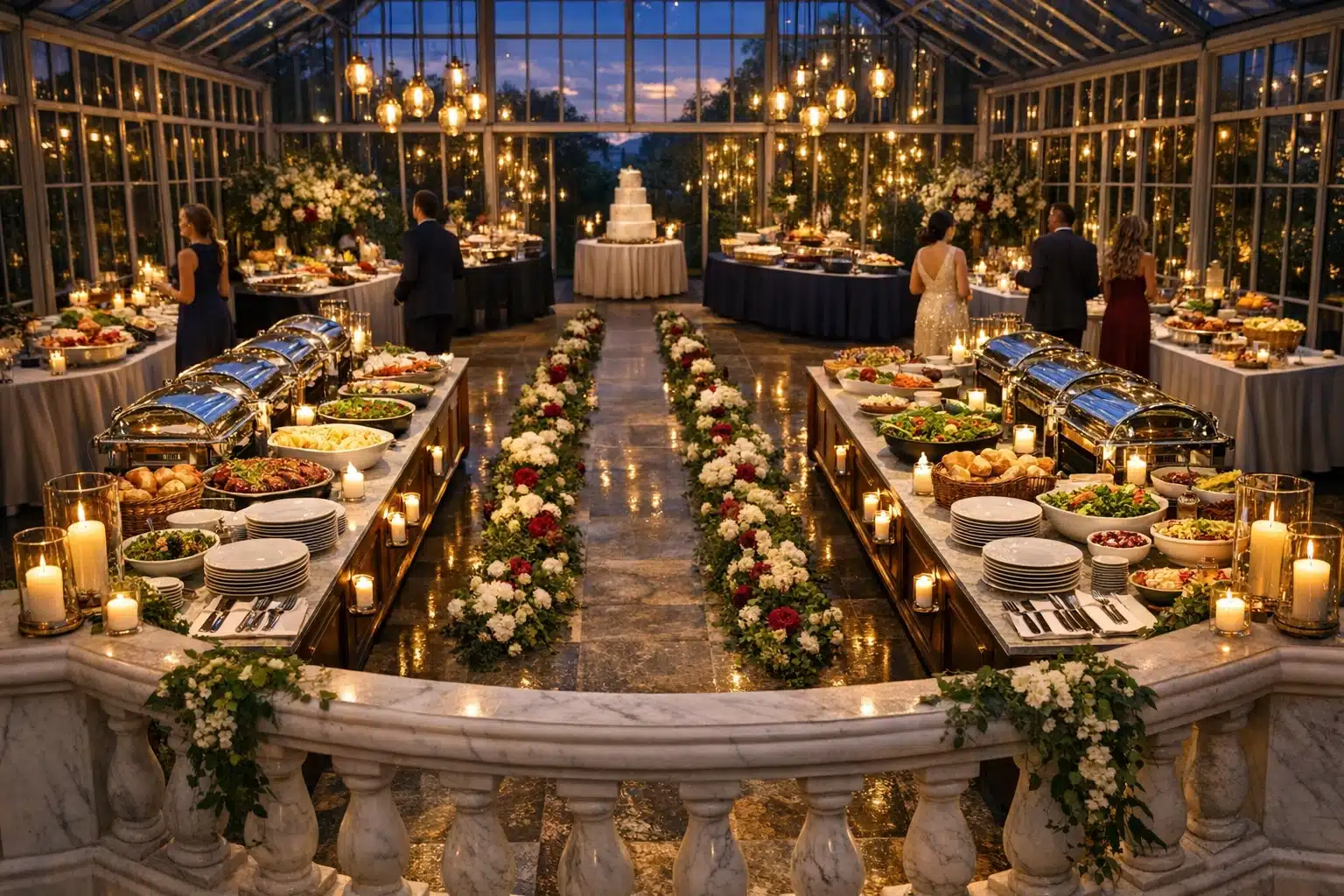
 Artificially generated image
 Planning a Wedding Buffet and Appetizers for 50 Guests at Costco
Planning a wedding buffet for 50 guests sounds romantic until you start pricing platters, counting napkins, and wondering whether the food will look abundant instead of merely adequate. Costco matters because it offers bulk sizing, familiar quality, and a realistic path for couples who want a polished reception without handing the entire budget to a caterer. With a smart menu and a clear timeline, a warehouse run can become the backbone of a celebration that feels easy, welcoming, and well fed.
Article outline:
- Define the event style, guest expectations, and venue limits before shopping.
- Calculate realistic appetizer and buffet quantities for a 50-person reception.
- Compare Costco platters, frozen items, and DIY options to shape the budget.
- Plan service flow, staffing, food safety, and storage for the wedding day.
- Use a sample menu and final checklist to turn ideas into a workable buffet plan.
1. Start with the Event Shape Before You Fill the Cart
The most useful wedding buffet decision rarely begins with food. It begins with the shape of the event itself. A reception for 50 people sits in a sweet spot: it is large enough to need real structure, yet small enough that a Costco-centered plan can still feel intentional rather than industrial. Before you compare trays or count mini desserts, define four things clearly: timing, venue, guest mix, and labor. Those four elements will quietly determine whether your buffet feels relaxed and abundant or rushed and slightly chaotic.
Timing matters because food volume changes with the schedule. A ceremony followed by a one-hour cocktail period and a full buffet dinner needs fewer appetizers than an event where guests mingle for two hours before the meal. Venue matters because many reception spaces offer only a prep table and outlets, not a full kitchen. That difference changes everything. If there is no oven, then frozen hors d’oeuvres that need baking become harder to manage, while cold platters, bakery items, and room-temperature sides become more attractive. Guest mix matters because 50 adults with hearty appetites eat differently from a mixed crowd of older relatives, young children, and light snackers. Labor matters because Costco can supply the food, but it does not usually provide the hands that replenish a tray, wipe a spill, or switch out serving utensils.
A practical planning conversation should answer questions like these:
- Will appetizers be a brief welcome bite or a visible part of the meal?
- Does the venue allow sterno fuel, warming trays, or outside food?
- How many guests need vegetarian, gluten-aware, dairy-free, or kid-friendly options?
- Who will transport, arrange, and monitor the buffet during the event?
This is also where Costco should be compared honestly with a full-service caterer. A caterer usually bundles menu planning, staffing, setup, and food safety control into one package. Costco usually lowers the food bill, but shifts responsibility to the couple, a planner, or trusted helpers. That is not a flaw; it is simply the trade-off. If you embrace that trade-off early, you can build a wedding buffet that suits the day instead of forcing the day to fit the food. Think of the menu as a supporting cast. When the logistics are right, the food looks effortless, and that is often what guests remember most.
2. How Much Food Do 50 Wedding Guests Actually Need?
Quantity planning is where buffet confidence is won or lost. Most wedding hosts do not underestimate because they are careless; they underestimate because buffet dining looks deceptively simple. Platters vanish faster than expected, guests take more when choices look appealing, and cocktail hour can quietly turn into dinner if the main meal runs late. A useful rule from catering practice is to plan roughly 6 to 8 appetizer pieces per person for a one-hour reception before a meal, and about 10 to 12 pieces per person if appetizers function as the main food event. For 50 guests, that means around 300 to 400 pieces for a standard pre-dinner appetizer spread, or 500 to 600 pieces if you are serving heavy hors d’oeuvres instead of a full buffet.
The buffet itself needs balance more than sheer volume. Guests feel satisfied when the table offers contrast: one or two proteins, one starch, one vegetable or salad, bread if appropriate, and a little texture variation. For mixed-age wedding groups, allowing about 4 to 6 ounces of cooked protein per guest is a sensible baseline when several sides are included. If you are serving two proteins, you can split the total rather than buying full portions of both. Side dishes are usually where value appears. Pasta salad, roasted vegetables, mashed potatoes, rice dishes, green salads, and dinner rolls stretch the meal elegantly without making it feel cheap.
Here is a helpful way to think about the menu for 50 guests:
- Appetizers: 3 to 4 varieties, with different textures and temperatures.
- Main buffet: 1 to 2 proteins, 2 sides, 1 salad, and bread or rolls.
- Dessert: wedding cake plus a small extra sweet option if desired.
- Beverages: water, sparkling water, soft drinks, and any approved bar service.
Comparisons matter here. Cold appetizers such as cheese boards, fruit trays, vegetable platters, pinwheel sandwiches, and shrimp trays are easier to execute than hot items because they need less equipment and less last-minute attention. Hot appetizers, however, often feel more festive and filling. A good compromise is to let cold items carry most of the volume while one or two warm bites provide the sense of occasion. The same logic applies to the buffet: familiar foods usually outperform adventurous ones at weddings because guests want to eat comfortably, chat easily, and return to the dance floor without decoding the menu.
If alcohol is being served, err slightly upward on food quantities. If the event falls in the afternoon, portions may run lighter. If it is an evening celebration after a ceremony and photos, appetites tend to grow. In short, food math is not glamorous, but it is the quiet engine of a generous reception.
3. Building a Costco Menu: Platters, Frozen Favorites, and Budget Trade-Offs
Costco works best for wedding food when you use it strategically rather than trying to buy every single bite in the most heavily prepared form. Its strengths are clear: large-format trays, bakery items, crowd-friendly sides, frozen appetizers, beverages, and a broad range of disposable supplies. Its weak points are just as important: product availability varies by warehouse, some prepared platters must be ordered ahead, and not every attractive item is practical for transport or buffet service. The smartest couples treat Costco as a toolkit, not a script.
For appetizers, Costco often shines with items that visually fill a table fast. Think fruit trays, vegetable platters, cheese assortments, crackers, charcuterie elements, sandwich trays, shrimp cocktail, dips, olives, nuts, and bakery bites. Frozen options can add variety if your venue has heating access. Mini quiches, spanakopita, meatballs, puff pastry hors d’oeuvres, and breaded bites can make the spread feel fuller without requiring restaurant-level prep. Still, a comparison is useful: cold platters are dependable and low-stress, while frozen appetizers may offer more charm per bite but demand oven time, sheet pans, and someone willing to manage batches.
For the buffet, Costco is often strongest in supportive categories rather than highly customized entrées. Ready-made salads, mac and cheese, mashed potatoes, rolls, roasted vegetables, and bakery desserts can anchor the meal. Some couples combine these with a single outside entrée from a local restaurant, barbecue spot, or family cook. That hybrid model can work beautifully. Costco handles scale and value, while one signature dish adds personality. It is the culinary version of wearing elegant shoes with a borrowed jacket and somehow making the whole outfit look intentional.
Budget is where the warehouse approach becomes especially relevant. In many U.S. markets, a Costco-centered wedding food plan for 50 guests may land around $12 to $25 per person for food, dessert, and basic serving supplies, depending on how many premium trays, hot appetizers, and disposable items you choose. A full-service catered wedding meal often costs far more because labor, delivery, setup, staffing, rentals, and cleanup are built in. The savings can be meaningful, but remember what is and is not included.
When comparing menu paths, keep these trade-offs in mind:
- Prepared platters save time but usually cost more per serving than DIY assembly.
- Frozen appetizers increase variety but add equipment needs and day-of labor.
- Bulk staples such as salad, rolls, beverages, and desserts often deliver the best value.
- Premium items such as shrimp, smoked salmon, and artisanal cheeses raise the bill quickly.
The best Costco menu is rarely the one with the most items. It is the one where every purchase earns its place on the table.
4. Service Flow, Setup, and Food Safety on the Wedding Day
A buffet can succeed on good food alone only in theory. In real life, success depends on movement. Guests need to know where to line up, where to place used plates, how to find beverages, and how to avoid creating a traffic jam beside the hot food. For a 50-person wedding, one buffet line can work, but two mirrored lines usually feel smoother if table space allows. Even a simple duplicate setup for plates, cutlery, napkins, salad, and main items can shorten wait times and prevent the awkward cluster that forms when one popular dish slows everyone behind it.
Appetizers deserve their own rhythm. If they are placed too close to the buffet, guests often hover in one zone and create a bottleneck. A better setup is to use one or two appetizer stations away from the main meal area. That encourages mingling, keeps the bar or beverage table from becoming crowded, and prevents early guests from filling dinner plates with cocktail snacks. Think of layout as invisible hospitality. When people move naturally through the room, the event feels calmer than the actual effort behind it.
Day-of staffing is another overlooked piece. Even if you are not hiring a catering team, assign at least two dependable helpers who are not part of the couple’s immediate spotlight. Their jobs can include setting out fresh trays, checking beverages, removing empty packaging, and monitoring the buffet appearance. One person can often manage cold items while another handles warming trays and replenishment. If no one owns that work, the food table starts looking tired long before the party is over.
Food safety should be treated seriously, especially with dairy, seafood, meat, and mayonnaise-based sides. Standard safety guidance is straightforward:
- Keep cold foods at or below 40 degrees Fahrenheit when possible.
- Keep hot foods at or above 140 degrees Fahrenheit when using warming equipment.
- Do not leave perishable foods out for more than 2 hours, or 1 hour if the environment is very hot.
- Use insulated coolers, ice packs, and simple food thermometers during transport and setup.
Finally, build a realistic timeline. Shop for stable items several days ahead, pick up platters as close to the event as practical, and label every serving dish before leaving for the venue. Bring tongs, spoons, knives, extra napkins, tape, trash bags, and disposable gloves. Those humble details rarely appear in wedding inspiration photos, yet they are often what separates a lovely buffet from a frantic one. A graceful reception is usually powered by plain preparation.
5. A Sample Costco Wedding Buffet for 50 Guests and Final Takeaways
For couples who want a concrete model, here is a practical way to shape a wedding buffet and appetizer menu for 50 guests using Costco as the main source. Imagine a reception with a one-hour cocktail period followed by a buffet dinner. In that case, you might aim for 300 to 350 appetizer pieces total, then a buffet built around one substantial protein, one secondary option, two sides, a salad, bread, dessert, and drinks. The goal is not luxury through excess. The goal is generosity through proportion.
A sample appetizer spread could include a shrimp tray, a cheese-and-cracker station, a vegetable platter with dip, and one hot passed or self-serve bite such as mini quiches or pastry appetizers. That combination works because it covers freshness, salt, crunch, and something warm. For the buffet, a sensible structure might be sliced chicken or another easy crowd-pleasing entrée, a pasta or potato side, a green salad, roasted vegetables, dinner rolls, and wedding cake. If your family wants a stronger signature, replace one side with a favorite regional dish or a recipe tied to the couple. That small personal touch can make a warehouse-based menu feel surprisingly intimate.
A simple shopping framework may look like this:
- Appetizers: 4 categories with enough volume for 6 to 7 pieces per guest before dinner.
- Main buffet: protein for 50, plus 2 substantial sides and 1 salad.
- Bread and condiments: rolls, butter, dressings, and any sauces needed.
- Dessert: cake plus a secondary sweet if you expect lingering conversation after dinner.
- Supplies: plates, appetizer napkins, cutlery, cups, chafing fuel if allowed, serving utensils, and storage containers.
For the target audience here, namely couples, families, or close friends planning a medium-sized wedding without a traditional catering package, the biggest lesson is this: Costco is most effective when it supports a plan rather than replacing one. Make the guest count firm. Choose a menu that matches the venue. Buy fewer things, but buy enough of them. Let cold platters carry reliability, let one or two warm items add celebration, and let your helpers know exactly what they are doing before the first guest arrives.
In the end, a wedding buffet does not need to look extravagant to feel memorable. Guests notice full trays, smooth pacing, easy access, and food that tastes familiar in the best possible way. If your reception table invites people to gather, eat comfortably, and stay in the moment, then you have already achieved the part that matters. The flowers may wilt, the playlist may skip once, and someone will definitely ask where the extra forks are, but a thoughtful buffet can still make the whole evening feel beautifully put together.