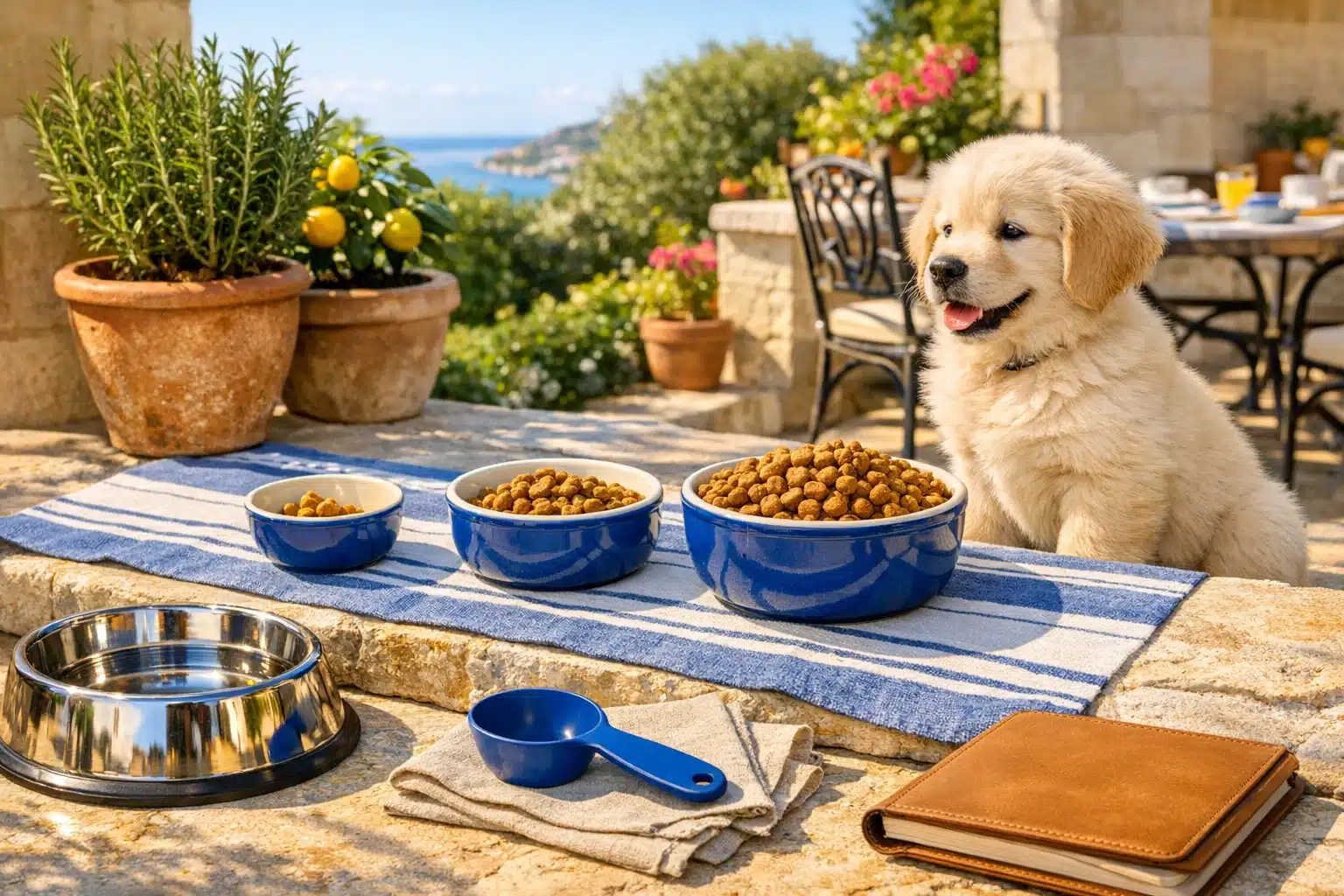
Puppy Feeding Chart by Weight: A Practical Guide
Feeding a puppy looks simple until growth spurts, tiny stomachs, breed size, and calorie needs all collide in one food bowl. A chart by weight gives owners a practical starting point, helping them estimate portions without guessing or overreacting to every hungry stare. It also reduces common mistakes, such as overfeeding large-breed pups or underfeeding active small breeds. Used wisely, it turns mealtime into a steady routine that supports healthy bones, muscles, digestion, and behavior.
Outline:
• Why feeding by weight is a useful starting method
• A practical daily feeding chart for different puppy weights
• How age, breed size, and food type change portion needs
• Signs that a puppy needs more food, less food, or closer monitoring
• A simple routine that helps owners feed with consistency and confidence
Why Feeding by Weight Is the Smart Starting Point
When people bring home a puppy, one of the first questions usually sounds simple: how much should this little dog eat? The trouble is that puppies grow fast, and their needs can change almost from week to week. A feeding chart based on weight gives owners something concrete to work with. It replaces vague guessing with a measurable reference point. Instead of filling the bowl according to instinct, owners can look at the puppy’s current body weight, compare it to a general portion range, and begin from there.
Weight matters because a five-pound puppy and a fifteen-pound puppy are not just different sizes, they are different feeding situations. A toy-breed puppy may need smaller, more frequent meals because its stomach is tiny and its energy reserves are limited. A medium or large puppy can usually handle larger servings, but that does not mean the bowl should be heaped. Overfeeding is especially risky in bigger breeds, where rapid growth can put extra stress on developing joints and bones. In other words, more food is not always better food. Growth should be steady, not rushed.
Weight-based feeding also helps owners notice changes early. If a puppy gains weight appropriately and keeps a healthy body shape, the portion is probably close to right. If the puppy becomes round through the ribs, leaves food behind regularly, or develops loose stool after meals, the amount or food type may need adjustment. If the puppy seems leaner each week despite finishing every meal eagerly, more calories may be needed. A chart cannot replace observation, but it gives observation a useful frame.
A good chart does three important jobs:
• It gives a starting range rather than a single rigid number.
• It reminds owners to divide the daily amount into several meals.
• It encourages regular rechecks as the puppy grows.
Think of the chart as the map, not the destination. The map gets you pointed in the right direction. Your puppy’s body condition, appetite, stool quality, and growth rate tell you whether that route still fits. That mix of structure and flexibility is what makes feeding by weight so practical for first-time owners and experienced breeders alike.
Puppy Feeding Chart by Weight: A Practical Daily Baseline
The most useful feeding chart is one that is honest about its limits. Food brands differ in calorie density, kibble size, protein sources, and moisture content, so no single chart works perfectly for every puppy food on the shelf. Still, a practical baseline can save owners from starting too high or too low. The following guide assumes a standard dry puppy food with roughly 380 to 420 calories per cup. These ranges refer to the total daily amount, which should then be split across the day’s meals.
Practical puppy feeding chart by current body weight:
• Under 2 lb or under 0.9 kg: about 1/4 to 1/3 cup per day
• 2 to 5 lb or 0.9 to 2.3 kg: about 1/3 to 3/4 cup per day
• 6 to 10 lb or 2.7 to 4.5 kg: about 3/4 to 1 1/4 cups per day
• 11 to 20 lb or 5 to 9 kg: about 1 1/4 to 2 cups per day
• 21 to 30 lb or 9.5 to 13.6 kg: about 2 to 2 3/4 cups per day
• 31 to 40 lb or 14 to 18 kg: about 2 3/4 to 3 1/2 cups per day
• 41 to 50 lb or 18.6 to 22.7 kg: about 3 1/2 to 4 1/4 cups per day
• 51 to 75 lb or 23 to 34 kg: about 4 1/4 to 5 3/4 cups per day
• 76 to 100 lb or 34.5 to 45 kg: about 5 3/4 to 7 cups per day
These numbers become more useful when paired with meal frequency. Very young puppies, especially those under about twelve weeks, often do best with four small meals a day. From around three to six months, many puppies transition comfortably to three meals. After six months, two meals often work well, though large breeds and highly active puppies may benefit from a more tailored schedule. A puppy at ten pounds eating one cup a day, for example, might receive four quarter-cup meals at first, then three one-third-cup meals later.
The smartest way to use a chart is to begin near the middle of the listed range, monitor the puppy for seven to ten days, and then adjust. If ribs are difficult to feel, the waist disappears, or the puppy gains excess fat, reduce slightly. If the puppy is lean, growing quickly, and maintaining normal stool quality, an increase may be justified. And always read the package label. If one brand contains 450 calories per cup and another contains 360, the same volume will not deliver the same energy. The bowl may look identical, but the math behind it is very different.
Why Age, Breed Size, and Food Type Change the Portion
A weight chart is useful, but puppies are not identical machines that run on the same schedule. Age changes the feeding picture almost immediately. A young puppy of eight to twelve weeks has a small digestive capacity, so its total daily amount needs to be spread across more meals. By four months, many puppies can go longer between feedings. By six to twelve months, the number of meals often falls again even if the total daily calories are still substantial. Owners sometimes misread this transition and think a puppy is suddenly less hungry or becoming picky, when the reality is simply that the growth pattern is shifting.
Breed size matters just as much. A Chihuahua puppy and a Labrador puppy may both be lively, curious, and convinced that all meals should happen now, but their long-term growth patterns are very different. Small breeds mature faster and often reach adult size earlier. Large and giant breeds grow for longer and need careful nutritional balance, especially with calcium and phosphorus levels. That is one reason many veterinarians recommend large-breed puppy formulas for dogs expected to grow big. The goal is not to make them massive as quickly as possible. The goal is controlled, healthy development.
Food type changes the equation too. Dry kibble is calorie-dense compared with wet food because it contains much less moisture. Fresh or gently cooked diets may use grams, ounces, or patties instead of cups. Raw feeding plans often calculate portions by body weight percentage, but those plans still need individual review because energy needs vary widely. This is where many owners make an honest mistake: they switch food and keep the same bowl volume. If the new food is more concentrated, the puppy may start gaining fat before anyone notices.
Several variables deserve attention at the same time:
• Age and expected adult size
• Calorie density listed on the food package
• Daily exercise and temperament
• Treats used during training
• Health issues such as parasites, digestive upset, or recovery from illness
Treats deserve special mention because puppy training often involves many of them. A few tiny rewards are fine, but frequent extras add up. If treats make up a noticeable share of the day, the main meals should be adjusted slightly to keep the overall intake balanced. The best feeding plan is not the one that looks most exact on paper. It is the one that fits the puppy in front of you, the food in your hand, and the growth pattern unfolding week by week.
How to Tell Whether the Portion Is Actually Right
The bowl can be measured perfectly and still be wrong for the puppy. That is why observation matters so much. One of the most reliable tools is body condition, not just body weight. A healthy puppy should usually have ribs that can be felt under a light layer of fat, a visible waist when viewed from above, and a gentle abdominal tuck when viewed from the side. You should not see sharply protruding bones, but you also should not lose the outline of the body under softness. Many veterinarians use a nine-point body condition score, and a puppy around 4 or 5 out of 9 is often a healthy target.
Stool quality gives another useful clue. Firm, easy-to-pass stool usually suggests that the amount and type of food are being handled well. Chronic loose stool, frequent straining, or repeated vomiting after meals is not something to shrug off as ordinary puppy chaos. Sometimes the portion is too large. Sometimes treats are the culprit. Sometimes the issue is a sudden diet change, intestinal parasites, or a food sensitivity. A food chart can guide quantity, but digestion tells you how the puppy is coping with that quantity.
Energy and behavior add texture to the picture. Healthy puppies have bursts of enthusiasm followed by naps that seem almost theatrical in their timing. A puppy that is bright, playful, interested in meals, and recovering well after activity is usually being fed reasonably. A puppy that seems weak, fails to gain appropriately, or appears constantly frantic for food may need closer review. On the other hand, a puppy that becomes sluggish and heavy after meals may be getting too much.
Useful signs to watch each week:
• Can you feel the ribs without pressing hard
• Is there still a visible waist from above
• Has the stool stayed consistent for several days
• Does the puppy finish meals at a normal pace rather than inhaling or refusing them
• Has body weight changed gradually rather than sharply
A weekly weigh-in can be surprisingly helpful. Use the same scale, the same time of day, and write the number down. A simple notebook or phone note can reveal trends that memory misses. Pair the number with a quick photo from above and from the side, and you create a practical growth record. That record is far more informative than a single glance at a suddenly larger puppy stretching across the kitchen floor like it pays rent there.
Conclusion for Puppy Owners: Build a Routine, Then Adjust With Confidence
If you are feeding a puppy for the first time, the best approach is not perfection. It is consistency plus attention. Start with a chart based on current weight, check the food label for calories, divide the daily amount into age-appropriate meals, and then observe what happens. That process sounds modest, but it works because it keeps you from making dramatic changes every time the puppy begs, skips a bite, or looks especially adorable under the table. Puppies are persuasive. Their eyes are often a poor measuring cup.
A strong routine makes every part of feeding easier. Offer meals at roughly the same times each day. Measure food rather than estimating by eye. Keep fresh water available. Use training treats thoughtfully so they do not quietly become a second dinner. When changing foods, transition gradually over five to seven days unless your veterinarian advises otherwise. Sudden switches can create digestive upset that looks like a quantity problem when it is actually a transition problem.
It also helps to think ahead. Small breeds may reach maturity sooner and move off puppy food earlier, while large breeds often remain on growth formulas longer. Rescue puppies may arrive underweight, stressed, or recovering from inconsistent feeding histories, so their plan may need extra care. Very active puppies, pups in cold climates, and those recovering from illness can also need different management than the average chart suggests. That is not a flaw in the chart. It simply reflects real life.
Keep these takeaways in mind:
• Use the weight chart as a starting framework, not a permanent rule
• Recheck portions whenever weight, food brand, or activity level changes
• Watch body condition more closely than appetite alone
• Ask a veterinarian for guidance if growth seems abnormal, stool stays poor, or feeding feels confusing
For most owners, success comes from small, sensible habits rather than complicated formulas. A good feeding chart gives structure. Careful observation gives accuracy. Put those together, and you create the kind of steady mealtime routine that supports healthy growth without turning every scoop of food into a guessing game. That is the real goal: a puppy that grows well, feels good, and meets each meal with the happy confidence of a dog who knows life is on schedule.