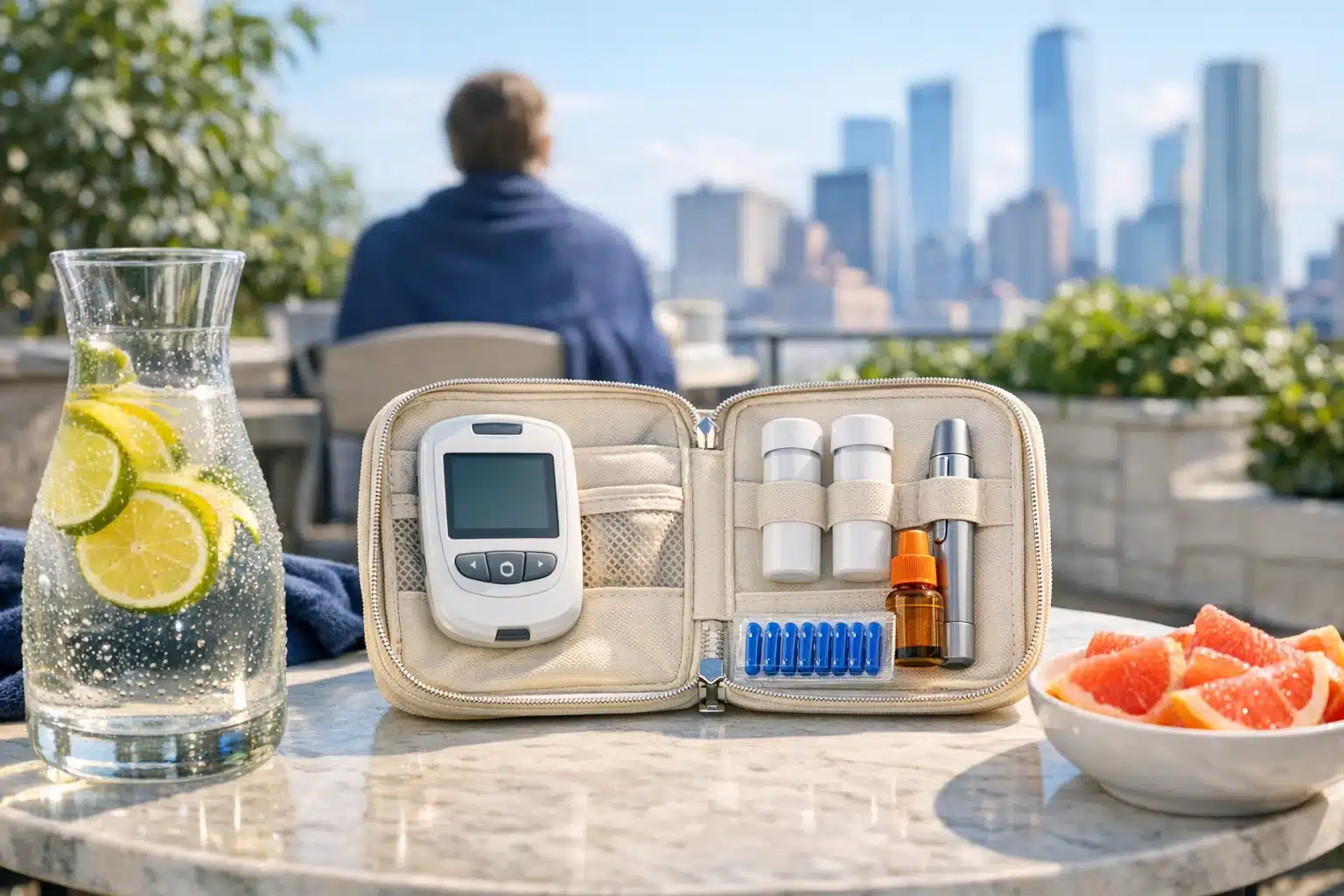
 Artificially generated image
 Sam’s Club Diabetic Testing Supplies: What to Know
For many people managing diabetes, the hard part is not only testing on schedule but keeping a steady supply of strips, lancets, and backup items without letting costs spiral in the background. Sam’s Club deserves a closer look because warehouse pricing, pharmacy access, and larger pack sizes can sometimes reduce routine spending. Still, a lower sticker price means little if the supplies do not match your meter, your insurance rules, or your daily habits. This guide breaks down the practical details so shoppers can compare options with clearer expectations.
Outline: The Questions This Guide Answers Before You Buy
Any useful discussion about Sam’s Club diabetic testing supplies should begin with a clear map. Diabetes care is often built on repetition: test, record, adjust, refill, repeat. Because that routine happens day after day, even small shopping decisions can shape convenience, confidence, and monthly spending. This article is organized to answer the practical questions a shopper usually has while standing in an aisle, browsing a pharmacy page, or comparing receipts at the kitchen table.
First, it examines what kinds of diabetic testing supplies are typically relevant when shopping at a warehouse club. That includes the obvious essentials, such as blood glucose meters and test strips, but also the smaller items people forget until they run out, including lancets, control solution, ketone testing products, and skin-prep basics. These items may seem minor when viewed one by one, yet anyone who has opened a meter case and found a missing piece knows how quickly a small gap can disrupt a careful routine.
Second, the article looks at cost in a realistic way. Warehouse pricing can be attractive, but the most important number is often not the package price. It is the cost per strip, cost per lancet, and cost over a month or year. For someone testing several times a day, a modest difference in per-unit cost can add up meaningfully. That is where Sam’s Club may become more than just another store. It may become a budgeting tool.
Third, it explores how Sam’s Club compares with other options. A local pharmacy may offer speed and pharmacist familiarity. A big-box retailer may offer broader access without a membership. Online sellers may offer convenience, but they can also complicate returns, shipping timing, or product verification. Comparison matters because no single store is ideal for every person with diabetes.
Finally, the guide closes with a practical summary for the people who benefit most from shopping at Sam’s Club and those who may be better served elsewhere. In short, the key questions are:
– What products are usually worth checking for?
– How do membership, insurance, and HSA or FSA spending affect value?
– When does bulk buying help, and when does it create waste?
– Which shoppers are most likely to save time or money?
By the end, readers should have a more grounded way to decide whether Sam’s Club fits smoothly into their diabetes management routine.
What Sam’s Club Diabetic Testing Supplies Usually Mean in Practice
When people hear the phrase diabetic testing supplies, they often picture only a glucose meter and a box of strips. In reality, the category is wider and more layered than that. At Sam’s Club, the exact selection can vary by location, season, pharmacy setup, and online availability, but shoppers are generally evaluating a familiar group of products. The first and most important point is compatibility. Test strips are not universal. They are designed for specific meter systems, which means the least expensive box on the shelf is not a bargain if it does not work with the device already in your case.
Core items typically include:
– Blood glucose meters
– Test strips matched to specific meter models
– Lancets in different gauges
– Lancing devices or replacement caps
– Control solution for meter accuracy checks
– Ketone testing supplies, depending on store inventory
– Alcohol pads or related prep items in the broader health section
Meters often have a relatively low entry cost, while the ongoing expense comes from strips. That pricing structure is common across the industry. A meter may be cheap or even promotional, but the strips determine what daily testing really costs. Lancets matter too, even though they are frequently treated as an afterthought. Gauge, comfort, and device fit can influence whether a person sticks to a routine or avoids testing more than they should. Lower-gauge numbers generally mean a thicker lancet, while higher-gauge numbers are usually thinner.
Another useful distinction is between standard finger-stick supplies and newer continuous glucose monitoring systems. Sam’s Club shoppers may still be primarily looking for traditional testing items, especially because those are easier to stock in volume and easier to compare on a shelf. CGM products are increasingly important in diabetes care, but access can depend more heavily on prescriptions, insurance rules, and pharmacy processing. As a result, many shoppers still rely on finger-stick supplies for everyday use, backup testing, travel, or double-checking readings when something seems off.
The practical lesson is simple: do not shop the category as if every item is interchangeable. Check the exact meter name, strip count, expiration date, and whether the product is intended for routine use, backup use, or occasional troubleshooting. In diabetes care, a tiny mismatch can turn a hopeful purchase into a frustrating return. Sam’s Club can be helpful, but only when the shopper approaches the shelf with a system rather than a guess.
Price, Membership, Insurance, and the Real Math Behind Value
Warehouse clubs earn attention because of price, but price alone can be a little theatrical. The bigger question is value over time. Sam’s Club may offer lower per-unit costs on diabetic testing supplies, especially when products are sold in larger quantities, but that advantage needs to be measured against membership fees, household shopping habits, insurance reimbursement, and how often a person actually tests. In other words, the most useful price tag is not the one printed in large font. It is the one you calculate over several months.
Consider a simple example. If someone tests four times a day, that person uses about 120 strips in a 30-day month. If the difference between one buying option and another is only 20 cents per strip, the monthly gap is about 24 dollars. Over a year, that becomes roughly 288 dollars, and that is before adding lancets, ketone strips, or backup supplies. For someone testing more often, the savings or the overspending can climb higher. This is why experienced shoppers pay close attention to unit cost rather than box price.
Membership changes the calculation. If a household already uses Sam’s Club for groceries, household goods, or pharmacy purchases, the diabetic testing supply savings may be an extra benefit layered onto an existing membership. If the membership would be purchased only for strips and lancets, the value case needs to be stronger. The decision becomes even more nuanced when insurance enters the picture. Some people buy testing supplies over the counter without using insurance because the cash price is simpler or cheaper. Others need a prescription on file for coverage, reimbursement, or use of a preferred pharmacy network.
It is also worth remembering that many diabetic supplies are commonly eligible expenses for HSA or FSA funds in the United States, though plan rules differ. That can change how shoppers think about cash flow, especially when a larger purchase at warehouse size feels expensive upfront but is easier to manage with tax-advantaged funds. Before buying, it helps to check:
– Whether the item is covered by your insurance or reimbursement plan
– Whether a prescription is required for your preferred pricing route
– Whether the pack size matches your monthly use
– Whether expiration dates allow you to finish the product comfortably
The quiet truth is that Sam’s Club can be cost-effective, but only when the math fits the person. A good deal in the abstract is not always a good deal in the real rhythm of diabetes care.
How Sam’s Club Compares With Pharmacies, Big-Box Stores, and Online Sellers
Sam’s Club sits in an interesting middle ground. It is not quite the same as a neighborhood pharmacy, and it does not behave exactly like a purely online seller either. That position creates both strengths and limitations. Compared with a traditional pharmacy, Sam’s Club may appeal to shoppers who want larger pack sizes, visible shelf pricing, and the convenience of combining health purchases with regular household shopping. A local pharmacy, however, often wins on immediacy and familiarity. If you need a same-day refill, want to ask a pharmacist about substitutions, or prefer a smaller, more focused setting, the neighborhood option can feel easier.
Compared with a general big-box retailer, Sam’s Club may offer stronger unit pricing on certain items, especially for members who already shop there regularly. Yet a non-membership store can be simpler for people who only need a single box of strips, an emergency replacement meter, or occasional supplies. Convenience matters. Sometimes the cheapest route on paper is not the best route when gas, travel time, and scheduling are added to the equation.
Online sellers add another layer. Their advantages are obvious:
– Fast price comparison across brands and counts
– Home delivery
– Subscription options for recurring supplies
– Access to customer reviews and product details
But online shopping is not automatically superior. Shipping delays can create stress if a household waits too long to reorder. Returns may be slower. Product listings can also overwhelm shoppers with near-identical names and counts. On open marketplaces, it can take more attention to verify seller quality and packaging condition. For diabetic testing supplies, that extra scrutiny matters because compatibility and expiration dates are not minor details.
Warehouse club competitors such as Costco may offer a similar proposition, while Walmart may provide some of the same broad affordability logic without the membership barrier. That means Sam’s Club tends to work best in specific situations: the shopper values bulk purchasing, already visits the store regularly, likes the possibility of pharmacy support, and wants a reasonable balance between in-person shopping and price efficiency. It works less well when a person needs highly specialized products, ultra-flexible refill timing, or the absolute widest selection. In a sense, Sam’s Club is often the practical choice rather than the dramatic one, and for many households that steady practicality is exactly the point.
Conclusion: Who Should Consider Sam’s Club and How to Shop With Confidence
For the right shopper, Sam’s Club can be a sensible place to buy diabetic testing supplies. It tends to make the most sense for people who test frequently, prefer buying several weeks or months of basics at once, and already use the store for other household needs. Caregivers managing supplies for a parent, spouse, or child may also appreciate having a repeatable shopping routine instead of chasing small purchases across multiple stores. When the meter model is already chosen and the needed strip type is clear, warehouse shopping can feel pleasantly boring in the best way: predictable, efficient, and easier on the budget.
It may be less ideal for shoppers whose needs are highly specialized, whose insurance strongly favors another pharmacy, or who need only a very small amount of product at a time. A person using a specific continuous glucose monitoring setup, or someone whose clinician wants supplies billed through a certain network, may find that another retailer fits better. Likewise, people who test infrequently might not benefit much from larger quantities if expiration dates become a concern. In diabetes care, excess is not always an advantage. Supplies that expire unused are simply money in a drawer.
The smartest approach is to treat Sam’s Club as one tool rather than a universal answer. Before placing an order or heading to the store, use a short checklist:
– Confirm the exact meter and strip compatibility
– Compare price per strip, not just price per box
– Check whether HSA, FSA, or insurance changes the final cost
– Buy enough for routine use plus a modest buffer, not a guess
– Review expiration dates if purchasing larger packs
– Keep a backup plan for travel, illness, or sudden stock gaps
The target audience for this topic is not looking for hype. It is looking for dependability. People managing diabetes, or helping someone who does, usually need supplies that are affordable, easy to reorder, and correct the first time. Sam’s Club can meet that need when the shopping decision is grounded in real usage, real numbers, and real compatibility. That is the central takeaway: the best buy is the one that supports consistent testing without adding confusion to an already demanding routine.