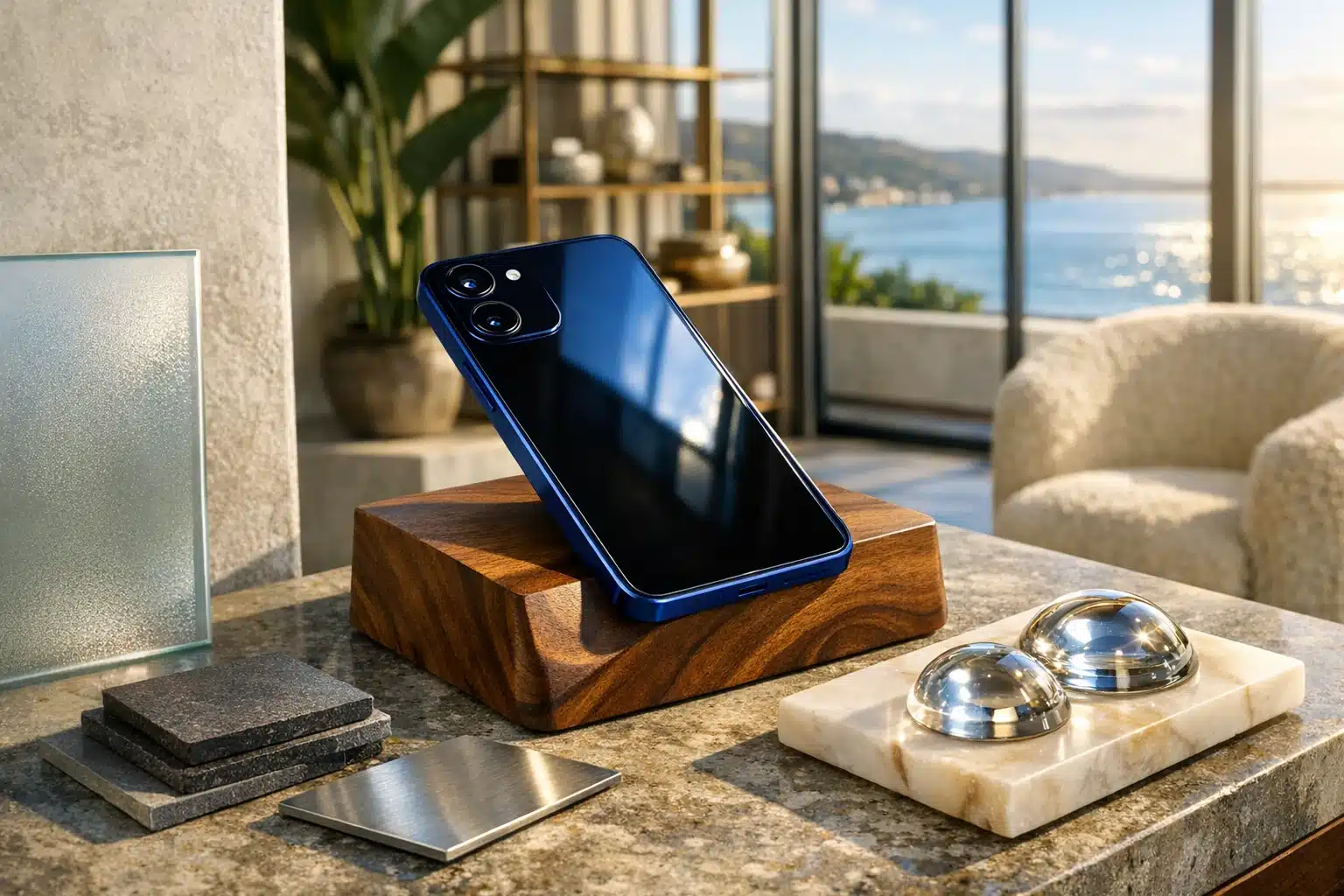
 Artificially generated image
 This Is How the Apple iPhone 19 May Look
Every new iPhone sparks a familiar ritual: leaks, sketches, wish lists, and careful guesses about what Apple will try next. Imagining the iPhone 19 matters because Apple rarely alters its design language without influencing rivals, suppliers, and even accessory makers. Looking ahead is not only fan chatter; it is a practical way to read where mobile cameras, batteries, displays, and on-device AI may be heading. This article builds a realistic picture of the iPhone 19 by pairing Apple’s recent habits with broader smartphone trends.
Article outline:
- Why the iPhone 19 is worth forecasting at all
- How the body and materials may evolve
- What could change in the display and controls
- How cameras and sensors may be redesigned
- What all of this may mean for everyday buyers
Why the iPhone 19 Is Worth Imagining
Trying to picture a phone that is still years away may seem like an exercise in stylish guesswork, yet Apple products tend to evolve in patterns rather than abrupt detours. That is why the iPhone 19 is an interesting topic instead of a random one. Apple usually refines a successful design over several generations, then folds in one or two visible shifts that make the new model feel modern without making it unfamiliar. Seen that way, a future iPhone is less like a mystery box and more like the next chapter in a book whose tone is already established.
There are several reasons predictions can be reasonably grounded. Apple has a long history of repeating a few core habits:
- It favors material upgrades that improve feel and durability, such as stainless steel to titanium transitions in premium models.
- It typically removes visual clutter over time, pushing cameras, sensors, and bezels toward a cleaner front and back.
- It invests heavily in custom silicon, which means software ideas are often tied to new chip capabilities rather than only cosmetic redesigns.
- It tends to wait until a feature is mature before treating it as mainstream, whether that concerns biometrics, high refresh displays, or computational photography.
That pattern matters because the smartphone market is now less about invention from scratch and more about integration. Most premium phones already offer excellent screens, fast processors, and multiple cameras. The next wave is likely to revolve around how invisible the technology becomes. Instead of shouting for attention, the best hardware may simply step out of the way. Apple has been moving in that direction for years with flatter frames, tighter tolerances, fewer external interruptions, and a growing dependence on software intelligence.
The imagined iPhone 19 therefore sits at an interesting crossroads. It could be the point where design minimalism, AI-assisted usability, and camera hardware finally feel truly fused. That does not mean every rumor deserves belief. Foldable fantasies, portless dreams, and dramatic transparent bodies often generate clicks because they sound cinematic. In reality, Apple generally chooses reliability over spectacle. If the iPhone 19 looks different, it will probably do so in measured ways: a thinner border here, a less visible sensor there, a more integrated camera island, a smarter power system, a deeper software layer.
In other words, the most believable future iPhone is not a science-fiction slab glowing under moonlight. It is a familiar object made calmer, smarter, and more seamless. That is the frame for everything that follows.
A More Seamless Body: Materials, Shape, and Build
If Apple continues its usual design logic, the iPhone 19 may look less like a dramatic reinvention and more like a confident reduction of visible complexity. Think of a device that appears machined from a single decision rather than assembled from many. The current direction already points there: flatter sides, sharper lines, slimmer borders, and premium materials selected not only for strength but also for tactile identity. By the time an iPhone 19 arrives, the body could become even more unified, with fewer seams, a calmer camera area, and a profile that feels lighter in the hand without seeming fragile.
Material choice is one of the clearest clues. Apple has repeatedly used materials to distinguish high-end models, and that strategy is unlikely to disappear. Titanium introduced the idea that premium could mean both sturdy and relatively light. A future step could involve a refined titanium alloy, advanced recycled composites, or a hybrid structure that keeps metal where rigidity matters and uses lighter materials where radio performance and weight reduction benefit. Apple has steadily emphasized recycled content across its products, so sustainability will likely be part of the design story as much as finish or color.
The silhouette may also change in subtle but meaningful ways. Several developments seem plausible:
- Even thinner bezels around the display, making the front appear almost all screen.
- A less pronounced camera bump, either through stacked internal engineering or a broader, lower-profile camera shelf.
- Slightly more rounded edges where the hand meets the frame, improving comfort without abandoning Apple’s clean geometry.
- Better resistance to scratches and drops through tougher front and rear glass treatments.
One especially interesting area is thickness. The wider smartphone market has been experimenting with thinner premium devices, yet battery expectations keep rising. Apple will not want a device that looks elegant but compromises endurance. That means any thinner iPhone 19 would likely depend on denser battery chemistry, more efficient silicon, and improved thermal layout. In practical terms, users may not notice a millimeter on a spec sheet as much as they notice how balanced the phone feels during a long day.
Color and finish deserve attention too, because Apple often uses them to signal maturity rather than novelty. The iPhone 19 may lean toward quieter tones with richer texture: muted metallic shades, frosted surfaces, and a finish that resists fingerprints more effectively than many current glossy approaches. Apple tends to treat color as part of industrial design, not decoration alone. A soft graphite, deep blue-gray, warm silver, or pale sand tone would fit a future model that aims to look precise rather than flashy.
So how may the iPhone 19 look from across a table? Probably slimmer, cleaner, and calmer. Not alien. Not theatrical. Just more resolved, as if the phone finally shed a few design compromises that older generations had to wear in public.
Display, Buttons, and Everyday Interaction
The front of the iPhone is where Apple’s design ambitions become most visible, and the iPhone 19 may continue a long march toward an uninterrupted surface. Over the past several generations, Apple has gradually reduced intrusion on the display while turning interface elements into software features rather than fixed hardware shapes. The clearest prediction, then, is not that the screen will suddenly become unrecognizable, but that it will feel more complete. A future iPhone 19 could push Face ID components further under the display, shrink or reshape the visible cutout, and rely even more heavily on contextual software that adapts around the hardware rather than apologizing for it.
Display technology is moving quickly across the premium market. High refresh rates are no longer a luxury talking point; they are expected. Brightness, outdoor visibility, and power efficiency matter just as much now as pixel count. Apple will likely respond by improving three areas at once: panel efficiency, adaptive refresh behavior, and perceived immersion. An iPhone 19 display may use newer OLED or OLED-adjacent panel technology with better brightness control and lower energy draw. That would matter not only for video, gaming, and photography, but also for battery life, which every user feels even if they never read a spec sheet.
Interaction may evolve just as much as visuals. Apple has shown interest in reducing dependence on mechanical parts, and the iPhone 19 could expand the role of solid-state or haptic-based controls. Rather than fully eliminating buttons overnight, Apple may refine them into pressure-sensitive elements that simulate click feedback while reducing wear and improving water resistance. This would fit its broader design habit: preserve familiarity, then quietly change the engineering underneath.
Several interface shifts seem believable:
- A more advanced always-on display with smarter context awareness, showing useful information only when it helps.
- Further integration of Dynamic Island-style interactions, or its successor, into timers, navigation, calls, live sports, and AI-generated summaries.
- Under-display sensors that make the front appear cleaner without sacrificing biometric security.
- Improved anti-reflective coating for easier visibility under harsh sunlight.
Ports are another recurring debate. Some people keep expecting a fully portless iPhone, but Apple tends to move only when the practical case is convincing. Wireless charging keeps improving, yet wired transfer, recovery functions, and professional workflows still matter. The iPhone 19 may not abandon the port entirely, but it could make the bottom edge look cleaner through tighter speaker perforations, better symmetry, and reduced visual interruption. In typical Apple fashion, the everyday effect would be more emotional than technical: the device would feel less like a gadget full of parts and more like a single polished interface.
If the iPhone 19 succeeds here, users will notice something deceptively simple. The screen will seem less framed by hardware, less interrupted by components, and more responsive to context. It will not merely display information. It will feel as though it understands when to step forward and when to disappear.
Cameras, Sensors, and the Next Stage of Mobile Imaging
The camera system is one of the biggest reasons each new iPhone attracts attention, and it is also where design constraints become visible fastest. Large sensors improve image quality, especially in low light, but they take space. Optical zoom hardware adds complexity. Stabilization systems need room to move. As a result, every ambitious camera phone risks wearing its engineering on the outside. The iPhone 19 may try to solve that tension more elegantly than past models by making the camera system physically larger in capability yet visually less disruptive.
One plausible direction is a more integrated rear layout. Apple could spread internal components more efficiently and reduce the abruptness of the camera bump, even if it cannot eliminate thickness differences completely. A broader platform with gentler transitions might replace the look of lenses simply rising from the back like metal towers. That would make the phone appear cleaner while still accommodating advanced optics. It is the kind of change Apple likes: not a headline-grabbing gimmick, but a visible reduction in awkwardness.
In terms of function, the iPhone 19 may lean into a mix of hardware and computation rather than chasing megapixel bragging rights alone. Apple has historically focused on consistent results, natural color, and reliable video. The next step may include:
- Larger image sensors for better low-light performance and more natural depth separation.
- Periscope-style zoom refinements for clearer long-range photography without dramatic body growth.
- Improved spatial photo and video capture as mixed-reality ecosystems mature.
- Stronger real-time computational photography powered by on-device AI, such as scene-aware tone mapping and subject isolation.
Video will likely remain central. Apple has long treated the iPhone as a pocket filmmaking tool, and future improvements may target audio cleanup, stabilization, and live processing as much as raw resolution. A future iPhone 19 could offer more intelligent capture modes that recognize shooting conditions in real time and adjust framing, exposure, or background separation before the user ever taps edit. That would fit a broader industry movement toward proactive cameras rather than reactive ones.
Sensor fusion may become the quiet hero of the design. Depth sensing, motion tracking, image stabilization, and AI-assisted recognition increasingly work together rather than separately. The result could be a phone whose cameras do not just produce better photos, but also enhance navigation, accessibility, translation, augmented reality, and portrait handling. This is where the iPhone 19 may look smarter, not only sharper. The camera array could become less of a collection of lenses and more of an environmental reading system.
What may this look like in practice? A cleaner rear panel, slightly larger but more elegantly arranged optics, and software that turns difficult scenes into usable images with less effort. The most impressive part may not be the camera module itself. It may be the way it stops announcing its struggle and simply delivers.
What the iPhone 19 Could Mean for Buyers
For everyday buyers, the most important question is not whether the iPhone 19 will look futuristic in marketing images. It is whether the next design shift will actually improve life with the phone after the excitement of launch week fades. On that front, the most realistic answer is encouraging. If Apple follows the path suggested by recent models and wider industry movement, the iPhone 19 may be the kind of upgrade that feels better the longer you use it. Less visual interruption, better battery efficiency, cleaner interaction, and smarter photography all add up in daily life more than a single spectacular feature ever could.
This matters differently depending on who you are. A casual user may care most about comfort, reliability, and how long the device lasts away from a charger. A creator may focus on video quality, storage speed, and microphone performance. A power user may want stronger multitasking, more advanced AI assistance, and a display that remains readable in any environment. Apple generally tries to satisfy all three groups through the same hardware, which is why its design choices often seem conservative at first glance. The goal is not to amaze one niche while frustrating everyone else.
For prospective buyers, here is the practical takeaway:
- If you want dramatic novelty, the iPhone 19 may disappoint because Apple usually evolves rather than revolts.
- If you value polish, longevity, and tightly integrated features, it could be one of the more meaningful generational refinements.
- If you are waiting for truly hidden sensors, more intelligent cameras, and stronger on-device AI, this generation may be a credible point for those ideas to mature.
- If your current phone already feels fast and dependable, the visual changes alone may not justify impatience.
There is also a broader market angle. When Apple adjusts design priorities, accessory makers, app developers, chip suppliers, and competing brands often respond. That means the shape of the iPhone 19 could influence not only Apple users but the entire premium smartphone category. A cleaner front may accelerate work on under-display components. Better AI efficiency may push rivals toward stronger on-device processing. A more elegant camera layout may redefine what buyers consider acceptable bulk on flagship phones.
In the end, the iPhone 19 may look like the natural outcome of years of trimming, refining, and integrating. It could be thinner without feeling weaker, smarter without feeling intrusive, and more advanced without becoming visually busy. For readers trying to decide whether future iPhones are still worth watching, that is the real conclusion: the most interesting Apple design is often the one that removes friction so effectively you stop thinking about the device and simply enjoy using it.