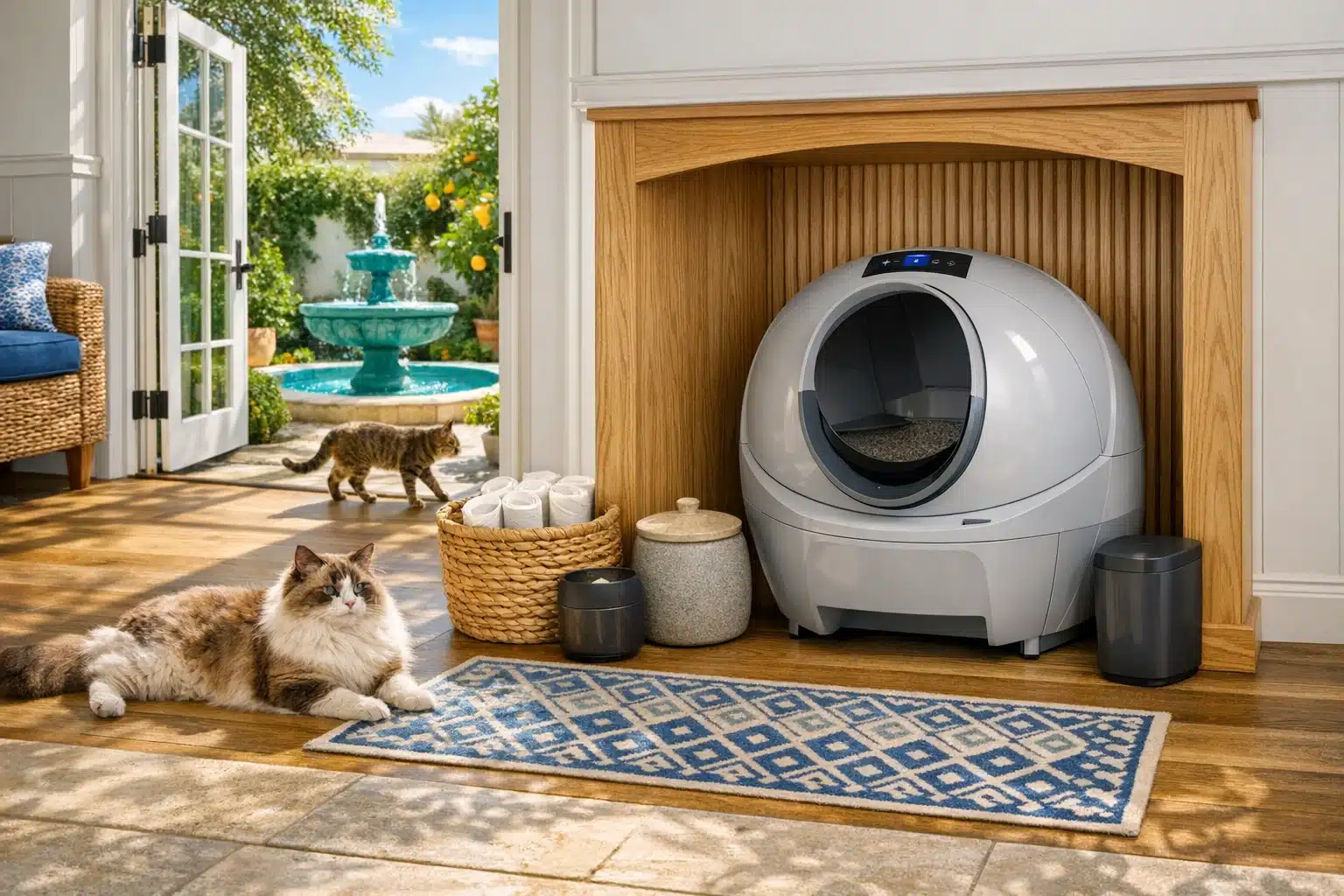
 Artificially generated image
 Walmart Is Clearing Out Self-Cleaning Cat Litter Boxes
Discounts on self-cleaning litter boxes catch attention for a reason: these machines promise to shrink one of pet care’s most repetitive chores into a quick check of a waste drawer. When Walmart marks down selected units, curious cat owners get a chance to weigh convenience against cost without stepping straight into premium pricing. That matters in a category where design, safety, and upkeep can vary far more than the bright sale tag suggests.
Outline:
- Why Walmart markdowns on self-cleaning litter boxes are drawing so much interest
- The features that matter most before you buy any automatic litter box
- The everyday benefits and limitations owners should expect at home
- How to judge whether a Walmart clearance price is actually a good deal
- Which shoppers should buy now, and who may be better off waiting
Why Walmart Clearance Deals on Self-Cleaning Litter Boxes Matter
In many homes, the litter box is the least glamorous square foot of real estate, yet it shapes the rhythm of the day. It asks for attention in the morning, reminds you again at night, and announces neglect with all the subtlety of a trumpet. That is why self-cleaning litter boxes have become such a popular category. They promise less manual scooping, more consistent waste removal, and, in many cases, noticeably better odor control. When a major retailer like Walmart reduces prices on these products, interest rises quickly because the category is still expensive enough that even a moderate markdown can change the buying decision.
It is also important to understand what “clearing out” usually means in retail terms. It does not always signal that a product line is disappearing forever. More often, it can reflect routine inventory turnover, updated packaging, a newer model arriving, seasonal resets in the pet department, or price adjustments from online marketplace sellers. That nuance matters because one store may show a reduced price while another location, or even the same listing a few days later, may not. Availability can shift by ZIP code, fulfillment method, and whether the item is sold directly by Walmart or by a third-party seller using Walmart’s platform.
Self-cleaning litter boxes also sit in a broad pricing band. Entry-level automatic units may begin around the lower hundreds, while larger connected models with app controls, sealed waste drawers, and multi-cat capacity can climb into premium territory. A markdown in this category is not only about saving money up front. It can make buyers more willing to test a feature set that once felt too expensive to justify. For someone managing one indoor cat in a small apartment, that lower barrier matters. For a busy household with multiple cats, the appeal is even stronger because manual litter upkeep scales up very quickly.
There is another reason these Walmart deals deserve a closer look: the market is crowded, but not every design solves the same problem. Some units use a rake system that pulls waste into a compartment. Others rotate a drum, sift clumps through a grate, or use proprietary crystals and disposable trays. The sale sign may make them look interchangeable, but they are not. A good markdown can be a smart entry point into automated pet care. A rushed purchase, on the other hand, can leave you with a bulky appliance your cat avoids and your wallet resents.
What Features Deserve the Closest Look Before You Buy
The smartest way to shop a litter box clearance is to ignore the excitement for a moment and study the machine like a practical tool. A self-cleaning litter box is not a decorative gadget; it becomes part of your daily pet care system. That means the right model depends on your cat’s size, habits, litter preference, and tolerance for motion and sound. One cat may step into a rotating globe without hesitation, while another decides the moving drum is a personal insult and never returns. Features are where the real value lives, so buyers should compare them carefully instead of focusing only on the discount percentage.
Safety should come first. Automatic boxes often rely on weight sensors, infrared sensors, timing delays, or combinations of all three to detect when a cat has entered or left. The unit should pause cleaning when movement is detected and restart only after a delay. This is especially important for younger cats, timid cats, or households where one cat may stalk another near the box. If the product page is vague about how the safety system works, that is not a detail to brush aside.
Next comes litter compatibility and internal capacity. Some boxes work with ordinary clumping litter, while others perform best with a narrow grain size or a brand-specific refill. If a machine requires special trays, liners, or crystals, the low sale price may be offset by higher monthly operating costs. It helps to compare:
- Maximum cat weight and recommended age range
- Whether standard clumping litter is supported
- Waste drawer size and how often it needs emptying
- Noise level during cleaning cycles
- Entry height for older or short-legged cats
- App functions, alerts, and whether a subscription is required
- Ease of disassembly for deep cleaning
Size matters more than many shoppers expect. Product photos can be misleading, and some automatic boxes occupy much more floor space than a traditional pan. Large cats need enough room to turn around comfortably, while senior cats may struggle with a high step-in point. If your cat already kicks litter like a tiny excavator, look for higher walls, a controlled entry path, or a mat-friendly design that limits tracking.
Finally, think about maintenance beyond the daily scoop. A well-designed unit should make weekly or monthly cleaning simple, not turn it into a puzzle of clips, screws, and awkward plastic curves. The best models are not just automatic; they are practical to live with. A clearance bargain feels much better when the machine fits the cat, the room, and the routine all at once.
The Real Benefits of Automatic Litter Boxes and the Trade-Offs Buyers Should Expect
Self-cleaning litter boxes have obvious appeal, but their real advantages become clearer when you think in terms of routine rather than novelty. The biggest win is consistency. Waste is removed more frequently than many people would scoop by hand, and that can help limit odor buildup, encourage a cleaner box environment, and make the surrounding space feel easier to manage. In small apartments, shared living spaces, or homes where the litter area is close to a hallway or bathroom, that steady cleanup cycle can make a noticeable difference. For people with demanding schedules, long commutes, mobility limitations, or simple scoop fatigue, the convenience is not trivial. It can remove friction from everyday pet care.
There is also a behavioral benefit in some households. Many cats prefer a clean litter area and may become less likely to protest with edge-of-box messes when the surface stays tidier. Multi-cat homes can especially benefit when a box refreshes itself throughout the day. Instead of one cat finding a used pan and acting offended, the system can keep conditions more stable between manual checks. That does not make an automatic unit magical, but it can reduce one common source of household stress.
Still, the trade-offs are real. Automatic does not mean maintenance-free. Waste drawers need to be emptied, sensors wiped, interiors deep-cleaned, and occasional stuck clumps addressed. Some models also introduce new recurring costs such as filters, liners, disposable trays, specialty litter, or replacement parts. The machine may save time, but it may not save money over the long run. Owners should also be realistic about cat acceptance. Sensitive cats may dislike the sound, motion, or enclosed shape of certain models. A dramatic technology upgrade that looks perfect in a listing can become a very expensive corner sculpture if the cat refuses it.
Transition matters here. Many owners get better results by placing the new unit near the old box, leaving it powered off at first, and letting the cat explore it at its own pace. Once the cat uses it comfortably, automation can be introduced gradually. This is especially useful for anxious cats or seniors that dislike abrupt change.
Some practical limitations are less obvious until the product arrives. Large units can dominate a laundry room or bathroom nook. Heavier boxes are harder to move for cleaning. Some models are not ideal for kittens below a certain weight threshold because the sensors may not register them reliably. Others may struggle with very large cats or with cats that urinate high on the wall of the chamber. The bottom line is simple: these products can improve daily life, but they work best when buyers treat them as systems with strengths, limits, and upkeep rather than as miracle appliances.
How to Tell Whether a Walmart Deal Is Actually Worth It
A lower price is helpful, but a good deal is more than a price drop on a screen. When browsing Walmart listings for self-cleaning litter boxes, the first step is to identify exactly what kind of markdown you are seeing. A clearance item can be a strong opportunity, but it can also reflect discontinued accessories, limited replacement part support, damaged packaging, or a seller trying to move slower inventory. That does not make the purchase bad; it simply means the context matters. Savvy shoppers read beyond the headline and treat the product page like a contract rather than a poster.
Start by checking who is selling the item. Walmart’s marketplace includes third-party sellers, and the buying experience may differ from an item sold directly by Walmart. Return windows, shipping speeds, customer service, and warranty handling can vary. If a product uses proprietary waste bags, filters, trays, or sensors, look for those refills before you buy the machine. A discount on the base unit loses its shine quickly if the refill ecosystem is expensive, hard to find, or frequently out of stock.
It also helps to compare the sale price against the model’s usual street price, not only against a high “original” figure. Some items look dramatically discounted because the comparison price is inflated or outdated. Recent reviews are more valuable than old ones because manufacturers sometimes revise a model while keeping the same product name. Read comments about:
- Assembly difficulty and setup time
- Reliability after several weeks or months
- Sensor performance and safety pauses
- Noise, odor control, and cleaning convenience
- How well the unit works for large cats or multiple cats
- Availability of replacement liners, filters, or trays
Dimensions deserve a second look too. Buyers often focus on width and forget height, depth, and access space for removing the waste drawer. Make sure the unit fits where you plan to place it and that you can comfortably clean around it. If the product includes app connectivity, confirm whether the software offers useful notifications or merely adds complexity. An alert that tells you the waste bin is full can be genuinely helpful; an unreliable app is just another chore wearing a smart label.
A practical way to judge value is to think in monthly terms. Estimate the purchase price, add expected consumables, and spread that total over a year or two of use. That simple math often reveals whether the Walmart markdown is a genuine convenience upgrade or just a tempting impulse buy in sleek plastic clothing.
Conclusion for Cat Owners: Who Should Buy Now, Who Should Wait, and What to Check First
If you are the kind of cat owner who winces at the scoop, forgets a cleaning cycle after a long day, or wants the litter area to stay fresher with less manual effort, Walmart markdowns on self-cleaning litter boxes are worth serious attention. They can lower the entry cost to a category that often feels premium, and for the right household, that can translate into a more manageable routine. Apartment dwellers, multi-cat homes, busy professionals, and people with limited mobility may see the clearest benefit because consistency matters most when time, space, or physical ease is limited.
At the same time, waiting can be the smarter move for some shoppers. If your cat is extremely cautious, already fussy about litter texture, or unusually large for standard enclosures, the cheapest available unit may not be the right one. The same applies if the discounted box depends on expensive proprietary refills or comes from a seller with weak return support. A self-cleaning litter box should reduce stress, not convert it into a new subscription to filters, liners, and troubleshooting.
Before clicking buy, it helps to run through a final practical checklist:
- Measure the space where the unit will actually live
- Confirm your cat fits the size and weight recommendations
- Check whether your preferred litter works with the design
- Review cleaning steps, not just daily automation claims
- Look up refill and replacement part availability
- Read recent reviews from owners with similar cat sizes and home setups
- Verify return terms in case your cat rejects the unit
The best deal is not always the lowest number. It is the model that matches your cat’s habits, your tolerance for upkeep, and your budget after the excitement of the sale fades. Think of these Walmart clearances as an invitation to shop carefully rather than quickly. If the machine is safe, easy to maintain, appropriately sized, and affordable to operate over time, the discount can be genuinely useful. If those pieces do not line up, skipping the deal is not missing out. It is simply making room for a better purchase later, and your cat, with all the quiet judgment that cats naturally carry, will probably appreciate the wisdom.