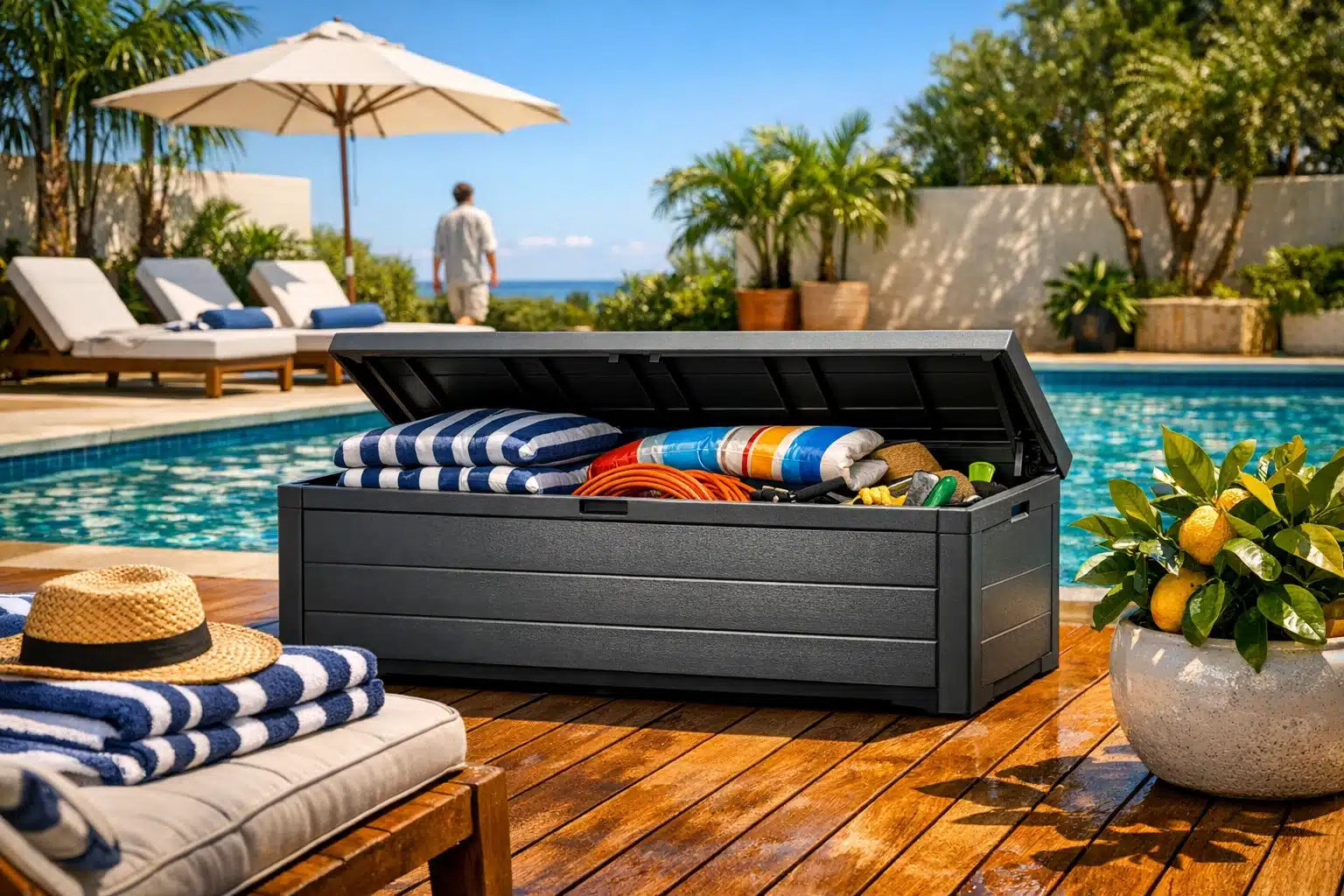
 Artificially generated image
 Walmart Is Clearing Out These Outdoor Storage Sheds
A backyard can turn messy in a hurry once hoses, folding chairs, potting soil, and sports gear stop having a place to live. That is why clearance season on outdoor storage sheds matters to homeowners, renters, and anyone trying to reclaim a patio without building an expensive addition. Walmart often rotates bulky seasonal inventory aggressively, and that creates opportunities only if you understand the trade-offs behind size, material, assembly, and long-term use. The guide below sorts through those choices so the markdown feels useful, not distracting.
Outline
1. Why outdoor shed clearances happen and which products tend to be included. 2. The main storage shed types shoppers usually find, from deck boxes to walk-in models. 3. Material and durability comparisons, including resin, metal, and wood-look options. 4. The practical math behind a good purchase, such as size, delivery, setup, and maintenance. 5. A shopper-focused conclusion that helps different households choose the right clearance shed with fewer surprises.
Why Walmart Clearance Events on Outdoor Sheds Matter
Clearance language can make almost any large item feel urgent, but outdoor storage sheds are a category where the timing often has a logical retail reason behind it. Big-box retailers do not have endless room for bulky goods, and sheds are some of the most space-hungry products in seasonal home inventory. They come in large cartons, they move unevenly depending on weather and region, and they compete for warehouse space with patio sets, grills, gardening supplies, holiday décor, and cold-weather equipment. When the calendar shifts, the storage sheds that are still sitting in inventory can become candidates for markdowns, especially if a new round of seasonal merchandise is on the way.
At Walmart, that pattern can show up in several forms. Some discounts happen in stores, where managers need floor and stockroom space. Others happen online, where inventory can be pooled, repriced, or cleared through regional fulfillment. A shopper may also notice that the most practical models are often the ones discounted first. That does not mean they are bad products. It often means they are mid-priced, broadly useful items that were stocked in higher volume. In plain terms, the retailer is usually trying to move quantity, not confessing that a shed has some secret flaw.
Clearance timing often lines up with a few predictable retail moments:
• late-summer and early-fall outdoor resets
• post-spring inventory balancing after peak gardening season
• store-specific overstock situations
• online promotions on heavy or oversized home products
The kinds of sheds that commonly appear in these cycles tend to be practical rather than premium. You are more likely to see deck boxes, vertical utility cabinets, compact resin sheds, and entry-level walk-in models than high-end custom structures. That matters because these are precisely the products many households actually need. A family trying to store pool toys, bagged soil, hand tools, and chair cushions usually benefits more from an efficient medium-size shed than from a showpiece building at the back of the yard.
This is why the topic is relevant beyond bargain hunting. Outdoor storage affects how usable a space feels. A clear patio is easier to clean, safer to walk through, and more enjoyable to use. A discounted shed can solve a real household problem, but only if the buyer understands what kind of storage problem they are solving. Clearance is not the destination. It is the opening scene.
The Main Outdoor Storage Shed Types Shoppers Commonly See
Not every outdoor storage shed is trying to do the same job, and this is where many rushed purchases go wrong. A shopper sees a lower price, pictures a tidy backyard, and forgets to ask the basic question: what exactly is this unit meant to hold? The sheds commonly sold through mass retailers such as Walmart usually fall into four broad groups, each with a different strength. Understanding those categories makes comparison easier and prevents the classic mistake of buying based only on footprint.
The smallest option is the deck box. These are often measured by gallon capacity rather than room-style dimensions, and they work best for lightweight or medium-weight items such as seat cushions, garden gloves, small tools, extension cords, and pool accessories. Many models fit on a balcony, deck, or narrow patio, so they are especially useful for renters or homes with limited yard space. A deck box is not a shed in the walk-in sense, but for many households it solves the first layer of clutter. Think of it as the storage version of cleaning off the kitchen counter: instantly helpful, modest in scale, and easy to appreciate every day.
Next comes the vertical utility cabinet. This is a strong candidate for people who need to store brooms, rakes, hedge trimmers, watering cans, and narrow garden tools without giving up much floor space. Vertical models use height intelligently, which makes them appealing for side yards and smaller patios. Some include adjustable shelves, while others leave the interior mostly open for taller equipment. When comparing them, the door opening matters as much as the outer measurements. A slim cabinet with awkward access can be more annoying than a larger unit with a wider door.
Then there are horizontal and low-profile sheds, sometimes used for trash bin storage, bike gear, lawn supplies, or compact equipment. These work well when height restrictions matter or when you want storage to sit below a fence line. They are practical, but they require careful measuring because interior dimensions can shrink quickly once hinges, walls, and roof shape are factored in.
Finally, the full-size walk-in shed is the model most people imagine first. Common entry-level sizes often begin around compact footprints such as 5×3, 6×4, or 7×4 feet, with larger versions stretching into more flexible storage territory. These are suitable for lawn mowers, stacked bins, bulk paper goods, seasonal décor, fertilizer, hand trucks, and more. The jump from a deck box to a walk-in shed can feel like going from a drawer to a room. The right choice depends less on the drama of the upgrade and more on the everyday items you need to store without frustration.
Resin, Metal, and Wood-Look Options Compared
Material is the quiet decision that shapes how a shed performs years after the sale price is forgotten. A storage shed may look sturdy in a listing photo, but its long-term value depends on how its material reacts to sun, moisture, temperature swings, dents, and basic wear. In Walmart’s outdoor storage selection, the most common materials are resin, metal, and wood-look or composite-style designs. Each has a legitimate place, but each asks for a different kind of compromise.
Resin is usually the most familiar option in mainstream retail. It is popular because it resists rot, does not rust, and generally asks for less maintenance than natural wood. For many households, that alone makes it the default pick. Resin sheds are often easier to clean, lighter than heavier permanent structures, and available in practical styles ranging from deck boxes to walk-in units. They also tend to fit the broad middle of the market: functional, weather-aware, and relatively approachable for DIY assembly. The trade-offs are important, though. Lower-end resin can feel less rigid, and cheaper panels may be more vulnerable to warping, fading, or brittleness in harsh conditions. Reinforced floors, steel-supported roofs, and UV-resistant finishes are often the details that separate a merely affordable resin shed from a durable one.
Metal sheds appeal to buyers who want sharper price efficiency per square foot and a structure that feels harder-edged and more utilitarian. They can offer strong storage capacity with thinner wall profiles, which helps maximize interior space. In the right setting, a metal shed is a practical workhorse. Yet metal has its own habits. It can dent, it may grow hot in direct sun, and it often requires attention to ventilation and condensation. If the protective coating is damaged, rust becomes a long-term concern. Assembly can also be more fiddly because sharp edges, multiple panels, and alignment issues make the process less forgiving than some molded resin systems.
Wood-look and composite-style sheds are usually purchased by shoppers who care about appearance as much as utility. They can blend better with decks, fences, and landscaped yards, which matters if the shed will sit in clear view. Some composite-style models give buyers the aesthetic warmth of wood with lower upkeep, but pricing can climb quickly and not every attractive finish equals structural strength. Decorative texture is not the same thing as durability.
A useful way to think about the comparison is this:
• choose resin for low-maintenance everyday storage in mixed weather
• choose metal if value per footprint matters and you can manage heat, rust prevention, and careful setup
• choose wood-look or composite if visual integration with the yard is a high priority
The best material is not the one with the most confident marketing copy. It is the one that suits your climate, your patience for upkeep, and the kind of items you are actually putting behind the doors.
How to Tell Whether a Clearance Shed Is Actually a Good Buy
A markdown can be real value, or it can be a shortcut to a product that creates more work than it solves. The smartest way to evaluate an outdoor storage shed on clearance is to treat the price as only one line in a bigger equation. The more practical question is whether the shed fits the site, the contents, the setup process, and the total cost of ownership. That may sound serious for a box that will hold fertilizer and folding chairs, but this is exactly the kind of purchase where hidden details become expensive later.
Start with space, and measure more than once. Shoppers often record the footprint and forget about door swing, roof overhang, walking clearance, or the room needed to lift a lid fully on a deck box. Interior dimensions also matter more than the outside promise. Thick walls, shelving supports, and sloped rooflines can reduce usable space enough to change what fits. A mower, for example, may technically fit by width but become awkward if the handle must be collapsed every time.
Then consider the base. Many outdoor sheds perform poorly not because the unit is bad, but because it sits on an uneven, muddy, or unstable surface. A flat paver area, compacted gravel base, or concrete pad can dramatically improve longevity and door alignment. If a buyer skips that cost in the mental math, the clearance price can become misleading. The same goes for accessories. Anchors, padlocks, shelving kits, floor reinforcement, and weather seals may not be included.
There are also purchase-path differences worth noticing at Walmart. Some listings are sold directly by the retailer, while others come from marketplace sellers. That distinction can affect shipping speed, support, packaging consistency, and return procedures. It does not automatically make one option better than the other, but it does mean shoppers should read the seller details, product specifications, and review patterns carefully.
A practical checklist helps:
• verify exterior and interior measurements
• check if the floor is included
• confirm whether anchoring hardware comes with the shed
• read assembly estimates and note if two people are recommended
• inspect venting, lock compatibility, and weight limits for shelves or lids
• compare seller, delivery terms, and warranty coverage
In short, the best clearance shed is the one that stays useful after the cardboard is gone and the screw bags are empty. A lower price is exciting for a moment. Easy access, weather resistance, solid fit, and manageable maintenance are what make the purchase feel wise months later.
Conclusion for Shoppers: Which Clearance Shed Makes Sense for You?
If you are the kind of shopper who wants a clean yard without wasting money, the good news is that outdoor shed clearances can be genuinely useful. The key is to match the product to the way you live instead of letting the sale tag make the decision for you. A small-space renter with a balcony or compact patio probably gains more from a sturdy deck box or upright cabinet than from chasing a larger walk-in unit that creates placement headaches. A homeowner with garden tools, bags of soil, kids’ outdoor toys, and seasonal decorations may find that a mid-size resin shed offers the best balance of capacity and low upkeep. Someone storing heavier equipment or prioritizing maximum storage per footprint might lean toward metal, provided the setup surface and ventilation are handled well.
This is where the article’s main takeaway becomes useful: clearance should act like a filter, not a verdict. It narrows the field, but it does not answer the practical questions on its own. You still need to know your dimensions, your weather conditions, your storage goals, and your tolerance for assembly. A shed that saves money up front but fights you every time you open the doors is not a bargain. A smaller unit that fits neatly, stays dry, and keeps clutter out of sight often delivers more daily value than a larger model bought only because it seemed too cheap to ignore.
For quick decision-making, this simple guide works well:
• choose a deck box if your main problem is cushions, accessories, and small loose items
• choose a vertical cabinet if your clutter is tall, narrow, and tool-heavy
• choose a horizontal shed if height must stay low or bins and bikes are the focus
• choose a walk-in shed if you need flexible room for larger gear and future storage growth
For budget-minded families, new homeowners, practical gardeners, and anyone tired of outdoor clutter creeping into every corner, Walmart shed clearances can be worth watching. Just shop with a tape measure in one hand and a little skepticism in the other. That combination usually beats impulse every time, and it turns a seasonal markdown into something far more satisfying: a backyard that feels calmer, more organized, and easier to enjoy.