 Artificially generated image
 What Funeral Caskets May Look Like in 2030
For generations, the funeral casket has been imagined as a heavy, glossy rectangle in polished wood or metal, formal almost to the point of silence. That image is starting to shift. By 2030, caskets may reflect changing attitudes toward sustainability, cost, personalization, and ritual, making them feel less like standardized inventory and more like objects shaped by values. For families planning ahead, that matters, because even small design changes can alter the tone, price, and meaning of a farewell.
Outline
- The social and market forces that are likely to reshape casket design by 2030
- How materials may change, from traditional hardwood and steel to lighter and greener options
- Why personalization, digital memorial features, and cultural identity will matter more
- How regulation, cost pressure, and green burial practices may influence what is sold
- What families and funeral professionals should watch as they plan for the next few years
1. Why the Casket of 2030 Will Not Be a Simple Copy of the Past
The classic casket still carries strong cultural weight, especially in places where visitation, open-casket services, and cemetery burial remain important. Yet the market around that familiar object is changing quickly. One major reason is demographics. In many countries with aging populations, the number of deaths is expected to rise over the next decade, which puts pressure on funeral providers to offer more flexible products at different price points. At the same time, consumer behavior has changed. Families now compare prices online, read reviews, ask about environmental impact, and expect clearer explanations than previous generations often received.
Another major factor is the rise of cremation. In the United States, industry data has shown cremation moving well above burial for several years, and that trend affects casket design even when a casket is still used for a viewing or ceremony. A family that chooses cremation may not want to pay for a traditional premium hardwood model designed mainly for long-term burial. That opens space for ceremonial caskets, rental exteriors, lighter combustible containers, and more modest but still dignified designs. In other words, the casket is no longer always a permanent underground product; sometimes it is part of the ritual, not the final destination.
Several pressures are likely to shape what people see in showrooms by 2030:
- More demand for sustainable and biodegradable materials
- Greater price transparency from funeral homes and online sellers
- Broader acceptance of cremation, green burial, and hybrid memorial practices
- Stronger interest in personalization rather than one-size-fits-all styling
- Growing cultural diversity in funeral preferences and aesthetics
These forces change appearance as much as function. The casket of 2030 may look lighter, less ornamented, and more intentional. Instead of dark lacquer and brass hardware being treated as the default sign of respect, families may increasingly see natural finishes, soft fabrics, rounded edges, woven textures, or minimalist handles. That does not mean tradition will vanish. Many buyers will still want mahogany tones, brushed metal, or religious iconography. But the key difference is range. The showroom of the future is likely to offer a wider spectrum, from formal and conventional to eco-minded and contemporary.
There is also a quiet emotional shift behind this trend. People are becoming more comfortable asking what a funeral item is made of, where it came from, and whether it matches the person being honored. That is a big change from the era when caskets were chosen under stress from a narrow display room and a sales sheet. By 2030, a casket may still symbolize dignity, but it will also be expected to reflect transparency, practicality, and personal story.
2. Materials in 2030: From Hardwood and Steel to Bamboo, Fiberboard, and Biodegradable Alternatives
If caskets in 2030 look different, materials will be one of the main reasons. Traditional models are typically made from hardwoods, wood veneers, steel, or copper and bronze in premium cases. Those materials are not disappearing overnight, because they remain familiar, durable, and visually associated with ceremonial gravitas. However, they are increasingly being compared against alternatives that are lighter, less resource-intensive, and often less expensive to ship or manufacture. That comparison is likely to become sharper by the end of the decade.
Hardwood caskets will probably remain part of the market, especially for families who value craftsmanship, natural grain, or long-standing religious and cultural traditions. Yet buyers may see more emphasis on certified wood sources, low-VOC finishes, and simpler construction that reduces material waste. Metal caskets may also stay relevant, especially in regions where they are traditionally perceived as protective or prestigious, but they may lose some share to products that better align with green burial standards or budget concerns. Since metal is not accepted in many green burial settings, suppliers will likely respond with a broader catalogue of compliant options.
Some of the materials likely to become more visible by 2030 include:
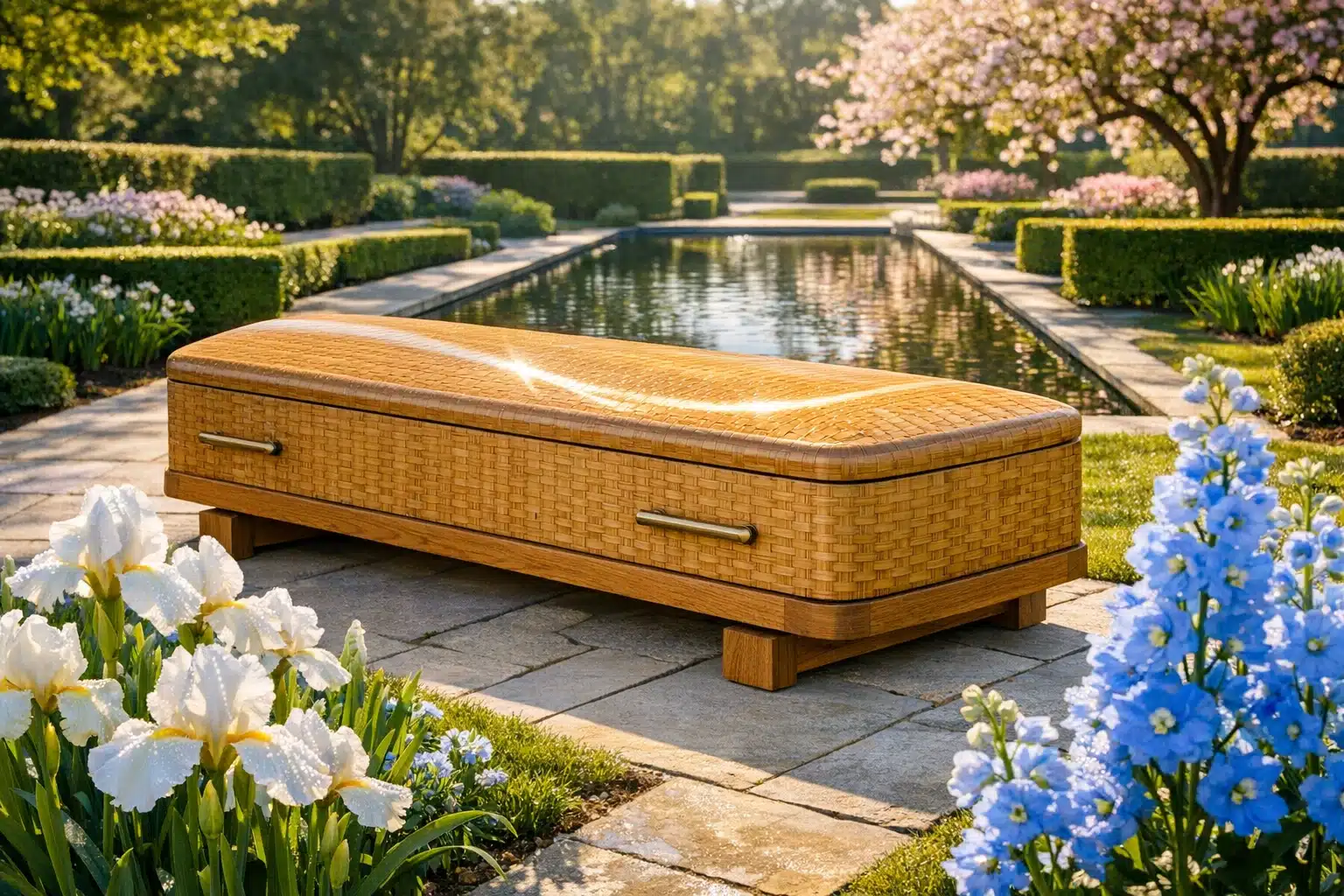
- Bamboo, wicker, willow, and rattan for woven, biodegradable designs
- Engineered fiberboard and cardboard-based ceremonial containers for lower-cost needs
- Recycled or lower-impact wood composites with improved exterior finishes
- Mycelium and other plant-based experimental materials for eco-focused niches
- Natural interior fabrics such as cotton, linen, wool, or unbleached textile blends
Not all of these materials serve the same purpose, and that matters. A woven willow casket may appeal to a family choosing natural burial, where decomposition and reduced environmental impact are part of the intention. A fiberboard container may be more common in a cremation-focused service where affordability and appearance for a short ceremonial period are the main concerns. A bamboo casket might sit in the middle, offering a cleaner environmental profile than some traditional models while still looking refined enough for a formal service.
The most interesting change may be that “green” will stop meaning “plain.” Early eco-friendly funeral products were sometimes seen as visually austere or even improvised. By 2030, manufacturers will likely invest more in design quality, offering biodegradable caskets with better joinery, softer interiors, warmer color palettes, and more polished craftsmanship. Some may even use modular construction so the outer appearance feels elegant while the structural core remains environmentally gentler.
There are tradeoffs, of course. Biodegradable options may not meet every cemetery requirement, and ultra-low-cost materials may not satisfy families who want a particular aesthetic. Durability expectations also vary depending on whether the casket is intended for burial, cremation, transport, or a public viewing. Still, the direction is clear: the future casket market will probably be defined less by one dominant material and more by a menu of material choices, each linked to a different set of values.
3. Design, Personalization, and Digital Memory Will Likely Become More Visible
One of the biggest visual changes in funeral caskets by 2030 may not be structural at all. It may be stylistic. For a long time, casket design followed a narrow language of solemnity: dark finishes, high gloss, tufted interiors, substantial hardware, and symmetrical form. That vocabulary will still exist, but it is likely to share space with designs that feel more contemporary, more personal, and in some cases more intimate. Think less showroom uniformity, more tailored selection.
Personalization is already moving beyond engraved nameplates and color choice. In the next few years, families may be offered a broader range of design elements, including custom printed panels, interior fabrics chosen to match a loved one’s taste, carved motifs tied to hobbies or heritage, and subdued decorative details that feel specific rather than generic. A veteran’s family might choose understated service emblems and a flag-toned lining. A musician’s family may prefer a warm wood finish with a softly etched motif rather than something ornate. A person known for gardening might be honored with botanical patterns, pressed floral design cues, or natural woven accents. The goal is not novelty for its own sake. It is emotional accuracy.
Digital features may also become part of the experience, though probably in restrained ways. The most plausible versions are simple and practical:
- QR codes or NFC tags linking to an obituary, memorial page, photo archive, or service details
- Digital configuration tools that let families preview finishes and interiors before purchase
- Online personalization platforms that reduce rushed decisions in the funeral home
- Integration with livestreamed services, tribute pages, or digital guestbooks
It is unlikely that most caskets in 2030 will resemble gadgets. Large built-in screens or flashy electronics would be expensive, fragile, and often at odds with the tone of a funeral. But discreet digital memorial tools are much more realistic. A small embedded tag inside the lid or on a memorial card could connect future visitors to stories, photographs, or recorded tributes. In that sense, the casket becomes a physical starting point for memory, not just a sealed object at the end of a service.
Cultural diversity will also shape design. Funeral providers increasingly serve families whose traditions differ in color symbolism, religious requirements, preferred ornamentation, or expectations about burial simplicity. By 2030, casket catalogues may be less centered on a single Western formal style and more responsive to different communities. Some families may want strict simplicity and biodegradable materials. Others may want rich textiles, symbolic color, or iconography that would once have required special ordering. Better supply chains and digital customization tools make that easier.
There is something quietly human in this shift. The casket may remain a serious object, but it may no longer feel as anonymous as it often has in the past. Instead of asking only, “What does this cost?” families may increasingly ask, “Does this feel like them?” That single question could do more than any trend forecast to define how caskets look in 2030.
4. Cost, Regulation, and Green Burial Standards May Shape the Future More Than Fashion
It is tempting to imagine the future of funeral caskets as a design story, but practical pressures may prove even more influential. Cost remains one of the strongest drivers in funeral decision-making. Traditional metal and hardwood caskets can cost several thousand dollars, and families facing sudden loss often have little time to compare options calmly. As price transparency improves, especially through online funeral planning and digital catalogues, casket makers will have to justify not only appearance but value. That could push the market toward clearer segmentation: premium heirloom-style models at one end, efficient and dignified alternatives at the other, and more customizable midrange choices in between.
Regulation matters too. In the United States, consumers have legal protections around funeral purchasing, and pricing transparency has received growing attention. By 2030, it is reasonable to expect more funeral homes to display prices online or provide digital planning tools that make comparison easier. That alone could change what caskets look like, because products designed for online browsing tend to benefit from clearer categories, simpler descriptions, and more obvious feature differences. A vague label like “standard bronze unit” may not work as well in a digital marketplace as “solid bamboo green burial casket with natural cotton lining.”
Green burial standards will likely have an even more direct effect on construction. Cemeteries and natural burial grounds that emphasize reduced environmental impact often restrict certain materials or finishes. That can mean no metal, limited synthetic upholstery, minimal toxic sealants, and hardware that biodegrades more readily. If green burial continues to grow, manufacturers will need to build more models specifically for those requirements rather than treating them as fringe products.
Some likely practical developments include:
- More modular casket designs for shipping efficiency and local assembly
- Greater use of ceremonial rental caskets for services followed by cremation
- Expanded labeling around material source, finish type, and burial compatibility
- Simplified models designed to meet cemetery and transport rules without excess cost
- Improved online comparison tools that sort caskets by ritual use, not only by price
Even logistics may influence appearance. Lighter materials reduce transportation costs and can be easier for staff to handle safely. Flat-pack or semi-modular construction, while not suitable for every premium model, may become more common in budget or green categories. That could lead to cleaner lines, fewer decorative add-ons, and hardware designed for efficiency rather than sheer visual weight.
Perhaps the most important takeaway is that what people notice in 2030 may be the visible result of invisible pressures. A simpler casket may not reflect declining respect; it may reflect changing burial practices, clearer consumer rights, rising material costs, or ecological rules set by cemeteries. The future casket, in other words, may be designed as much by paperwork, freight, and law as by taste.
5. Conclusion: What Families and Funeral Professionals Should Watch Before 2030 Arrives
If you are wondering what funeral caskets may look like in 2030, the safest answer is this: less uniform, more intentional, and more openly tied to personal values. Some will still look traditional, because tradition remains meaningful and many families find comfort in forms they recognize. But the broader market is likely to become more varied. You may see lighter materials, natural finishes, greener construction, customizable interiors, better online previews, and discreet digital links to memorial content. The old image of a casket as a standard product chosen from a narrow wall display is steadily giving way to something more flexible.
For families planning ahead, that shift can actually be helpful. A future purchase may still be emotional, but it may no longer feel as mysterious. Instead of asking only which model looks most respectable, buyers can compare what fits their priorities. Is environmental impact the main concern? Is the service centered on viewing and ceremony, or is cremation planned afterward? Does cultural or religious symbolism matter more than finish or hardware? Is the budget strict? Questions like these will likely define the 2030 casket market more than prestige alone.
A practical checklist for readers might include:
- Ask what materials are used and whether they suit burial, cremation, or green burial
- Compare interior fabrics, finish types, and hardware, not just exterior appearance
- Check whether a funeral home offers online pricing and digital design previews
- Find out if cemetery rules limit certain materials or construction methods
- Consider whether personalization adds real meaning or simply extra cost
For funeral professionals, the message is equally clear. The next few years will likely reward providers who communicate plainly, stock a broader range of materials, and understand that dignity can be expressed in many visual languages. Some families will want polished oak and formal trim. Others will prefer woven willow, simple linen, and a biodegradable frame. Neither choice is inherently more caring than the other. They reflect different beliefs about memory, ritual, stewardship, and affordability.
By 2030, the most successful casket designs may be the ones that do something deceptively hard: they make a difficult decision feel honest. They do not hide costs behind tradition, and they do not turn sustainability into a marketing costume. They simply offer families choices that are clearer, more humane, and more suited to the person being remembered. In a field where emotion and practicality meet under pressure, that may be the most important design improvement of all.