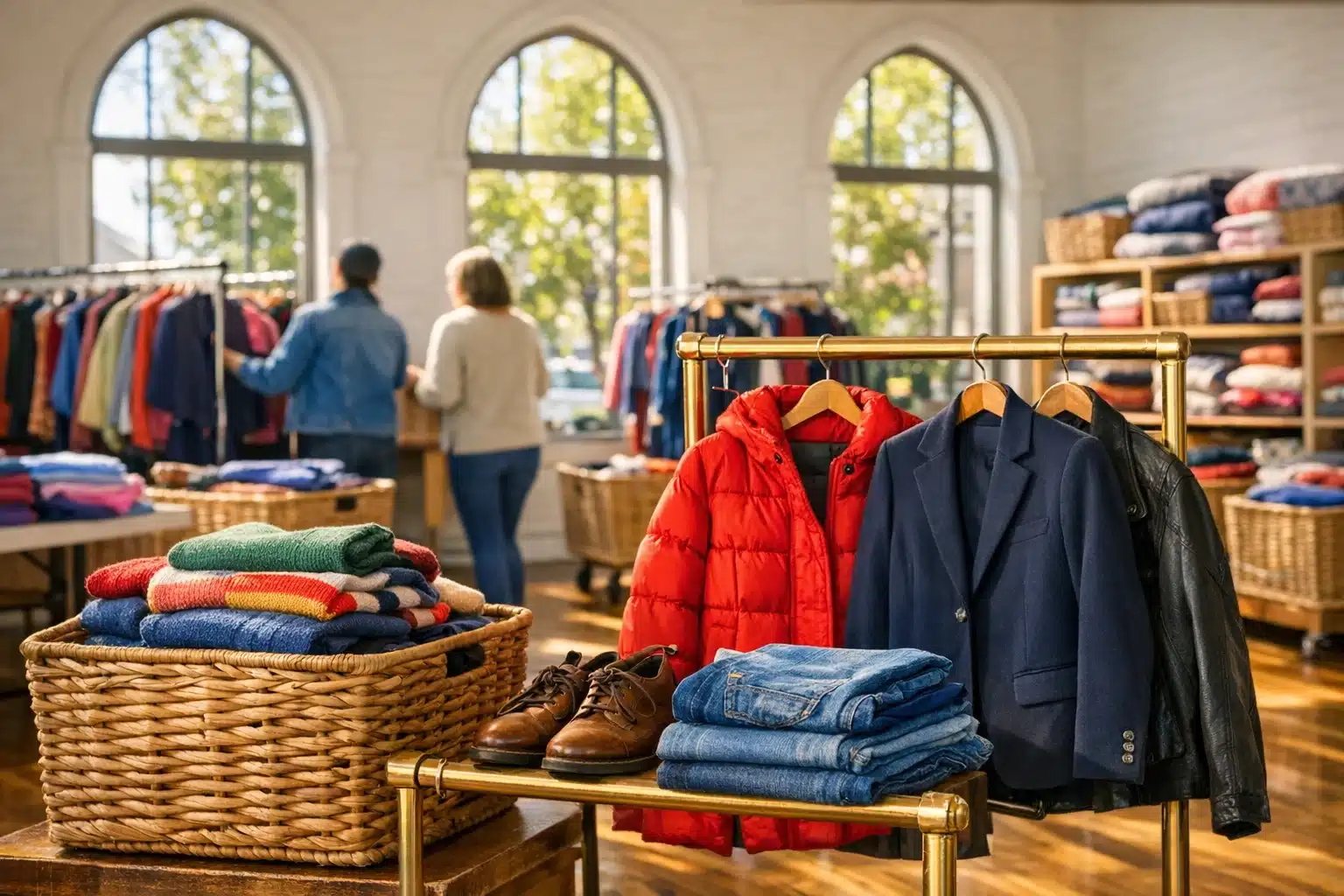
 Artificially generated image
 Where to Donate Clothes You No Longer Wear
Your closet probably holds a quiet pile of maybes: the jacket that no longer fits, the jeans you keep out of guilt, the sweater you have not reached for in two winters. Donating those items can free space at home, help people meet everyday needs, and keep usable textiles in circulation longer. The real challenge is knowing where each piece should go, because the right destination depends on condition, season, and purpose.
Outline
- Why thoughtful clothing donation matters and how to sort items honestly
- How local organizations compare, from shelters to neighborhood clothing closets
- What national charities, thrift stores, and drop-off bins do well and where they fall short
- Where to send specialty items such as workwear, baby clothes, formalwear, and damaged textiles
- How to prepare donations properly and build a simple, repeatable habit for future clean-outs
1. Start With the Right Question: Is This Donation, Reuse, or Recycling?
The best place to donate clothes is not always the most convenient place; it is the place that matches the condition of the item. That is the first filter, and it matters more than many people realize. A surprising amount of clothing dropped into donation bags is not ready for another person to wear. It may be stretched out, stained, missing buttons, heavily pilled, or carrying an odor that will not wash out. When that happens, the bag does not become generous by default. It becomes work for someone else.
A useful rule is simple: if you would feel comfortable handing the item to a friend, it is probably suitable for donation. If you would hesitate, pause and reassess. Many nonprofit organizations sort huge volumes of clothing, and unusable pieces can consume staff time, volunteer effort, storage space, and disposal fees. Thoughtful donation helps organizations focus on what they actually exist to do: serve people, not manage trash.
There is also an environmental angle. Textile waste has grown into a major issue, and agencies such as the U.S. Environmental Protection Agency have reported that millions of tons of textiles are discarded annually in the United States. Reuse is generally more resource-efficient than buying new, but only when garments are still functional. That is why honest sorting comes before drop-off locations. A closet can feel like a museum of former selves, but a donation bag should not become an archive of things that have already reached the end of the road.
Before you choose a destination, sort clothes into clear categories:
- Excellent condition: clean, current enough to wear, no repairs needed
- Good condition: wearable but slightly older or less stylish, still fully functional
- Special purpose: uniforms, interview clothes, prom dresses, baby items, seasonal outerwear
- Damaged but recyclable: torn cotton, single socks, worn T-shirts, textiles not fit for wearing
This first pass saves time later and leads to better decisions. A formal blazer may help someone preparing for an interview. A warm coat may be far more useful at a shelter than in a generic donation bin. A faded sleep shirt might be best sent to a textile recycling program rather than handed to a charity that needs wearable apparel. Once you sort by condition and purpose, the question “Where should I donate?” becomes much easier to answer, and much more responsible.
2. The Most Direct Impact Often Starts Close to Home
If your goal is to help people quickly and locally, nearby organizations are often the best first stop. Community-based donation channels usually have a clearer understanding of immediate need than large, generalized collection systems. Domestic violence shelters, refugee resettlement agencies, school resource centers, mutual aid groups, church closets, foster care support nonprofits, and neighborhood outreach programs often distribute clothing directly to people instead of sending it through a retail process first.
This direct model has several advantages. It can be faster, more personal, and better targeted. A family arriving in a new city may need coats, shoes, children’s clothing, and basics right away. A shelter may urgently need women’s tops in common sizes, men’s work pants, or unopened socks and underwear. A school social worker may be trying to help students who need weather-appropriate clothing to attend class comfortably. In these settings, donated garments are not just spare fabric; they can remove a practical barrier from daily life.
That said, local groups often operate with limited storage. They may not be able to accept everything at all times. Some will only take in-season items. Others may decline formalwear, accessories, or anything that requires heavy sorting. Calling ahead is not an inconvenience; it is part of donating well. Ask what they need most, whether appointments are required, and how clothing should be packed.
Local options worth checking include:
- Homeless shelters and transitional housing programs
- Domestic violence shelters
- Refugee and immigrant support organizations
- School clothing closets and parent associations
- Community centers, faith groups, and neighborhood mutual aid projects
- Free stores and “take what you need” community hubs
The biggest comparison point here is specificity. A general charity may accept almost anything wearable. A local outreach group may accept less, but use it more precisely. That trade-off often leads to stronger impact. For example, a bag of toddler clothes can be extremely useful to a family support program, while the same bag might sit longer in a broad donation system. Likewise, clean winter gear donated before cold weather begins is much more valuable than coats dropped off after demand has already peaked.
Think of local giving as the difference between mailing a letter and having a conversation. One reaches a system; the other reaches a community. If you are willing to spend an extra ten minutes researching nearby organizations, you can often place your clothes where they will be used sooner, appreciated more directly, and handled with much less friction.
3. National Charities, Thrift Stores, and Donation Bins: Convenient, Useful, and Worth Comparing
For many people, the easiest donation route is a large charity thrift network or a familiar drop-off center. That convenience has real value. National organizations and established thrift chains often have broad infrastructure, regular donation hours, receipt systems for tax purposes where applicable, and staff trained to sort high volumes of goods. If you are clearing out several bags at once, these channels can be practical and efficient.
Some organizations resell donated clothing in thrift stores and use the revenue to support job training, social services, rehabilitation programs, community grants, or other mission-driven work. Others distribute a smaller portion directly and sell the rest to fund operations. Neither model is automatically better; they simply work differently. What matters is understanding where your items are likely to go. If you want direct person-to-person distribution, a thrift-based system may not be your first choice. If you want convenience and broad acceptance of everyday wear, it may be a very good fit.
It is also wise to compare storefront donation centers with anonymous roadside bins. Some bins are operated by legitimate charities or textile recovery companies, while others are poorly labeled and vague about ownership or use of proceeds. If the organization name is unclear, the website is missing, or the contact details look incomplete, pause before donating. Transparency is part of trust.
When comparing larger donation channels, consider these questions:
- Are the items sold, distributed directly, exported, recycled, or some combination of these?
- Does the organization clearly explain its mission and handling process?
- Are donations accepted year-round, and are there quality standards?
- Is there a receipt process if you want documentation?
- Does the drop-off site look maintained and regularly serviced?
Large charities can be especially useful for common categories: casual clothing, children’s basics, jeans, sweaters, and household textiles in good shape. They may be less ideal for highly specialized needs, such as interview suits, prom dresses, or urgent cold-weather gear meant for immediate local use. In other words, convenience is their strength, not always precision.
There is no need to romanticize or dismiss these systems. They fill an important role in the secondhand economy by moving a large number of garments back into use. The smart approach is to treat them as one tool among several. When you need speed, scale, and a predictable drop-off process, national charities and reputable thrift organizations can be a sensible destination. When the item has a more specific purpose, another route may serve it better.
4. Specialty Donations: Matching the Garment to the Need
Some clothes are too specific to disappear into a general donation stream without losing part of their value. A sharp blazer, steel-toe work boots, maternity wear, school uniforms, prom dresses, baby sleepers, and winter coats all meet different kinds of need. When you match those garments to specialty programs, the donation becomes more efficient and often more meaningful.
Professional clothing is a clear example. Interview-ready outfits, shoes, belts, and structured bags can support job seekers who need to present themselves well but may not have the budget to assemble a work wardrobe. In many cities, career closets or employment nonprofits collect these items for clients preparing for interviews or entering new roles. These programs usually prefer modern, clean, and workplace-appropriate clothing. A dated suit may still be wearable, but a current, neutral outfit is usually more helpful.
Children’s clothing and baby items often work best through family resource centers, parenting groups, foster care organizations, and neighborhood exchanges. Kids outgrow clothes quickly, and families often need basics in rotating sizes. These channels can be especially effective because they move items fast. In many communities, online groups such as Buy Nothing networks, local parenting pages, and mutual aid circles help clothing circulate almost immediately. A bag of size-4T clothing can go from one hallway closet to another family’s laundry basket in a single afternoon.
Other specialty pathways may include:
- Formalwear drives for prom or graduation season
- Coat drives before winter
- School uniform exchanges
- Sneaker or athletic shoe reuse programs
- Textile recycling services for garments that are too worn to donate
Textile recycling deserves special mention. Not every piece of clothing should be donated for wearing, but that does not mean it belongs in household trash. Some municipalities, retailers, and fabric recovery programs accept worn textiles for recycling or downcycling into insulation, wiping cloths, or industrial materials. Acceptance rules vary, so check carefully. Clean but damaged cotton items, old pajamas, and unmatched socks may fit here better than in a charity bag.
The comparison to keep in mind is this: general donation channels are broad, but specialty channels are sharper. They may require a little more effort, yet they often produce better outcomes because the item arrives where its features matter. A coat is not just a coat when cold weather begins. A blazer is not just a blazer when someone is walking into an interview. The more specific the garment, the more worthwhile it is to find a destination that understands exactly what it can do.
5. A Practical Conclusion: How to Donate Responsibly and Make It a Habit
If you want your clothing donation to be genuinely useful, preparation matters almost as much as destination. Clean items before giving them away. Button shirts, pair shoes, empty pockets, and check for stains, tears, broken zippers, or missing parts. Fold garments if the receiving organization requests it, and separate categories when that makes intake easier. These small steps are easy to overlook, but they respect the time of the people receiving and sorting your donation.
It also helps to donate with timing in mind. Heavy coats are more useful before or at the start of winter. School clothing and children’s basics can be especially valuable before a new term begins. Professional attire may be requested year-round, but some career programs announce targeted drives during hiring seasons. If you donate according to likely demand instead of your own cleaning schedule alone, the same bag can have more impact.
Here is a simple repeatable system for future closet clear-outs:
- Sort into four piles: keep, donate, specialty donate, recycle
- Check condition honestly and remove items that are not wearable
- Choose the nearest suitable organization, not just the nearest bin
- Call or verify current needs online before dropping off
- Package donations neatly and label specialty items if helpful
- Set a reminder to review your closet every season rather than once a year
This approach is especially useful for busy households, students moving apartments, growing families, and anyone trying to declutter without being wasteful. You do not need a perfect system or a dramatic minimalist makeover. You just need a better decision tree. Clothes in excellent condition can support local programs or charity resale. Purpose-specific items often belong with targeted organizations. Damaged textiles may need recycling instead of donation. Once you learn those distinctions, the process becomes far less confusing.
The real takeaway for readers is straightforward: donating clothing is not only about getting rid of things; it is about sending useful items to the right next life. That can mean a shelter, a school closet, a reputable thrift organization, a neighbor in a mutual aid group, or a textile recycler. When you donate with care, your wardrobe clean-out stops being a chore and starts acting like a small, practical form of community support. Open the closet, choose with honesty, and let each garment go where it can still do some good.