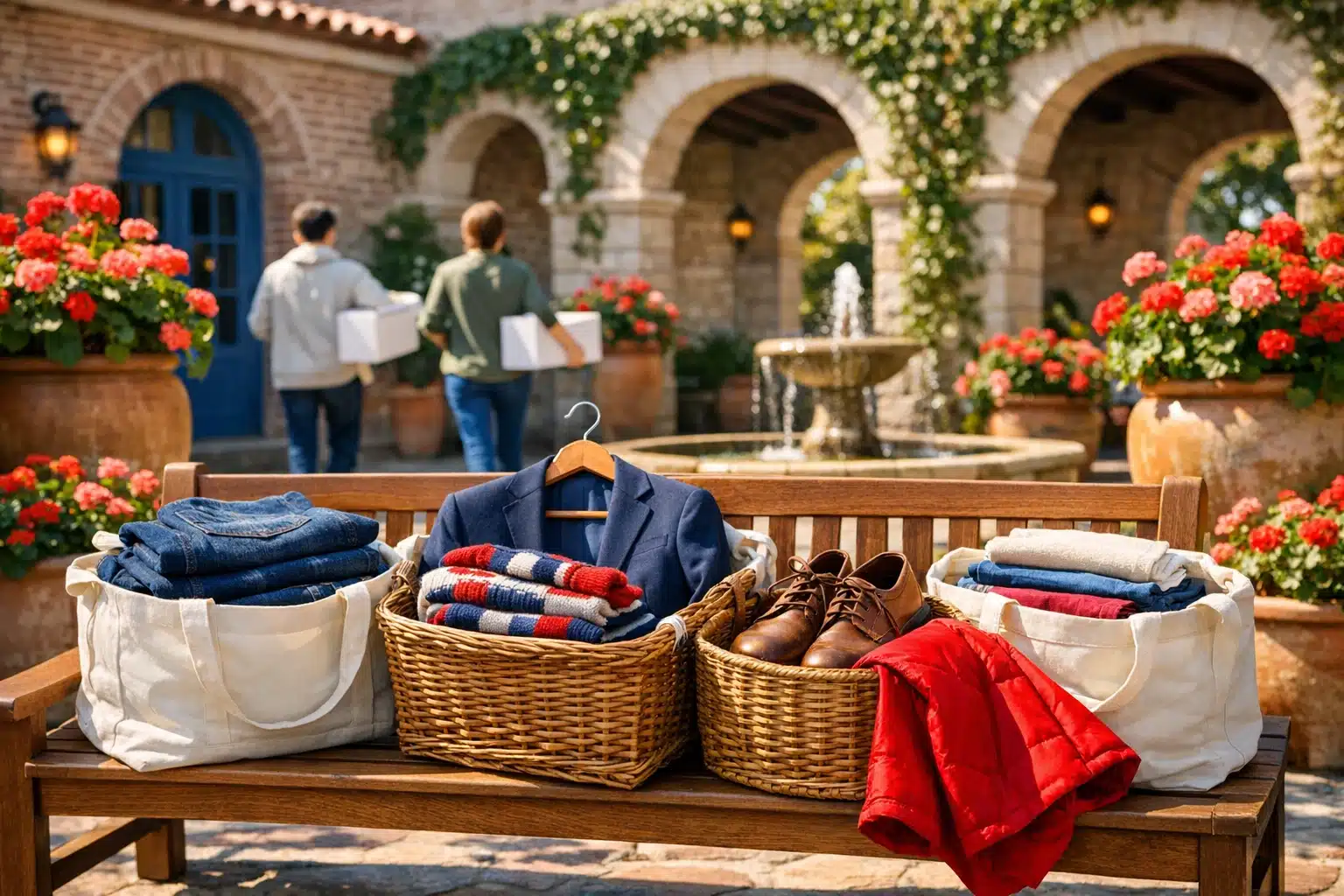
 Artificially generated image
 Where to Donate Clothes You No Longer Wear
That stack of shirts on a chair, the coat you never reach for, and the jeans that no longer fit can still be useful to someone else. Donating clothes is not only a way to clear space at home, but also a practical choice that can support families, shelters, schools, and local nonprofits. The real trick is knowing where each item belongs, because the best destination for a winter coat is not always the same as the best destination for office wear, baby clothes, or worn basics.
Outline
This article covers five practical parts of the clothing donation process: how local charities and shelters work, when specialty programs make more sense, where community-based giving can help faster, why some items should be recycled instead of donated, and how to prepare garments so your donation is genuinely useful.
- Local charities, thrift stores, and shelters
- Specialty donation programs for specific clothing types
- Community networks, mutual aid, and direct giving
- Textile recycling and alternatives for damaged garments
- How to prepare items and choose the best destination
Local Charities, Thrift Stores, and Shelters
For many people, the most obvious answer to where to donate clothes is a local charity shop or nonprofit thrift store. That is often a good starting point, but it helps to understand how these organizations actually use donations. Some groups give clothing directly to people in need through free closets, emergency support services, or shelter programs. Others sell donated items in thrift stores and use the revenue to fund job training, housing support, food assistance, rehabilitation, or community outreach. Both models can be helpful, but they serve different purposes, and knowing the difference makes you a smarter donor.
Organizations such as Goodwill, The Salvation Army, church-run thrift shops, and independent nonprofit stores usually accept everyday clothes in clean, wearable condition. Their biggest strength is convenience. They often have established drop-off systems, tax receipt procedures, and staff who can sort large volumes of items. If you have a mixed bag of casual wear, children’s clothes, sweaters, and shoes, a nonprofit resale shop may be the easiest place to begin. The clothing may be purchased at a low price by someone who needs affordable options, and the proceeds may support broader social programs. In that sense, your old cardigan can quietly become bus fare, job coaching, or pantry supplies for someone else.
Direct-service shelters are different. Homeless shelters, domestic violence shelters, refugee support centers, and family crisis programs often need specific items rather than random bags of clothes. They may have limited storage, so they often prefer seasonally appropriate donations and essentials that people can wear immediately. A shelter may urgently need socks, underwear in new packaging, winter coats, practical shoes, or basic men’s and children’s clothing. An evening dress or a stack of fashion tops may not be useful there at all. That is why calling ahead matters.
Before you donate locally, look for a few signs that the organization is organized and transparent:
- It explains what items it accepts and what it cannot use.
- It gives clear drop-off hours and instructions.
- It describes whether donations are given directly, resold, or recycled.
- It has a physical location, active website, or verified local presence.
The best local option depends on your goal. If you want the broadest acceptance and easiest drop-off, thrift-based nonprofits are practical. If you want your donation to meet an urgent human need, shelters and community aid organizations may be better. A closet clean-out feels lighter when it is matched with intention rather than habit.
Specialty Donation Programs for Coats, Workwear, and Other Specific Items
Not all clothing belongs in the same donation stream. A winter coat, a business suit, steel-toe boots, school uniforms, prom dresses, and infant clothing all solve different problems for different people. That is where specialty donation programs can make a bigger impact than general thrift drop-offs. When a garment is tied to a specific need, giving it to an organization built around that need is often the smartest move.
Workwear is a clear example. Professional clothing can be genuinely valuable for people preparing for job interviews, starting a new role, or reentering the workforce after a difficult period. Organizations such as Dress for Success, local workforce centers, and career closets at colleges often accept interview-appropriate clothing, shoes, belts, handbags, and coats. These programs usually want items that are current, clean, and ready to wear without repairs. A blazer that sits untouched in your closet may be exactly what someone else needs to walk into an interview feeling prepared rather than apologetic.
Cold-weather donations are another category where specialized programs matter. Groups such as One Warm Coat and local winter drives often focus on coats, gloves, hats, scarves, and thermal wear. In colder regions, these items are not merely seasonal extras; they are safety items. Community coat drives tend to be especially effective in autumn and early winter, when organizations are actively preparing for demand. Donating a heavy coat in July may still help, but timing can improve how quickly it reaches a person who needs it.
Other useful specialty paths include:
- School clothing closets that need children’s basics, backpacks, and shoes
- Foster care agencies that often need clothing for children arriving with very little
- Prom or formalwear drives for students who cannot easily afford event clothing
- Baby banks and family resource centers that accept infant and toddler clothing
- Shoe-focused charities and social enterprises that distribute or resell footwear to support aid programs
The main advantage of specialty donation is precision. Instead of hoping your clothes will eventually reach the right person, you improve the odds from the start. The trade-off is that standards are often stricter. Many specialty programs accept only certain brands, sizes, seasons, or condition levels. They may refuse outdated office wear, stained baby clothes, or formal garments that need tailoring. That is not pickiness; it is logistics. Their clients often need items that are ready immediately.
If you have highly usable pieces with a clear purpose, specialty organizations are often the best choice. They turn clothing from a vague act of generosity into a well-aimed one. In donation, as in storytelling, the right details matter.
Community Networks, Mutual Aid, and Direct Giving Close to Home
Some of the most effective clothing donation happens outside large institutions. Community groups, neighborhood networks, mutual aid circles, school communities, and refugee support volunteers can move clothing quickly and directly to people who need it. If traditional donation bins feel impersonal, this route may suit you better. It is less like dropping a bag into a system and more like passing along practical help through a chain of familiar hands.
Mutual aid groups often operate through social media, neighborhood message boards, community centers, or informal volunteer networks. Unlike many formal charities, they may post highly specific requests: size 8 children’s sneakers, men’s work pants, maternity clothes, winter gloves, or interview outfits. That specificity is powerful. Instead of donating “women’s clothes” in a general sense, you can respond to a direct need from a local family, a newly arrived refugee, a student, or a person leaving an unstable living situation. The donation becomes more immediate, and the chance of waste drops.
Common community-based options include:
- Buy Nothing groups and neighborhood exchange pages
- School social workers and family resource coordinators
- Refugee resettlement agencies and volunteer circles
- Churches, mosques, synagogues, and community centers with clothing closets
- Domestic violence outreach programs with confidential client needs
These routes work especially well for everyday items that people need fast: children’s clothes, coats, shoes, backpacks, casual basics, and seasonal gear. They also help when an organization has little storage space but strong local knowledge. For example, a school counselor may know exactly which families need uniforms or winter jackets. A refugee support volunteer may know whether a household needs women’s medium clothing, toddler pajamas, or men’s shoes in a specific size. That kind of matching is hard for large donation systems to replicate.
Still, direct giving requires more attention from the donor. You may need to sort by size, take clear photos, coordinate pickup, or wait for a confirmed match. Privacy also matters. It is wise to avoid posting personal details about recipients or expecting emotional gratitude in return. Good community giving is respectful and low-drama. The point is usefulness, not performance.
If you want to help locally and quickly, community-based donation can be one of the best choices available. A sweatshirt placed in the right hands on the right day can do more good than a larger bag that spends weeks in a sorting room. Generosity does not always need a loading dock; sometimes it just needs a group chat and a bit of follow-through.
When Donation Is Not the Right Answer: Textile Recycling, Swaps, and Responsible Alternatives
One of the most helpful things you can learn about donating clothes is this: not every item should be donated. Charities regularly spend time and money sorting through garments that are stained, torn, moldy, heavily pilled, or simply too worn to be useful. Well-meant bags can become a disposal problem. If a shirt is not something you would offer to a friend in good faith, it may belong in a different channel.
This is where textile recycling becomes important. Many municipalities, retailers, and private recycling programs accept fabric that is no longer wearable. Some items are converted into wiping cloths, insulation, stuffing, or industrial fiber. The exact process varies by program, so it is worth checking local guidance. Some curbside systems take textiles in marked bags, while some clothing retailers host collection boxes. Other areas rely on mail-in programs or designated recycling days. This route is especially useful for single socks, ripped T-shirts, stretched leggings, or garments with broken zippers that no longer make sense as donations.
You may also want to consider alternatives that sit between keeping and donating. Clothing swaps, hand-me-down networks, and consignment options can extend the life of good-quality garments in a more targeted way. A community swap works well for trendy pieces, children’s clothing, or occasion wear that people only need temporarily. Consignment or resale platforms may be better for higher-value items such as designer coats, premium denim, or barely worn shoes. While selling is not donation, it can prevent waste and free up funds that you might choose to donate elsewhere.
A simple sorting framework can help:
- Wearable and versatile: donate to charities, community groups, or specialty programs
- High-value and in excellent condition: consider consignment or resale
- Still useful but highly specific: offer through local groups or direct requests
- Damaged, stained, or incomplete: send to textile recycling if available
This distinction matters because donation systems work best when donors act like thoughtful curators, not last-minute cleaners. It is tempting to toss everything into one bag and call it generosity, but that approach can shift labor onto underfunded organizations. A responsible donor separates reusable items from worn-out fabric before the bag ever leaves the house.
In practical terms, the goal is not simply to get clothes out of your closet. The goal is to move each item to its highest reasonable use. Sometimes that means a shelter closet. Sometimes it means a school social worker. Sometimes it means a textile recycler. Knowing the difference is what turns decluttering into stewardship.
How to Prepare Your Clothes, Choose the Best Destination, and Take the Next Step
Once you know the main donation routes, the final step is preparation. This part may sound ordinary, but it often decides whether your clothes become helpful inventory or extra work. A well-prepared donation is clean, seasonally relevant, sorted, and matched to a realistic destination. In other words, it arrives ready to be used, not ready to be decoded.
Start with condition. Clothes should usually be freshly washed, dry, and free from strong odors, excessive pet hair, and obvious damage unless a program specifically accepts textiles for recycling. Check pockets, remove tissues, zip bags shut, and pair shoes together. If buttons are missing or hems are coming apart, decide honestly whether the item is worth repairing before you donate it. Some people imagine that charities have sewing rooms and endless volunteers for mending. Most do not. Ready-to-wear almost always beats repair-needed.
Next, sort with purpose. Separate items into categories such as everyday basics, workwear, outerwear, children’s clothing, shoes, and recycling. Label bags if you are donating to a small organization. This saves time for staff and increases the chance that the right items reach the right people. If you are donating directly to a shelter or community program, confirm current needs first. Needs change fast. A center that wanted coats last month may now be full on coats and urgently short on men’s jeans or children’s pajamas.
It also helps to ask a few questions before drop-off:
- What items are currently most needed?
- Do you accept all sizes and seasons?
- Are there items you cannot store or distribute?
- Do you prefer hangers, folded bags, or labeled boxes?
- What are your actual donation hours?
Be careful with unattended bins or vague collection points that provide no organizational details. Legitimate programs usually identify who they are, what they do, and how donations are processed. If information is unclear, look for a website, a phone number, recent community activity, or reviews from local donors. Transparency is not a luxury; it is a sign that your donation is likely to be handled responsibly.
For readers standing in front of an overfull closet, the best advice is simple: do not ask only, “Where can I drop this off?” Ask, “Who could truly use this, and in what form?” That question changes everything. It turns old clothes into affordable stock for a thrift store, warmth for a neighbor, confidence for a job seeker, uniforms for a student, or raw material for recycling instead of landfill. If you sort carefully, donate honestly, and choose with intention, your unworn clothes can leave your home with dignity and arrive somewhere else with real value.