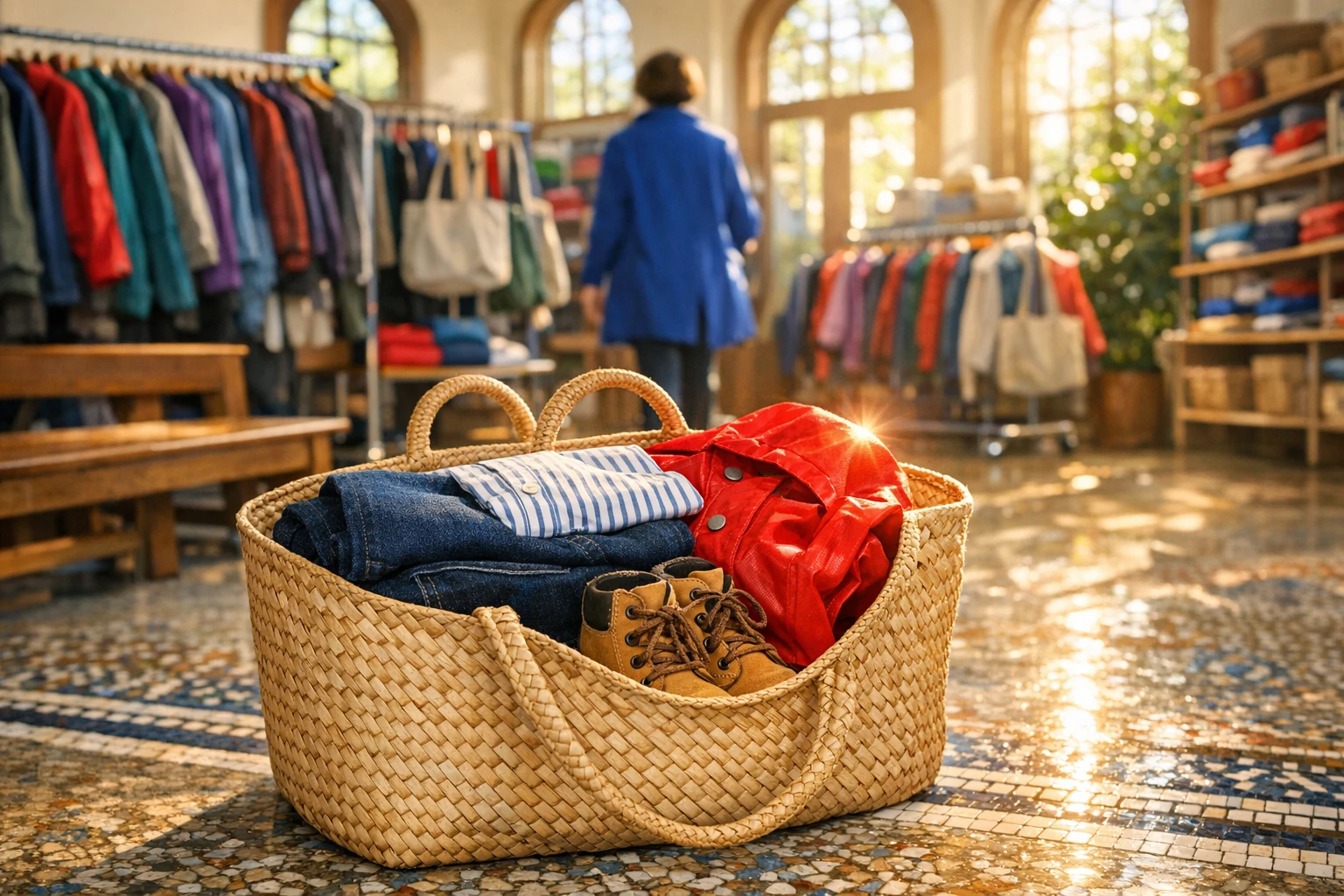
 Artificially generated image
 where to donate the clothes you don’t wear anymore
A forgotten shirt at the back of the closet may seem trivial, yet multiplied across a home, it becomes wasted space, sunk money, and avoidable trash. Donating wearable clothing gives useful items a second life while helping neighbors, charities, and community programs stretch limited budgets. The real puzzle is not whether to give, but where each piece can do the most good. This guide sorts through the choices so your next donation feels less like guesswork and more like a small act of smart stewardship.
Article Outline
- How local charities, shelters, and community closets often create the most direct impact
- How national nonprofits, thrift networks, and retailer take-back programs differ in purpose and convenience
- How to match specific clothing types to the organizations most likely to need them
- How mutual aid groups and neighborhood sharing networks offer fast, person-to-person giving
- How to prepare donations properly and avoid the most common mistakes
Local Charities, Shelters, and Community Closets Often Deliver the Most Immediate Help
If your main goal is to help people quickly and locally, start close to home. Community clothing closets, homeless shelters, domestic violence organizations, refugee support groups, school social work offices, and faith-based outreach centers often distribute clothing directly to people who need it. That direct route matters. A winter coat donated in October to a neighborhood shelter has a very different impact than one dropped into a generic bin with no clear destination. One is likely to be worn within days. The other may enter a long chain of sorting, resale, transport, or recycling.
Local organizations usually know exactly what is missing from their shelves. A family shelter may need children’s pajamas, leggings, and school-friendly basics. A men’s shelter may ask for hoodies, jeans, belts, and durable shoes. Domestic violence programs frequently look for everyday clothing in varied sizes because clients may arrive with very little. Many groups will also tell you what they cannot accept. For example, opened underwear, stained items, or heavily worn shoes are commonly declined for hygiene and storage reasons.
There is also a practical reason to begin locally: smaller organizations often work with tighter budgets. Receiving usable clothing reduces what they must buy and gives staff more flexibility to spend funds on food, transportation, counseling, or emergency lodging. In that sense, a bag of clean clothes can quietly support a broader network of services. It is not dramatic, but it is deeply useful.
Before donating, check an organization’s website or call ahead. Needs change by season, storage capacity, and client population. Some places accept walk-in drop-offs only on certain days. Others require appointments. Asking first saves everyone time and prevents the classic well-meant mistake of unloading items that staff cannot use.
- Best for: everyday clothing, coats, school clothes, practical shoes, bags, and weather-specific gear
- Strongest advantage: clothing can reach people directly rather than waiting to be sold first
- Main limitation: smaller groups may have narrow needs or limited storage space
Think of local donation as the shortest bridge between your closet and someone else’s immediate need. It may not feel glamorous, but it is often the most precise form of generosity.
National Nonprofits, Thrift Networks, and Retailer Take-Back Programs Serve Different Purposes
Not every donation has to go to a small neighborhood organization. National nonprofits and large thrift networks can also play a useful role, especially when convenience matters or when you have a larger volume of items. Organizations such as Goodwill, The Salvation Army, and St. Vincent de Paul are widely known because they make donating easy. Many operate donation centers, scheduled pick-ups, or storefront drop-offs. In many cases, the clothing is sold in thrift stores, and the proceeds support services such as job training, community assistance, or other charitable programs. That model differs from direct distribution, but it can still create value.
The key difference is this: some organizations give clothing straight to people, while others convert clothing into revenue for programs. Neither approach is automatically better in every situation. If you have neat, wearable, everyday clothing and want a low-friction drop-off experience, a large thrift network may be ideal. If you have highly practical items that someone needs right now, a shelter or community closet may be a stronger match.
Retailer take-back programs are a separate category. Some brands and chains invite customers to return old textiles for recycling or reuse. These programs can be helpful for worn basics, single socks, or pieces too tired for charitable distribution but not yet destined for the trash. However, they are not all identical. Some focus on resale, some on fiber recycling, and some on mixed outcomes depending on garment condition and local partners. If transparency matters to you, read the program details rather than assuming every collected item becomes a new shirt. Textile recycling remains technically challenging, especially for blended fabrics, so outcomes vary.
Large collection bins deserve extra caution. Some are run by legitimate nonprofits or recycling firms; others are private operators with little public information. A bin with a faded sticker and no clear contact details should raise questions. Look for the operator’s name, website, and instructions. If you cannot tell who receives the clothing or how it is handled, choose a more transparent option.
- Large nonprofit thrift networks: convenient, accessible, and often tied to broader service programs
- Retail take-back programs: useful for mixed-condition textiles, especially pieces not suited for direct wear
- Anonymous bins: easiest to use, but often the least transparent
Convenience matters because it makes good habits sustainable. Still, convenience should not replace curiosity. A two-minute check on where your clothes are going can turn a routine errand into a much more intentional act.
Match Each Type of Clothing to the Organization Most Likely to Need It
One of the smartest ways to donate is to stop thinking of clothing as a single category. A blazer, a toddler’s raincoat, a prom dress, and a worn-out cotton T-shirt do not belong in the same stream. The better you match the item to the mission, the more likely it is to be used well. This is where donation becomes almost a form of sorting with purpose.
Professional clothing is a classic example. Interview-ready jackets, blouses, slacks, button-down shirts, ties, and simple shoes are often wanted by workforce development groups, local career closets, and organizations such as Dress for Success. Men’s professional wear may be accepted by employment centers, reentry programs, veterans’ support groups, or nonprofit job-readiness programs. These items can help people prepare for interviews, new jobs, internships, or court appearances. A good work outfit may not solve everything, but it can remove one barrier at a stressful moment.
Children’s clothing is often best directed to school clothing closets, family resource centers, foster care organizations, or refugee resettlement services. Kids outgrow things quickly, which means gently used items in current sizes are especially valuable. Seasonal gear matters even more. In cold months, schools and shelters frequently need coats, gloves, hats, and sturdy shoes. During summer, lightweight clothing and sneakers may be more useful than bulky formalwear.
Special occasion clothing also has its place. Prom dress drives, community theater costume banks, and graduation outfit programs can make excellent use of dresses, suits, and accessories that are rarely worn but still in strong condition. Maternity clothing may be welcomed by family support nonprofits or community health programs. Athletic wear can be useful to youth clubs, school programs, or neighborhood recreation groups if it is clean and functional.
Then there is the category many people avoid thinking about: damaged clothing. If an item is stained, ripped beyond simple repair, stretched out, or no longer wearable, it may not belong in a charity bag at all. That does not mean it must go to landfill immediately. Textile recycling programs may accept clean but worn-out fabrics, especially cotton items, linens, and certain shoes. The honest rule is simple: if you would hesitate to hand it to a friend, do not assume a charity can rescue it.
- Workwear goes best to job-readiness and employment organizations
- Children’s basics fit schools, family centers, and foster support programs
- Formalwear suits special event drives and youth milestone programs
- Damaged textiles belong in recycling streams when available, not general donation piles
Good donation is less about quantity than fit. A smaller, better-targeted bag often does more good than a giant one filled without much thought.
Mutual Aid, Buy Nothing Groups, and Direct Giving Can Be Fast, Flexible, and Personal
Not every useful donation needs an organization in the middle. In many towns and cities, mutual aid groups, neighborhood sharing circles, Buy Nothing communities, school parent networks, and local online forums connect people directly. This approach can feel refreshingly human. Instead of sending clothes into a system and hoping they land well, you can respond to a real request from a real person: a parent looking for size 6 winter boots, a student needing interview clothes, or a family newly housed after a crisis. Sometimes a jacket travels less than a mile and matters more than an entire trunk dropped off elsewhere.
The biggest strength of direct giving is specificity. If someone says they need boys’ school uniforms, toddler pajamas, or plus-size maternity wear, you immediately know whether your items fit that need. That reduces waste, avoids unnecessary sorting, and often gets clothing to the recipient much faster than traditional donation channels. During emergencies such as house fires, sudden relocations, or weather-related disruptions, neighborhood networks can respond at remarkable speed because they are built on immediacy rather than process.
Direct giving also allows a level of dignity and choice that institutional donation sometimes cannot offer. Instead of receiving a random bag assembled by chance, the recipient can say what actually helps. That distinction matters. Useful giving respects the person on the other end as someone with preferences, routines, and practical constraints, not just someone who will take whatever appears.
That said, this route is not perfect for everything. It requires more coordination, more messaging, and a little more trust. You may need to photograph items, list sizes honestly, arrange pick-up times, or meet in a neutral place. Privacy and safety matter too. Avoid sharing more personal information than necessary, use public or porch pick-up arrangements when appropriate, and be clear about timelines so conversations do not drag on for weeks.
- Best for: children’s clothing lots, seasonal items, urgent requests, and niche sizes
- Main advantage: fast matching between a specific need and a specific item
- Main challenge: more coordination and less useful for large mixed-condition batches
If your closet cleanout feels personal, direct giving may be the most satisfying path. It turns donation from a one-way drop-off into a simple exchange of usefulness, which is sometimes exactly what a community needs.
Prepare Donations Properly and Avoid the Mistakes That Burden Charities
Where you donate matters, but how you donate matters just as much. Staff and volunteers at charities regularly sort through bags that contain excellent items mixed with broken hangers, dirty laundry, single shoes, food wrappers, or garments too damaged to wear. That kind of sorting costs time, space, and money. In the worst cases, charities must pay to dispose of unusable items. A donation should lighten a burden, not create a new one.
Start with condition. Clothes should be clean, dry, and reasonably presentable. Wash items before packing them, especially children’s wear, basics, and anything stored for a long time. Check pockets, remove tissues, and fasten loose bundles so they do not spill open in transit. If a zipper is broken, a button is missing, or a seam is split, ask yourself whether a quick repair is realistic. Some organizations can handle minor flaws; others cannot. If you would feel embarrassed seeing the item on a donation table, that feeling is probably useful information.
Sorting improves outcomes dramatically. Separate adult clothing from children’s items, keep shoes together, and group specialty pieces like businesswear or formalwear. Labeling bags by category can save volunteers a surprising amount of time. Timing helps as well. Coats are more likely to be needed before and during cold weather. School clothing drives often peak near the start of the academic year. Calling ahead about seasonal needs can make your donation more relevant.
It is also wise to understand the line between donating and recycling. Many people engage in what environmental experts sometimes call wish-cycling: sending unusable goods into a hopeful stream and assuming someone else will fix the problem. With clothing, that often means tossing in stained tees, stretched underwear, or threadbare leggings and hoping charity workers can figure it out. Usually they cannot. Wearable pieces should go to donation. Truly worn-out textiles should go to a recycling option if available.
- Wash and dry everything before packing
- Check pockets and pair shoes securely
- Sort by size, category, or intended recipient when possible
- Do not donate moldy, wet, stained, or badly damaged clothing
- Ask about receipts if you want a record for tax purposes
A good rule is wonderfully plain: donate with the same care you would use if you were handing the bag directly to someone you know. That one habit solves most donation mistakes before they happen.
Conclusion for Closet-Clearers Who Want Their Donations to Matter
If you are standing in front of an overstuffed closet wondering where to begin, do not overcomplicate it. Start by making three simple piles: wearable everyday items, specialty clothing, and textiles that are too worn for direct use. Then match each pile to the most suitable destination. Local shelters and community closets are often best for immediate practical needs. Thrift networks and national nonprofits work well for larger volumes and convenient drop-offs. Mutual aid groups shine when you have specific items that could help a specific person quickly.
The most effective donation is not the largest bag; it is the best-matched one. When you clean, sort, and place clothes thoughtfully, you help charities work better, reduce waste, and give useful items a real second life. That means your unworn clothes do more than leave the closet. They become part of a small but meaningful chain of care, one that starts at home and travels outward with purpose.