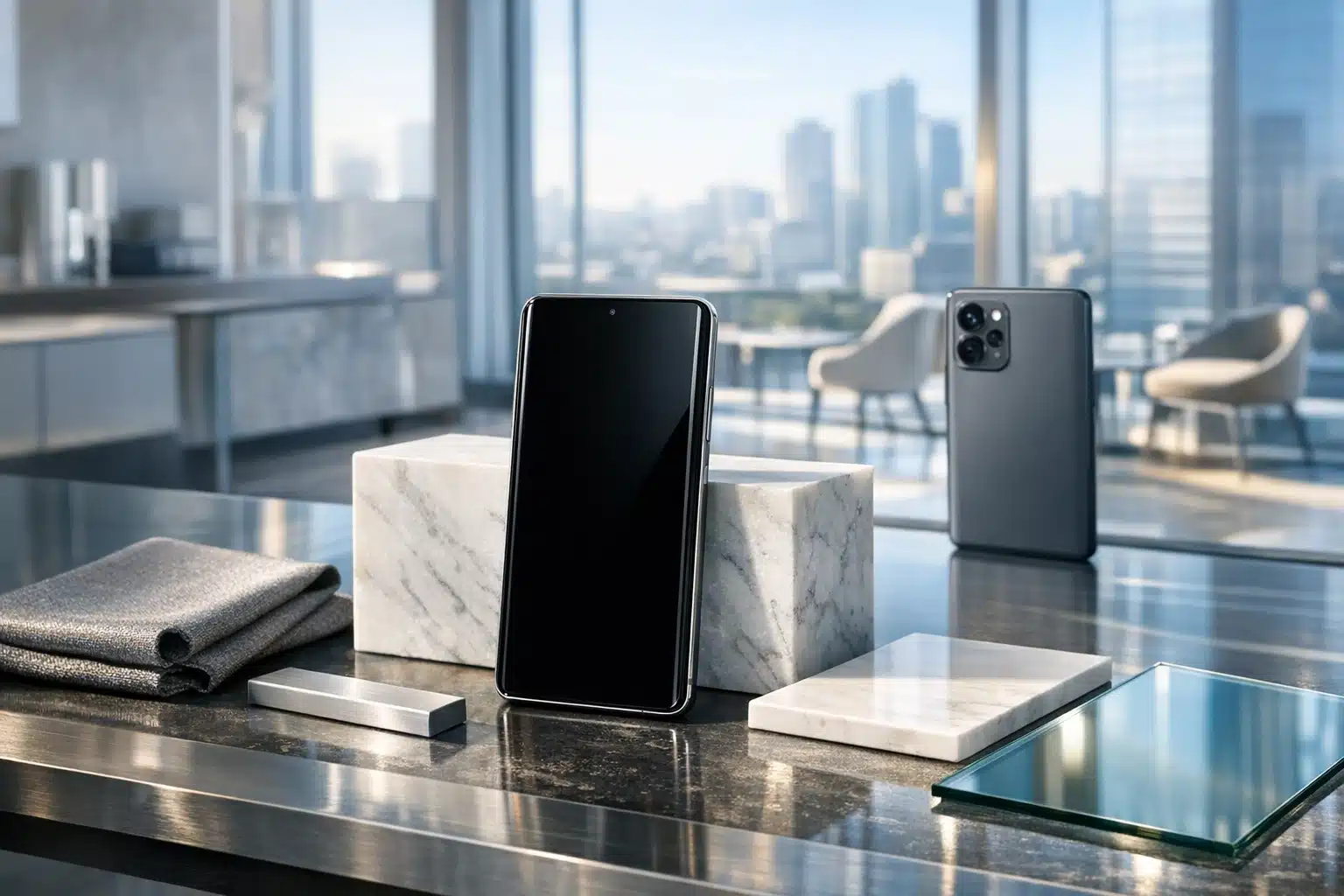
 Artificially generated image
 What Apple’s iPhone 18 May Look Like
Trying to imagine the iPhone 18 is not just a fan exercise, because Apple’s hardware decisions usually ripple through the entire premium phone market. A fresh design can affect upgrade plans, accessory ecosystems, app interfaces, and even what rivals build next. By studying Apple’s recent design habits, patent filings, supply-chain patterns, and broader smartphone engineering limits, we can form a grounded picture of what this future iPhone may look like and why that vision matters now.
Outline: This article begins with Apple’s likely design direction, then moves to the display and front-facing changes, continues with materials and hardware details, examines the rear camera layout, and ends with a practical conclusion for buyers who are deciding whether the iPhone 18 may be worth watching.
Apple’s Design Language Will Probably Evolve, Not Start Over
When people imagine a future iPhone, they often picture a dramatic visual reset: a phone with no ports, no buttons, no camera bump, and perhaps no visible sensors at all. Apple can certainly surprise the market, but its history suggests a more restrained pattern. The company usually refines a successful shape across several generations rather than replacing everything in one leap. That is why the most realistic prediction for the iPhone 18 is not a sci-fi slab from nowhere, but a more polished version of ideas Apple has already been testing.
Over the last several iPhone generations, Apple has shown a clear preference for strong geometric lines, premium materials, and a careful balance between familiarity and novelty. The flat-sided frame introduced again with the iPhone 12 proved durable, visually distinctive, and easier to align with accessories such as MagSafe wallets, chargers, and mounts. Because of that ecosystem advantage, it would be surprising if Apple abandoned the general silhouette by the time an iPhone 18 appears. A more likely route is subtle softening: slightly more rounded side edges for comfort, thinner borders around the display, and a camera housing that looks more integrated with the back panel.
Apple also tends to remove visual clutter when the underlying technology is ready. The iPhone X replaced the home button with Face ID. Later models trimmed the notch story into Dynamic Island. If the iPhone 18 pushes this minimalist direction further, its overall look may feel cleaner rather than radically unfamiliar. Think less “new species of phone” and more “same family, sharper suit.”
Several design clues support that idea:
• Apple usually keeps a successful industrial design for multiple release cycles.
• Accessory compatibility matters, especially around MagSafe alignment and case fit.
• Manufacturing scale rewards refinement over constant reinvention.
• Premium buyers often want a phone that feels new without becoming awkward to hold or use.
There is also the question of differentiation between standard and Pro models. Apple has increasingly used materials, refresh rates, camera hardware, and chip tiers to create separation within the lineup. If that strategy continues, the iPhone 18 family may share one broad design language while using texture, thickness, lens count, or frame material to signal product class. The standard model could remain simpler and lighter, while the Pro version may look more technical, with larger optics and a more sculpted rear section.
So, if you are expecting the iPhone 18 to resemble a concept render from a design forum, temper that expectation. The more plausible outcome is a phone that looks unmistakably like an iPhone, yet more resolved in every direction: tighter seams, slimmer bezels, more coherent camera integration, and perhaps a front surface that gets one step closer to all-screen purity.
The Front May Become Cleaner, Brighter, and More Seamless
If one area is most likely to define how the iPhone 18 looks at first glance, it is the front. People see the display before they notice the chip, battery chemistry, or modem. That is why Apple has spent years refining the visual interruption at the top of the screen, moving from the wide notch to the more flexible Dynamic Island approach. By the time an iPhone 18 arrives, the next logical step may be a smaller sensor cutout, a narrower island, or some version of hidden components beneath the display.
That does not mean a completely uninterrupted screen is guaranteed. Under-display camera systems still involve trade-offs in image quality, light transmission, and panel uniformity. Apple usually resists adopting a feature early if it weakens the user experience. For that reason, the most credible scenario is partial concealment rather than full invisibility. Face ID components could move under the panel first, while the selfie camera remains visible as a small opening. Visually, that would make the phone look calmer and more modern without compromising too much on security or photo quality.
Display technology itself will likely contribute just as much to the “look” of the device as the sensor layout. Apple has already leaned heavily into OLED and high-refresh-rate panels on higher-end models. An iPhone 18 may extend advanced display features more broadly across the lineup, potentially including:
• thinner black borders around the screen
• brighter peak outdoor visibility
• improved anti-reflective coatings
• more efficient LTPO refresh management
• slightly larger usable screen area without making the phone much bigger
Bezel reduction matters because it changes perception immediately. Even a millimeter shaved from each edge can make a phone feel more expansive and premium. Apple knows this well. It is one of the few visual upgrades that users notice every time the screen wakes. Combined with a more discreet front camera system, the iPhone 18 could appear less like a device with a display inserted into it and more like a continuous pane of responsive glass.
There is also the matter of symmetry. Apple has long cared about balanced spacing, corner radius consistency, and alignment between hardware and interface. If the iPhone 18 narrows its top cutout or shrinks surrounding borders, it will probably do so in a way that preserves that trademark symmetry. Rivals sometimes chase maximum screen percentage at the cost of uneven bezels or awkward punch-hole placement. Apple tends to avoid that feeling. The result may be a front face that looks quieter, more intentional, and slightly more luxurious than the numbers alone suggest.
In practical terms, this would benefit several kinds of users. Video viewers get a more immersive frame. Gamers get more apparent surface area. Photographers reviewing shots on-device see fewer distractions. And everyday users simply get a phone that feels more current the second they pick it up. On a product you interact with hundreds of times per day, those visual refinements matter more than they might seem on a spec sheet.
Materials, Buttons, Ports, and Comfort Could Define the Physical Feel
A phone’s appearance is only half the story. The way it feels in the hand often determines whether a design is loved, tolerated, or quickly hidden inside a thick case. If the iPhone 18 follows Apple’s recent trajectory, its body may look more refined not because of a wild new silhouette, but because of smarter material choices and tighter control over weight, thickness, and ergonomics.
Apple has already experimented with different frame materials across the iPhone lineup, from aluminum to stainless steel and titanium. Each choice has trade-offs. Aluminum is lighter and often easier to color-match. Stainless steel feels dense and premium, but it adds weight. Titanium offers a strong marketing story and can reduce mass, though it is more complex and expensive to work with at scale. By the time the iPhone 18 arrives, Apple may continue mixing materials across tiers, possibly using aluminum for standard models and titanium or another premium alloy for Pro versions. That would help explain visual differences without completely changing the form factor.
Comfort may become a bigger priority than raw thinness. The industry spent years chasing ever-slimmer devices, then learned that razor-thin bodies can worsen battery life, thermals, and handling. Apple seems more interested in balance than extremism. The iPhone 18 could therefore be fractionally thinner in some areas, but more importantly it may distribute weight better, soften edge transitions, and reduce the top-heavy feel that large camera systems sometimes create. A phone can be technically beautiful yet tiring after ten minutes of one-handed use; Apple knows that a premium device should avoid that trap.
Several hardware design questions are especially relevant:
• Will Apple keep USB-C? That is the most practical expectation, given regulatory pressure and user demand for cable consistency.
• Could the phone go fully portless? It remains possible in theory, but less likely in the near term because wired recovery, accessory compatibility, and professional workflows still matter.
• Will buttons change? Apple may continue experimenting with customizable action controls or more unified button designs, but a complete shift to solid-state inputs is still uncertain.
• What about durability? Stronger front glass, improved sealing, and more repair-friendly internal layouts would all affect the device’s physical architecture, even if they are not obvious at first glance.
Color and finish are part of the visual equation too. Apple often uses muted, controlled palettes rather than loud experimentation. For the iPhone 18, expect finishes that emphasize texture and depth over flashy saturation. A matte back with a slightly warmer metal frame, for example, could make the device feel contemporary without chasing short-lived trends. In classic Apple fashion, the design might whisper rather than shout.
This is where the likely iPhone 18 may win people over. The most memorable version of the device may not be the thinnest or the boldest, but the one that feels as though every line, edge, and surface has been tuned until nothing seems accidental.
The Rear Camera Area May Shift from a Bump to a More Integrated Signature
Turn an iPhone over, and the back tells you what era it belongs to. Over time, Apple’s camera systems have grown from small circles into large visual statements, driven by larger sensors, better stabilization, brighter lenses, and more advanced zoom systems. This growth has improved image quality, but it has also created one of the central design tensions facing every premium smartphone maker: how do you add more camera hardware without making the phone look clumsy?
The iPhone 18 may answer that question not by shrinking the cameras dramatically, but by changing how they are presented. Apple has already shown a willingness to turn functional hardware into recognizable design language. The camera cluster is now part of the iPhone identity, much like the old home button once was. Still, there is room for the layout to evolve. Instead of a sharply raised square island, Apple could move toward a more gradual camera shelf, a smoother transition between rear glass and lens housing, or a differently arranged set of lenses that reduces the appearance of bulk.
This matters because camera design is no longer just about looks. The shape of the rear module affects pocket comfort, table wobble, thermal management, and internal component stacking. Larger sensors need space. Tetraprism or periscope-style zoom systems need depth. Image stabilization systems require structural support. If Apple pushes zoom reach, low-light performance, or spatial capture features further, the iPhone 18 may need a more carefully engineered back panel to house those components gracefully.
There are a few likely visual outcomes:
• lenses may remain large, but sit within a cleaner, less abrupt platform
• LiDAR and flash elements could become more neatly grouped
• rear glass and camera housing may blend more seamlessly in color and texture
• Pro models may look more obviously camera-centric, while standard models stay simpler
Apple also studies how a device looks when it is doing nothing. A camera system should not just work well when you are shooting at sunset; it should still look balanced when the phone is lying on a desk. That is why the iPhone 18’s rear design could become more architectural. Imagine a surface where the camera area feels carved into the form rather than attached on top of it. That kind of integration would make the device seem more mature and less improvised.
There is room for creative polish here too. Apple could use new ring finishes around the lenses, more restrained branding, or color treatments that visually shrink the module. Even tiny decisions, such as reducing the contrast between the lens surround and the back panel, can make a large camera array look calmer. For users, that means the phone may appear more premium without pretending physics no longer exists. Better cameras still need space. The design challenge is not erasing that truth, but making it feel elegant.
Conclusion: Why This Possible iPhone 18 Design Matters to Buyers
For most readers, the real question is not whether the iPhone 18 will look interesting in a leak render. It is whether the design changes may be meaningful enough to affect an upgrade decision. Based on Apple’s pattern, the answer will probably depend on what kind of user you are. If you upgrade every year, the iPhone 18 may feel like another measured refinement. If you are holding onto a device that is three or four generations old, however, a cleaner display, lighter materials, more polished camera housing, and better day-to-day ergonomics could add up to a noticeably fresher experience.
The likely shape of the iPhone 18, as outlined in this article, points to a device that becomes more seamless rather than more theatrical. The front may move closer to an all-screen look through smaller visible sensors and thinner borders. The frame may use materials that better balance strength, weight, and cost. The rear camera section may become less like a protruding attachment and more like a defined part of the phone’s architecture. None of those changes sounds dramatic in isolation, but together they could make the device feel far more resolved.
That is often how Apple works. It rarely redraws the whole map in one stroke. Instead, it sands down friction points until the final object feels inevitable. Buyers should therefore watch for signs that Apple is improving the parts of smartphone design people notice constantly but describe poorly: how the edges sit in the palm, how the screen disappears into the frame, how the camera bump catches light, and how the phone rests on a desk without looking overdesigned.
If you are deciding whether to wait for the iPhone 18, focus on these practical signals:
• whether Apple reduces front-facing visual interruptions in a meaningful way
• whether the body becomes lighter or more comfortable without sacrificing battery life
• whether camera changes improve the shape, not just the specification list
• whether standard and Pro models differ in ways that truly match your needs
For everyday buyers, professionals, mobile photographers, and long-term Apple users alike, the iPhone 18 may matter less as a single product and more as a snapshot of where smartphone design is heading next. If current clues hold true, it could look familiar at first glance, then smarter the longer you examine it. And in Apple’s world, that kind of quiet progression is often the point.