Father’s Day Traeger Grill Recipes for a Special Backyard Meal
A Father’s Day meal carries more weight than an ordinary weekend dinner because the food often becomes part of the memory everyone talks about later. A Traeger grill suits that kind of occasion especially well, bringing together wood-fired flavor, controlled heat, and enough flexibility to cook a full menu outdoors. The goal is not to imitate a steakhouse or chase competition barbecue perfection. It is to serve a meal that feels generous, organized, and relaxed while still giving Dad something undeniably delicious.
Outline and Game Plan for a Father’s Day Traeger Menu
Before a single pellet drops into the hopper, it helps to sketch the meal like a host rather than improvise like a short-order cook. A well-built Father’s Day menu usually works best when it has one clear centerpiece, one or two sides that can share grill space, and a dessert that feels homemade without demanding constant attention. The outline below gives structure to the day and keeps the cook from running in circles when guests start arriving.
A practical Traeger-based Father’s Day menu can look like this:
• Opening plan: choose the lead protein based on the number of guests and how much hands-on time you want.
• Main options: reverse-seared ribeye for a classic steakhouse feel, smoked baby back ribs for a slower celebratory cook, or cedar-plank salmon for a lighter but still impressive meal.
• Side strategy: use vegetables and a starch that tolerate flexible timing, such as grilled corn, asparagus, smoked potatoes, or mac and cheese.
• Dessert finish: a skillet peach cobbler or berry crisp that can bake on the grill after the main course comes off.
• Service flow: appetizers inside, main event outside, dessert while everyone lingers and talks.
One reason a Traeger grill is so useful for Father’s Day is the balance it strikes between flavor and predictability. Compared with a gas grill, a pellet grill adds a more layered smoke note and usually holds temperature with less fiddling. Compared with charcoal, it often feels easier to manage for a family meal because you are not constantly adjusting vents or chasing flare-ups. The trade-off is that some pellet grills do not sear as aggressively as a blazing charcoal fire, which is why techniques like reverse searing or using a hot cast-iron pan can make such a difference.
Pellet choice also shapes the tone of the meal. Hickory gives beef and pork a deeper barbecue character. Oak is balanced and versatile, especially for mixed menus. Apple and cherry are gentler and pair nicely with poultry, salmon, and fruit desserts. If you are serving several dishes in one afternoon, an oak or competition blend is often the easiest all-purpose choice.
For a gathering of four to six people, one large ribeye roast, three racks of ribs, or a side of salmon makes service simple. For eight or more guests, ribs and salmon tend to scale more gracefully than individual steaks. A thoughtful outline matters because Father’s Day should feel like a celebration, not a series of last-minute rescues. Once the structure is clear, every recipe that follows becomes easier to prep, time, and enjoy.
Reverse-Seared Ribeye: The Steak Recipe That Feels Like a Gift
If Father’s Day calls for a dramatic centerpiece, a reverse-seared ribeye is one of the strongest choices you can make on a Traeger grill. Ribeye brings generous marbling, rich beef flavor, and a forgiving texture that stays satisfying even if one steak lands a shade more done than planned. It is also a smart cut for pellet grilling because the lower initial heat gives the fat time to soften and the smoke time to settle in before the final sear adds crust.
For four people, plan on two large ribeyes or one thick bone-in ribeye roast cut into steaks after cooking. Keep the seasoning simple so the wood-fired flavor can speak clearly. A dependable blend is kosher salt, coarse black pepper, garlic powder, and a touch of paprika. If you have time, salt the steaks the night before and leave them uncovered in the refrigerator. That dry brine improves surface drying, which later helps browning.
Here is the core cooking method:
• Preheat the Traeger to 225 degrees Fahrenheit.
• Place the steaks on the grate and cook until the internal temperature reaches about 110 to 120 degrees Fahrenheit for a medium-rare final result.
• Remove the steaks and let them rest briefly while the grill climbs to high heat, ideally 450 to 500 degrees Fahrenheit.
• Sear for 1 to 2 minutes per side until the crust develops and the internal temperature lands where you want it.
• Rest again before slicing. For food safety, the USDA recommends 145 degrees Fahrenheit with a 3-minute rest for whole cuts of beef.
Why choose ribeye over other Father’s Day favorites? Compared with New York strip, ribeye is richer and usually more tender, though strip steak offers a firmer bite and slightly cleaner beef flavor. Compared with tri-tip, ribeye cooks faster and feels more luxurious, while tri-tip is more budget-friendly for a crowd. If Dad appreciates old-school steakhouse energy, ribeye tends to win on pure indulgence.
A finishing touch can elevate the plate without making it fussy. Try a compound butter made with softened butter, chopped parsley, lemon zest, and roasted garlic. Let it melt over the hot steak just before serving. Pair it with grilled asparagus or smoked potatoes and the meal instantly feels occasion-worthy. There is something almost cinematic about bringing a deeply browned steak from the grill to the cutting board, hearing the first slice crackle through the crust, and watching everyone suddenly appear in the kitchen at once. That reaction alone makes this recipe a strong Father’s Day candidate.
Smoked Baby Back Ribs: A Slow-Cooked Favorite for a Longer Celebration
Not every Father’s Day menu needs the quick drama of steak. Sometimes the better mood comes from a slower cook, a fuller patio, and the kind of afternoon where the grill hums in the background while the rest of the family talks, sets the table, and sneaks glances at the ribs. For that style of gathering, smoked baby back ribs are hard to beat. They feel celebratory, feed a group well, and reward patience with tenderness and deep bark.
Baby back ribs are a practical choice on a Traeger because they usually cook a little faster than spare ribs and fit more neatly on standard grates. If you are serving six people, three racks is a comfortable target, especially when sides are involved. Start by removing the membrane from the back, then season with a rub built around brown sugar, paprika, black pepper, salt, garlic powder, onion powder, and a little chili powder. Some cooks use mustard as a binder, but it is optional; the rub will adhere well enough if the ribs are slightly damp.
A reliable Traeger approach looks like this:
• Preheat to 225 or 250 degrees Fahrenheit.
• Smoke the ribs meat-side up for roughly 3 hours.
• Spritz occasionally with apple juice or diluted cider vinegar if the surface looks dry, though this is optional.
• Wrap with a small amount of butter, honey, or apple juice if you prefer a softer texture, then cook another 1 to 2 hours.
• Unwrap, glaze lightly with barbecue sauce if using, and finish until the ribs bend easily and a toothpick slides between the bones with little resistance.
The old 3-2-1 method is widely known, but on baby backs it can sometimes push the meat too far into a fall-off-the-bone texture. Many cooks now prefer a shorter wrap or no wrap at all, depending on how much bark they want. Internal temperature can land around 195 to 203 degrees Fahrenheit, but feel matters more than a single number. When the collagen has fully softened, the ribs tell you.
Compared with St. Louis-style ribs, baby backs are leaner, a bit smaller, and often more approachable for guests who do not want a huge portion. St. Louis ribs offer more fat and deeper pork flavor, but they generally need more time. For Father’s Day, baby backs are often the easier balance of convenience and reward.
Serve them with pickles, slaw, grilled corn, or a simple potato salad. Keep the sauce on the side if you want the smoke and rub to stay at center stage. Ribs also create a different kind of celebration than steak: less formal, more hands-on, a little messier, and arguably more fun. That relaxed mood is often exactly what a backyard Father’s Day meal needs.
Cedar-Plank Salmon and Grill-Friendly Sides for a Lighter, Balanced Menu
Not every Father’s Day table needs to lean heavy. If the family wants something fresh, colorful, and still worthy of a special occasion, cedar-plank salmon on a Traeger grill is an excellent alternative. It delivers aroma, elegance, and enough visual appeal to make the meal feel intentional without requiring competition-level barbecue skills. It is especially useful when the guest list includes people who prefer seafood or want a break from richer meats.
Start with a large salmon fillet, preferably center cut so it cooks evenly. A cedar plank, soaked in water for at least 1 hour, adds a gentle woodsy fragrance while shielding the fish from direct heat. The seasoning can stay simple: olive oil, kosher salt, black pepper, lemon zest, and chopped dill. If you want a slightly sweeter glaze, whisk together Dijon mustard, maple syrup, and a little minced garlic, then brush it on during the final stage of cooking.
The cooking process is straightforward:
• Preheat the Traeger to about 350 to 375 degrees Fahrenheit.
• Place the soaked plank on the grill for a few minutes to warm it.
• Set the salmon on the plank, skin-side down, and season.
• Cook until the fish flakes gently and reaches your preferred doneness.
• Many cooks like salmon around 125 to 130 degrees Fahrenheit for a moist center, while food safety guidance commonly cites 145 degrees Fahrenheit as the fully cooked benchmark.
Compared with shrimp skewers, salmon is less fiddly and easier to serve buffet-style. Compared with chicken breasts, it cooks more quickly and often looks more impressive on a platter. It also pairs beautifully with lighter sides that can share the grill. Asparagus is a natural choice because it needs only oil, salt, pepper, and 8 to 12 minutes of heat. Corn can go on whole or husked, then finish with lime butter. Thick-cut zucchini and bell peppers add color and sweetness without stealing attention from the fish.
If you want one more side that feels substantial, smoked baby potatoes or a cast-iron pan of mac and cheese rounds out the plate. Potatoes bring earthy balance. Mac and cheese leans more indulgent and helps satisfy guests who expect comfort food on Father’s Day. That contrast matters: salmon can be the refined lead, while the sides keep the meal grounded and familiar.
There is also a practical advantage here. Salmon does not monopolize the grill for hours, so it suits smaller celebrations or families that want more time at the table and less time managing a long cook. The final platter, with burnished fish, bright vegetables, and lemon wedges scattered around, feels like summer showing off in the most useful way possible.
Conclusion: Dessert, Timing, and the Best Way to Pull the Meal Together
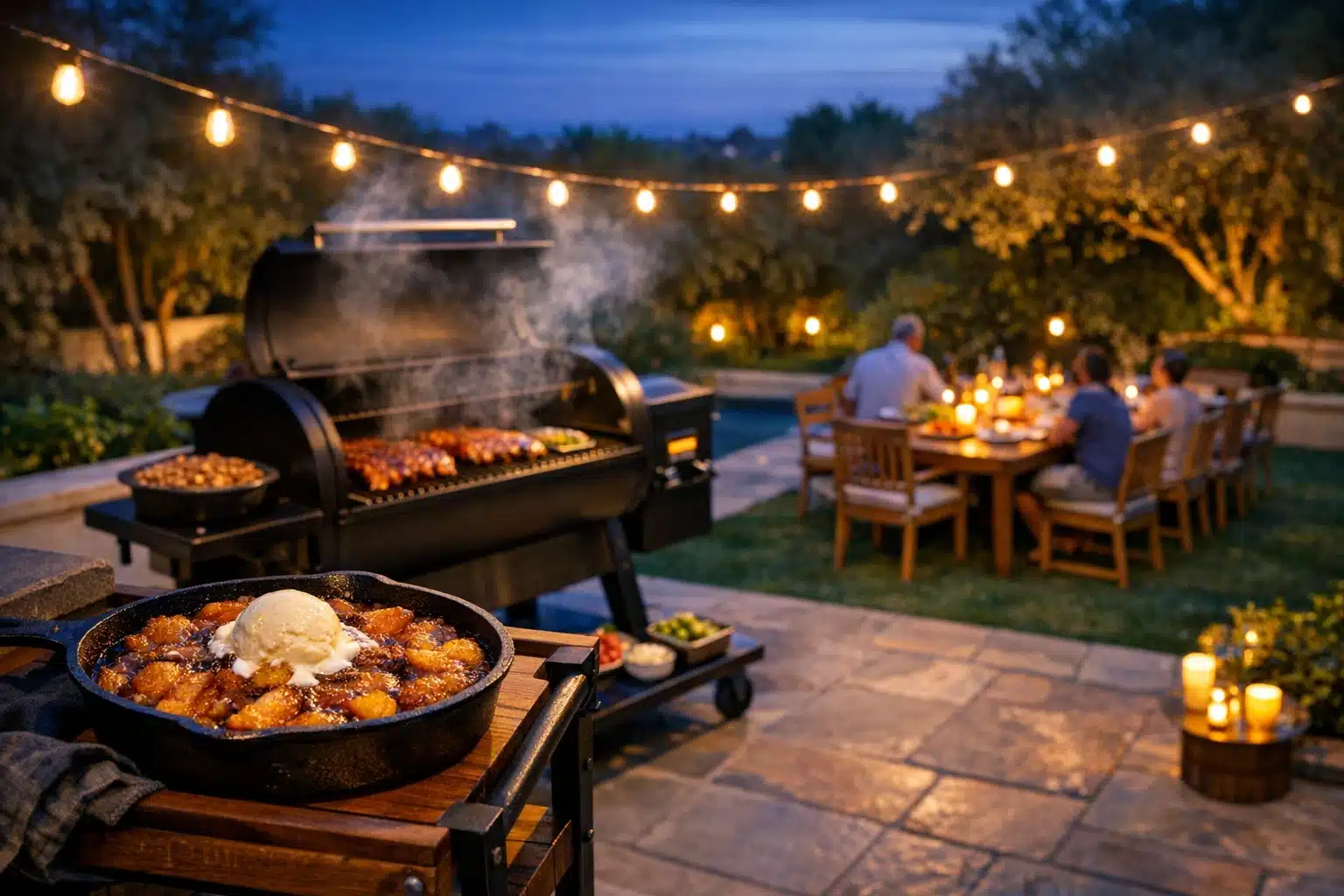
A Father’s Day menu becomes truly memorable when it ends as strongly as it begins, and dessert on a Traeger grill gives the whole cookout a satisfying final note. One of the easiest options is a skillet peach cobbler. It feels seasonal, it can go on the grill after the main course, and it fills the backyard with the kind of warm, buttery aroma that makes people drift back toward the table even when they insist they are full. Use sliced peaches, a little brown sugar, cinnamon, lemon juice, and a biscuit or cake-style topping. On a Traeger running around 350 degrees Fahrenheit, a cobbler usually bakes in 35 to 50 minutes, depending on pan size and how juicy the fruit is.
If peaches are not ideal, berries work beautifully, and apples are reliable when you want a firmer texture. Dessert is also where pellet choice can quietly help. A mild fruitwood blend complements cobbler well, while a stronger hickory profile can overpower delicate fruit. Serve the dessert warm with vanilla ice cream and let the contrast do the heavy lifting.
The final piece of the puzzle is timing. Even excellent recipes can feel stressful if they are all competing for the same grill space at the same moment. A simple schedule solves most of that problem:
• Early morning: prep proteins, season vegetables, and set dessert ingredients aside.
• Midday: start ribs if they are the main attraction.
• One hour before guests eat: cook salmon or begin the low stage of reverse-seared steaks.
• Final 20 minutes: grill vegetables, sear steaks, glaze ribs, or rest the main protein.
• After dinner: raise or steady the temperature for cobbler while everyone lingers over drinks and conversation.
For the target audience here, the real goal is not culinary theater for its own sake. It is giving Dad a meal that feels personal, relaxed, and worth gathering around. A Traeger grill helps because it can handle long smokes, weeknight-simple grilling, and even dessert without forcing the cook into constant crisis mode. Choose the recipe style that matches the day: ribeye for classic indulgence, ribs for a leisurely backyard session, or salmon for a lighter and brighter spread. Add a well-timed side, end with fruit dessert, and Father’s Day stops feeling like another item on the calendar. It becomes an afternoon with smoke in the air, good food on the table, and the kind of easy family attention that matters more than perfect grill marks ever could.