 Artificially generated image
 Walmart Outdoor Cat Enclosure Clearance: What to Know Before You Buy
Introduction and Article Outline
Giving a cat fresh air without giving up safety is one of those modern pet-owner puzzles that seems simple until you start shopping. Clearance pages can feel like treasure aisles, full of tempting discounts and product photos that promise a tiny backyard paradise. Yet an enclosure that looks roomy on a screen may be cramped, unstable, or poorly suited to your climate. Knowing how to judge the deal matters just as much as noticing the markdown.
Outdoor cat enclosures appeal to a wide range of owners. Some want a safer way for indoor cats to enjoy sun and movement. Others need a controlled space for older cats that still like to lounge outside but should not roam. Families in apartments may be looking for a compact balcony solution, while homeowners with yards may want a larger catio-style structure. In all of these cases, clearance shopping can reduce costs, but only if the product still matches the cat’s needs and the owner’s space.
That is why this topic matters. Cats benefit from enrichment, but uncontrolled outdoor access can expose them to traffic, loose dogs, parasites, weather, and neighborhood hazards. An enclosure can help manage those risks while adding stimulation through new smells, sounds, and climbing opportunities. The trick is choosing a model that is secure, practical to clean, and realistic for everyday use. A discounted item that sags in the rain or leaves gaps near the zipper is not a bargain for long.
Here is the outline this article will follow:
– what clearance usually means when shopping Walmart in stores or online
– which enclosure styles are most common and how they compare
– what safety and durability checks matter before purchase
– how to decide whether a low price actually represents good value
– which kinds of cat owners are most likely to benefit from a clearance find
Think of this guide as a calm walk through the aisle before the impulse buy happens. Instead of focusing only on the price tag, it looks at the whole picture: your cat’s behavior, your available space, the build quality of the enclosure, and the likely lifespan of the product. By the end, you should be able to sort the genuinely useful deals from the merely cheap ones.
How Walmart Outdoor Cat Enclosure Clearance Usually Works
When people search for Walmart outdoor cat enclosure clearance, they are often looking for one of two things: a marked-down product in a local store or a reduced price online. Both can be worthwhile, but they do not work in exactly the same way. In stores, clearance is often tied to seasonal resets, shelf space changes, discontinued inventory, box damage, or overstock. Online, discounts may reflect temporary promotions, algorithm-based pricing shifts, or third-party sellers trying to move slow inventory. That means the word clearance can point to very different situations.
A practical first step is to read the listing carefully. Is the item sold and shipped by Walmart, or by a marketplace seller? Is it new, open-box, or returned? Are all hardware parts included? Is the listed size an assembled measurement or shipping-box measurement? These details matter because outdoor enclosures can be bulky, and a missing panel or connector can erase the savings quickly.
Shoppers should also understand what kinds of pet products tend to appear in clearance channels. Smaller soft-sided pet tents, portable playpens, wire kennels adapted for cats, and compact balcony enclosures are more likely to be discounted than large premium catios. Bigger wooden or heavy metal units cost more to store and ship, so they may appear less frequently or sell out fast when reduced. Availability also varies by region, climate, and season. A spring garden reset may bring fresh stock, while late summer and fall sometimes produce more markdowns on seasonal outdoor goods.
Here are several useful checks while reviewing a deal:
– compare the current price with the recent average price, not just the stated original price
– scan customer photos, not only studio images
– look for notes about rust, torn mesh, unstable joints, or difficult assembly
– confirm whether anchors, shelves, and weather covers are included
– review the return policy before purchasing clearance merchandise
One more point deserves attention: clearance pricing can create false urgency. A cat enclosure is not like buying a discounted throw pillow. It is closer to buying a small piece of outdoor equipment that must handle movement, weather, and repeated use. If the product listing leaves major questions unanswered, the better move is often to wait for a clearer offer rather than gamble on a vague one. The goal is not simply to spend less. The goal is to spend wisely on something that keeps a cat safe and enriches daily life.
Comparing the Main Types of Outdoor Cat Enclosures
Not all outdoor cat enclosures are built for the same lifestyle, and that is where many clearance purchases go wrong. A buyer sees a low price, imagines a happy cat basking in the sun, and only later realizes the enclosure is too small for an active young cat, too flimsy for a windy yard, or too awkward for a balcony door. Comparing the main enclosure types before buying makes the decision much easier.
The first common style is the soft-sided pet tent or mesh playpen. These are often the most affordable options and are regularly seen in sales or clearance sections. They are lightweight, portable, and easy to store. For supervised use on calm days, they can work well for kittens, timid cats, or short outdoor sessions. However, they usually offer less durability than framed structures. Zippers, seams, and mesh panels can wear out faster, and some determined cats can push or claw harder than expected. They are convenient, but they are rarely the strongest long-term choice for daily outdoor time.
The second type is the metal-framed enclosure, sometimes resembling a walk-in cage, exercise pen, or vertical play space with shelves. These models tend to offer better strength and more climbing room. They are a smart middle ground for owners who want a sturdier setup without building a permanent catio. On clearance, these can be attractive finds, especially if they include ramps, resting platforms, or covers. The trade-off is assembly time, weight, and possible rust concerns if the finish is poor or the climate is wet.
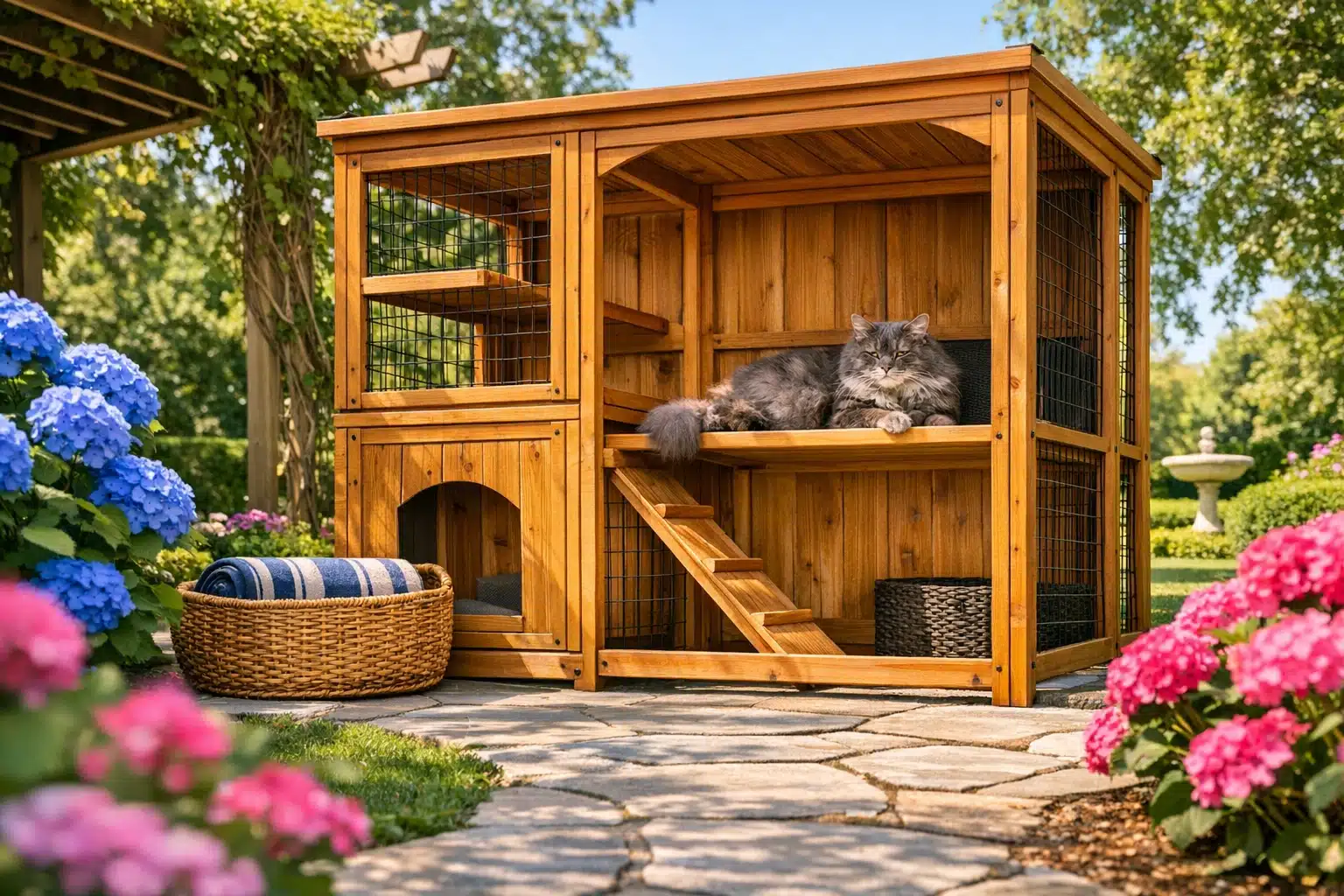
The third type is the wooden catio or hybrid wood-and-wire structure. These often look more attractive in a yard and can blend better with patios or garden areas. They may include small houses, ladders, or shelves that support enrichment. When well built, they feel more like an outdoor room than a pet accessory. Still, wood requires maintenance. Moisture exposure, cracking, and weathered finishes can shorten the life of cheaper models. A dramatic markdown is less exciting if the wood is thin or unfinished.
Shoppers may also encounter modular runs, window boxes, or tunnel systems that connect indoor space to an outside enclosure. These are excellent for households that want cats to choose their own outdoor visits. They are especially useful for multi-cat homes because they create movement and reduce boredom. Yet they demand more planning, more measuring, and usually more installation work.
A quick comparison helps:
– soft-sided tents: portable, inexpensive, best for supervised and occasional use
– metal enclosures: stronger, better for regular use, often a practical all-round choice
– wooden catios: visually appealing, roomy, but more weather-sensitive
– modular systems: highly customizable, ideal for serious setups, usually less impulse-friendly
The right choice depends on your cat’s size, energy level, climbing habits, and your available outdoor surface. A lazy senior cat may love a shaded, low-profile enclosure with a cushion and visibility. A young, athletic cat may need vertical shelves and stronger walls. A clearance bargain only becomes a good buy when the structure fits the living creature that will use it.
Safety, Durability, and Comfort Checks Before You Buy
If price is the hook, safety should be the filter. A cat enclosure is only useful if it prevents escape, reduces outside risks, and stays stable under normal use. Before buying any discounted model, examine the construction details as if you were checking a piece of camping gear or a small greenhouse. The photo may show a peaceful cat stretched in a patch of sunlight, but the real test is whether the enclosure remains secure when a squirrel dashes by, the wind picks up, or your cat suddenly decides it has Olympic ambitions.
Start with the frame. Metal should feel rigid, with connectors that fit tightly and doors that latch without shifting. If the unit is made from coated wire, look for signs that the coating can resist rust and weather. If it is made from wood, check whether the product is intended for outdoor use and whether buyers report warping or swelling. Next, inspect the walls and roof material. Mesh should be strong enough to handle scratching and leaning. Openings should be small enough to prevent squeezing through, especially for kittens or small adult cats.
Door design matters more than many shoppers expect. Single zipper openings on soft enclosures can be less secure than framed doors with firm latches. For active cats, a double-door or vestibule-style entrance adds an extra layer of control when placing the cat inside or removing it. Flooring matters too. Some enclosures sit directly on grass or patio surfaces, while others include a base. Ground placement can be fine, but you will want to think about digging, moisture, insects, and cleaning.
Use this checklist before purchasing:
– confirm the enclosure dimensions allow standing, turning, stretching, and resting comfortably
– check whether the roof provides sun protection or if you will need extra shade
– see whether anchors or tie-down options are included for windy areas
– review weight and stability for use on decks, patios, or balconies
– consider how easily litter trays, water bowls, and bedding can be added
– read reviews for assembly difficulty and missing hardware complaints
Comfort should never be treated as an afterthought. A plain empty box may technically contain a cat, but it will not necessarily create a pleasant experience. Good enclosures leave room for a perch, a shaded corner, and a surface that does not become dangerously hot in direct sun. Cats also need gradual introductions. Even the best enclosure can fail if the animal associates it with stress. A smart buyer plans not only the structure, but also the daily routine around it: short first sessions, treats, supervision, and observation of body language. That is how a clearance purchase becomes a useful part of a cat’s environment instead of an abandoned object on the patio.
Conclusion: How to Decide Whether a Clearance Deal Is Truly Worth It
The best clearance purchase is not always the cheapest enclosure on the page. It is the one that matches your cat, your home, and your tolerance for assembly, storage, and maintenance. For some owners, that will mean a simple foldable mesh tent used on mild days under supervision. For others, it will mean holding out for a sturdier metal unit with shelves, better latches, and enough room for regular use. The difference matters because an enclosure should support a routine, not become another neglected pet item stacked in a closet.
If you are shopping on a tight budget, start with function instead of appearance. Measure your outdoor area first. Think about where the unit will sit, how it will be shaded, and whether rain, sprinklers, or strong wind are common. Then consider your cat’s habits. A calm cat that likes to watch birds may be delighted by a moderate-size enclosure with one perch and a bed. A bold climber may need height, tougher materials, and much more interior complexity. Buying for the cat you actually have is far more effective than buying for an idealized product photo.
It also helps to separate bargain language from real value. A 40 percent markdown on a weak frame is still money spent on a weak frame. A modest discount on a durable enclosure with strong reviews may serve your household far longer and with fewer headaches. In practical terms, a worthwhile deal usually meets most of these standards:
– secure doors and tight panel construction
– usable space for the cat’s size and activity level
– materials suitable for local weather
– reasonable assembly demands
– clear return information and credible customer feedback
For apartment dwellers, portability and compact dimensions may matter most. For suburban homeowners, sturdiness and weather resistance usually rise to the top. For multi-cat households, interior layout and vertical space become especially important. And for first-time cat enclosure buyers, it is often smarter to choose a straightforward, well-reviewed design than to chase the most dramatic markdown.
In the end, Walmart outdoor cat enclosure clearance listings can be genuinely useful if you approach them with a checklist rather than pure excitement. A well-chosen enclosure can turn a patch of patio or a quiet balcony corner into a safe little world of breeze, sunlight, and sensory interest. That is the real win for the target audience here: not just saving money, but creating a better daily experience for a cat without opening the door to unnecessary risks.