Discover the Advantages of Backyard Apartments
Backyard apartments are no longer a niche idea reserved for oversized lots or unusual housing markets. They have become a practical answer to rising housing costs, multigenerational living, and the search for flexible space that evolves with changing needs. For many homeowners, a small secondary home tucked behind the main house offers more than extra square footage; it creates options, resilience, and new ways to make a property work harder without leaving the neighborhood they already love.
Outline
This article explores the topic in five parts:
- The growing appeal of backyard apartments and why demand is rising.
- The financial advantages, including rental income, property value, and cost efficiency.
- The lifestyle benefits for families, remote workers, guests, and aging relatives.
- The planning process, from zoning and design choices to utilities and construction strategy.
- A practical conclusion for homeowners weighing whether a backyard apartment is the right move.
Why Backyard Apartments Are Gaining Attention
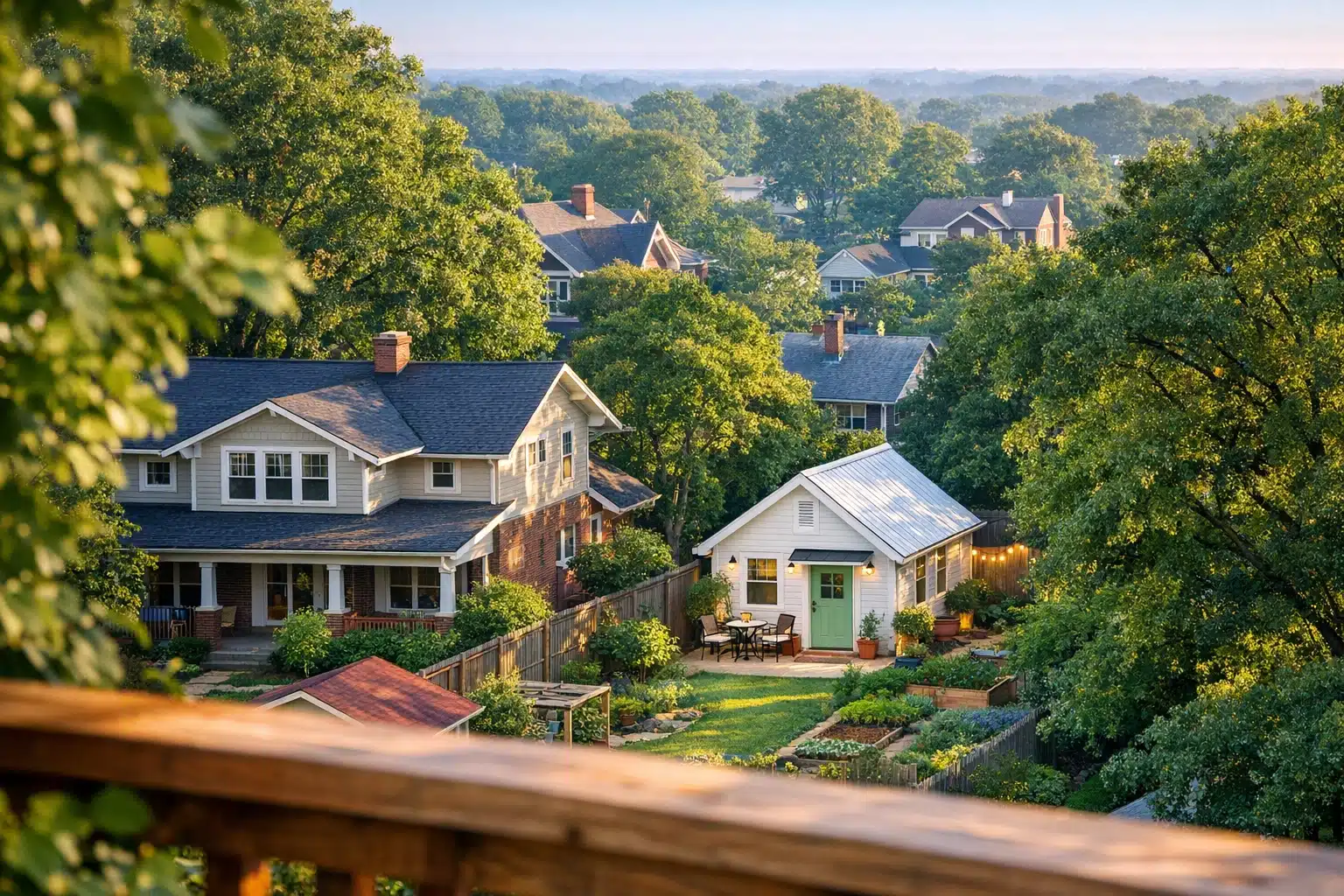
Backyard apartments, often called accessory dwelling units or ADUs, are compact secondary homes built on the same lot as a primary residence. They can be detached cottages, garage conversions, or additions built above existing structures. Their rising popularity is not a passing design trend. It reflects several real pressures in modern housing: tighter inventories, higher mortgage rates, increased rents, and the growing need for adaptable living arrangements. In many cities, local governments have also updated zoning rules to allow more ADUs as a way to add housing without changing the character of established neighborhoods too dramatically.
The appeal becomes easier to understand when you compare a backyard apartment to traditional alternatives. A homeowner who needs extra space could move to a larger home, add a major extension, or buy a separate investment property. Each route can be expensive, disruptive, or difficult to finance. A backyard apartment sits in a middle ground. It uses land already owned, can often be built faster than a full home purchase can be arranged, and creates a distinct living area without requiring the household to relocate. That is a powerful advantage in an era when staying close to schools, jobs, and community ties matters just as much as square footage.
There is also a broader economic and social reason for the growing interest. According to housing research groups and municipal planning departments across North America, ADUs are increasingly seen as one of the most efficient “gentle density” solutions. Instead of replacing single-family homes with large multifamily projects, backyard apartments quietly add one household at a time. A single small unit may not seem dramatic, yet across a city, many such units can improve housing supply in a meaningful way.
Homeowners are drawn to this flexibility. A backyard apartment can serve different purposes over time:
- Housing for adult children returning home after college
- A private residence for aging parents who need support nearby
- A long-term rental that helps offset mortgage costs
- A guesthouse that also doubles as workspace
- A downsizing option for owners who later choose to live smaller
Perhaps the strongest reason these homes capture attention is emotional as much as practical. A backyard apartment turns forgotten ground into something alive and useful. The place where a mower once traced the same summer loops can become a lit window at dusk, a quiet kitchen, a new chapter for a family member, or a steady income stream. In that sense, the advantage is not only spatial. It is the chance to give a property more purpose without losing its identity.
Financial Advantages: Income, Value, and Long-Term Efficiency
One of the clearest advantages of a backyard apartment is financial versatility. Unlike many home upgrades that mainly improve comfort or appearance, an ADU can create direct economic value. That value may come through rental income, increased resale appeal, lower housing costs for relatives, or more efficient use of land that would otherwise generate no return. While the numbers vary by location, construction type, and local regulations, the underlying principle is consistent: a second livable unit can make a property more productive.
Rental income is often the first reason homeowners start researching backyard apartments. In areas with strong rental demand, even a modest studio or one-bedroom unit can produce meaningful monthly cash flow. For example, in many suburban and urban markets, a well-designed ADU may rent for hundreds or even thousands of dollars per month depending on amenities and location. That income can help offset mortgage payments, property taxes, insurance, or maintenance costs. For some owners, the additional rent may improve overall financial stability rather than simply boost profit. A backyard apartment can act as a cushion when the household budget feels tight.
Compared with purchasing a separate rental property, the economics can also be attractive. Buying another home usually requires a down payment, closing costs, additional financing, and exposure to a second parcel’s taxes and upkeep. Building in the backyard still requires capital, but it allows owners to invest in land they already control. That distinction matters. Utility connections, site work, and permitting can be substantial expenses, yet the project is anchored to an existing asset instead of starting from zero.
Property value is another important factor. Not every dollar spent on an ADU returns dollar for dollar at resale, but many buyers place a premium on flexible living space. Appraisers and agents increasingly recognize detached units, especially in markets where ADUs are legal and in demand. A property with a permitted, attractive backyard apartment may stand out because it can serve several buyer types at once: investors, multigenerational families, remote workers, or people planning for future care needs.
Financial advantages often include indirect savings too:
- Housing an elderly parent nearby may reduce the need for more expensive care options.
- Providing space for an adult child can lower family housing costs during transitional periods.
- Using the unit as an office or studio may eliminate recurring lease payments elsewhere.
- Downsizing into the backyard apartment later in life may let owners rent the main house for stronger income.
Of course, a balanced view is essential. Backyard apartments involve upfront costs, possible financing hurdles, and ongoing maintenance. Local impact fees, design requirements, and utility upgrades can affect the budget substantially. Still, when evaluated over a long horizon rather than through the lens of immediate expense, the financial case becomes compelling. A backyard apartment is not merely an addition; it is a tool that can support income generation, reduce household vulnerability, and increase the usefulness of the property in ways many conventional renovations cannot match.
Lifestyle Benefits for Families, Work, and Everyday Flexibility
The financial case gets attention, but the lifestyle benefits are often what make homeowners feel that a backyard apartment is truly worth the effort. Space changes behavior. When that space is self-contained, private, and close to home, it can solve problems that a spare bedroom never quite fixes. Backyard apartments are especially useful for households that need connection and independence at the same time. That balance is hard to create within a single shared floor plan, yet it is exactly where ADUs shine.
Multigenerational living is one of the strongest examples. Many families want aging parents nearby for support, safety, and companionship, but not everyone thrives under the same roof. A backyard apartment can offer a parent their own kitchen, bathroom, and routine while keeping them steps away from family help. The arrangement supports dignity and convenience at once. It also helps younger generations by reducing travel time for caregiving and making everyday assistance far more manageable.
The same principle applies to adult children. In a time when home prices and rents have climbed faster than wages in many markets, young adults often need a temporary landing place after graduation, during career changes, or while saving for their own home. A backyard apartment provides a more independent setup than moving back into a childhood bedroom. It allows privacy, encourages responsibility, and can make a transitional season feel less like a setback and more like a strategic pause.
Remote and hybrid work have added another layer of relevance. A backyard apartment can function as a dedicated office, studio, or consulting space that is physically separate from household noise. That separation matters more than many people expect. Productivity often improves when work has its own threshold. Closing one door and opening another, even if the commute lasts twenty seconds across a garden path, creates mental clarity. The day begins with intention instead of interruption.
Guests benefit too. Instead of folding hospitality into crowded routines, homeowners can offer visitors a comfortable stay with privacy on both sides. This arrangement is particularly valuable for families who host relatives for holidays, extended visits, or life events such as a new baby or post-surgery recovery.
Common lifestyle uses include:
- A private home office for focused work
- An art, music, or writing studio
- A residence for a caregiver or nanny, where permitted
- Short-term family accommodation during life transitions
- A peaceful retreat for hobbies, study, or wellness routines
There is also a quieter advantage that numbers do not fully capture: emotional breathing room. Backyard apartments create the rare possibility of being close without being crowded. They make togetherness more sustainable because they allow each person to keep a corner of life that is distinctly their own. In a world where homes are asked to do more than ever, that kind of flexibility feels less like a luxury and more like intelligent design.
Planning, Design, and Practical Considerations Before You Build
The idea of a backyard apartment is exciting, but the success of the project depends heavily on planning. Good intentions alone do not produce a functional, legal, and cost-effective unit. Homeowners need to evaluate regulations, site conditions, design goals, financing, and long-term use before construction begins. This is where the dream either sharpens into a viable plan or becomes more expensive than expected. Careful preparation can prevent both budget surprises and design regrets.
The first step is zoning and permitting. Rules vary widely by city and county. Some jurisdictions encourage ADUs and have simplified approval processes, while others impose restrictions on size, height, setbacks, parking, owner occupancy, or rental terms. In some places, detached backyard apartments are easier to approve than garage conversions; elsewhere the reverse is true. Homeowners should verify whether the unit must be attached or detached, how utilities must be connected, and whether separate addresses are allowed. A permitted unit generally offers better legal security, insurance clarity, and resale value than an informal conversion.
Site conditions matter just as much as paperwork. A flat lot may reduce grading costs, while a narrow or sloped yard may complicate access and foundation work. Sewer lines, trees, drainage patterns, and utility locations can all influence the placement and cost of the build. It is wise to think of the backyard apartment not as an object dropped into empty space, but as part of a working ecosystem that includes privacy, sunlight, views, pathways, landscaping, and the relationship to the main house.
Design choices deserve strategic thinking. A smaller unit can still feel generous if it includes strong natural light, smart storage, and a simple layout. In many cases, a one-bedroom plan appeals to a broader range of future users than a studio. Durable materials may cost more upfront but reduce maintenance later. Separate outdoor space, even a small patio, can significantly improve livability.
Before moving forward, homeowners should consider a checklist like this:
- Confirm local ADU regulations and permit requirements.
- Request a realistic cost estimate that includes utility work and fees.
- Decide the primary use now and likely secondary uses later.
- Choose a design that supports privacy for both dwellings.
- Plan for heating, cooling, insulation, and long-term maintenance.
- Review insurance, financing, and possible tax implications.
Construction method is another major comparison point. Site-built units allow customization but may take longer. Prefabricated or modular ADUs can shorten timelines and improve cost predictability, though they may face transport, foundation, or local approval limitations. There is no universal winner. The better choice depends on budget, lot access, design priorities, and regional contractor availability.
Thoughtful planning turns a backyard apartment from a charming concept into a resilient asset. The most successful projects are rarely the biggest. They are the ones that align legal requirements, household needs, and design discipline from the start.
Conclusion: Is a Backyard Apartment the Right Move for You?
For homeowners, families, and property investors looking for flexibility without uprooting their lives, backyard apartments offer a rare blend of practicality and possibility. They can increase income, support relatives, create better work-from-home conditions, and make a property more adaptable over time. In many cases, the real advantage is not just that an ADU adds space. It adds options. And options are valuable when housing markets are unpredictable, family needs evolve, and financial planning requires more than a single path forward.
Still, a backyard apartment is not automatically the right answer for every property. The lot must be suitable, the local rules must allow it, and the budget must be grounded in reality. Homeowners who rush in because the concept sounds profitable may overlook permitting delays, utility costs, design compromises, or management responsibilities. The strongest projects begin with a clear purpose. Some owners want dependable rental income. Others want a place for parents, adult children, or guests. A few are planning farther ahead, imagining a day when they may choose to live in the smaller unit and rent the main home. Each goal points toward slightly different design and financing decisions.
For the target audience, the smartest next step is not to ask whether backyard apartments are generally good or bad. It is to ask whether one fits your land, your city, and your version of home. If the answer is yes, the benefits can be unusually durable. Unlike trend-based renovations, a well-planned backyard apartment serves real human needs: shelter, privacy, connection, and financial resilience.
If you are considering the idea, focus on a few practical questions:
- What role would the unit play in your life over the next ten years?
- Does your property support the layout without sacrificing livability?
- Can the project remain useful even if your original plan changes?
- Will the investment improve not only value, but also daily life?
When those questions are answered honestly, the path becomes clearer. A backyard apartment is more than a construction project at the edge of a lawn. It is a small building with the potential to solve large problems, quietly and effectively, right at home.