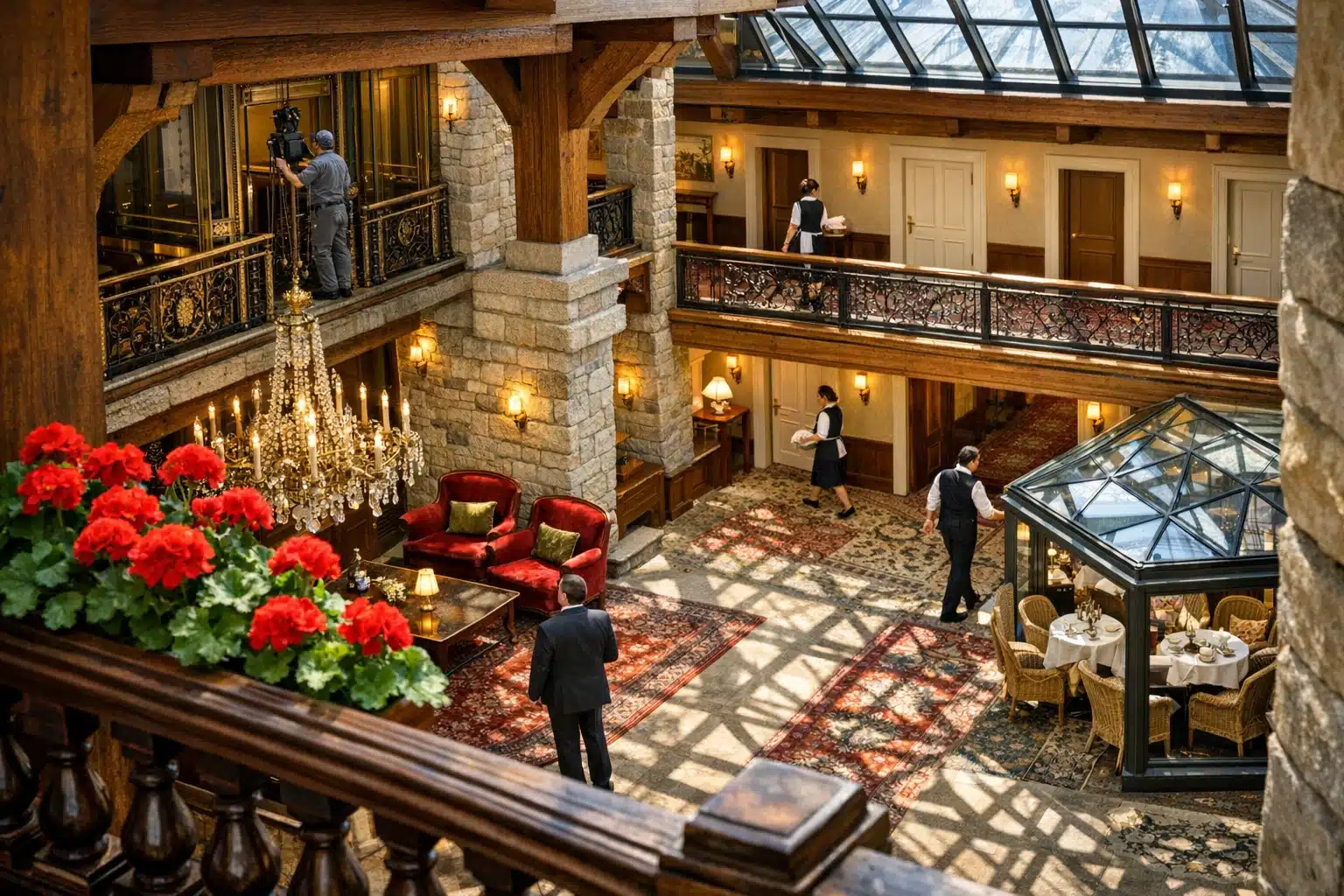
 Artificially generated image
 Hotel Staff Roles in Switzerland: A Guide to Key Positions and Responsibilities
In Switzerland, a hotel runs like a finely timed train: many roles move at once, and every one affects the guest experience. From reception desks in Zurich to housekeeping teams in alpine resorts, staff members balance precision, warmth, language skills, and local know-how. Understanding who does what helps job seekers choose a path, helps managers build stronger teams, and helps travelers appreciate the work behind a seamless stay. This guide maps the key positions and the responsibilities that keep Swiss hospitality moving.
Outline
- The structure of hotel work in Switzerland and why roles are clearly defined
- Front office and guest service positions that shape first impressions
- Housekeeping, maintenance, and back-of-house functions that protect standards
- Food, beverage, and event teams that turn service into a memorable experience
- Management, training, and career development for readers interested in Swiss hospitality
The Structure of Hotel Work in Switzerland and Why Clear Roles Matter
Before looking at individual jobs, it helps to understand why role definition is especially important in the Swiss hotel sector. Switzerland is known for high service standards, strong vocational training, and a tourism economy that serves several distinct markets at once. A business hotel near Geneva Airport, a family-run inn in the Bernese Oberland, and a luxury winter resort in St. Moritz may all be called hotels, yet their staffing models can differ sharply. What they share is the need for reliability, consistency, and smooth coordination across departments.
One reason hotel roles are so clearly organized in Switzerland is the diversity of guests. The country has four national languages: German, French, Italian, and Romansh. In practice, English is also widely used in international hospitality. That means staff members often need to adapt their communication style quickly. A receptionist may switch languages during one check-in shift, while a restaurant supervisor may explain dietary options to guests from multiple countries in the same hour. Clear responsibilities reduce confusion and allow teams to react quickly without lowering service quality.
Hotels usually divide work into several major operational areas:
- Front office and reservations
- Housekeeping and laundry
- Food and beverage service
- Kitchen operations
- Maintenance and technical support
- Sales, revenue, and marketing
- Administration, finance, and human resources
In a small boutique property, one employee may cover more than one function. A host might help with breakfast service, answer reservation emails, and prepare local activity suggestions. In a large luxury hotel, those tasks are split among specialists such as guest relations staff, breakfast supervisors, reservations agents, and concierge personnel. Neither model is automatically better; the right structure depends on the property’s size, price point, and guest expectations.
Seasonality also shapes staffing. Ski destinations often expand teams during winter, while lakeside and hiking regions may increase staffing in summer. Urban hotels serving conferences and corporate travel can experience peaks during trade fairs, congresses, and weekday business cycles. Because of this, Swiss hotels place strong value on flexibility, cross-training, and shift discipline. Behind every polished lobby is a practical reality: if the roles are unclear, delays travel through the building like an echo. If they are well defined, service feels effortless, even when the hotel is operating at full pace.
Front Office and Guest Service Roles: The Public Face of the Hotel
If the hotel is a stage, the front office is where the curtain rises. This department creates first impressions, manages arrivals and departures, answers questions, handles complaints, and often decides whether a guest feels welcomed or merely processed. In Switzerland, where many visitors expect efficiency without coldness, front office staff must combine administrative precision with genuine hospitality.
The most visible role is usually the receptionist or front desk agent. This person checks guests in and out, verifies bookings, explains services, processes payments, and answers practical questions about transport, breakfast times, or local attractions. In larger hotels, reception is supported by reservations agents who manage booking requests, room availability, rate rules, and communication with online travel agencies or direct customers. Night auditors often take over during late hours, combining guest service with accounting tasks such as reconciling daily transactions and preparing operational reports.
Guest-facing positions may also include:
- Concierges, who arrange transport, restaurant bookings, and local experiences
- Bell staff or porters, who assist with luggage and orientation
- Guest relations officers, who focus on VIP stays, complaints, and special requests
- Doormen, particularly in upscale city or resort properties
What makes these roles distinctive in Switzerland is the balance between formal standards and local knowledge. A concierge in Lucerne may be asked about lake excursions, mountain rail connections, and museum schedules in the same conversation. A receptionist in Zermatt may need to explain ski storage, spa reservations, and traffic restrictions because the village is largely car-free. The job is not simply clerical. It is logistical, interpersonal, and cultural at once.
There is also a major difference between front office work in a chain hotel and in an independent property. Chain hotels often rely on detailed brand procedures, centralized systems, and strict service sequences. Independent hotels may allow more personal flexibility, but that can also require broader judgment from staff. In both settings, accuracy matters. A small mistake in room assignment, wake-up timing, or billing can quickly affect the guest journey.
Strong front office professionals usually share several traits: calm under pressure, attention to detail, digital confidence with property management systems, and the ability to communicate with tact. Upselling is often part of the role as well, though in good hotels it should feel helpful rather than pushy. Suggesting a lake-view room, a late check-out, or a dinner package works best when it solves a guest need. At its best, the front office turns administration into reassurance. Guests may remember the mountain view, but they often judge the stay by how smoothly someone helped them reach it.
Housekeeping, Maintenance, and Back-of-House Support: The Quiet Engine of Quality
Some of the most important hotel work happens away from the lobby. Housekeeping, maintenance, and other back-of-house teams are less visible to guests, yet they have direct influence on comfort, hygiene, safety, and reputation. A spotless room, a silent heating system, fresh linen, and a functioning shower are easy to take for granted. In reality, each depends on tightly coordinated work that begins long before a guest opens the door.
Housekeeping roles typically include the executive housekeeper, floor supervisors, room attendants, public area cleaners, and laundry staff. In smaller properties, one person may cover several of these duties. The executive housekeeper or head housekeeper plans schedules, sets cleaning standards, checks room readiness, monitors inventory, and coordinates with reception on arrivals, departures, and priority requests. Room attendants clean guest rooms, restock amenities, replace linen, and report lost items or maintenance defects. Public area cleaners focus on corridors, lobbies, lifts, restrooms, and other shared spaces that shape the hotel’s visual standard.
Maintenance teams, meanwhile, keep the building operational. Their responsibilities often cover:
- Heating, ventilation, and air systems
- Electrical and lighting repairs
- Plumbing checks and urgent fixes
- Preventive maintenance for guest rooms and public areas
- Seasonal tasks such as snow management, outdoor safety, or pool systems
In Switzerland, this work can be particularly demanding because environmental conditions vary widely. A city hotel may focus on elevator uptime, conference technology, and quick room turns. A mountain resort may add weather-related pressure, equipment storage areas, spa systems, and higher seasonal occupancy peaks. In older chalet-style buildings, maintenance also requires sensitivity to the structure itself. Preserving charm while meeting modern comfort expectations is not a simple balancing act.
Housekeeping and maintenance are also central to sustainability, which matters more and more in Swiss hospitality. Hotels increasingly monitor water use, laundry cycles, waste sorting, and energy consumption. That does not mean lowering standards. It means running operations intelligently. For example, linen reuse programs only work when housekeeping explains them clearly and when supervisors ensure they are applied consistently. Preventive maintenance can also reduce waste by extending the life of equipment and avoiding major breakdowns.
The strongest back-of-house teams communicate constantly with front office and food service. If a guest reports a leaking tap, a delayed response can damage satisfaction immediately. If a room is released late, reception cannot check in the next arrival on time. The lesson is simple: invisibility does not mean unimportance. In many ways, these departments are the hotel’s quiet engine, and when they perform well, the guest notices almost nothing at all, which is often the highest compliment possible.
Food, Beverage, and Event Teams: Where Service Becomes Memory
For many travelers, the restaurant, breakfast room, bar, or banquet hall is where a hotel begins to feel alive. Food and beverage teams do more than serve meals. They shape atmosphere, manage timing, support revenue, and often create the moments guests describe later: the breakfast with mountain light on the windows, the polished conference lunch, the carefully paced dinner after a long day outdoors. In Switzerland, where hospitality often combines local identity with international expectations, these roles carry both practical and symbolic weight.
The department usually includes restaurant managers, maître d’ staff, servers, bartenders, baristas, banquet coordinators, hosts, and kitchen professionals such as executive chefs, sous-chefs, chefs de partie, commis chefs, pastry staff, and stewards. In large hotels, room service and minibar operations may be separate functions. In smaller inns, one compact team may cover breakfast, lunch, dinner, and events with remarkable versatility.
Kitchen work is highly structured because consistency matters. The executive chef oversees menus, food quality, staffing, hygiene, supplier relationships, and cost control. Sous-chefs help manage service flow and often supervise specific shifts. Chefs de partie focus on designated stations such as sauces, pastry, cold kitchen, or grill. Stewards and kitchen porters maintain cleanliness, dishwashing, and support logistics that keep the brigade moving. When service is running smoothly, it can feel almost musical; each station enters on cue, and timing matters as much as taste.
On the service side, restaurant managers and supervisors coordinate seating, staffing, guest preferences, and collaboration with the kitchen. Servers need menu knowledge, pacing awareness, and the ability to read a table accurately. Some guests want quick efficiency before a train departure; others want a slower dining rhythm and local recommendations. In business hotels, breakfast speed can be critical. In alpine resorts, afternoon lounges, half-board dinners, and après-ski traffic may shape the schedule differently.
Common responsibilities across food and beverage roles include:
- Maintaining hygiene and food safety procedures
- Managing allergies and dietary requests with care
- Supporting upselling through wine, dessert, or special menu recommendations
- Handling event service for meetings, weddings, and corporate functions
- Balancing guest satisfaction with cost and waste control
Switzerland’s multicultural guest base adds another layer. Teams may be expected to explain regional cheeses, vegetarian alternatives, gluten-free options, and children’s meals in more than one language. Event service raises the complexity again. A banquet manager must synchronize room setup, meal timing, audiovisual needs, and staffing while keeping the experience polished from the guest perspective. A conference coffee break may look simple, but behind it stands a choreography of purchasing, preparation, setup, replenishment, and clearing.
Food and beverage staff often influence revenue more directly than guests realize. Breakfast packages, bar sales, banquets, and special dinners can make a meaningful difference to hotel performance. Yet the real value of the department is larger than numbers. Good service can transform a functional overnight stay into something memorable, and memory is where hospitality quietly earns its reputation.
Management, Training, and Final Takeaways for Hospitality Job Seekers in Switzerland
Behind every visible department stands a layer of management and support roles that turn daily effort into a sustainable business. These positions are not always guest-facing, but they shape staffing levels, pricing, service standards, hiring decisions, and long-term strategy. In Switzerland, where operational discipline is part of the national business culture and hospitality education has an established reputation, management roles tend to demand both analytical ability and practical experience.
The general manager usually carries overall responsibility for the property. This includes financial performance, brand positioning, guest satisfaction, legal compliance, and cross-department coordination. Department heads, such as front office managers, executive housekeepers, food and beverage managers, and executive chefs, translate strategy into shift-by-shift execution. Sales managers build relationships with companies, tour operators, and event planners. Revenue managers study demand patterns, booking pace, room categories, competitor pricing, and seasonal trends in order to guide rates and inventory decisions. Human resources teams recruit staff, manage onboarding, support training, and help maintain a healthy workplace culture.
These roles matter because hotel success in Switzerland depends on more than charm. It requires planning. A resort that hires too late for winter may struggle during peak weeks. A city hotel that prices rooms poorly during a trade fair can lose revenue quickly. A property with weak training may face service inconsistency even if its location is excellent. Good managers connect numbers with people and standards with reality.
For readers interested in working in the sector, Switzerland offers several common career paths:
- Vocational apprenticeships that combine practical work with formal study
- Entry-level operational roles leading to supervisory responsibilities
- Specialized hospitality schools and hotel management programs
- Lateral movement between departments, such as reception to reservations or service to events
- Seasonal work that builds experience across regions and hotel types
Language ability is a major advantage, especially combinations such as German and English, French and English, or Italian and English. Soft skills are equally important. Hotels look for reliability, composure, problem-solving, and the ability to serve different kinds of guests without sounding mechanical. Technical familiarity with booking systems, point-of-sale tools, spreadsheets, and digital communication platforms is now expected in many positions.
For managers and owners, the lesson is straightforward: clearly defined roles reduce friction, improve accountability, and protect service quality. For students and job seekers, the field offers more variety than it may first appear. Someone drawn to people might thrive at reception or in guest relations. Someone who prefers precision and structure may fit housekeeping control, reservations, or revenue work. Creative professionals may find their place in the kitchen, events, or marketing. Even travelers can benefit from understanding this structure, because it reveals how many skilled hands shape one smooth stay.
In the end, Swiss hospitality is not built by a single star employee or a glamorous lobby. It is built by teams whose responsibilities connect like gears in a watch: visible, hidden, large, small, all essential. Knowing these roles is useful for anyone who wants to hire better, work smarter, or simply understand why a well-run hotel feels so easy when the work behind it is anything but simple.