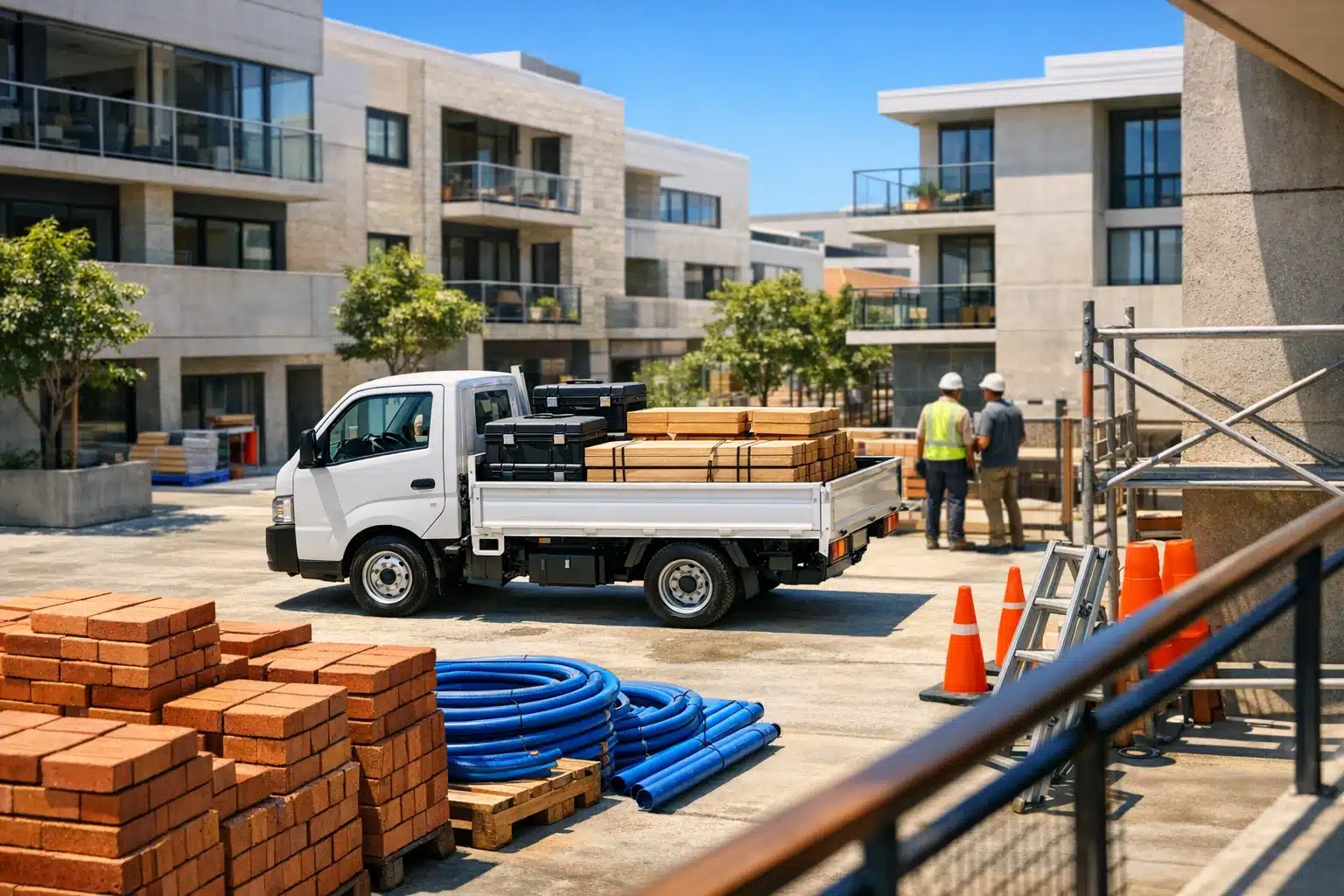
 Artificially generated image
 2026 Hyundai Porter: Overview, Features, and Buying Considerations
Article Outline and Why the 2026 Hyundai Porter Still Matters
The 2026 Hyundai Porter matters because small commercial trucks still carry a huge share of urban deliveries, trades work, and local logistics. While flashy EVs grab headlines, dependable cab-over workhorses keep bakeries stocked, construction crews moving, and farm routes running on schedule. This article looks at what buyers should examine in the new Porter, from body styles and cabin practicality to running costs and real-world usefulness. If you need a compact truck that earns its keep rather than posing for photos, the Porter deserves a careful look.
For many businesses, a light truck is less a vehicle than a daily tool, and the Hyundai Porter has built its reputation precisely in that role. The Porter name has long been associated with compact dimensions, a cab-over layout, and straightforward utility. That formula remains relevant in 2026 because city streets are not getting wider, delivery expectations are not getting slower, and operating costs are not getting cheaper. A truck that can haul meaningful cargo while fitting into crowded neighborhoods still has a place in the modern fleet.
This article is organized to answer the questions most buyers actually ask before choosing a vehicle like this. Rather than leaning on dramatic claims, it focuses on practical evaluation. The outline is simple:
• what the Porter is and why it fits today’s commercial landscape
• how its body styles, bed layout, and cabin design affect day-to-day work
• what to consider about powertrains, payload, maneuverability, and efficiency
• which comfort, technology, and safety features truly matter in ownership
• how it compares with alternatives and who should, or should not, buy one
That structure matters because the Porter is not usually purchased for image. It is bought by people who count time, fuel, tire wear, and loading effort in real money. A florist may value low loading height and easy city parking. A contractor may care more about payload configuration and service access. A municipal buyer may focus on durability, upfit compatibility, and fleet support. The same truck can look different depending on the job, which is why a broad overview is more useful than a trim-sheet recitation.
One more point is worth stating early: exact 2026 specifications can vary by market, trim, and local regulations. In some regions, buyers may see diesel-oriented offerings, while others may find LPG or electric versions more prominent. That does not weaken the Porter’s relevance; if anything, it shows how adaptable the platform has become. Think of the 2026 Porter as a working chassis and cab concept shaped around local needs. The details matter, but the central idea remains unchanged: compact size, practical cargo ability, and business-first design.
Body Styles, Exterior Design, and Cabin Practicality
The first thing that defines the 2026 Hyundai Porter is its cab-over architecture. Unlike a conventional pickup, where a long hood consumes valuable space, the Porter places the cabin above or close to the front axle. That layout creates a shorter overall footprint for a given cargo bed length, which is a major advantage in dense urban environments. For delivery operators, produce vendors, maintenance teams, and building contractors, that efficiency is not a small detail. It can determine whether a truck slips into a tight alley, backs into a cramped loading bay, or turns around on a narrow side street without a three-point drama.
Body style variety is one of the Porter’s strongest practical advantages. Depending on market, buyers often look for versions such as a standard cargo bed, dropside configuration, high-side load setup, freezer or box conversion, and specialized service bodies. That flexibility lets the same base vehicle support very different industries. A farm supplier may need open-bed versatility for sacks, tools, and equipment. A city courier may want an enclosed box body for parcel protection. A utility crew may prioritize ladder racks or service compartments. The Porter works best when matched carefully to the real cargo pattern rather than chosen as a generic solution.
Compared with a lifestyle-oriented pickup, the Porter usually feels more honest about its priorities. The bed is designed to be used, scraped, loaded, and cleaned rather than admired. The lower loading height can make repeated loading cycles less tiring over a full shift. That matters when a driver is handling crates, cylinders, building materials, or food stock several times a day. In business use, reducing strain is not only a comfort issue; it can also improve speed and reduce fatigue.
Inside the cabin, practicality typically takes the lead over luxury. Buyers should expect a space designed around visibility, easy entry, and straightforward controls. The upright seating position helps drivers judge corners and road edges more confidently, particularly in traffic. Storage may include simple but useful spaces for documents, gloves, drinks, charging cables, and handheld work devices. Materials are often chosen for durability and ease of cleaning rather than softness. Mud on boots, dust from a job site, and spilled coffee are more realistic design targets than premium ambience.
That does not mean comfort should be ignored. A Porter used for local work may still keep its driver behind the wheel for hours every day. When inspecting a 2026 model, buyers should pay attention to seat support, steering wheel adjustability if offered, visibility through mirrors, cabin noise, and the quality of climate control. In a vehicle like this, smart ergonomics are a quiet luxury. After a long day of stop-and-go work, they are often remembered more fondly than decorative trim ever could be.
Powertrains, Payload, Maneuverability, and Real-World Work Performance
If the body defines what the Porter can carry, the powertrain defines how calmly it handles a full day of work. For the 2026 Hyundai Porter, buyers should pay close attention to which engine or propulsion options are actually available in their market. Hyundai has offered commercial vehicles in different forms over time, including diesel-based and electric variants, and availability may depend heavily on local emissions rules, tax policy, and fleet demand. That means one buyer may be deciding between internal combustion and battery-electric operation, while another may only see a narrower lineup.
For conventional work use, a diesel or similar low-end torque-focused setup still appeals to many operators because it suits repetitive hauling, quick refueling, and longer days without charging concerns. Diesel remains attractive for businesses that cover mixed routes, operate away from charging infrastructure, or regularly carry heavy loads. On the other hand, electric commercial trucks can make a persuasive case in short-route delivery work, especially where businesses want lower tailpipe emissions, reduced noise, and potentially lower routine maintenance. The right answer depends less on internet debate and more on route planning, payload consistency, climate, and charging access.
Payload capability is central to the Porter’s value, but it should never be judged by headline numbers alone. Buyers need to verify:
• rated payload for the exact bed and wheelbase configuration
• whether the body conversion changes legal carrying capacity
• how passengers, tools, racks, or refrigeration equipment reduce usable load
• whether local rules affect licensing, axle loads, or urban access
Maneuverability is where the Porter often justifies its existence. A compact cab-over truck can feel almost tailor-made for older commercial districts, dense neighborhoods, and delivery routes crowded with parked cars. The driving experience is not about speed; it is about precision and efficiency. A tight turning circle, a commanding forward view, and a short nose make low-speed placement much easier than in many larger pickups. That gives the Porter a practical edge for drivers who spend the day entering side roads, reversing into courtyards, or squeezing between market stalls and service entrances.
Ride quality is another real-world consideration. Light trucks often feel firmer when empty and more settled when carrying weight, which is normal for work-oriented suspension setups. Buyers should test the truck in conditions that resemble actual use rather than evaluating it on a smooth, unloaded dealer route alone. Even small differences in gearing, acceleration response, brake feel, and visibility can change how tiring the truck feels after eight or ten hours of operation. In commercial life, the winning vehicle is not always the most powerful one. It is usually the one that feels easiest to use every single day without wasting fuel, time, or patience.
Features, Safety, Technology, and the Ownership Experience
When people discuss a work truck, they sometimes talk as if features do not matter. In reality, the right features can save time, reduce driver fatigue, improve safety, and support better uptime. The 2026 Hyundai Porter is not the type of vehicle where buyers should chase gadgets for their own sake, but it is absolutely the type of vehicle where a few well-chosen options can improve the working day. The difference between an acceptable truck and an excellent fleet tool is often found in the details: mirror visibility, parking assistance, climate control effectiveness, seat comfort, and how easily a driver can connect a phone or navigation device.
Safety deserves more attention than it sometimes gets in the light commercial segment. These trucks operate in crowded environments filled with pedestrians, scooters, parked vehicles, and constant stop-start motion. Even a basic suite of driver aids can be valuable. Depending on trim and market, buyers should look for features such as stability control, rear parking sensors, a reversing camera, lane or forward warning systems, better headlamp performance, and strong mirror coverage. Some of these features seem ordinary until the truck is reversing near a loading dock at dusk or edging through a packed wholesale market before sunrise.
Technology in a commercial truck should be judged by utility rather than novelty. A simple infotainment display with Bluetooth, hands-free calling, and clear audio can matter more than elaborate graphics. Fleet operators may value navigation integration, charging ports for handheld devices, and straightforward controls that drivers can learn quickly. A service van that spends time with multiple drivers benefits from simplicity. The best interface is often the one that causes the fewest mistakes on a rushed morning.
Ownership, of course, goes well beyond the cabin. Maintenance access, parts availability, warranty terms, dealer support, and downtime risk are often more important than brochure highlights. Buyers should ask practical questions:
• How quickly can common wear items be sourced?
• Are service intervals realistic for local working conditions?
• Is there strong dealer support for fleet customers?
• If choosing an EV version, what is the charging plan at home base or depot?
• What happens to productivity if the truck is unavailable for several days?
Total cost of ownership is where smart buyers separate excitement from business sense. A lower purchase price may lose its appeal if fuel use is high, service is inconvenient, or resale is weak. Conversely, a pricier configuration may justify itself through better efficiency, stronger safety equipment, or improved reliability in harsh daily use. Think of the Porter not as a one-time buy, but as a machine that will either quietly support a business or gradually interrupt it. That perspective makes feature selection much clearer. Useful technology is not decoration here; it is a form of operational discipline.
Buying Considerations, Alternatives, and a Conclusion for Work-Focused Buyers
The 2026 Hyundai Porter makes the most sense when buyers begin with the job, not the badge. This is a truck for people who need compact dimensions, easy loading, and commercial-purpose flexibility. Before deciding on a specific version, it helps to map out a normal week of use rather than imagining ideal conditions. How many trips are short urban runs? How often is the truck fully loaded? Does it carry fragile cargo, loose materials, refrigerated goods, or tools that stay onboard? Will it be driven by one owner-operator who knows every sound it makes, or rotated across several employees in a fleet? Those answers point more reliably to the right Porter than any advertising phrase ever could.
Comparison shopping is essential. In many markets, the Porter may be evaluated against rivals such as the Kia Bongo or against a different vehicle category altogether, including compact vans and midsize pickups. A van offers better cargo security and weather protection, but it may be less flexible for oversized or messy loads. A pickup can deliver broader private-use appeal and sometimes more passenger-friendly comfort, but it may give away cargo efficiency in a similar footprint. The Porter’s strongest argument remains its focused design: it is built to carry, load, unload, and repeat.
Prospective buyers should create a simple checklist before purchase:
• choose the body style that matches the cargo instead of adapting the cargo to the truck
• confirm payload after any body conversion or equipment installation
• test visibility, seat comfort, and low-speed maneuverability on realistic routes
• compare fuel or charging costs over at least three years
• investigate dealer support, parts supply, and likely resale in the local market
The ideal Porter buyer is usually a business owner, tradesperson, fleet manager, or agricultural operator who values efficiency over image. It is especially appealing for last-mile delivery, maintenance work, market supply runs, light construction support, and municipal tasks where compact size is an everyday advantage. It may be less suitable for those who want refined high-speed cruising, premium interior materials, or the multipurpose role of a family vehicle. The Porter is most convincing when judged honestly, on working terms.
In summary, the 2026 Hyundai Porter remains relevant because it addresses a very real problem with a very practical answer: how to move meaningful loads through busy environments without stepping up to a larger and costlier truck. Its appeal lies in body flexibility, compact urban usability, and a work-first layout that many businesses still need. The best version to buy will depend on route length, local powertrain availability, payload needs, and ownership support. For readers shopping with business priorities in mind, the Porter deserves attention not because it is glamorous, but because it may be one of the most sensible tools in the yard.