 Artificially generated image
 Tractor Supply Tool Box Clearance: What to Know Before You Shop
A clearance tag can feel like a green light, but a tool box is not the kind of purchase you want to judge by price alone. At Tractor Supply, clearance items may include truck boxes, portable chests, and storage units that look similar at a glance yet differ sharply in size, material, lock quality, and weather resistance. Knowing what to measure, inspect, and compare before you buy can turn a lucky find into a practical long-term upgrade instead of an awkward bargain.
Outline: How to Approach a Tractor Supply Tool Box Clearance
Before diving into prices, it helps to map out the decision the way a careful buyer would walk a store aisle: slowly, with a tape measure in one pocket and a few real questions in mind. This article is built as a practical roadmap for shoppers who want more than a quick bargain. The goal is simple: understand what a clearance tool box can offer, where the risks are hidden, and how to tell whether a markdown represents value or just urgency wrapped in a sticker.
The first thing to know is that not all tool boxes serve the same purpose. Some are designed for truck beds, especially crossover styles that sit behind the cab and leave room underneath for longer cargo. Others work better in workshops, barns, garages, or trailers. Portable chests may suit homeowners and DIY users, while larger metal boxes are often better for ranch work, contracting, maintenance crews, or anyone who carries heavier hand tools and power tools. That is why the article begins with the structure of the buying process rather than the thrill of the discount.
Here is the framework the rest of the article follows:
- How clearance pricing usually works and why certain tool boxes get marked down
- Which toolbox styles are most common and how to match them to your vehicle or work area
- What construction details matter most, including material, hinges, seals, locks, and finish
- How to decide whether the lower price really saves money after fit, condition, and long-term use are considered
This matters because clearance shopping often compresses decision-making. A buyer sees a reduced price, notices limited stock, and suddenly feels like the clock is ticking. That pressure can make an oversized truck box seem manageable, or a scratched floor model seem harmless, or a light-duty chest seem stronger than it really is. Yet a tool box lives a hard life. It gets bumped by lumber, rattled by gravel roads, soaked by rain, and opened with muddy gloves after a long day. A flashy markdown cannot protect tools from water, rust, or theft if the box itself is not up to the task.
Think of this outline as your flashlight before entering the clearance corner. It does not tell you what to buy, but it helps you see clearly. By the end, you should be able to shop with better questions, sharper comparisons, and a calmer mindset, which is often the best discount of all.
How Tractor Supply Tool Box Clearance Shopping Usually Works
Clearance pricing in a retail setting usually happens for practical reasons rather than mysterious ones. A tool box may be marked down because the store is rotating inventory, making room for seasonal merchandise, clearing discontinued models, or moving a slower-selling size. In some cases, a piece may be a display model or returned item that cannot be sold as brand new at full price. For shoppers, that means a clearance label is not automatically a warning sign, but it is always a signal to investigate.
At Tractor Supply, inventory can vary widely by location. A rural store with strong truck accessory sales may carry different toolbox sizes than a suburban location with more emphasis on home and garden goods. Online listings may also differ from what is physically on the floor. That matters because clearance stock is often limited in quantity, and one store’s bargain may not appear at another store even within the same region. A smart shopper treats clearance as a local opportunity, not a guaranteed catalog.
There are a few typical patterns worth understanding:
- End-of-line items may be new but no longer part of the current assortment
- Display units may carry cosmetic wear such as scratches, faded labels, or minor dents
- Oversized or specialized boxes may be discounted simply because fewer buyers need them
- Online clearance may move quickly and can involve shipping limits for larger metal products
The practical question is not merely “How much off is it?” but “Why is it off?” A 15 percent discount on a pristine, well-built toolbox that fits your truck perfectly can be a better buy than 40 percent off a mismatched floor model with damaged seals. Consider a simple example. If a crossover box originally priced at $500 is marked down to $400, the savings are meaningful only if it fits between your bed rails, clears your tonneau cover if you have one, and offers enough depth for the tools you actually carry. If not, the $100 saved is only a polite way of losing $400.
It also helps to examine the final pricing rhythm. Retail markdowns often come in stages. An item may first receive a modest reduction, then a deeper cut if it sits unsold. Some shoppers wait for another drop, but that strategy has risk: someone else may buy it first, and clearance inventory is rarely deep. The best approach is to decide in advance what counts as good value for your needs. If the box meets your measurements, appears structurally sound, and is reduced enough to beat comparable options, hesitation can be more expensive than action. In clearance shopping, patience matters, but preparation matters more.
Choosing the Right Toolbox Style, Size, and Use Case
The phrase “tool box” sounds simple until you stand in front of several metal boxes that all look sturdy but solve very different problems. Choosing the right style is where many clearance shoppers either make a smart purchase or carry home a heavy lesson. The best toolbox is not just the cheapest one on the floor. It is the one that fits your vehicle, your tools, and your working habits with the least amount of compromise.
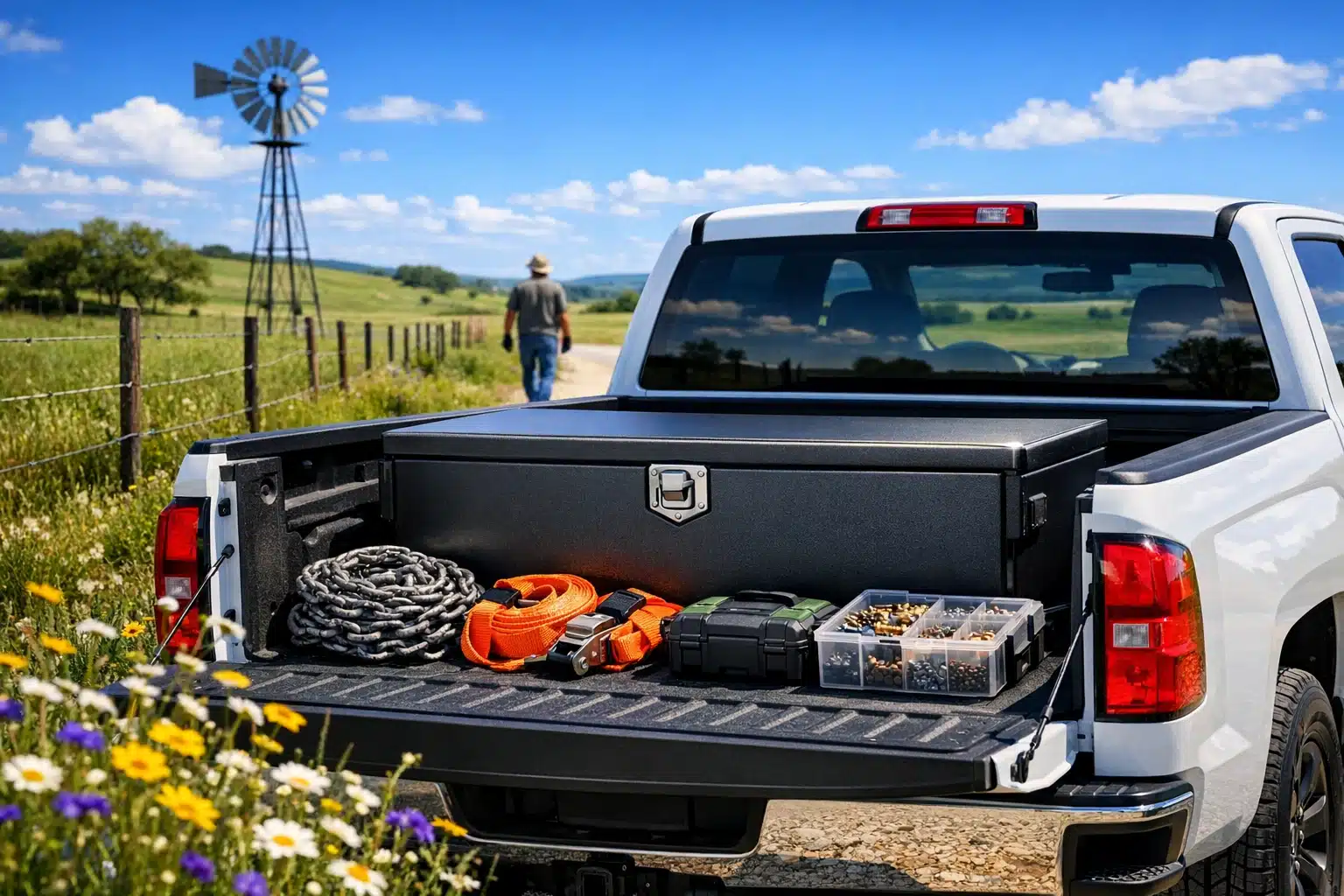
For truck owners, the most recognizable option is the crossover box. This style typically sits across the width of the truck bed just behind the cab, resting on the bed rails. Its biggest advantage is efficiency. It uses the front portion of the bed while leaving the space below and behind available for cargo. For farmers, contractors, and mobile repair workers, that layout often makes sense because it keeps frequently used tools easy to reach. Side-mount boxes, by contrast, mount along one side of the truck bed and can work well for users who want to preserve as much open cargo space as possible. Chest-style truck boxes sit lower in the bed and are useful when bed rail clearance or cover compatibility is a concern.
Portable boxes and utility chests serve a different crowd. They may be a better match for homeowners, garage users, and small-equipment owners who need organized storage without mounting hardware or vehicle-specific dimensions. If your goal is storing sockets, pliers, drill accessories, fencing tools, or workshop consumables, a portable chest can be more practical than a truck-mounted unit.
When comparing styles, use a checklist like this:
- Measure the available width, depth, and height before shopping
- Consider lid clearance, especially near the truck cab or a bed cover
- Think about what you carry most often: hand tools, power tools, chains, straps, fluids, or hardware bins
- Match the box to the environment: truck bed, trailer, garage, barn, or service area
- Estimate how often you need access during the day, because convenience affects real-world value
Material and weight also influence the right choice. Aluminum boxes are popular because they resist corrosion and tend to weigh less than steel, which can matter in a truck where payload and fuel efficiency are always in the background. Steel, however, can feel more substantial and may appeal to buyers who prioritize rigidity and price over lighter weight. Neither material is automatically better in every scenario. The better question is whether the box will live outdoors, ride on rough roads, or stay in a controlled indoor space.
Finally, remember that internal layout matters. A toolbox that swallows everything into one dark metal cavern can turn every job into a treasure hunt. Removable trays, dividers, or organized compartments are not glamorous features, but they can save time day after day. A clearance buy should make your workflow easier, not simply move clutter from one place to another.
What to Inspect Before Buying: Build Quality, Security, and Weather Resistance
Once you find a toolbox in the right style and roughly the right size, the inspection phase begins. This is where bargain hunters separate cosmetic flaws from functional problems. A scratch in the finish may be harmless. A warped lid, weak latch, or damaged seal is another matter entirely. Since clearance items can include display units or older inventory, a careful physical check is worth every extra minute you spend.
Start with the body of the box. Look for dents at corners, signs of twisting, or any panel that seems uneven. Open and close the lid several times. It should move smoothly and sit properly when shut. If the lid rubs, sticks, or leaves gaps, the box may not seal correctly. Hinges are equally important. They should feel solid, not loose or shaky. If the box has gas struts or lift supports, make sure they hold the lid open without wobbling. A lid that drops unexpectedly is not just annoying; it is a safety issue when your hands are full of tools.
Pay close attention to these details:
- Latch and lock function: the mechanism should close firmly and align cleanly
- Weather seal condition: gaskets should be intact, flexible, and fully seated
- Finish quality: chips or exposed metal can invite corrosion over time
- Mounting points: brackets and holes should not be bent or enlarged
- Interior condition: check for moisture marks, rust spots, or missing trays and hardware
Security deserves a realistic discussion. Most toolboxes deter casual theft, but no light-duty retail box is a vault. A stronger latch, better hinge design, and solid lock placement can improve security, yet the real goal is raising the difficulty level for opportunistic tampering. If you store expensive cordless tools, diagnostic gear, or specialty equipment, inspect how the lid overlaps the body and whether the lock area looks reinforced or flimsy. On a windy day in a parking lot, a thin metal lid can tell its own story.
Weather resistance matters just as much. Truck boxes face rain, dust, heat, and road vibration. A good seal helps, but design plays a role too. Angled lids, clean welds, and tight fitment can reduce water intrusion. If the box is aluminum, surface oxidation is usually less of a threat than deep rust would be on damaged steel, but finish quality still matters for longevity and appearance. If it is steel, inspect any nick, corner, or seam where coating failure might begin.
Finally, ask about missing parts, warranty terms, and return conditions. Clearance can sometimes mean final sale, and that changes the risk equation. A lower price is most attractive when the remaining support is still reasonable. If the box passes the structural test, the hardware test, and the fit test, the discount starts to look meaningful. If not, the clearance sign is just a bright-colored distraction attached to a future headache.
Conclusion: How to Tell If the Deal Is Really Worth It
For the right buyer, a Tractor Supply tool box clearance can be a very practical opportunity. Truck owners who need lockable storage, rural property owners who want a durable utility chest, and DIY shoppers outfitting a garage can all benefit when a solid box appears at the right price. The key is to treat the purchase like equipment, not like a souvenir from a sale aisle. A good deal should serve your work, protect your tools, and fit your space with very little compromise.
The easiest way to judge value is to combine price with total usefulness. Imagine two options. One box is deeply discounted but requires awkward mounting, wastes bed space, and shows enough wear to make you question its lifespan. The other costs a bit more but fits cleanly, seals well, and organizes your most-used tools. In most real-world cases, the second option is the better bargain because it creates fewer daily frustrations and fewer replacement costs. Clearance shopping should reduce waste, not create it.
As a final buying guide, keep these priorities in order:
- Fit first, because even a premium box is a poor choice if dimensions are wrong
- Condition second, because damaged hardware can erase the value of any markdown
- Function third, because storage layout affects how often you truly use the box
- Price last, because savings matter only after the other three boxes are checked
This topic is especially relevant for shoppers who balance utility and budget every day. That includes farmers hauling fencing tools, contractors carrying jobsite essentials, pickup owners tired of loose gear sliding around the bed, and homeowners who simply want tougher storage without paying full retail. These buyers do not need hype. They need measurements, durability, and a clear-eyed sense of what makes a box worth bringing home.
If there is one takeaway to keep, let it be this: clearance is a starting point, not a conclusion. Walk in knowing your dimensions, your must-have features, and your acceptable trade-offs. Inspect the box as if you will rely on it in bad weather, after dark, with work still left to do. When a discounted toolbox clears that test, the purchase can feel less like luck and more like good judgment, which is usually the strongest tool in the whole truck.