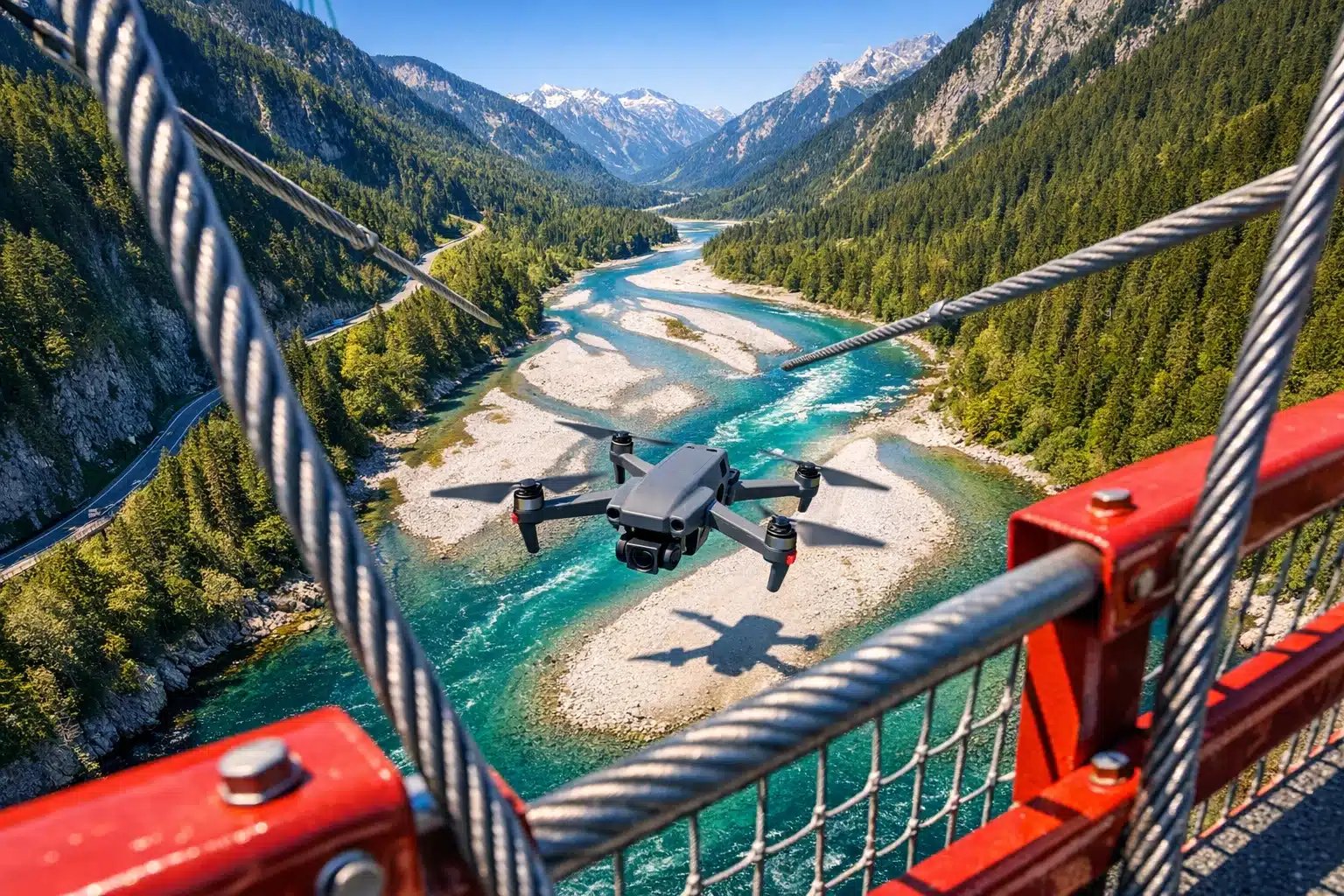
DJI Mini 5 Pro CMOS Camera Drone on Amazon: Features, Specs, and Buying Tips
Introduction and Article Outline
Small camera drones have moved far beyond hobby-shop novelty, and that is why so many buyers now search Amazon for the next DJI Mini release. The name “DJI Mini 5 Pro” naturally creates buzz because it hints at better image quality, smarter safety features, and easier travel use in a sub-250-gram body. Still, online excitement can blur facts, especially when placeholder listings, rumor pages, and accessory bundles appear before official details are fully clear. This guide is designed to help shoppers separate practical value from marketing haze.
The topic matters because the Mini line sits in a sweet spot that few gadgets manage to hit. It is small enough to fit in a day bag, capable enough to create travel footage that once required much larger aircraft, and approachable enough for first-time pilots who do not want a complicated setup. Amazon adds another layer of relevance. For many people, it is the first stop for price checks, bundle comparisons, shipping times, and customer reviews. Yet that convenience comes with a catch: not every listing tells the full story. Some pages mix official product names with third-party accessories, some use speculative wording, and some rely on headline claims that sound impressive but mean little in actual flight.
This article follows a simple roadmap so readers can move from curiosity to clarity:
• First, it explains why the Mini category is so important and how to approach “Mini 5 Pro” searches with a careful eye.
• Next, it breaks down what a CMOS camera actually contributes to drone photography and video performance.
• Then, it compares likely expectations for a Mini 5 Pro with known benchmarks such as the Mini 4 Pro and Mini 3 Pro.
• After that, it turns to Amazon buying strategy, including sellers, bundles, pricing, and return policies.
• Finally, it closes with practical advice for different kinds of buyers, from travelers and beginners to creators deciding whether to buy now or wait.
There is one important note at the outset: if a product page uses the name “DJI Mini 5 Pro,” verify whether it refers to an officially announced model, a rumor-driven listing, or a bundle built around an earlier Mini-series drone. That distinction is not a minor technicality; it changes how you should interpret the price, the specifications, and the risk of the purchase. In other words, this is not just an article about a drone. It is also a guide to buying intelligently when the internet is speaking in three voices at once: official information, reseller enthusiasm, and plain old guesswork.
Why the CMOS Camera Matters More Than the Marketing Headline
When shoppers see the phrase “CMOS camera drone,” it can sound like generic tech language, but the camera sensor is the heart of the entire flying experience. CMOS stands for complementary metal-oxide-semiconductor, and in practical terms it refers to the type of image sensor used to capture light. Nearly every modern consumer drone uses a CMOS sensor because it is power-efficient, fast to read, and well suited to compact electronics. That does not mean every CMOS camera is equal. Sensor size, lens quality, image processing, stabilization, color depth, and low-light handling still make a huge difference. In a small drone, those details matter even more because the aircraft has limited space, weight, and battery capacity.
For most buyers, the sensor conversation should begin with one simple truth: bigger light-gathering capability usually leads to better image quality. A larger sensor can improve dynamic range, preserve more detail in shadows and highlights, and handle dusk scenes with less noise. That is why a 1/1.3-inch CMOS sensor, common in higher-end compact drones, tends to outperform the smaller sensors found in cheaper toy-style models. Marketing may push megapixels first, but pixel count alone does not guarantee better results. A small sensor with a very high pixel number can still produce softer detail, noisier night footage, or artificial-looking sharpening. The more useful question is not “How many megapixels?” but “How clean and flexible is the image in real shooting conditions?”
A strong drone camera system also depends on the pieces around the sensor:
• A bright lens helps in low light and keeps ISO levels under control.
• A stable gimbal reduces shake and makes motion feel cinematic instead of jittery.
• Higher bit-depth video profiles can preserve more color information for editing.
• HDR and smart processing can help retain sky detail without crushing darker foreground areas.
This is where the Mini category gets especially interesting. Compact drones are often used in exactly the scenes that challenge cameras the most: sunrise cliffs, bright beaches, city skylines at dusk, forests with deep shadows, and moving subjects viewed from changing angles. A good CMOS setup turns those scenes from a messy blur into footage that feels polished. A weak one leaves the pilot with technically successful flights but visually disappointing files. It is a bit like carrying a beautifully bound notebook with a pen that skips every third word. The machine may work, yet the result does not satisfy.
If you are evaluating a supposed Mini 5 Pro listing on Amazon, pay close attention to how the camera is described. Look for concrete details such as sensor size, video frame rates, color profiles, gimbal stabilization, and photo modes. If the page leans heavily on dramatic adjectives while avoiding technical specifics, that should raise a small but healthy flag. Real image quality is built on measurable features, not just glossy phrases.
Comparing Mini 5 Pro Expectations With the Mini 4 Pro and Mini 3 Pro
Because the “DJI Mini 5 Pro” name may appear in searches before a full official launch or broad retail availability, the smartest way to judge it is by comparing it with the Mini models that are already established reference points. The DJI Mini 3 Pro and DJI Mini 4 Pro set a very high standard for small drones. Both belong to the sub-250-gram class in their standard battery configurations, making them especially attractive for travelers and casual creators who want lighter gear and, in many regions, simpler regulatory treatment. The Mini 3 Pro brought meaningful imaging and safety upgrades to the line, while the Mini 4 Pro refined tracking, sensing, and video capabilities in a more mature package.
Known benchmarks matter here. The Mini 3 Pro introduced a strong compact-camera formula with a 1/1.3-inch sensor, bright lens, 4K video options, and tri-directional obstacle sensing. The Mini 4 Pro pushed further with features such as omnidirectional obstacle sensing, more advanced subject tracking, improved transmission, and higher-end video options including 4K at up to 100 fps. Depending on region and configuration, the Mini 4 Pro can also offer transmission claims up to 20 km under ideal FCC-rated conditions, though real-world range is usually much shorter because interference, regulations, and environmental obstacles matter more than headline lab figures. Both drones also offer manufacturer-rated flight times that look generous on paper, but wind, speed, temperature, and recording habits can cut those numbers down quickly.
So what would make a true Mini 5 Pro compelling rather than merely newer? Buyers should look for meaningful upgrades in areas such as:
• A larger or more efficient sensor for cleaner low-light footage
• Better dynamic range for scenes with bright skies and dark ground detail
• Improved obstacle sensing and tracking reliability in complex environments
• More robust wind handling without sacrificing the lightweight design
• Longer real-world battery performance, not just improved lab statistics
• Better computational photography features that remain natural rather than overprocessed
It is also worth keeping expectations realistic. In a drone under 250 grams, every engineering improvement competes with weight, heat, battery size, and cost. A huge leap in camera size, battery endurance, obstacle sensing, and speed all at once is unlikely without trade-offs. That is why rumor pages often sound more dramatic than the products they predict. A believable step forward would be incremental but useful: cleaner twilight footage, smarter tracking around trees, a more dependable connection in noisy wireless environments, or refined editing profiles for creators who color-grade their work.
Another key comparison point is bundle value. A Mini-series drone can look very different depending on whether it comes with the basic controller, a screen-equipped controller, extra batteries, a charging hub, spare propellers, filters, or a carrying case. A supposed Mini 5 Pro listing priced well above a Mini 4 Pro should justify that premium with more than vague “next generation” language. If the upgrade story is unclear, the newer name may be less important than the better-documented older model. In plain language, do not buy the echo of an improvement when you can buy the improvement itself with confidence.
How to Evaluate Amazon Listings, Sellers, Bundles, and Real Ownership Costs
Amazon is useful because it compresses search, pricing, reviews, delivery, and accessories into one place. It is also tricky for exactly the same reason. On a single results page, you might see an official-looking product image, a third-party bundle, a renewed unit, an imported version, and a speculative listing that borrows attention from a product name people are already typing into the search bar. If you are trying to buy a DJI Mini drone responsibly, especially one listed as a “Mini 5 Pro,” you need a checklist that is boring in the best possible way. Boring checks prevent expensive surprises.
Start with the seller identity and listing clarity. Ask a few direct questions before you even look at star ratings:
• Is the item sold by Amazon, by an identifiable authorized retailer, or by an unfamiliar marketplace seller?
• Does the title clearly match the model shown in the images and the technical specifications below?
• Are the controller type and battery count stated clearly?
• Does the listing describe a new drone, a renewed unit, or an accessory bundle built around a separate core product?
• Is there a return policy you can actually live with if the item arrives misrepresented or incomplete?
Next, examine the bundle logic. Some bundles are genuinely useful; others are padded with low-value accessories that inflate the sticker price. Extra batteries, a proper charging hub, spare propellers, and a quality case can be worth paying for. Generic memory cards, weak landing pads, and random accessory add-ons are not always bargains just because they make the box sound fuller. Compare the bundle price to the cost of purchasing the core drone and trusted accessories separately. If the math feels slippery, pause. A good bundle should save time and offer sensible value, not confuse the customer into overlooking the real price difference.
Then consider ownership costs beyond checkout. Batteries wear down. Propellers need replacement. ND filters may be useful if you shoot video in bright daylight. A screen-equipped controller may be convenient, but it raises the entry price. Insurance or protection plans may or may not be worthwhile depending on how often you fly, where you fly, and whether accidental damage is already covered elsewhere. Regulations also matter. In some jurisdictions, drones under 250 grams can simplify registration or operational rules, but that advantage may change if you use larger batteries or specific accessories that affect the weight category. Local rules differ widely, so treat broad internet claims with caution.
Finally, read customer feedback intelligently rather than emotionally. Reviews are most useful when they describe verifiable details: packaging condition, battery health, included parts, seller responsiveness, and whether the product matched the listing. Reviews that only say “amazing” or “terrible” are less helpful than those that explain why. On Amazon, the best buyer is not the fastest buyer. It is the one who reads the small print before the drone ever unfolds its first propeller.
Final Buying Advice for Travelers, Beginners, and Content Creators
If you are the kind of shopper drawn to a compact drone because you want better travel footage, easier packing, and fewer barriers to getting airborne, the Mini class remains one of the most practical segments on the market. That is the core reason interest in a “DJI Mini 5 Pro” keeps building. People are not simply chasing a newer gadget. They are looking for a tool that can capture a sunrise over a coastline, a mountain trail, a family road trip, or a quiet architectural shot without forcing them to lug around a bulky flight case. In that sense, the appeal is easy to understand. A good Mini drone feels less like a technical project and more like a camera that happens to fly.
For beginners, the safest buying path is usually the clearest one. If a Mini 5 Pro listing on Amazon does not provide firm, verifiable information, a well-documented current model may be the smarter purchase. The Mini 4 Pro is already a strong option for users who want advanced tracking, excellent compact-image performance, and broader obstacle awareness. The Mini 3 Pro can still make sense if priced attractively and paired with the features you actually need rather than the ones that simply look impressive in a comparison table. New pilots benefit more from reliability, support, and understandable accessories than from speculative features that may never matter in normal use.
For travelers and casual creators, ask yourself three honest questions:
• Do you need the latest name, or do you need a drone that fits your trips and skill level today?
• Will you actually use advanced video modes and editing profiles, or is straightforward 4K footage enough?
• Is your budget better spent on extra batteries, a better controller, and practice time rather than on uncertain early-adopter pricing?
For experienced creators, the decision is more nuanced. Waiting can make sense if your current drone still works well and you specifically want improvements in low-light image quality, tracking intelligence, or workflow efficiency. Buying now can also make sense if a confirmed Mini 4 Pro package already covers your needs and will earn regular use immediately. Gear has a funny habit of looking perfect in rumor form and merely good once reality arrives. That does not make new releases disappointing; it simply means they live in the real world, where compromises have weight and batteries do not read marketing copy.
The bottom line for Amazon shoppers is simple: verify the listing, judge the camera by meaningful specifications, compare the bundle against proven alternatives, and buy for the footage you want to make rather than for the product name you hope exists. That approach serves beginners, travelers, and creators alike. It is practical, patient, and far more likely to leave you with a drone you enjoy using long after the search results stop glowing.