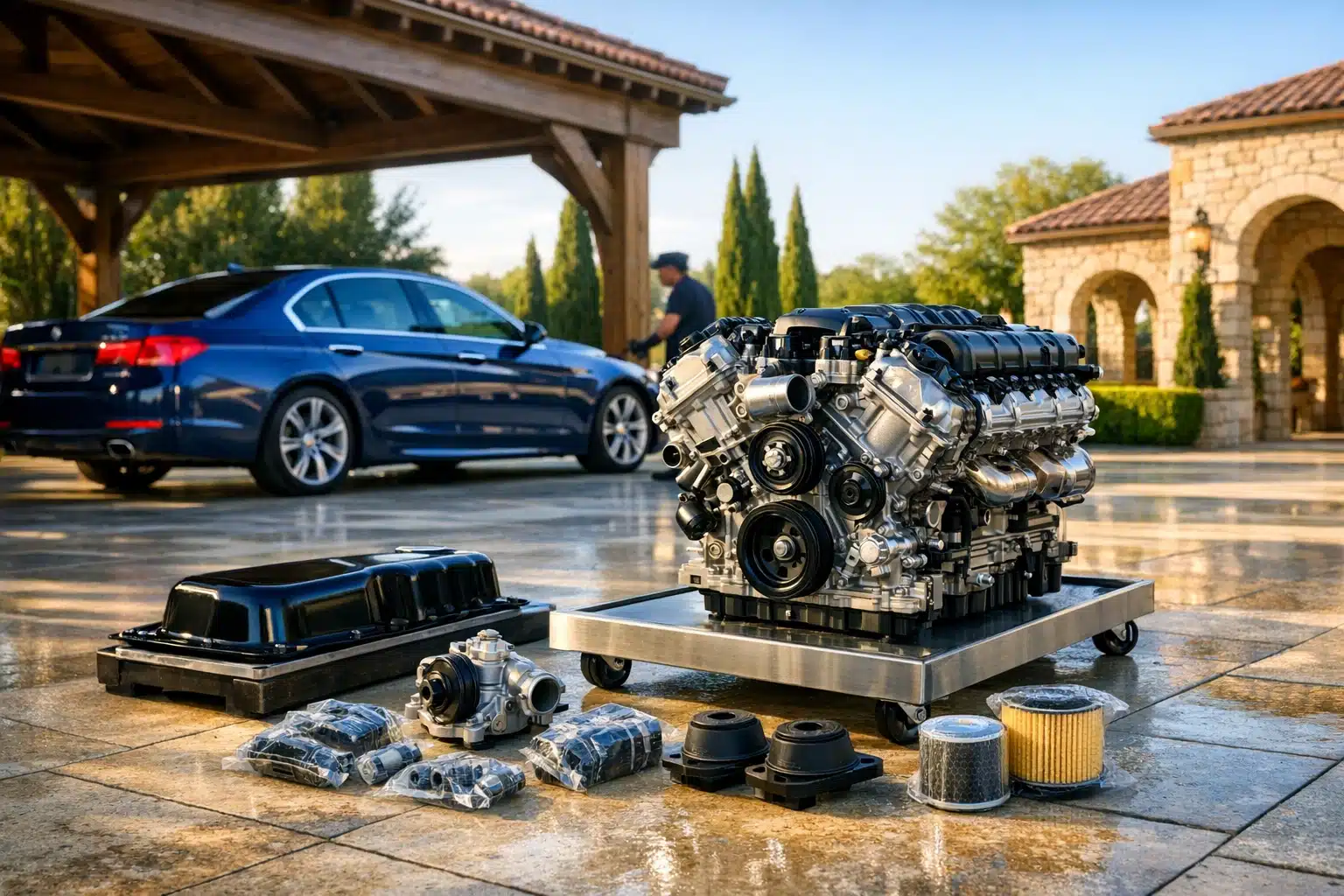
Guide to LKQ Remanufactured Engines and Quality Checks
Buying an engine is rarely an emotional decision, yet it can decide whether a car returns to daily duty or heads for the classifieds. That is why remanufactured options deserve a closer look, especially when a supplier such as LKQ enters the conversation. Understanding how these engines are rebuilt, inspected, documented, and supported helps owners, fleet managers, and repair shops spend with more confidence and far fewer unwelcome surprises.
Outline
This guide starts with the meaning of an LKQ remanufactured engine and why terminology matters more than many buyers realize. It then walks through the quality checks that typically separate a serious remanufacturing program from a basic cleanup and resale job. After that, it covers the smart questions to ask before purchase, including fitment, paperwork, and warranty details. The final sections compare remanufactured engines with used, rebuilt, and new alternatives, then explain how installation habits and maintenance choices influence long-term results.
- What a remanufactured engine is and how it differs from other options
- The inspection and machining steps that support reliability
- How to evaluate an engine listing before money changes hands
- Cost, value, and ownership trade-offs in real situations
- Installation, break-in, and habits that protect your investment
What an LKQ Remanufactured Engine Really Means
The phrase remanufactured engine sounds straightforward, but in the automotive world, labels can hide important differences. In general, a remanufactured engine is taken apart completely, cleaned, measured, machined where needed, and reassembled with replacement components that bring it back within specified tolerances. When buyers look at LKQ remanufactured engines, that distinction matters because the word remanufactured usually signals a deeper process than simply pulling an engine from a donor vehicle and replacing a few worn parts.
It helps to place remanufactured engines beside the three alternatives most shoppers already know. A used engine is exactly what it sounds like: a take-out unit removed from another vehicle, often sold with mileage information and a limited startup warranty. A rebuilt engine usually receives repairs only in the areas that failed or showed obvious wear. A new crate engine, by contrast, is built from all-new major components and is commonly the most expensive choice. Remanufactured engines sit between these categories, aiming to deliver more consistency than a used engine and lower cost than a brand-new assembly.
-
Used engine: lowest upfront cost, but unknown internal wear can remain.
-
Rebuilt engine: targeted repairs, but the scope may vary significantly by builder.
-
Remanufactured engine: full teardown, inspection, machining, and replacement of critical wear items.
-
New crate engine: maximum component freshness, usually at the highest purchase price.
For many drivers, the appeal of an LKQ remanufactured engine is balance. If the vehicle is worth saving but not worth the cost of a factory-new powerplant, a reman unit often enters the shortlist. Think of it as a middle road built from measurements, not hope. The engine block, crankshaft, cylinder heads, oiling system, and rotating assembly all become part of a process where wear is not guessed at from the outside; it is checked with tools.
That said, buyers should not assume that every remanufactured engine program is identical. Procedures can vary by engine family, production line, and documentation package. Some listings include long blocks, while others include additional components. Some programs provide detailed test records, while others provide a more general warranty-backed description. The smart takeaway is simple: the word remanufactured is a promising start, not the final answer. Understanding the scope behind that term is what turns a hopeful purchase into an informed one.
Quality Checks That Matter More Than Marketing
If there is one place where a remanufactured engine earns its value, it is in the quality-control chain. Engines live or die by clearances, sealing surfaces, oil flow, cooling efficiency, and the strength of the parts that move thousands of times per minute. A proper remanufacturing process is therefore less about shiny paint and more about disciplined measurement. When reviewing LKQ remanufactured engines, buyers should focus on the inspection and reconditioning steps that directly affect durability.
The process typically begins with a full teardown and core evaluation. The bare block, crankshaft, heads, rods, and other major components are cleaned to remove sludge, carbon, and debris. Once the grime is gone, inspection becomes meaningful. Cracks in cast iron or aluminum may be checked using methods such as magnetic particle inspection or dye penetrant testing, depending on the part material and production system. Cylinders are measured for taper and out-of-round conditions. Deck surfaces are checked for flatness. Main bearing bores, cam bores, and crank journals are inspected because even small deviations can affect oil pressure and bearing life.
Machining follows inspection. Cylinder bores may be honed or bored to an oversize specification if wear requires it. Crankshafts may be polished or ground. Cylinder heads are commonly pressure-tested, resurfaced, and fitted with renewed valve-train components as needed. Valve guides, seats, and seals receive attention because a head that leaks compression or oil will ruin the ownership experience no matter how fresh the block looks. Throughout the build, torque values, bearing clearances, ring end gaps, and timing alignment need to be controlled carefully.
-
Critical wear parts often replaced include rings, bearings, gaskets, seals, and timing components.
-
Oil pumps, freeze plugs, and fasteners may also be renewed depending on the engine design and reman program.
-
Some programs perform final hot testing, spin testing, or leak checks before shipment.
A useful question for any seller is not “Was it rebuilt?” but “What was inspected, machined, and replaced?” That wording gets you closer to reality. A good remanufactured engine should have a paper trail or at least a clearly stated process behind it. It should also reflect the reality that different engine families have different failure points. On some designs, head issues are common. On others, oiling, timing chains, or balance-shaft wear deserve extra scrutiny. Quality, in this space, is not a slogan floating above the engine like a halo. It is the sum of many small, correct decisions made in sequence.
How to Evaluate an LKQ Reman Engine Before You Buy
Even a well-remanufactured engine can become the wrong purchase if it does not match the vehicle, lacks the right supporting documents, or comes with conditions the buyer never noticed. This is where a careful checklist pays for itself. The smartest engine shoppers act less like gamblers and more like investigators. Before you approve the order, confirm fitment, included components, warranty rules, and the support available if something does not line up.
Start with compatibility. Engine listings may look interchangeable at a glance, yet differences in VIN codes, emissions packages, sensor locations, variable valve timing hardware, oil pan design, and accessory mounting points can turn a promising deal into a headache. Model year overlap is not enough on its own. Matching the vehicle’s exact engine code and production details is safer. If the vehicle has turbocharging, cylinder deactivation, direct injection, or hybrid-related integrations, the need for precision becomes even greater.
Next, review what is actually included. A long block usually covers the major assembled engine components, but intake manifolds, exhaust manifolds, turbochargers, injectors, fuel rails, sensors, wiring, and external accessories may not be part of the package. This affects both price comparison and installation planning. Two engines can appear similarly priced while carrying very different completion costs once missing hardware is added.
-
Ask for the exact part number and compatible applications.
-
Clarify whether the engine is a long block, short block, or more complete assembly.
-
Request written warranty terms, including labor coverage if any exists.
-
Confirm the core charge, return deadline, and acceptable core condition.
-
Check whether preinstallation steps are required to keep the warranty valid.
Documentation matters more than many first-time buyers expect. A reman engine supported by inspection notes, a build specification, or testing information inspires more confidence than a vague listing with generic language. At the same time, be realistic: not every seller will provide a dramatic binder full of machining records. What you want is clarity, not theater. You should understand what major work was performed, which components were renewed, and what the warranty excludes.
Watch for practical red flags. If a seller cannot explain fitment, avoids discussing the core process, or glosses over installation requirements, slow down. Many warranty disputes start long before the engine is shipped. They begin when the buyer assumes included parts, ignores cooling-system contamination, or skips replacement of items such as oil coolers, thermostats, sensors, or external lines that may have contributed to the original failure. In short, evaluating an LKQ remanufactured engine is not just about the engine itself. It is about the entire transaction around it.
Remanufactured vs Used, Rebuilt, and New: Cost and Value in Context
The cheapest engine on day one is not always the cheapest engine six months later. That simple idea explains why remanufactured engines attract attention from owners who think beyond sticker price. An LKQ remanufactured engine usually competes in a crowded middle ground where value is shaped by labor costs, downtime, warranty protection, and the intended lifespan of the vehicle. To judge the option fairly, compare total ownership impact rather than invoice totals alone.
A used engine often wins the upfront price battle. For an older vehicle with limited remaining value, that can be enough. If the goal is to get another year or two from a commuter car, the risk may be acceptable. The trade-off is uncertainty. Even if mileage is known, maintenance history, overheating events, oil-change discipline, and hidden wear are often mysteries. Labor is the equalizer here. Replacing an engine is expensive enough that many buyers would rather pay more once than pay less twice.
A rebuilt engine can be excellent when performed by a skilled local machine shop or specialist. The problem is variability. One builder may inspect everything with great care, while another may address only the obvious failure point. Remanufactured engines tend to appeal to buyers who want a more standardized process and a formal warranty structure. A new crate engine remains the benchmark for freshness, but it can make less financial sense for aging vehicles unless the owner plans long-term retention, restoration, or special-use service.
-
Choose used when the vehicle value is low and budget pressure is high.
-
Choose rebuilt when you trust a specific local builder and want custom attention.
-
Choose remanufactured when you want a structured middle path between price and consistency.
-
Choose new when maximum originality or longest expected service life justifies the cost.
Consider a work truck that earns income. Downtime may cost more than the engine difference itself. In that case, warranty support, parts availability, and predictable condition matter a great deal. Now picture a lightly used family sedan that simply needs to stay dependable for school runs and commuting. A remanufactured engine can make sense because it extends service life without asking the owner to finance a brand-new powerplant. The value equation shifts again for performance cars or collectible vehicles, where original specifications, matching components, and builder expertise may outweigh broad convenience.
The real comparison, then, is not only about product type. It is about your timeline, labor rate, tolerance for risk, and the role the vehicle plays in everyday life. That is where an LKQ remanufactured engine often earns a place: not as the automatic answer for every situation, but as a sensible answer for many of them.
Installation, Break-In, and the Habits That Protect Reliability
Even the most carefully remanufactured engine can be sabotaged by a rushed install. This is the part many buyers underestimate because the engine arrives looking complete, substantial, and ready to work. In reality, installation is where the project either lands smoothly or slips on something preventable. A reman engine should be treated like a precision component entering a larger system, not like a miracle cure dropped into a worn-out vehicle.
Begin with the reason the original engine failed. If a cooling-system restriction, lubrication problem, injector fault, turbo issue, contaminated oil cooler, or tuning problem caused the damage, replacing only the engine may recreate the same failure. Shops and experienced DIY owners know this lesson well: the replacement engine is not responsible for the old engine’s bad environment. Radiators should be inspected, oil passages cleaned, hoses checked, sensors verified, and any related failure points corrected before startup. On some applications, replacing the thermostat, water pump, external coolers, filters, and mounts is simply prudent.
Prestart procedure matters too. Fluids must be correct, the oiling system may need priming depending on the design, and all electrical and fuel connections should be verified carefully. Initial startup is not the moment for improvisation. Watch oil pressure, coolant temperature, leaks, unusual noises, and fault codes. If the engine management system requires relearns or software calibration, that step belongs in the plan, not on a forgotten sticky note.
-
Use the specified oil grade, coolant type, and filters.
-
Replace contaminated or suspect supporting components that could compromise the new engine.
-
Document the installation with receipts and service notes in case warranty questions arise.
-
Follow the supplier’s startup and break-in guidance rather than relying on folklore.
Break-in recommendations vary, so it is wise to follow the guidance supplied with the engine. In general, early operation should avoid needless abuse while still allowing the engine to reach full temperature and normal load conditions. Many installers also perform an early fluid and filter check after initial operation to catch debris, leaks, or minor issues before they become expensive ones. This stage is less glamorous than ordering the engine, but it is where long-term confidence begins.
For repair shops, communication is part of quality control. Customers should know what was replaced, what was reused, what maintenance is now required, and what behavior would threaten warranty coverage. For individual owners, the rule is simple: protect the investment with patience. A remanufactured engine is not a lottery ticket. It is a second mechanical life, and like any second chance, it responds best to better habits than the ones that ended the first.
Conclusion: A Practical Choice for Owners and Repair Shops
LKQ remanufactured engines can be a strong option for drivers who want more assurance than a used engine typically offers without stepping all the way up to the price of a new crate engine. The key is to look past broad claims and focus on the details that actually matter: teardown scope, machining standards, replaced components, fitment accuracy, warranty rules, and installation discipline. For independent repair shops, that means building a process around verification and documentation. For individual vehicle owners, it means asking better questions before the purchase and avoiding shortcuts after delivery.
If your goal is dependable transportation, controlled costs, and a reasonable path back to the road, a remanufactured engine deserves serious consideration. Just remember that value does not come from the label alone. It comes from the quality checks behind the engine and the care applied once it reaches the vehicle.