Guide to the Costco 14-Day Japan Tour Package
Planning a two-week trip through Japan can feel exciting and slightly overwhelming, especially when you are comparing rail passes, hotels, airport transfers, and the long list of cities worth seeing. A Costco 14-day Japan tour package stands out because it bundles many moving parts into one bookable product, giving travelers a clearer starting point for budgeting and logistics. That matters for first-time visitors, busy families, and anyone who wants structure without losing the wonder of temple paths, neon districts, and quiet ryokan mornings.
Outline: 1. What a Costco 14-day Japan package usually includes. 2. How a typical two-week itinerary is structured across Japan. 3. Pricing, value, and the extra costs travelers often miss. 4. Who benefits most from this format and who may prefer independent travel. 5. A final booking checklist and practical conclusion for travelers deciding whether to reserve.
1. What a Costco 14-Day Japan Tour Package Usually Includes
A Costco 14-day Japan tour package is best understood as a convenience product first and a sightseeing product second. In other words, the biggest value often comes from reducing planning friction. Japan is famously traveler-friendly once you arrive, yet getting every piece lined up before departure can still take real work. Flights, hotel locations, luggage rules, transfer details, rail timing, and reservation policies all matter more than many first-time visitors expect. A packaged itinerary can fold those pieces into a single purchase, which is one reason it attracts travelers who want less spreadsheet time and more confidence.
That said, no two packages are identical. Costco Travel offerings can vary by season, departure city, supplier, inventory, and promotional period. A 14-day product may include round-trip airfare, hotel stays, some breakfasts, rail or coach transfers between major cities, airport transportation, and selected guided tours. Another version may lean more toward independent travel, where the package handles flights and hotels but leaves daily activities mostly open. Before assuming everything is covered, it is smart to read the line-by-line inclusions. Key items to verify include: • hotel category and room size • whether breakfast is included daily or only at selected properties • transfers from airport to hotel • intercity transportation method • baggage allowances • admission tickets for major excursions.
One overlooked detail is hotel style. Japanese city hotels are efficient, clean, and often compact. Standard rooms in business hotels can fall roughly in the 14 to 20 square meter range, which may surprise travelers used to larger rooms in North America. A package can help by steering guests toward properties that are practical for tourism, often near train stations or major districts. That location advantage matters because a ten-minute walk in Tokyo or Kyoto can feel very different when you are carrying luggage or arriving late after a long flight.
Compared with fully independent booking, packaged travel may also simplify the less glamorous parts of the trip. Luggage forwarding services, station transfers, and arrival instructions are easy to underestimate until you are trying to decode a platform sign while jet-lagged. Japan rewards curiosity, but it also rewards preparation. A strong package does not remove the country’s magic; it removes some of the administrative noise around it. For travelers who want a smoother launch into Japan, that difference can be worth real money, even before the first bowl of ramen or temple visit enters the picture.
2. How a Typical 14-Day Japan Itinerary Is Structured
The shape of a good 14-day Japan itinerary is not random. It is usually built around geography, train efficiency, and the need to balance major cities with lighter moments. A Costco-style package often follows a familiar route because the route works. Two weeks is enough time to experience Japan meaningfully, but not enough to see everything without turning the vacation into a marathon. The strongest itineraries therefore create rhythm: fast urban energy, cultural depth, scenic pauses, and just enough free time to let travelers wander.
A common pattern begins in Tokyo. This makes sense for both logistics and energy level. Tokyo offers major international airport access, a deep hotel inventory, and plenty to do while travelers adjust to the time change. Three to four nights here is typical. That gives room for neighborhoods such as Shinjuku, Asakusa, Shibuya, and Ginza, plus the option for a day trip to Nikko, Kamakura, or Mount Fuji viewpoints depending on the package. Tokyo is often the loud opening act: giant stations, polished department stores, tiny bars under rail lines, and temples tucked behind modern streets like a quiet parenthesis in the middle of the sentence.
From there, many itineraries move southwest. Hakone or another hot spring area may appear as a one-night scenic stop, offering a slower mood and, in some packages, a ryokan stay with dinner. Kyoto then tends to anchor the cultural section of the trip. Two to four nights are common, because Kyoto is not a single attraction but a collection of districts, shrines, markets, and seasonal landscapes. Nearby Nara is a natural day trip, while Osaka often adds food culture, nightlife, and a slightly more casual urban personality.
The rail logic behind this route is one of Japan’s quiet pleasures. Tokyo to Kyoto on the shinkansen is roughly a little over two hours on the fastest services, and Kyoto to Osaka can be a quick hop. Some 14-day packages add Hiroshima and Miyajima, which broadens the trip beyond the classic Golden Route and gives historical context that many travelers find memorable. A typical flow might look like this: • Tokyo and a nearby day trip • scenic or hot spring stop • Kyoto and Nara • Osaka • Hiroshima or another regional extension.
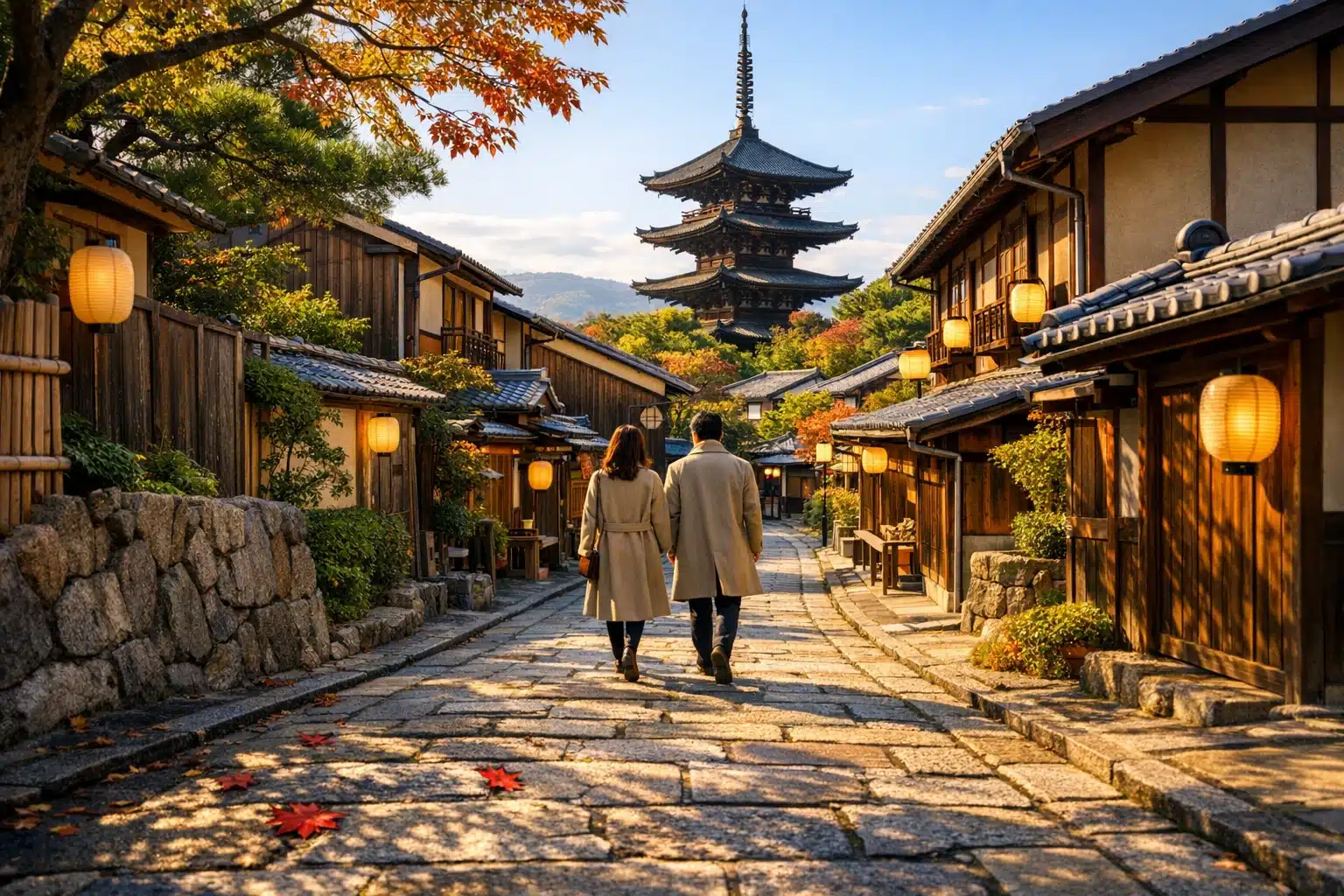
When comparing packages, watch the pace carefully. A tour that lists many cities can sound impressive but may sacrifice actual enjoyment if it relies on frequent hotel changes. The best itineraries do not simply maximize destinations; they maximize usable time. Japan unfolds best when there is space to notice things: station melodies, vending machine aisles, maple leaves over temple stone, the neat choreography of commuters stepping aside for a train. A well-built two-week route should let you see the country and still feel it.
3. Pricing, Value, and the Hidden Costs Travelers Should Compare
The price of a Costco 14-day Japan tour package can look high at first glance, but sticker shock alone is a poor way to judge value. Japan is not necessarily the ultra-expensive destination it once seemed, yet a two-week trip still adds up quickly when booked piece by piece. Round-trip airfare from North America can vary widely by season and city, often landing somewhere around the high hundreds to well over a thousand dollars per traveler. Midrange hotels in Tokyo, Kyoto, and Osaka regularly run about $100 to $250 per night, and sometimes more during cherry blossom season, autumn foliage peaks, and major holidays. Add intercity rail, airport transfers, attraction admissions, and meals, and the total can move fast.
This is where packages deserve a fair comparison rather than a quick judgment. The right question is not, “Is the package cheaper than doing it myself?” The better question is, “What would the same standard of trip cost if I recreated it independently?” Many travelers accidentally compare a package with centrally located hotels, some included transfers, and a few guided excursions against a do-it-yourself fantasy built on the cheapest room they can find three subway lines away from the places they actually want to visit. That is not apples to apples.
Still, packages are not automatically the better deal. Sometimes they include extras that matter, and sometimes they bundle items you may not value. Breakfasts can save money and time, especially on moving days. Airport transfers can prevent a stressful arrival. Guided city tours may help first-time visitors get oriented quickly. On the other hand, travelers who love spontaneous food stops or who prefer simple business hotels might find more value in independent booking. Since the nationwide JR Pass became less attractive for many itineraries after its 2023 price increase, point-to-point train tickets or regional transport combinations can sometimes beat older assumptions about rail savings.
Look closely at hidden costs. Common ones include: • optional tours not listed in the base price • meals beyond breakfast • hotel city taxes • checked baggage fees on international or domestic segments • single supplements for solo travelers • travel insurance • private transfer upgrades. One welcome contrast for many visitors is tipping culture. In Japan, tipping is generally not expected in the way it is in the United States, so that is one budget category that may feel refreshingly simple.
The smartest comparison is itemized. Price the flights, hotels, rail segments, and major excursions yourself. Then consider the soft value of time saved and mistakes avoided. A well-priced package can be a sensible buy even if it is not the absolute cheapest route. Value is not only about dollars; it is also about predictability, comfort, and how much of your energy you want to spend before the journey even begins.
4. Who This Package Fits Best, and When Independent Travel May Be Better
Not every traveler wants the same version of Japan. That is why the Costco 14-day package format can feel ideal to one person and too rigid to another. The travelers most likely to appreciate it are those who value structure, broad coverage, and reduced planning effort. First-time visitors are the clearest example. Japan has excellent infrastructure, but the volume of choices can overwhelm even confident travelers. Which airport is best? Should you sleep in Tokyo Station, Shinjuku, or Ueno? Is a ryokan worth fitting in? How many one-night stops are too many? A package answers many of those questions upfront, which can remove a layer of pre-trip anxiety.
Busy professionals and families also tend to benefit. If your schedule makes it hard to research every transport leg, a bundled trip may be worth the premium. Multigenerational groups can gain even more, because coordinating different comfort levels is easier when hotels and transfers are already arranged. Travelers who want to see Japan’s headline highlights without becoming rail experts often find the format practical rather than limiting.
There are other good-fit travelers too. Some retirees like the predictability. Some couples use a package as a low-friction way to take a big international trip without months of advance planning. Some shoppers appreciate the Costco style of purchasing in general: one reservation, clear inclusions, and member-facing customer support channels. In a country where even simple things can involve multiple booking windows and cancellation rules, that consolidation has appeal.
Independent travel may be the better choice, however, if your priorities are highly personal or niche. If your dream trip revolves around small-town onsen, regional art islands, baseball games, anime events, Michelin-level dining, hiking specific pilgrimage trails, or staying in one neighborhood long enough to become a regular at the same coffee bar, a package may feel too broad. Japan rewards slow curiosity. A prebuilt route, by design, favors reliability over deep customization.
Mobility and pace should also be considered honestly. Even polished itineraries can involve a lot of walking, stairs, station navigation, and hotel changes. Travelers with accessibility concerns should ask direct questions about transfer times, elevator access, room setup, and luggage handling. A package that looks easy on paper can still be physically demanding in practice.
The clearest divide is this: if you want a dependable overview of Japan, the package may suit you very well. If you want a handcrafted personal narrative, independent planning usually wins. Neither choice is more sophisticated. They simply optimize for different kinds of travel satisfaction.
5. Is the Costco 14-Day Japan Tour Package Right for You?
For the target traveler, the final decision comes down to how you want to spend three different resources: money, time, and attention. A Costco 14-day Japan tour package is often most appealing when you are willing to pay a bit more for coordination and a bit less for uncertainty. If that sounds like you, the package can be a smart gateway into Japan. It gives shape to a trip that might otherwise feel too big to begin. That matters more than people admit. Many dream vacations stall not because travelers lack interest, but because the planning becomes a second job.
Before booking, treat the package page as the beginning of your research rather than the end. Ask practical questions with almost boring discipline. Useful ones include: • Which flights are included, and are long layovers likely? • How many hotel changes occur across the two weeks? • Are the hotels centrally located or simply budget friendly? • Which meals are included? • How much free time is built into major cities? • Are airport transfers private, shared, or self-managed? • What is the cancellation policy? • Are key attractions prepaid, reserved, or optional? • What out-of-pocket daily budget should you realistically expect? • Is travel insurance offered, and what does it actually cover?
You should also think about travel season. Spring blossoms and autumn foliage are beautiful, but they usually bring higher demand and denser crowds. Summer offers festivals and long daylight hours, but can be hot and humid in many regions. Winter may provide lower prices in some periods and a different atmosphere entirely, especially if your package includes scenic or hot spring areas. The same itinerary can feel very different depending on when it is taken.
If you move forward, a few small preparations can improve the trip substantially. Set up an eSIM or roaming plan before departure. Carry a backup payment card and some cash. Learn a handful of useful phrases, even if many interactions will be smooth without them. Pack light enough to manage train stations comfortably, or budget for luggage forwarding when needed. Japan often feels effortlessly organized to the visitor, but that smoothness becomes easier to enjoy when you arrive prepared.
In summary, this package is likely a strong option for first-time visitors, time-pressed planners, and travelers who want a broad, well-supported introduction to Japan. It is less ideal for people seeking maximum spontaneity, unusual destinations, or the lowest possible cost. Compare the itemized value, judge the pace honestly, and match the itinerary to the kind of trip you actually want. Do that, and whether you book through Costco or go independent, you will be making a travel decision based on clarity rather than impulse.