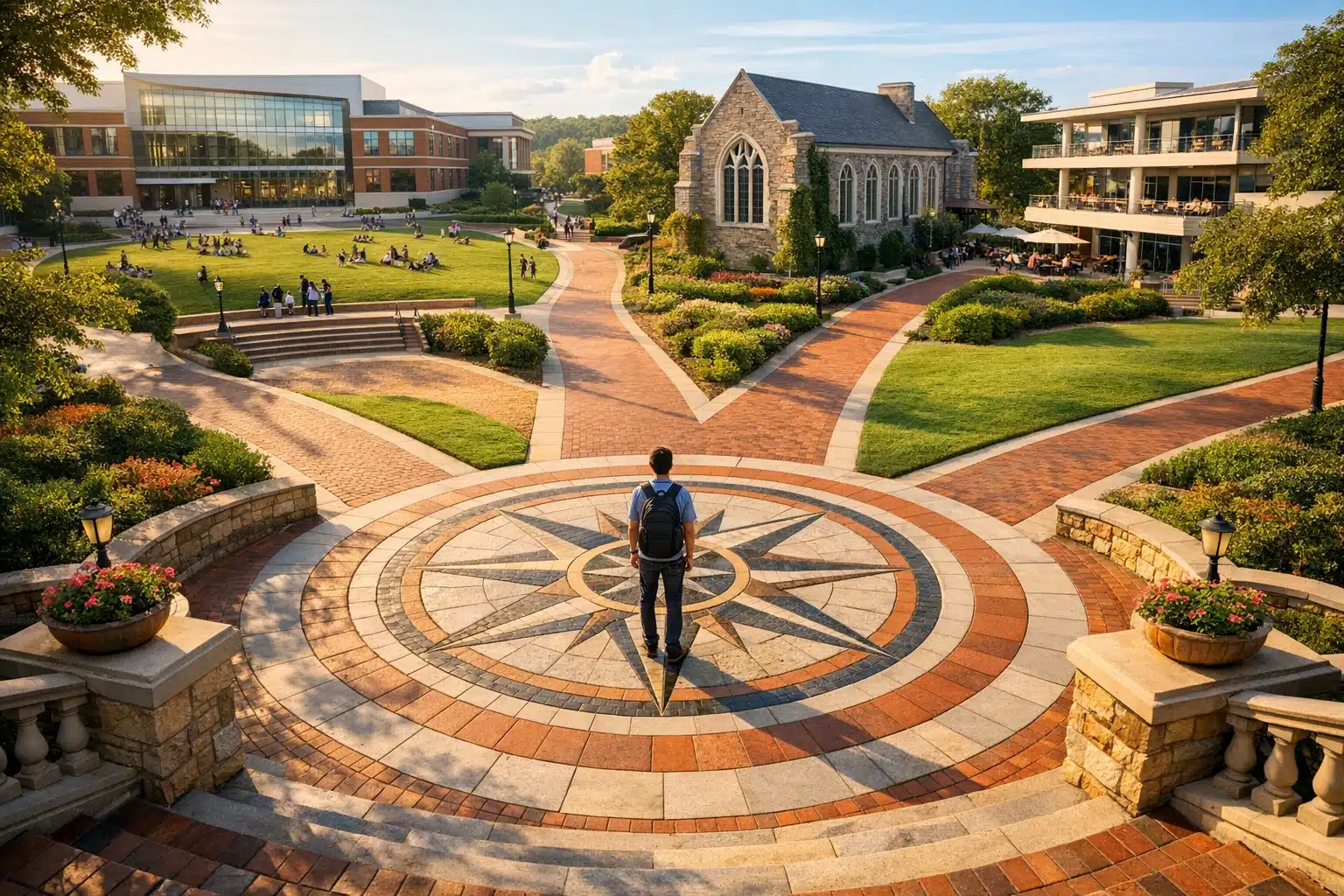
 Artificially generated image
 Higher Education Options in Georgia: A Practical Guide for Students
Georgia has one of the most varied higher education systems in the Southeast, and that variety can be both a gift and a puzzle. A student aiming for engineering in Atlanta, a future nurse in Augusta, and an adult learner returning to class in Columbus may all need different academic environments. Knowing how public universities, private colleges, technical programs, and online study connect can prevent expensive detours. This article explains the main options, compares their strengths, and points out the practical questions that matter before applications go out.
Outline: 1. Georgia’s higher education landscape. 2. Public universities and state colleges. 3. Private and specialized institutions. 4. Technical, online, and transfer-friendly routes. 5. Paying for college and choosing the right fit.
1. Understanding Georgia’s Higher Education Landscape
Before comparing campuses, it helps to see the full map. In the United States, Georgia supports several distinct higher education pathways rather than a single, one-size-fits-all model. The best-known route is the public university system, which includes major research institutions, regional universities, and state colleges. Alongside that system, students can find private nonprofit colleges, faith-based institutions, historically Black colleges and universities, specialized schools, and technical colleges focused on workforce preparation. For many families, the challenge is not a lack of opportunity. It is learning what each option is actually designed to do.
A useful starting point is to separate institutions by mission. The University System of Georgia includes 26 public colleges and universities. These schools range from nationally recognized research campuses, such as the University of Georgia and Georgia Tech, to regional institutions that often combine lower costs with strong teaching and local employer connections. The Technical College System of Georgia includes 22 technical colleges, many of which offer certificates, diplomas, and associate-level programs in fields such as logistics, welding, cybersecurity, medical assisting, and automotive technology. Private institutions add another layer by offering smaller classes, distinctive campus cultures, and in some cases highly selective academic programs.
Students usually benefit from sorting choices into a few practical categories:
- Public research universities for broad program options, large campuses, and advanced facilities
- Regional public universities for affordability, access, and strong local networks
- Private colleges for smaller learning communities and mission-driven education
- Technical colleges for fast, career-focused training and lower tuition
- Transfer pathways for students who want to begin locally and complete a bachelor’s degree later
Geography also matters. Metro Atlanta gives students access to large public universities, private institutions, internships, and corporate connections. Smaller cities and regional hubs can provide quieter campuses, lower living costs, and easier transitions for first-generation students. In practical terms, location shapes commute times, housing expenses, transportation needs, and the kinds of employers students meet while in school.
Another point often missed in college conversations is that prestige and fit are not the same thing. A highly ranked university can still be a poor match if its size, pace, cost, or support systems do not align with a student’s needs. Some learners thrive in large lecture halls and competitive environments. Others do better in smaller classes where faculty know their names early in the semester. Georgia’s higher education landscape is broad enough to serve both groups. The real skill is learning to compare institutions by purpose, not just by reputation.
2. Public Universities and State Colleges: Breadth, Value, and Variety
For many students, public higher education is the most practical starting point because it combines recognized degrees with lower tuition for in-state residents. Georgia’s public institutions cover a wide range of experiences. At one end are research-intensive campuses with global visibility. Georgia Tech is widely known for engineering, computing, and technology-related fields, while the University of Georgia is especially strong in business, journalism, public affairs, agriculture, and the liberal arts. Georgia State University, located in downtown Atlanta, is notable for its urban setting, diverse student body, and strength in business, policy, health, and professional pathways. These institutions can open impressive doors, but they also tend to be larger, busier, and in some cases more selective.
Regional universities and state colleges offer a different kind of value. Schools such as Kennesaw State University, Georgia Southern University, Valdosta State University, Augusta University, and the University of West Georgia attract students who want bachelor’s and graduate degree options without the intensity or scale of a flagship campus. Many of these schools have strong programs tied to workforce demand, including nursing, education, information technology, business, public health, and applied sciences. Class sizes may still be substantial in introductory courses, yet students often find more accessible advising and a campus culture that feels easier to navigate.
Cost is one of the strongest arguments in favor of public education. In-state tuition at Georgia public colleges is generally far lower than the sticker price at private universities, especially when students qualify for state aid or complete general education courses efficiently. Housing and fees still matter, of course, and a public campus in a major city may cost more overall than a smaller institution in a regional town. Even so, for many families the public route provides a balance of credibility and financial realism.
Students comparing public institutions should look beyond admissions headlines and ask deeper questions:
- Does the school offer the exact major or concentration you want?
- How easy is it to change majors if your interests shift?
- What are the graduation and retention patterns like?
- Are internships, co-ops, research labs, or clinical placements built into the experience?
- How manageable are class sizes in your likely first-year courses?
Public campuses also differ in personality. One may feel like a small city with football weekends, research labs, and hundreds of student organizations. Another may feel more like a practical launchpad, where commuters balance school, work, and family responsibilities. Neither atmosphere is automatically better. A student who wants a traditional residential experience may love a broad, spirited campus. A student who values flexibility may prefer a place where the educational path is clear, efficient, and less socially overwhelming. In Georgia, public higher education is not one lane on the road. It is a whole interchange, and students have genuine room to choose wisely.
3. Private Colleges and Specialized Institutions: Smaller Settings, Distinct Missions
Private colleges in Georgia appeal to students who want a more defined campus culture, smaller classes, or a highly specific institutional mission. They can be expensive on paper, but the sticker price does not always tell the full story. Many private colleges offer institutional grants, merit scholarships, and need-based aid that change the actual cost considerably. For some students, especially those with strong grades or particular talents, a private college can end up being more competitive in net price than expected.
Georgia’s private higher education sector is remarkably diverse. Emory University is one of the best-known private universities in the state, with strong programs in medicine, public health, business, the sciences, and the humanities. Mercer University attracts students across fields such as law, pharmacy, business, health professions, and liberal arts. Berry College is often recognized for its distinctive campus and liberal arts focus. The Atlanta area also includes important historically Black institutions such as Morehouse College, Spelman College, and Clark Atlanta University, each with a powerful legacy and a clear educational identity. These campuses are more than academic destinations. They are communities shaped by history, leadership traditions, and long-standing alumni networks.
Specialized institutions add another dimension. Some students are drawn to art and design, music, ministry, or highly focused professional training. Others want an environment where class discussion matters more than stadium crowds, or where service, ethics, and mentorship are woven into the culture. In that sense, private colleges often feel less like giant systems and more like carefully composed rooms, each with its own rhythm, values, and expectations.
That said, private education is not automatically the right answer for everyone. Prospective students should examine whether the campus offers enough major flexibility, research access, internship support, and career services for the tuition charged. A smaller college may provide close faculty relationships but fewer niche programs. A specialized school may be inspiring if your direction is clear, yet limiting if your plans are still evolving.
When considering private institutions, these factors deserve close attention:
- Net cost after grants and scholarships, not just published tuition
- Internship pipelines and alumni outcomes in your intended field
- Campus culture, mission, and level of academic support
- Whether the school encourages broad exploration or early specialization
- Class size and faculty accessibility beyond the first year
For many students, private colleges work best when they offer a strong match between personality, academic interests, and financial aid. The right private institution can feel like a place that already knows what kind of conversations it wants to host. If that conversation sounds like one you want to join, the value can extend well beyond the classroom.
4. Technical Colleges, Online Learning, and Transfer Routes: Flexible Paths with Real Value
Not every student needs a four-year residential campus, and Georgia’s higher education system is stronger because it does not pretend otherwise. Technical colleges, online programs, and transfer pathways offer practical alternatives for learners who want speed, flexibility, lower cost, or direct entry into a profession. These options are especially important for working adults, first-generation students, career changers, parents, and anyone who wants education to fit into life rather than rearrange it completely.
The Technical College System of Georgia plays a major role here. Its colleges focus on career-ready education in sectors that employers actually need, including advanced manufacturing, commercial truck driving, health care support, computer networking, culinary arts, precision machining, aviation maintenance, and skilled trades. Programs may lead to certificates, diplomas, or associate degrees, and many are designed with local workforce demand in mind. That employer alignment can make technical education appealing for students who care less about campus tradition and more about getting qualified quickly.
There is also a financial argument. Technical college tuition is often lower than university tuition, and program lengths can be shorter. A certificate may take months rather than years. An associate degree commonly requires around 60 credit hours, while a bachelor’s degree often requires about 120. For students who want to start earning sooner, that difference matters. It can reduce borrowing, shorten time away from full-time work, and create a stepping stone to later education.
Transfer options make these pathways even more useful. Some students begin at a technical or two-year institution, complete foundational coursework, and then move into a bachelor’s program. Others earn a workforce credential, enter employment, and return later with tuition assistance from an employer. This layered approach can be smart, especially in fields where practical experience improves academic decision-making.
Online and hybrid programs have expanded the menu further. They are not easier by default, but they can be more manageable for students balancing jobs, commuting, or family responsibilities. A strong online program should still provide advising, tutoring, library access, clear deadlines, and responsive faculty communication.
These routes may be a strong fit if you want:
- Shorter training tied to a specific job market
- Lower upfront cost and less borrowing pressure
- A way to study while working or caring for family
- A transfer-friendly start before committing to a bachelor’s campus
- Hands-on learning with direct employer relevance
There is a stubborn myth that the only respectable path runs straight through a traditional university. In reality, flexible pathways can be strategic, efficient, and deeply successful. Sometimes the smartest route is not the one with the loudest name. It is the one that gets you where you need to go without wasting time, money, or momentum.
5. Paying for College and Choosing the Right Fit: A Decision Framework for Students
Once students understand the landscape, the next challenge is deciding what they can afford and what they actually want from college. This is where many families get buried under marketing, assumptions, and half-finished spreadsheets. A smarter approach is to compare institutions through a few grounded questions: What will this cost after aid, what will I study, what support will I receive, and what opportunities will be available while I am enrolled?
In Georgia, state financial aid can shape the answer in a big way. The HOPE Scholarship and Zell Miller Scholarship are well-known merit-based programs connected to academic achievement, and they can significantly reduce tuition at eligible public institutions while also applying in certain ways to eligible private colleges. Students should also complete the FAFSA to determine eligibility for federal grants, loans, and work-study. Beyond that, many institutions offer departmental scholarships, first-generation support, talent awards, and need-based institutional grants. The key lesson is simple: never judge affordability from tuition alone. Net price is the number that matters.
Cost should also be examined in full, not in fragments. A campus with lower tuition may still require high housing costs or expensive commuting. A school with higher tuition may have stronger aid and better graduation support. Graduation timing is especially important. Taking extra semesters can increase the total bill dramatically, even when each semester looks manageable by itself.
Students can make the process less overwhelming by creating a simple comparison checklist:
- Total annual cost after grants and scholarships
- Availability of your intended major and backup options
- Campus resources such as tutoring, advising, mental health support, and career services
- Internships, co-ops, clinical placements, or undergraduate research opportunities
- Location, transportation, housing, and day-to-day living expenses
- Graduation rates, transfer policies, and likely time to degree
This final stage is not only about numbers. It is also about fit. Visit if you can. Sit in on a class. Ask current students what surprised them after enrolling. Read the degree requirements rather than relying only on a brochure. If you are undecided, choose a place that gives you room to explore without adding heavy financial risk. If you already know your destination, pick a campus with a direct route and clear outcomes.
For Georgia students, the good news is that there is no single correct answer to the college question. The state offers nationally respected universities, affordable public options, mission-driven private colleges, and flexible technical pathways that can lead straight to work or onward to higher degrees. The right choice is the one that fits your goals, your learning style, and your budget with the least amount of unnecessary strain. When you compare options honestly and plan with purpose, college stops being a maze and starts looking more like a map.