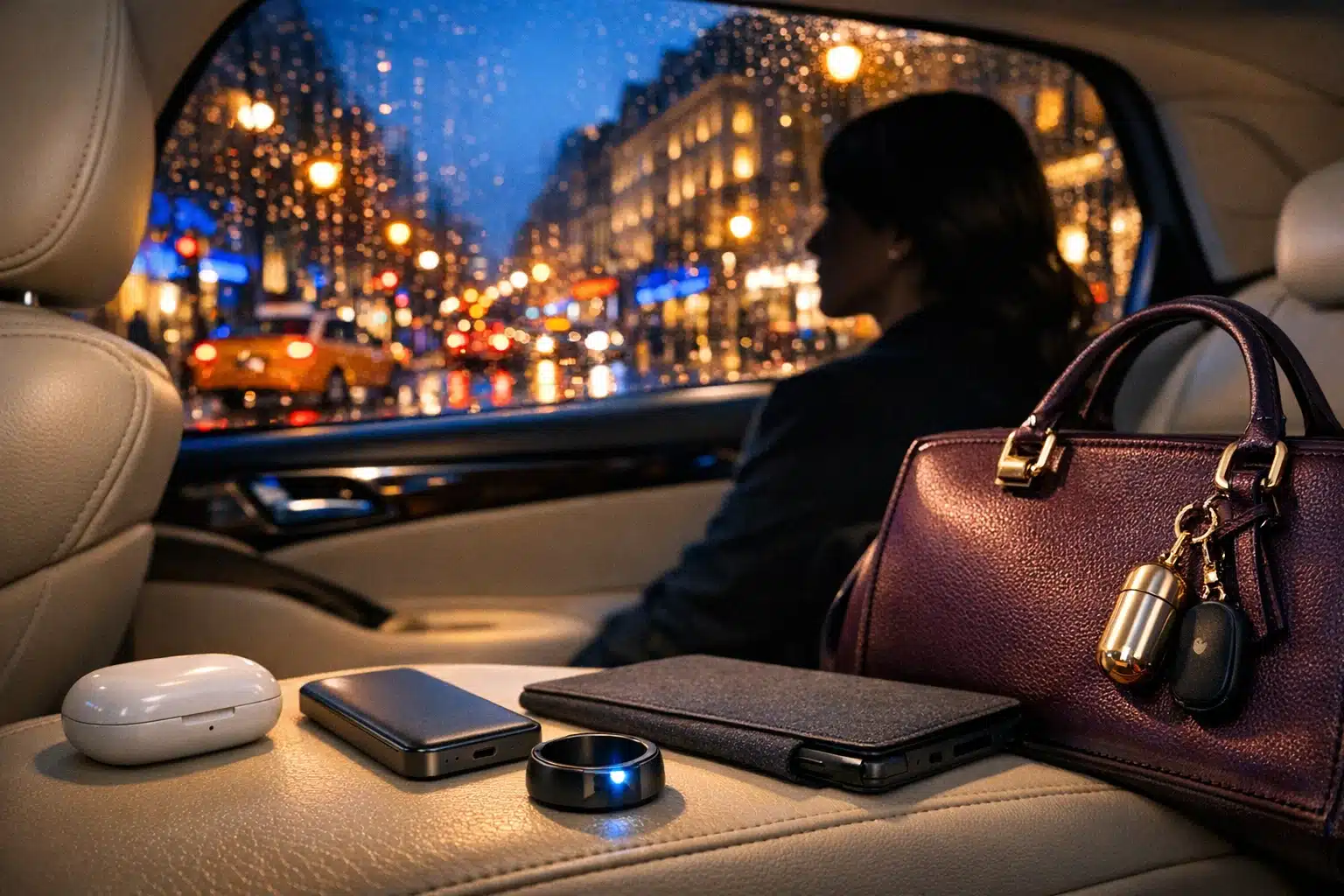
 Artificially generated image
 Latest Devices for Women: A Guide to New Personal Tech
Personal tech is no longer designed around a generic user, and that shift matters. Women now have access to smarter watches, compact audio gear, health-focused wearables, and safety tools built for real routines rather than lazy clichés. The newest devices are lighter, more customizable, and often better at blending style with everyday usefulness. This guide looks at what is genuinely new, what is practical, and what deserves a closer look before you buy.
Article outline: this article begins with a snapshot of modern wearables, then moves into audio and productivity devices, explores safety and travel tech, reviews beauty and wellness gadgets with a critical eye, and ends with a conclusion that helps readers choose the right setup for their budget, habits, and comfort level.
1. The New Shape of Wearables: Smartwatches, Smart Rings, and Health Tracking
Wearables have become the front door of personal tech, and recent devices show how fast the category is maturing. A few years ago, many products aimed at women leaned too heavily on color choices and too lightly on function. That has changed. The strongest new devices are succeeding because they focus on fit, comfort, accurate sensors, and everyday usefulness. In practical terms, that means lighter smartwatch cases, smaller strap options, improved sleep tracking, skin temperature sensing on some models, cycle logging features, and better battery management.
Recent smartwatch and wearable options from brands such as Apple, Samsung, Garmin, Fitbit, and Oura illustrate how the market has diversified. A full smartwatch can handle notifications, exercise tracking, contactless payments, calendar reminders, and in some cases ECG or fall detection. Smart rings take a quieter route. They usually skip a large screen and instead focus on sleep, recovery, heart rate trends, and comfort during long wear. Fitness bands still occupy a useful middle ground, offering lighter weight and lower cost than a premium watch while covering the basics well.
Here is the simplest comparison:
• Smartwatches are best for all-day interaction, messaging, workouts, and app support.
• Smart rings are best for discreet wear, sleep analysis, and longer battery life.
• Fitness bands are best for budget-conscious users who still want solid health metrics.
Battery life remains a major dividing line. Most advanced smartwatches need charging every 1 to 3 days, while many rings and simpler bands last closer to 4 to 7 days. That difference matters more than spec sheets suggest. A device that sits on a charger too often becomes like a gym membership in January: full of good intentions, strangely absent by spring.
Women comparing these devices should pay close attention to fit and sensor placement. A bulky case may look impressive online but feel awkward with smaller wrists, tailored sleeves, or frequent keyboard use. Software matters just as much. Some platforms present sleep and cycle information clearly, while others bury useful trends under shiny dashboards. It is also important to remember that consumer wearables are not medical substitutes. They can flag patterns, support habits, and improve awareness, but they should not replace clinical advice when symptoms or concerns are serious.
The latest wearable trend is not just “more data.” It is better filtering of data into practical prompts: go to bed earlier, stand up, breathe, recover, or move. That shift is what makes modern devices more valuable. They are not only counting steps. At their best, they are quietly editing the background noise of daily life into something a person can actually use.
2. Audio and Productivity Devices That Fit Modern Work and Daily Life
If wearables sit on the wrist or finger, audio devices live in the rhythm of the day. They shape commutes, workouts, video calls, and even the mood of a grocery run. The latest earbuds and headphones have improved in ways that matter more than flashy launch slogans suggest. Better microphones, stronger noise control, multipoint Bluetooth, smaller charging cases, and more comfortable eartip designs are making current models far easier to live with.
For many women, comfort is not a minor detail. It is the difference between a device that becomes indispensable and one that disappears into a drawer. Recent earbuds are increasingly available in lighter builds and with multiple eartip sizes, which matters for people who have struggled with oversized designs. Open-ear and bone-conduction styles are also gaining attention, especially for walkers, runners, and commuters who want to hear traffic or announcements while still listening to music or podcasts. Traditional noise-canceling earbuds remain the better pick for flights, offices, and focused work, but open-ear models offer situational awareness that many users prefer.
There is a similar story in tablets, e-readers, and compact productivity tools. E-ink readers continue to appeal because they last weeks on a charge, reduce eye fatigue for many people, and slip easily into a tote bag. Tablets with stylus support now work well for note-taking, casual sketching, digital planning, and reading recipes in the kitchen without balancing a laptop like a risky architectural experiment. Small Bluetooth keyboards, foldable stands, and USB-C hubs have also become more reliable, turning a tablet or phone into a surprisingly capable mobile workstation.
When comparing the newest personal audio and productivity devices, useful questions include:
• Does it stay comfortable after two hours, not just ten minutes?
• Is the microphone good enough for calls in a noisy place?
• Does it charge with USB-C and fit the cables you already use?
• Can it switch easily between a phone, laptop, and tablet?
Brand examples are easy to find across the market, from Apple AirPods and Samsung Galaxy Buds to Sony, Bose, Anker, JBL, Kindle, Kobo, and iPad-compatible accessories. Yet the real decision is less about prestige and more about use case. Someone who works remotely may value microphone clarity and multipoint pairing above all else. A student or frequent traveler may prioritize battery life and packability. A reader may care more about glare reduction and font control than processor speed.
The broader lesson is refreshing: personal tech does not need to shout to be impressive. Sometimes the smartest device is the one that slips into the background and removes friction from the day. Better calls, easier reading, fewer cables, lighter bags, smoother routines. That is not glamorous copywriting. It is simply good design doing its job.
3. Safety, Travel, and Everyday-Carry Tech Worth Considering
Some of the most valuable devices in modern personal tech are the ones people hope they never need in a tense moment. Safety and travel tools have grown more sophisticated, more compact, and in many cases more thoughtful about privacy. For women who commute early, travel alone, work irregular hours, or simply want more control over everyday logistics, this category deserves serious attention.
One of the clearest examples is the personal safety alarm. These devices are not new, but current models are louder, lighter, and easier to attach to keys or bags. Unlike complicated gadgets that demand a setup ritual and three forgotten app permissions, a safety alarm is intentionally simple: pull, press, attract attention. That simplicity is a strength. Some models also include a strobe light, which can increase visibility in dark settings. They are not substitutes for broader safety planning, but they can be sensible additions to daily carry.
Bluetooth trackers are another major category. Products like Apple AirTag, Tile, Chipolo, and similar devices help users locate keys, luggage, backpacks, wallets, and other belongings. They are especially useful for travel, where losing a bag can derail an entire schedule. Newer systems have also introduced stronger anti-stalking features, including alerts when an unknown tracker seems to be moving with someone. That is an important development and worth highlighting clearly: trackers should be used for personal items or with explicit consent, never to monitor people without their knowledge.
Portable charging is also evolving in practical ways. Many current power banks are smaller, faster, and better matched to USB-C charging standards. Some have integrated cables, magnetic alignment for compatible phones, or slim shapes that fit easily into handbags and coat pockets. For frequent travelers, a reliable power bank is no longer a luxury add-on. It is a tiny insurance policy against dead maps, missed ride-share details, boarding-pass chaos, and the universal drama of a battery icon turning red at exactly the wrong time.
A useful everyday-carry tech checklist might include:
• A compact power bank with clear battery capacity labeling
• A tracker for keys or luggage
• A well-reviewed personal safety alarm
• A durable charging cable or two-in-one cable
• A compact wall charger with multiple ports
Other devices gaining ground include smart luggage scales, travel routers, mini translation earbuds, and compact door alarms for hotel stays. Not every traveler needs all of them, and some are far more niche than marketing suggests. Still, the best recent travel tech shares a common trait: it reduces uncertainty. It helps people move through unfamiliar spaces with less friction, less panic, and better backup options.
That may sound understated, but it is precisely why these devices matter. Tech is often praised when it dazzles. In real life, however, the most appreciated gadgets are often the ones that quietly prevent a bad day from getting worse.
4. Beauty and Wellness Devices: Useful Innovation Versus Decorative Hype
Beauty and wellness tech is one of the fastest-growing areas in consumer devices, and it is also one of the easiest places to overspend. The shelves are full of promise: LED masks, cleansing brushes, heated styling tools, facial toning devices, smart mirrors, scalp tools, massage guns, smart scales, and more. Some of these products are genuinely useful. Others are expensive reminders that good lighting and persuasive packaging can make almost anything look revolutionary.
The most practical way to approach this category is to separate beauty devices into three groups: habit-supporting tools, convenience tools, and claim-heavy tools. Habit-supporting tools include devices like electric toothbrushes, guided oral-care systems, sunrise alarm clocks, or massage devices that encourage consistent use and measurable routines. Convenience tools include advanced hair dryers, multi-stylers, and temperature-regulated straighteners that save time and reduce guesswork. Claim-heavy tools include many at-home skin devices, where benefits may be modest, slow, or highly dependent on regular use and individual skin response.
LED skincare masks and handheld light devices are popular examples. Some research supports specific wavelengths of light for certain cosmetic goals, but results vary widely, and home devices are not equivalent to in-office treatments. Microcurrent tools may create a temporary tightening effect for some users, yet they should not be framed as miracle sculptors. Smart mirrors can be helpful for lighting and magnification, but their tech-heavy features are sometimes less useful than a simple, well-placed mirror with good bulbs. The smartest purchase is often the one that solves a real routine problem, not the one that sounds like it belongs in a spaceship vanity case.
There are, however, several categories where modern improvements are genuinely noticeable:
• Hair tools with better heat regulation can help reduce unnecessary damage from extreme temperatures.
• Electric toothbrushes and water flossers can support more consistent oral-care habits.
• Massage guns and compact recovery devices can be convenient for post-workout soreness, though they are not medical treatment.
• Smart scales and wellness apps may help track trends over time, but they should be used thoughtfully, especially by anyone sensitive to obsessive measurement.
Women shopping in this area should examine three things closely: evidence, effort, and maintenance. Evidence asks whether the core claim has reasonable support. Effort asks whether the device requires a routine you will actually follow. Maintenance asks how often it needs charging, cleaning, replacing, or recalibrating. A device that demands ten steps before breakfast may begin as an exciting upgrade and end as a countertop ornament.
There is also a bigger cultural shift here. Beauty tech is gradually moving away from the old “fix yourself” tone and toward comfort, customization, and ritual. That is a healthier direction. The best devices do not suggest a person is unfinished. They simply make an existing routine easier, gentler, or more enjoyable. And frankly, there is something refreshing about tech that can improve a morning without pretending to reinvent your entire life.
5. Conclusion: How to Choose the Right Personal Tech for Your Life
For women navigating the flood of new devices, the most useful mindset is not “What is the hottest launch this month?” but “What problem do I want this device to solve?” That single question filters out a remarkable amount of noise. A smartwatch may be perfect for someone juggling fitness, notifications, and payment convenience. A smart ring may better suit a person who wants sleep data without a glowing screen on the wrist. Noise-canceling earbuds might be the difference between a tolerable commute and a draining one. A power bank, tracker, or safety alarm might deliver more day-to-day value than a flashier gadget with a longer marketing video.
Price should be considered alongside lifespan and usefulness, not in isolation. A cheaper device that frustrates you every day is not truly economical. On the other hand, the most expensive option is not automatically the most suitable. Mid-range products have improved dramatically in recent years, especially in wearables, earbuds, and chargers. The sweet spot for many buyers is now in the middle: products with dependable core features, good battery life, and fewer gimmicks.
Before buying, it helps to run through a simple checklist:
• Fit: will it feel comfortable with your body size, clothing, and daily habits?
• Battery: can it last through your actual routine?
• Compatibility: does it work well with your phone and preferred apps?
• Privacy: what data does it collect, and how easy is it to control?
• Maintenance: will you still use it after the novelty fades?
It is also worth remembering that “for women” should never mean “shrunk, pink, and overpriced.” The better interpretation is more respectful and more useful: devices that account for different needs, better ergonomics, flexible sizing, lifestyle variety, and a wider understanding of health and safety. The most meaningful advances in personal tech are not decorative. They are practical, adaptable, and quietly supportive.
If you are the target reader for this guide, you do not need to buy into every trend to benefit from modern personal tech. Start with one area where friction shows up repeatedly in your week. Maybe it is sleep, commuting, travel, calls, workouts, or self-care. Choose a device that fits that one reality well. Let it prove its value. Then, if needed, build from there.
In the end, the best personal tech should feel less like a performance and more like a good assistant: present when needed, unobtrusive when not, and smart enough to make ordinary life run a little more smoothly. That is a far better promise than perfection, and it is one worth shopping for.