 Artificially generated image
 Top 10 Private Beach Resorts in the USA
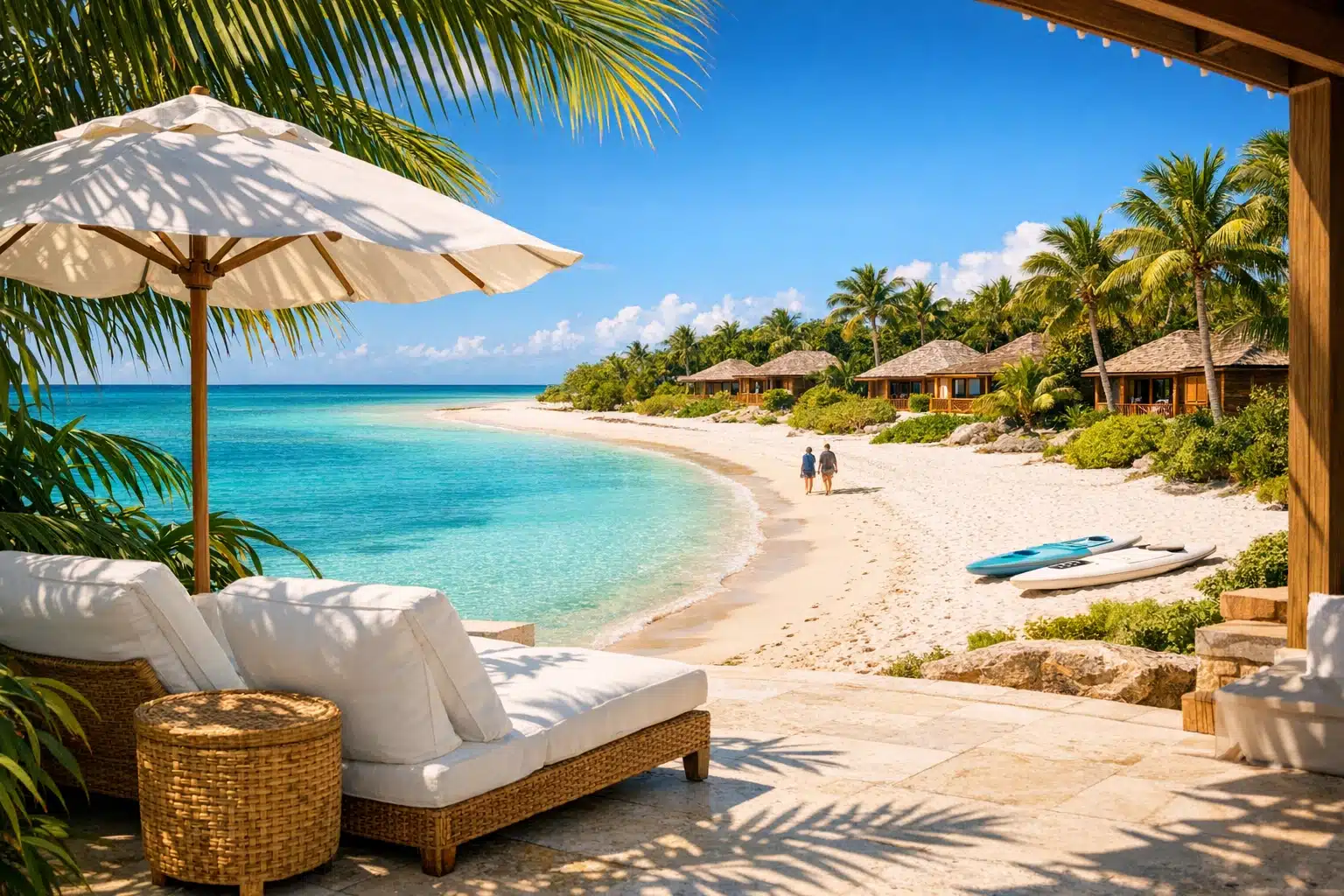
Privacy is a precious currency in beach travel, and in the United States it can be surprisingly difficult to find. Many coastlines are protected by public-access rules, so the smartest travelers look for resorts that create seclusion through private islands, guest-only entry points, or remote beachfront settings. That distinction matters, because the right choice can turn a crowded vacation week into something that feels slow, quiet, and deeply restorative. The resorts below stand out not only for sand and scenery, but also for service, atmosphere, and the kind of escape they actually deliver.
This is a curated top 10 rather than an official industry scorecard. The list favors resorts that combine a strong sense of exclusivity with consistently respected hospitality, distinctive surroundings, and beach access that feels meaningfully removed from the everyday rush.
Article Outline
- Florida favorites: Little Palm Island Resort & Spa and Casa Marina Key West
- Southern classics: The Cloister at Sea Island and The Sanctuary at Kiawah Island Golf Resort
- Hawaiian standouts: Four Seasons Resort Lanai and Four Seasons Resort Hualalai
- New England refinement: Ocean House and Chatham Bars Inn
- Active-luxury picks: Gurney’s Montauk Resort & Seawater Spa and Mauna Lani, Auberge Resorts Collection
Florida Favorites: Little Palm Island Resort & Spa and Casa Marina Key West
If your dream beach escape begins with the phrase no crowds, Florida offers two very different answers. Little Palm Island Resort & Spa, tucked away in the Lower Florida Keys, is the closest thing on this list to a tropical hideaway that feels detached from the mainland. The resort sits on a private island of roughly five and a half acres, and guests arrive by boat or seaplane, which immediately changes the rhythm of the trip. That arrival matters. It tells you, before you even unpack, that this place is built around distance, hush, and a slower heartbeat. The resort is known for its bungalow-style suites, lush landscaping, and an atmosphere that leans romantic rather than busy. For travelers who want to hear palms moving in the wind instead of poolside playlists, Little Palm Island is one of the strongest choices in the country.
Casa Marina Key West, by contrast, offers privacy with a social pulse still within reach. This historic Key West resort has long been noted for having one of the largest private beach experiences in the city, a meaningful distinction in a destination where expansive sandy beachfront is relatively limited. You are not floating off on your own island here; you are staying in a resort that gives you beach access and breathing room while keeping Duval Street, local restaurants, galleries, and sunset spots close enough for an easy outing. That blend is its advantage. Some travelers want retreat at night but activity after breakfast, and Casa Marina serves that rhythm better than most Florida beach properties.
The comparison between these two resorts comes down to how you define exclusivity. Little Palm Island is intimate, adults-oriented in feel, and ideal for milestone trips, honeymoons, or anyone who wants to disappear in plain sight. Casa Marina is broader in appeal and better for travelers who do not want seclusion to become isolation. In practical terms:
- Choose Little Palm Island if you want true remove, a boat-access arrival, and a boutique scale.
- Choose Casa Marina if you want private-style beachfront with easy access to Key West culture.
- Choose Little Palm Island for romance-first travel.
- Choose Casa Marina for a mix of relaxation, dining, and walkable exploration.
Both properties deserve a place in any top 10 conversation, but they serve different moods. One whispers. The other smiles and opens the door to town. That is exactly why Florida earns two spots on this list: it can deliver castaway calm and classic resort ease without forcing travelers into a single version of luxury.
Southern Classics: The Cloister at Sea Island and The Sanctuary at Kiawah Island Golf Resort
The American South does beach luxury in a distinctive way. It tends to be polished without feeling cold, tradition-minded without becoming stiff, and deeply invested in service. That is why The Cloister at Sea Island in Georgia and The Sanctuary at Kiawah Island Golf Resort in South Carolina remain such strong contenders for travelers seeking a private beach atmosphere paired with a full resort experience. These are not hidden little inns. They are established coastal institutions, and they succeed because they combine space, heritage, and a sense of order that many travelers quietly crave.
Sea Island has been associated with upscale coastal hospitality for generations, and The Cloister is its best-known anchor. The broader Sea Island setting includes roughly five miles of private beach, giving the resort an immediate advantage for guests who want room to breathe. The architecture and interiors lean classic rather than trendy, and that timelessness is part of the appeal. This is a place where families return repeatedly, golfers settle in for long weekends, and service tends to feel practiced instead of theatrical. The beach itself benefits from the resort’s controlled-access environment, so even at popular times of year it can feel calmer than more publicly exposed coastal stretches. Sea Island is especially compelling for multi-generational trips because it balances children’s activities, golf, dining, and beach time without any one piece overwhelming the others.
The Sanctuary at Kiawah Island Golf Resort takes a somewhat different path. Kiawah Island is famous for its natural beauty and for a shoreline that stretches roughly ten miles, and that scale creates a tremendous sense of openness. The beach often feels wide, windswept, and tied to the surrounding dunes in a way that looks almost cinematic at sunrise. The Sanctuary adds a grand hotel layer to that landscape, offering a more formal base for travelers who want golf, spa access, ocean views, and strong dining in one place. Kiawah often appeals to people who love the idea of being active without sacrificing luxury. You can cycle, walk long distances on the sand, play championship golf, and still end the day with a very polished dinner.
If Sea Island feels like an heirloom, Kiawah feels like a carefully preserved wilderness with five-star edges. A quick comparison helps clarify the difference:
- Sea Island is stronger for traditional resort culture and family continuity.
- Kiawah is stronger for nature-rich scenery and active outdoor days.
- Sea Island feels more club-like and classic.
- Kiawah feels more expansive and landscape-driven.
Both belong comfortably in a top 10 list because both understand that privacy is not only about gates or exclusivity. It is also about space, flow, and the ability to spend hours near the water without feeling pressed by the outside world.
Hawaiian Standouts: Four Seasons Resort Lanai and Four Seasons Resort Hualalai
Hawaii deserves special treatment in any discussion of private-feeling beach resorts because the islands deliver something the mainland often cannot: distance that feels absolute. Yet even within Hawaii, not every luxury resort creates the same sense of seclusion. Four Seasons Resort Lanai and Four Seasons Resort Hualalai are both elite properties, but they offer very different interpretations of privacy, and that contrast is useful for travelers trying to decide where their money will matter most.
Four Seasons Resort Lanai is one of the most distinctive names on this list because Lanai itself is low-density, quiet, and dramatically different from the more frequently visited Hawaiian islands. Staying here can feel like stepping onto a separate track of time. The resort fronts the Hulopoe Bay area, where the water is often remarkably clear and the scenery has that polished, postcard look travelers hope is real before they arrive. The appeal of Lanai is not just the beach. It is the island-wide atmosphere: fewer crowds, fewer distractions, and a strong sense that the landscape still leads the experience. For travelers who want a luxury stay that feels almost cinematic in its calm, Lanai often lands near the top of the shortlist.
Four Seasons Resort Hualalai, on the Big Island’s Kona-Kohala Coast, is less hushed in mood but every bit as impressive in execution. The property spreads across a large oceanfront footprint shaped by volcanic terrain, tropical plantings, and carefully designed water features. That geography gives Hualalai a powerful visual identity. Instead of soft, uniform coastline, you get a dramatic meeting of dark lava rock, bright water, and pockets of beach and lagoon space. The result feels distinctly Hawaiian rather than generically tropical. Guests who value snorkeling, marine life, paddling, golf, and broader recreational depth often lean toward Hualalai because it gives them more to do without sacrificing the premium feel.
Here is where the decision usually becomes clear:
- Pick Lanai if you want a lower-density island experience and a more retreat-like emotional tone.
- Pick Hualalai if you want top-tier service plus abundant activity and family-friendly options.
- Pick Lanai for stillness and scenic drama.
- Pick Hualalai for a richer menu of experiences across land and sea.
Both resorts benefit from Hawaii’s natural advantage: even the journey there reminds you that this is not an ordinary beach vacation. But their personalities diverge in meaningful ways. Lanai is the elegant whisper. Hualalai is the composed, confident host who knows exactly how to keep a long stay interesting. If you define private luxury as emotional distance from the everyday world, both belong in the top tier of any U.S. list.
New England Refinement: Ocean House and Chatham Bars Inn
Private beach travel is often associated with palm trees, but the Northeast proves that salt air, old-world charm, and cooler light can be just as seductive. Ocean House in Watch Hill, Rhode Island, and Chatham Bars Inn on Cape Cod show how privacy can feel elegant rather than tropical. These resorts are not trying to imitate the Caribbean or South Florida. They lean into regional character, and that confidence makes them memorable.
Ocean House sits dramatically above the shoreline, and its setting alone gives it a strong advantage. The property is one of the most recognizable luxury hotels in coastal New England, with a restored grand-hotel presence that feels both historic and carefully updated. Its private beach access is central to the experience, but so is the mood created by the bluff-top perspective, the sea breeze, and the way the hotel seems to hold itself just slightly apart from everything around it. Watch Hill has long attracted travelers looking for refinement without urban noise, and Ocean House still embodies that appeal. If you want a beach resort where service, architecture, and atmosphere matter as much as swimming conditions, it is a serious contender.
Chatham Bars Inn offers a different Cape Cod version of exclusivity. The resort sits on a large waterfront property of about 25 acres and is known for its private quarter-mile beach, beautiful lawns, and a setting that connects naturally with the broader Chatham harbor landscape. This is the kind of place where the details add up: a well-run beach operation, polished dining, the possibility of boat excursions, and a general feeling that the resort understands exactly why people come to the Cape in the first place. Chatham Bars Inn often works especially well for travelers who want a complete coastal New England vacation rather than only a hotel stay. The town nearby adds shops, galleries, and maritime charm without overwhelming the resort’s quieter core.
For comparison, the split is fairly straightforward:
- Ocean House is stronger for grand-hotel romance, elevated service rituals, and a more dramatic visual setting.
- Chatham Bars Inn is stronger for classic Cape Cod immersion and broader family appeal.
- Ocean House feels a bit more formal and occasion-driven.
- Chatham Bars Inn feels more flexible, breezy, and rooted in local coastal life.
What links them is the quality of the escape. Neither relies on flashy excess. Instead, both show that a private beach resort can succeed through proportion, restraint, and a strong sense of place. On some evenings in New England, when the sky turns silver and the water darkens toward blue slate, that quieter kind of luxury can feel richer than anything louder.
Active-Luxury Picks: Gurney’s Montauk Resort & Seawater Spa and Mauna Lani, Auberge Resorts Collection
Some travelers want seclusion, but they do not want stillness all day. They want a private beach atmosphere with energy around the edges: surfing, snorkeling, movement, strong food, and enough activity that the trip feels expansive rather than sleepy. For that kind of guest, Gurney’s Montauk Resort & Seawater Spa in New York and Mauna Lani, Auberge Resorts Collection on the Big Island of Hawaii are especially compelling. They approach beach luxury from different angles, yet both reward travelers who like their relaxation with a little momentum.
Gurney’s Montauk has one of the more recognizable beachfront settings in the Northeast. Its roughly 2,000-foot private sand beach is a major asset in a region where direct, resort-controlled shoreline is not common at this level. Montauk itself carries a cool-weather surf-town mystique, and Gurney’s turns that into a luxury product without draining away the coastal character. You still feel the Atlantic here. The wind can be brisk, the ocean can look muscular, and the beach experience is more about atmosphere and long walks than tropical-style floating. That is part of the charm. Add in the resort’s spa focus and food scene, and you get a beach property that suits couples, groups of friends, and city dwellers who want a polished reset without a long-haul flight.
Mauna Lani, by contrast, operates in warm water and lava-shaped calm. The resort’s appeal lies in its access to beautiful coves, a private Beach Club environment, and the broader sense of ease created by the Kohala Coast. This is a place where the ocean often invites action: paddleboarding, snorkeling, canoe outings, and long sunlit afternoons that make a watch feel unnecessary. Mauna Lani also stands out for travelers who appreciate cultural texture. The Big Island has a grounded, elemental quality, and the resort benefits from that setting. Luxury here does not feel separated from the landscape; it feels woven into it.
If you are narrowing the final choice, think in terms of tempo:
- Choose Gurney’s for Atlantic drama, spa time, and quick access from the Northeast corridor.
- Choose Mauna Lani for warm-water recreation and a distinctly Hawaiian outdoor rhythm.
- Choose Gurney’s if beach luxury means style and seasonal energy.
- Choose Mauna Lani if it means sunshine, reef-friendly water, and year-round ease.
These two resorts complete the list because they prove that privacy does not have to mean silence. Sometimes the best version of a private beach resort is one where the sand is quiet, the service is smooth, and the day still has plenty of room for motion.
Conclusion: Which Private Beach Resort Fits You Best?
If you are planning a trip around privacy, the most important question is not simply which resort is the most expensive or the most famous. It is which version of seclusion matches the way you actually travel. Couples celebrating a milestone may find Little Palm Island or Four Seasons Resort Lanai more emotionally rewarding than a larger property. Families and golf travelers may get more value from Sea Island or Kiawah, where activities and space work hand in hand. Travelers drawn to classic East Coast elegance should look closely at Ocean House, Chatham Bars Inn, or Gurny’s Montauk, while warm-water adventurers may feel immediately at home at Hualalai or Mauna Lani.
In other words, the best private beach resort in the USA is rarely the same for everyone. The smartest booking comes from matching atmosphere, geography, and trip style. Do that well, and the beach stops being a backdrop and becomes the reason the whole vacation feels unforgettable.